5 Thing We Learned: Chicago Fire vs. Inter Miami
1. The floor is going up
In the opening moments of the Fire’s 2025 campaign, the offense looked dynamic, with Jonathan Bamba setting up a brace for Brian Gutiérrez inside of 22 minutes. The problem? The Fire kept conceding – giving up their 1-0 lead just six minutes later, and their 2-1 lead moments before half thanks to an own-goal from Carlos Terán. That became the start of a trend, with the Fire dropping points off a 2nd half stoppage time a week later. Just last week, the team played well enough to win except for what Berhalter called a “five-minute blackout period,” when the team conceded a penalty and allowed two goals.
Good play ruined by mental lapses? That’s something Fire fans know far too well, and however much the team’s ceiling was raised by improved offense, overall performances would continue to be undermined by a low ceiling if the team kept allowing itself to commit “Soccer 101” errors.
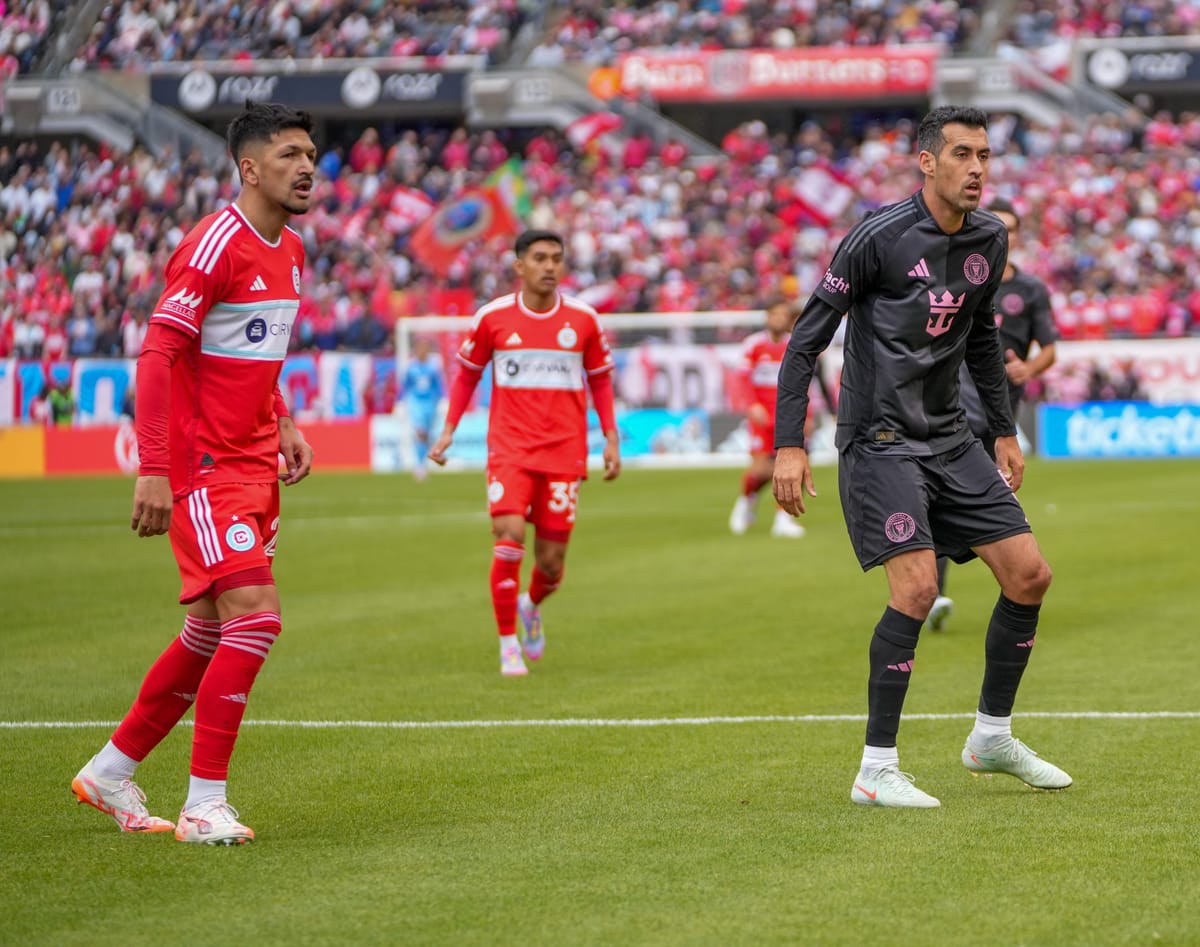
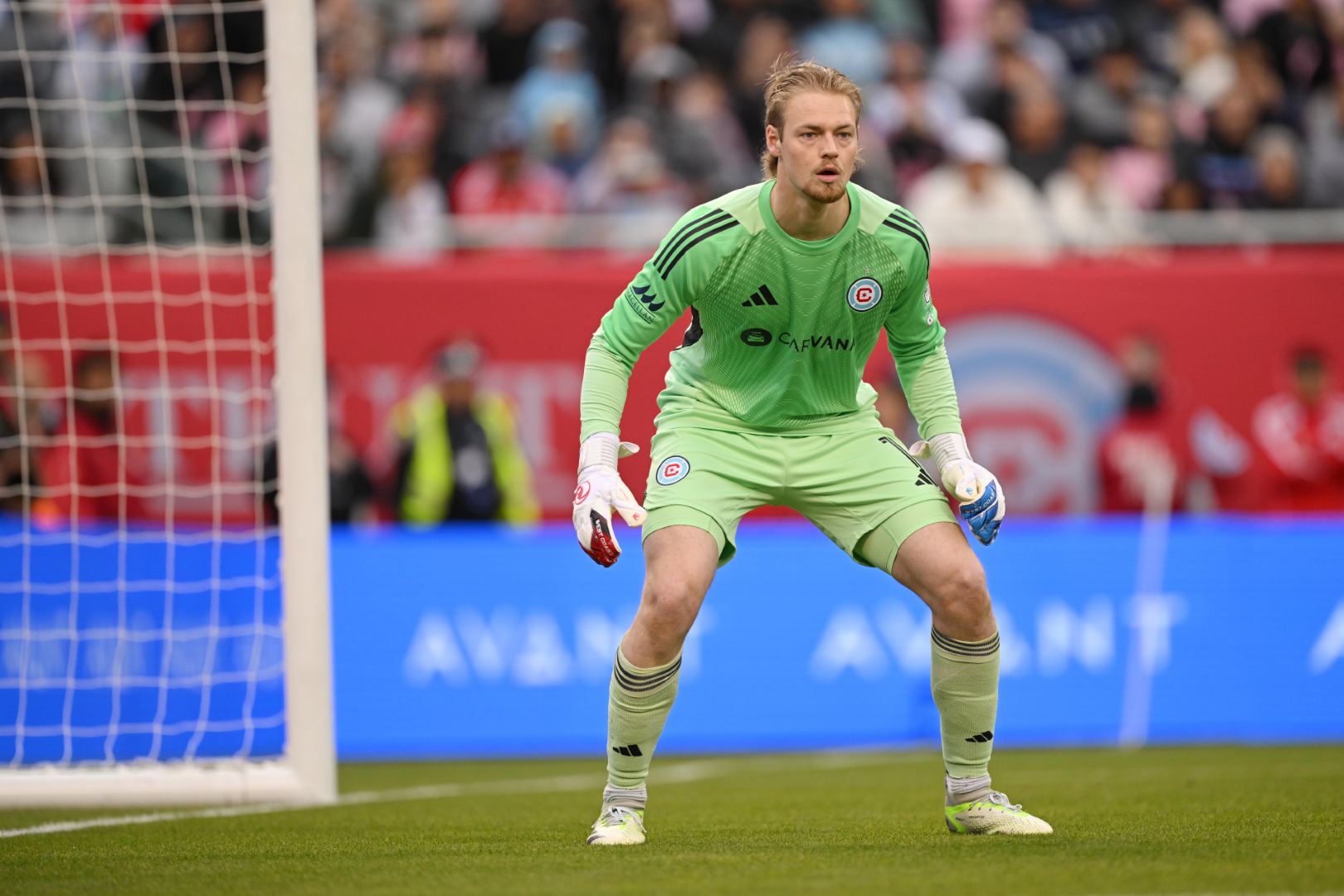
Against Miami, however, the team put on a solid defensive performance. That’s not my opinion, it’s goalkeeper Chris Brady’s, who said Terán “was locked down. Same with [Andrew] Gutman, same with Jack [Elliot], same with Omari [Glasgow]” – more on him in a minute. Brady still had to make some highlight reel-worthy saves, but with a better structure in front of him, he was in position to do so.
It still wasn’t perfect. The team’s five yellow cards, including two that granted Lionel Messi free kicks from just outside the penalty arc, which Berhalter said “almost feel like penalty kicks” when coming from the World Cup winner, are testament to that. Even Terán, who had his overall best performance in memory for the Fire, gave the ball away to Messi in the opening moments for the game’s first shot, and was carded for action inside his own box late in the game. The card in particular shows the lack of situational awareness that has plagued him throughout his time in Chicago.
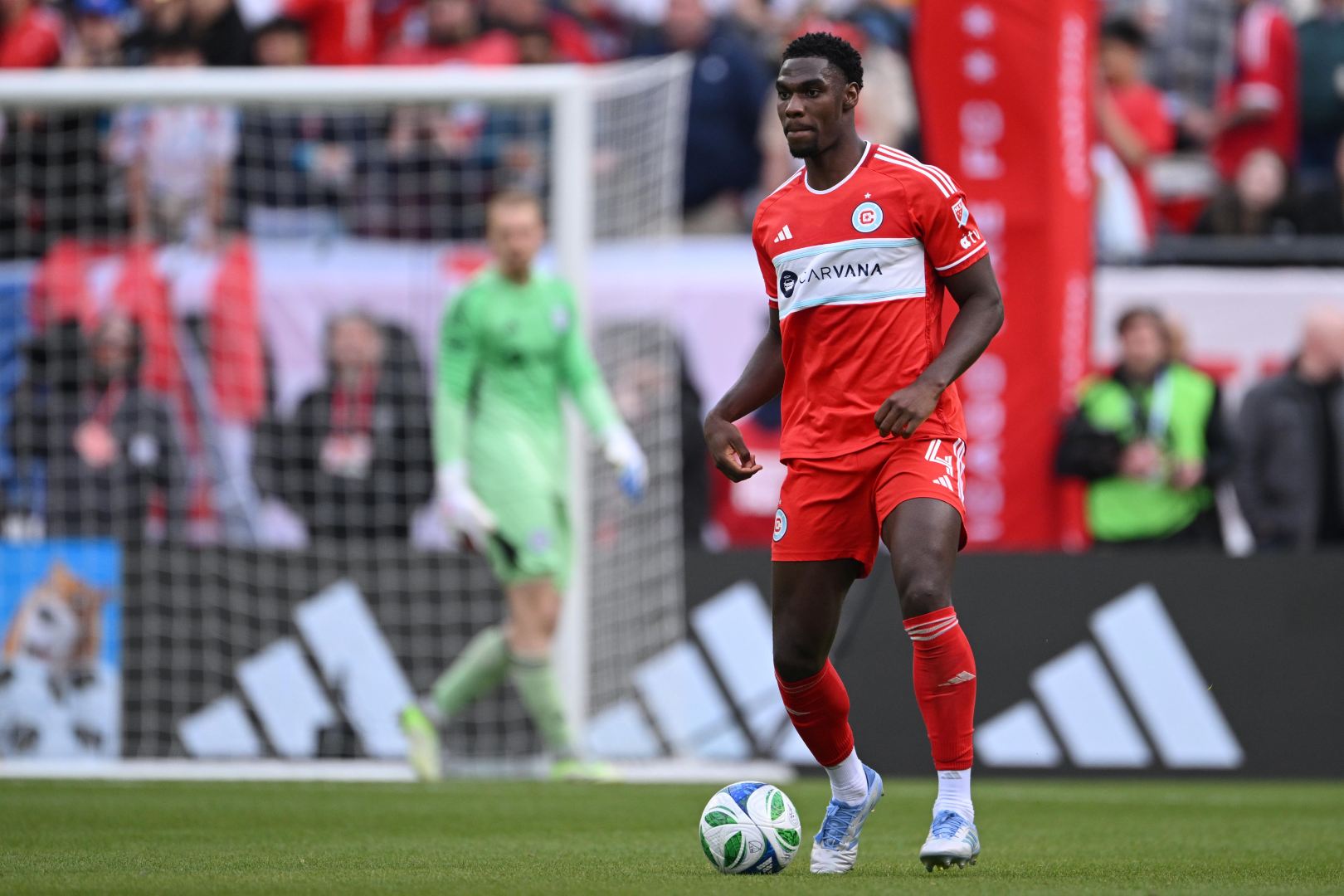
The performance was good enough, however, to earn the first clean sheet of the year. Every team makes mistakes, it’s about limiting their quality and quantity. The Fire have started to do that – first in stretches, as we saw last week, where a winning 85 minutes was ruined by carelessness going into half – and then in complete games.
If the Fire can keep that up, that raises the team’s floor and is often the difference between teams that make the playoffs and those that manage the occasional regular-season over playoff-bound teams before their season ends on Decision Day.
2. There is still clear room to improve
The draw against Inter Miami was the team’s most complete defensive performance of the season, but it still wasn’t a great overall game because the offense didn’t have that final, fatal touch.
On paper, the team had its first-choice attacking talent in the XI for this one, and even if Brian Gutiérrez is just working his way back from injury, you still don’t love to see stuff like this.
https://twitter.com/MattDoyle76/status/1911558206557475045
Even the best players in the world don’t finish every good chance – Messi’s performance was proof of that in this one – but throughout the game, it felt like the final touch wasn’t quite there. Great team play to get players in dangerous positions – the improved system under Berhalter helps a lot here – turned into shots that either didn’t have much pace or which were sent right into Óscar Ustari’s breadbasket. Players would get promising balls into the box, but the runner would be half a step off pace and too little would come of it.
Understandable for individual plays – not every chance is going to get finished clinically – but taken together, you could have hoped for more from the Fire in this one. We’ve seen this group do it, they just didn’t do it this week (or last week).
Combining the finishing that we’ve seen against teams like the Whitecaps and the defensive solidity that we saw against Miami – not incidentally, two of the top teams in the league – will make the Fire truly a force to be reckoned with.
3. There’s never going to be a perfect test
The Fire travelled to Vancouver and walked away with a win against a surging Whitecaps team that have rapidly worked their way into serious conversations about trophies this year. A lot of pundits around the league put an asterisk next to the victory, however, noting how many players the Whitecaps were missing because the game was played during an international break (something Berhalter has said he’d prefer that MLS stop doing).
Now, the team hosted Inter Miami and walked away with a clean sheet, one of just three games in MLS play where Messi played and his team failed to score, and just the second time in MLS play when he started and his squad was kept off the score sheet. (The other was a 0-0 draw against Nashville shortly when the two sides met shortly after Miami defeated Nashville in the Leagues Cup final.)
Doubtless, part of the narrative on this one is going to be that Miami had tired legs and were on short rest. Messi’s 37-year-old legs had already logged 270 minutes in the past week-and-a-half before kickoff.
Fine: Fatigue did seem like it was an issue at times for Miami. The easiest counterpoint is that Messi runs exactly as much – or as little – as he wants in any given game. A near-complete failure to rotate players over the span is, however, very much on Miami head coach Javiar Mascherano. This is both his first club coaching gig and his first senior men’s coaching job as an assistant or head coach at any level, and he has just two years of youth head coaching experience, and many felt he was brought in at Messi’s behest and may be too willing to bend to his star player’s requests.
Why does that matter? Even though the results have been there in the early going for Miami, there is a good chance that questionable coaching choices will very much be a theme for the squad this year, and the Fire are not going to be the only opponent that benefits from lapses or shortsightedness. The Fire also have issues on their side of the ledger: they were facing an injury crisis against Vancouver. Against Miami, were so short handed on defense that Omari Glasgow was deputized into the XI as a right-back.
In other words, there won’t ever be a “perfect test.” You have to play the opponents in front of you – and the Fire are about to face many difficult ones – but there’s a good chance that every one of them will have players out for one reason or another, or other circumstances that make it something other than a best-XI-on-best-XI matchup. That’s the reality of the game, and so far, the Fire have shown that they can perform in these situations. Not perfectly, and there’s room to improve
4. Omari Glasgow showed he’s a “true pro”
When I lived in Guyana, calling someone a “pro” at something was always meant ironically. Telling someone how to improve their shot, or how to drive? “Yeah because you’re such a true pro.”
This, however, is meant seriously: Omari Glasgow was played as a right-back – something he hasn’t done as a professional – in just his second MLS start. And he looked good doing it throughout 90 minutes on the pitch, even if there were a few shaky moments here and there. This should go without saying, but his first minutes as a defender came against Miami’s potent attack, as he was having to see off players like the talented Telasco Segovia and Federico Redondo, to say nothing of names like Luis Suárez and Lionel Messi.
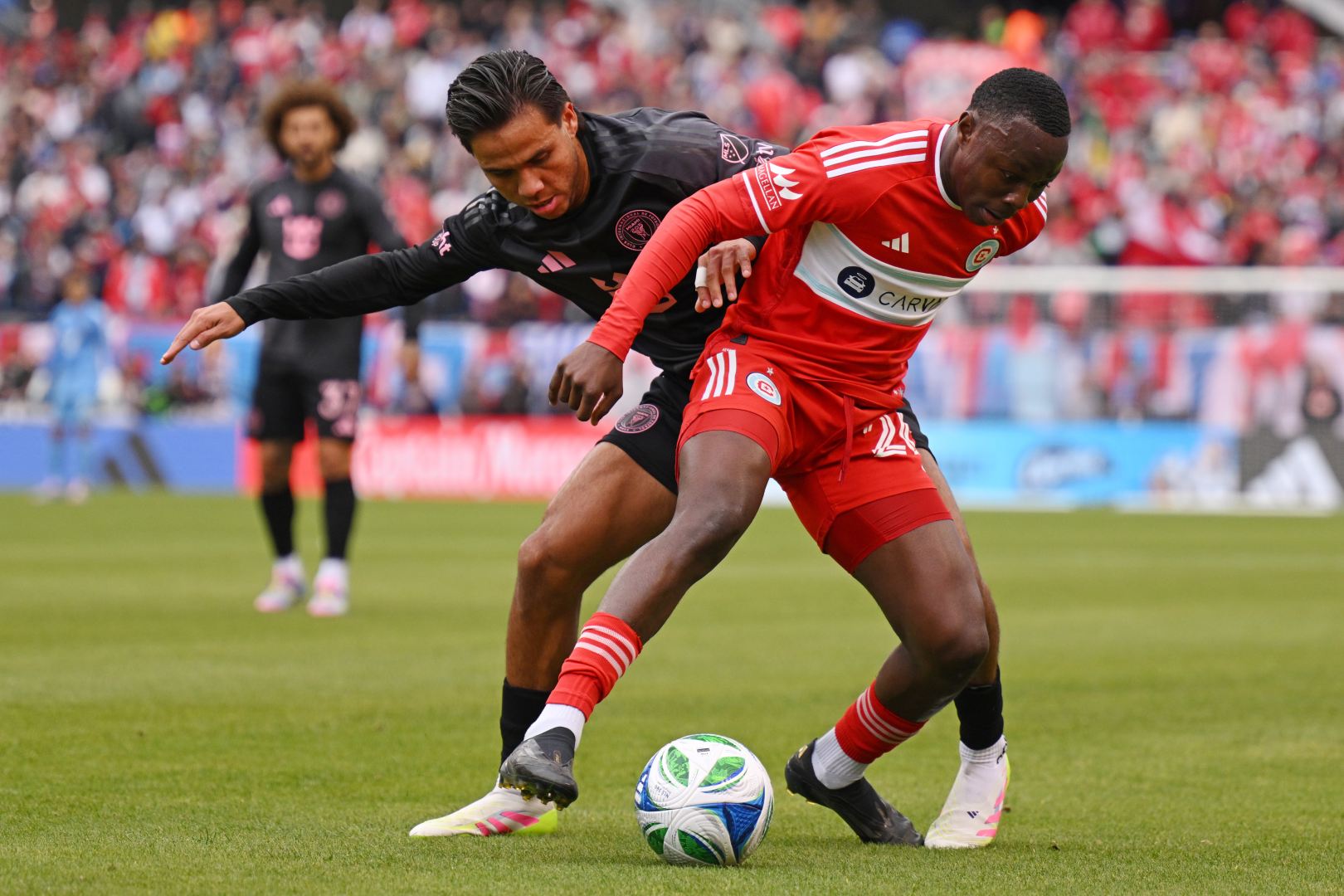
Glasgow is a true professional. On a Fire squad where minutes at his normal spot on the wing are likely to be hard to come by, Guyana’s all-time leading scorer made a very good case that he deserves serious consideration for minutes at right-back, a much shallower position on the depth chart.
It wouldn’t be the first time that an attacking player has found minutes in a deeper-lying role. Timothy Weah plays as a winger for the USMNT but has been deployed as a wingback with his club, including last weekend. Ultimately, the wingback role is simpler, and might present Glasgow with an opportunity for more minutes as he adapts to the pace and level of MLS.
It likely won’t always be smooth sailing, as Glasgow will have to learn to balance defensive responsibilities with the attacker’s instinct to go forward, but the performance against Miami gave one a heck of an audition.
5. There’s a new problem in the midfield
For several games this season, the Fire had an acute crisis in the midfield so extreme that the team had to sign Sam Williams to a first-team deal just to have enough bodies after running out of short-term callups for him. That injury crisis has largely abated, and the Fire have further strengthened at that position with the signing of Djé D’Avilla.
Now Berhatler faces a new problem with his midfield: What to do with all of the players that have made a strong case for minutes.
At the beginning of the season, the Fire’s preferred XI would have featured Kellyn Acosta and Rominigue Kouamé alongside Brian Gutiérrez. Against Miami, Berhatler decided to keep Acosta and Kouamé on the bench, instead opting to pair Gutiérrez with Mauricio Pineda and Sergio Oregel Jr. for an all-homegrown trio for the second time this season, and all three of them performed admirably.
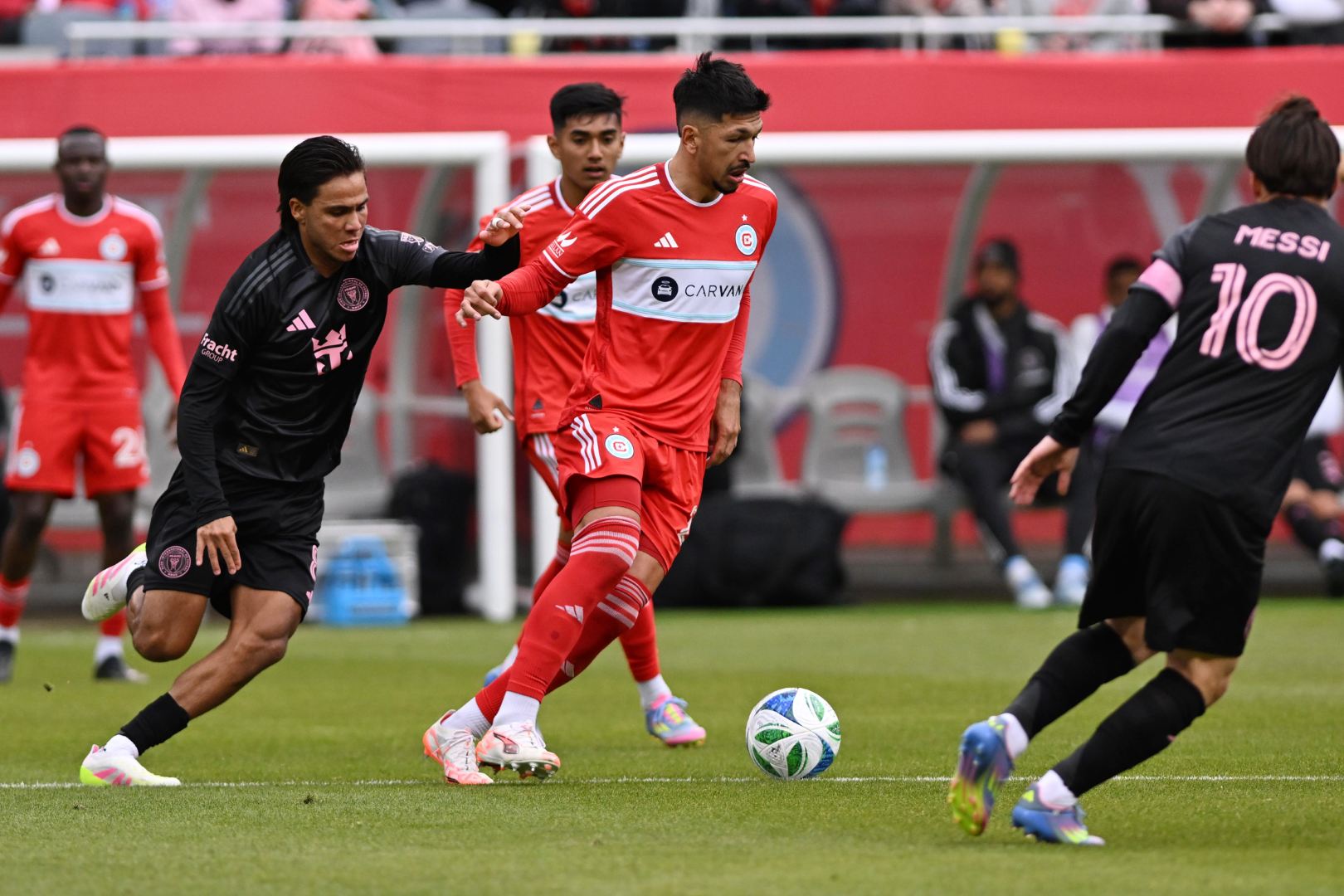
Gutiérrez was still something short of full sharpness coming back from injury, but Oregel had a decent shift on both sides of the ball. Pineda showed more of an offensive spark than Fire fans have seen from him in a long time, alongside a defensive performance that was solid, despite his early booking.
Kellyn Acosta had an off year in 2024 and hasn’t looked great in his in 2025, but as John Thornton said on The Bonfire recently, “I’m not selling my Acosta stock yet. Some of Acosta’s best minutes as a professional came in Berhalter’s system with the USMNT, and he still figures for a rebound. Kouamé has shown promise in his limited minutes, and although we haven’t seen enough of D’Avilla to get a clear reading, he has the profile of someone that can do well in this league.
Even if the Fire don’t always have all six of those players available, that still leaves Berhalter with difficult – if not unwelcome – choices, at least until the summer transfer window.