5 Things We Learned: Chicago Fire vs Columbus Crew
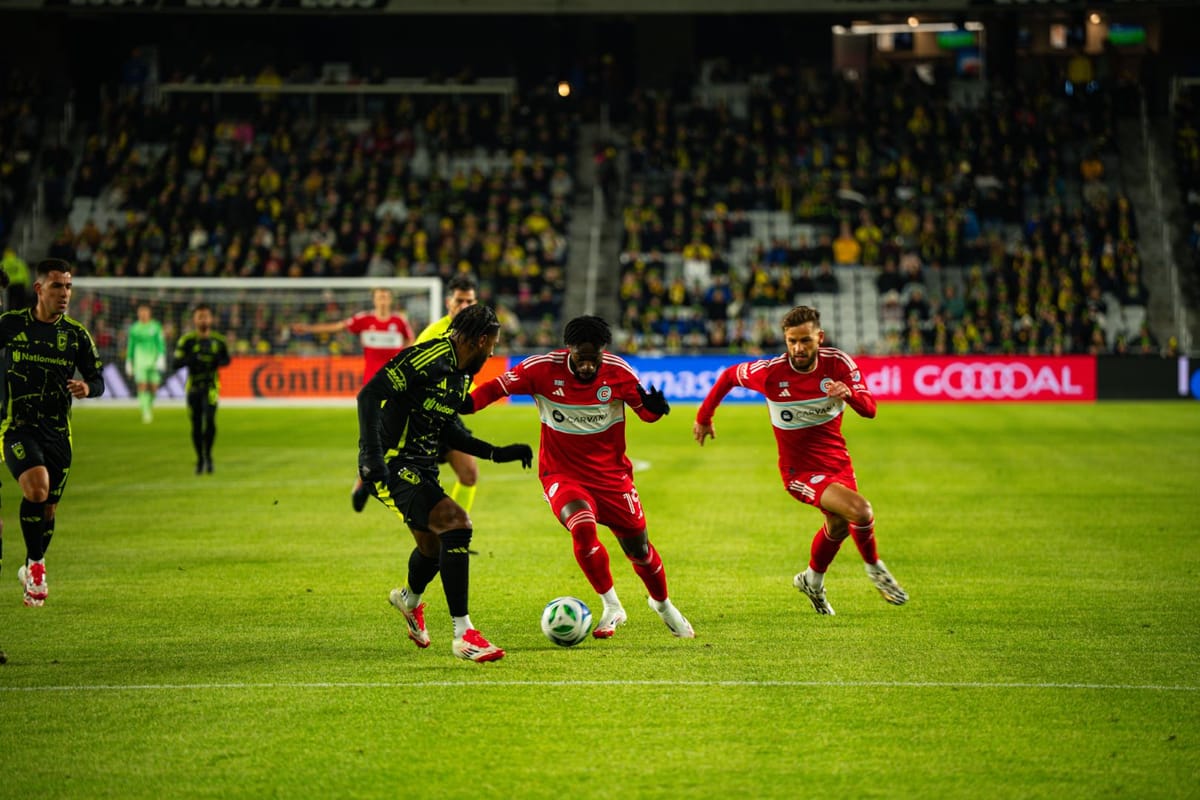
The Fire’s first game of the Gregg Berhalter era is in the books. Although the result is painfully familiar, and the team is still looking for their first opening-day win since 2009, the team nonetheless showed real progress – although the 4-2 loss also shows just that the Fire are still short of the league’s elite.
After a preseason where the team won games in convincing fashion against the San Jose Earthquakes and in a more scrappy manner against the defending MLS Champion L.A. Galaxy, the Fire showed what the squad can do in games that matter, and how far the team has to come, while also making it clear that they haven’t waltzed their way into the league’s elite overnight.
1. There are real signs of improvement
Early in the first half, the Fire were absolutely flying against the team that has the most points in the league over the past two seasons. While the Fire have sometimes gotten leads against strong opponents in recent years, this felt different: The Fire’s goals didn’t seem lucky, they didn’t come off of set pieces but instead were the result of a system and structure that wasn’t there in previous seasons. The Fire were playing out of the back and using the width of the pitch effectively to stretch the opponent.
Both of the Fire’s goals started in the Fire’s own half, and exploited the fact that Crew Head Coach Wilfred Nancy’s system pushes numbers forward to create overloads, leaving large amounts of space in behind. That’s what you’d expect from Berhalter’s system and neither is the kind of goal that the Fire have scored with any regularity – let alone twice in a half – over the past few seasons. That’s true whether we’re talking about the Fire teams coached by Frank Klopas, Ezra Hendrickson or Raphaël Wicky.
The opening half-hour – despite Jacen Russel-Rowe’s goal in the 19th minute – showed the progress that the team has made. Every team will concede goals, but the Fire responded well – sticking to the game plan that their new coach had laid out and they were rewarded shortly after the restart with Gutiérrez’s second goal, restoring the Fire’s lead. The Fire will have an identity on the pitch in 2025, and we saw signs of what it is in Columbus.
It will take time to build, but it was refreshing to see and if you figure that this is the team’s floor in establishing that identity and style of play, then the Fire are already starting on a pretty good platform for success this season.
2. ... But there is still a learning curve
Despite the strong start, the Fire wound up with another loss in Columbus after conceding four goals – as Berhalter noted in the press conference afterwards, that is not a way to win games – but more than the goals, it’s how the Fire conceded that gives fans a sense of déjà vu. All four of the Fire’s goals came, seemingly, out of nowhere.
Under Nancy, the “classic” Crew goal comes from slow, methodical buildup, eventually pulling opponents out of position before going in for the kill. None of Columbus’s last night came that way. Instead, the Crew scored by exploiting mistakes as the Fire were trying to build out of the back. Terán’s own goal may be the most painfully familiar to Fire fans, where a relatively innocuous play that winds up in the back of the net off of what would be a comedy of errors if it didn’t put the Fire into a hole they didn’t recover from for the rest of the game.
Some of it is down to personnel: Sergio Oregel Jr. was given his first-ever MLS start more than two years after his first and only previous appearance with the Fire first team. That was always going to be a case of throwing the 19-year-old Fire homegrown into the lions’ den given how the Crew like to dominate games in the midfield, but it turned out that it was a relatively simple miscue from Oregel that resulted in the Crew’s first goal.
Oregel seemed surprised by the speed of Columbus’s press, and before he could pass the ball back to Brady, he was dispossessed of it and Jacen Russell-Rowe sent it past the Fire keeper. Romingue Kouamé, a considerably more experienced player, is probably the normal starter at that position, at least early in the season. Bad spacing on defense and another miscue on a relatively simple play from Zinckernagel also resulted in the ball landing in the back of Brady’s net. The Danish winger made some good plays for the Fire, but he also seemed surprised by the speed and level of his opponent at several points, and is clearly adjusting to the league.
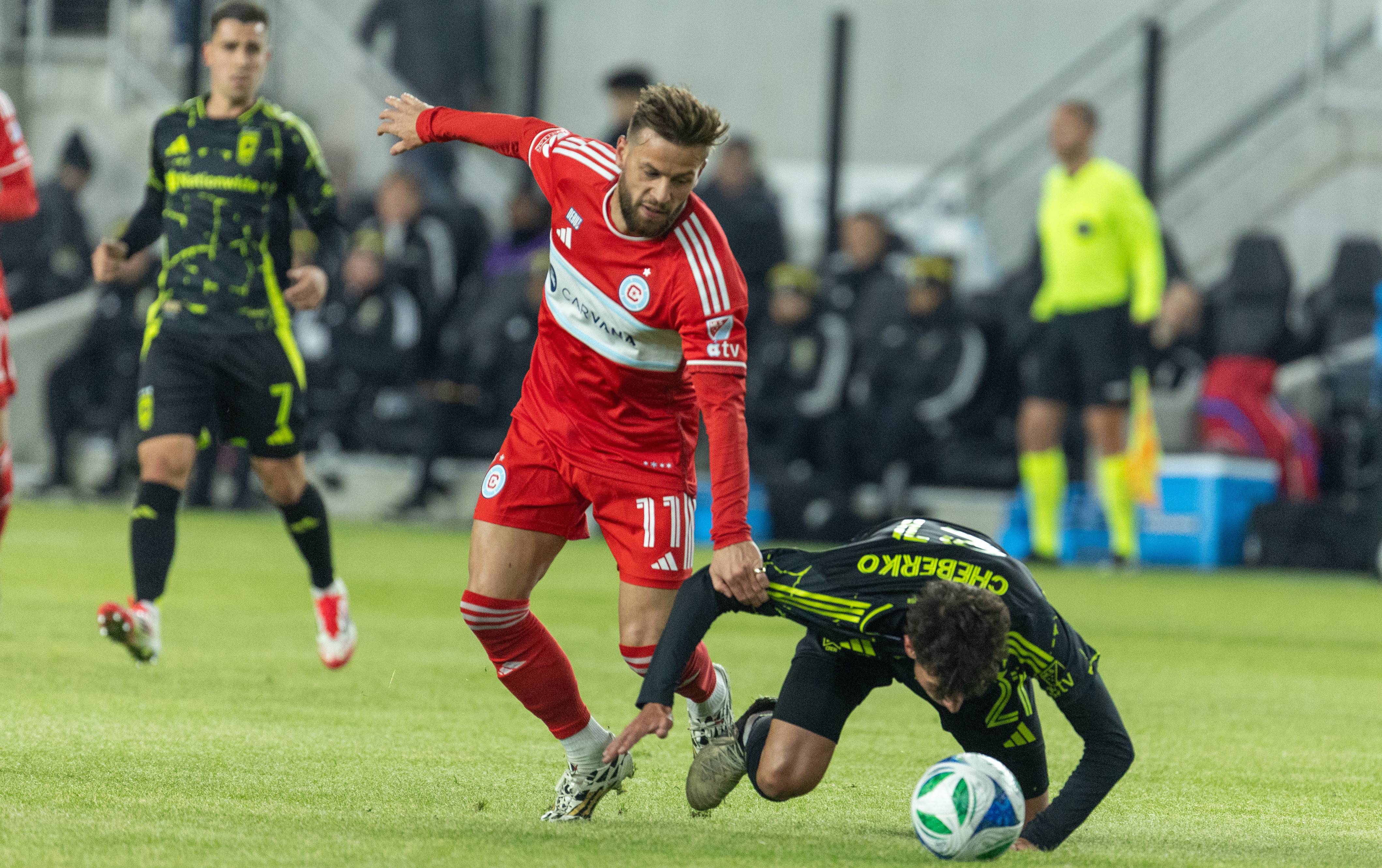
More than personnel, however, the goals came form a team that is still clearly learning how to play out of the back – not something the FIre have done in recent seasons – and, in some cases, still getting used to their teammates, as communication can take a while to develop.
Here’s what Berhalter had to say about it after the match: “A lot can be improved. But I think, again, the effort, the mindset of the guys was good but we have to threaten the back line more. I want to see some of that. I want to see defensively, the chances we gave up, you know, we need to take a look at, the own-goal wasn't a great positioning by our defense on that goal. But we'll keep working. The goal was to keep making progress, and I think the team has made progress throughout this preseason and we'll continue to build.”
3. Jonathan Bamba looks really good
Like, really, really good.
The new Fire Designated Player was Berhalter’s most high-profile acquisition of the offseason. While the French-Ivorian winger had the profile of a player that would be successful in MLS, having played at a high level in both France and Spain, the Fire have previously had a number of signings that looked great on paper but failed to impress on the pitch. It also wasn’t clear how quickly Bamba would get up to speed, having arrived relatively late into preseason.
After a sample size of exactly one (1) game, Bamba looks like exactly the kind of player that the Fire hoped they were getting when they brought Bamba over from RC Celta de Vigo. The Crew were always going to leave space in behind their lines, and Bamba exploited them, stretching the pitch both vertically and horizontally for the Fire. He used his strength and confidence on the ball to drag defenders his way, and is a skilled-enough passer to lay it off for other Fire attackers.
It was close to an ideal debut for the winger, although after the game, Berhalter did say that he was hoping to have Bamba threaten more directly, saying “we want to see home with goals and assists for sure.”
4. Brian Gutiérrez is here with intensity
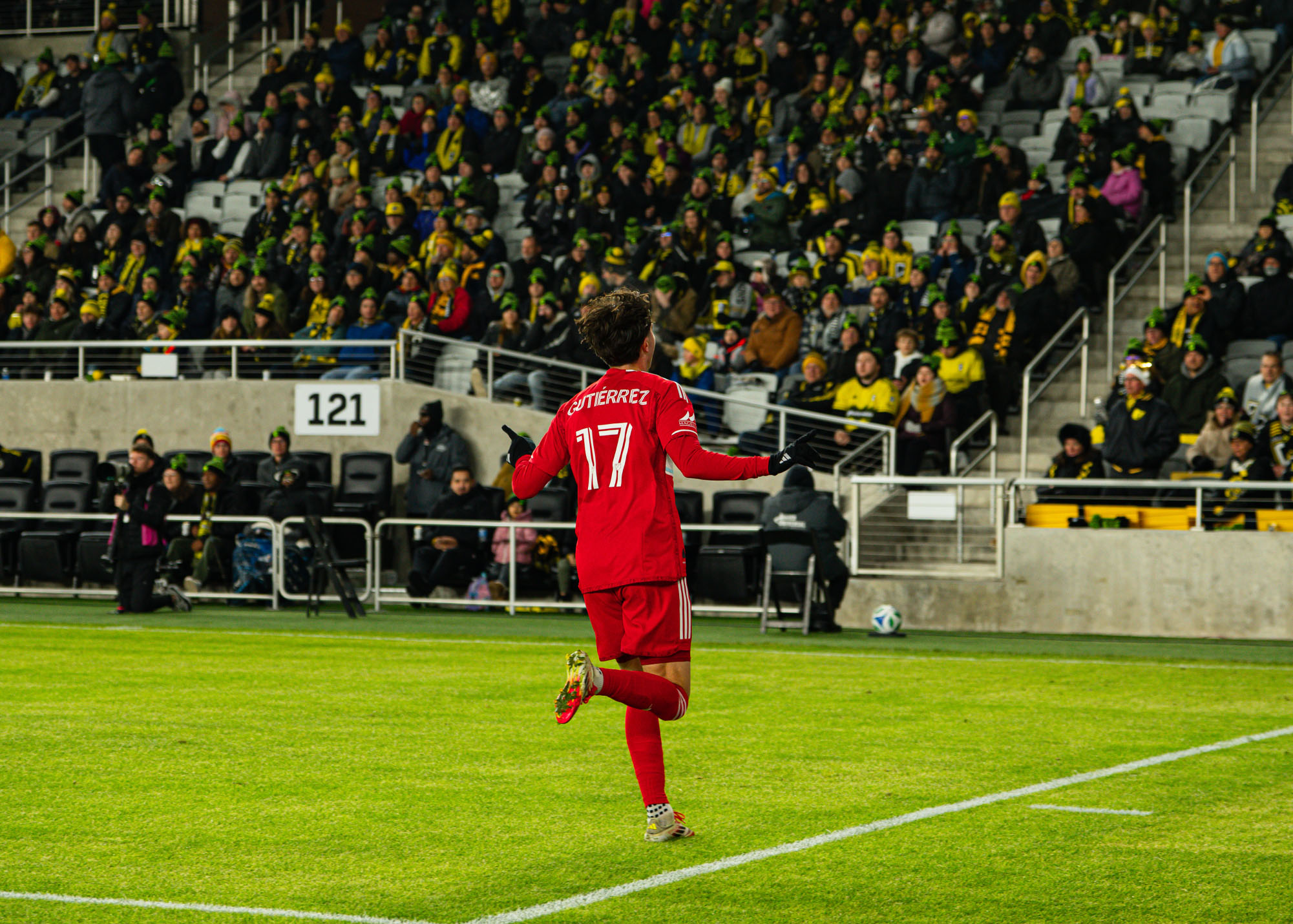
After the first day of matches (though not matchday, with games to be played on Sunday), Gutiérrez’s brace against the Crew has him tied at the top of the league Golden Boot standings (losing out on tiebreakers). While he’s unlikely to stay at the top of the leaderboard throughout the season, it’s still a welcome sight to see. It’s Gutiérrez’s first multi-goal game as a professional, coming at the start of his sixth year with the team, and it actually ties the number of goals he had in both 2023 and 2022, after failing to score in limited minutes in both 2020 and 2021.
More than the goals, however, Gutiérrez played with intensity throughout the match. He was active not just in the final third – something we’ve seen from the Fire homegrown in previous seasons – but also, tracking back on defense, getting clearances, being available for outlet passes. After a 2024 where, despite a career-best season in goals (with six), Gutiérrez often seemed like he was listless on the pitch, it was refreshing to see him thoroughly engaged and playing the game with intensity.
Maybe a little bit too much intensity, however, as he was lucky that his reckless arm against the Crew’s Evgen Cheberko was only given a yellow card. Thankfully, we don’t have to wonder about whether Gutiérrez’s brace in the season opener would be worth a suspension for the home opener.
Asked about the what the message was to help young players like Gutiérrez keep the intensity dialed up but scaling back the reckless play, Berhalter said that Gutiérrez “cares a lot, and he wants to win soccer games. Sometimes young players lose emotional control, and you know, all players lose emotional control. For him, it's about really understanding how good he can be and what's going to fuel him.” The trick will be keeping the fire stoked (pun not unintended) without it flashing over into cards or suspensions.
On the whole, however, outside of Fire circles, few really appreciate Gutiérrez’s talent level, partly because there just hasn’t been enough footage of him coming anywhere near his high ceiling. When I asked Gutiérrez about what changed this season, he said that the new coach has made things “straightforward,” giving him and others a clear role, “and we have that football identity,” something he said that he felt that the club had lacked in prior seasons.
5. Berhalter is committed to making it work
The long-range plan for the Fire’s identity is clear, but it was a fair question of how much of the we’d see from the Fire in the early going, or if Berhalter would try to simplify the system in the first few matches of the season as the team gels. Especially against the Crew, the team that scored the second most goals in MLS last year, you could forgive Berhalter if the game plan didn’t involve playing out of the back.
That’s especially true when the team was missing two probable starters in Kouamé and right back Leonardo Barroso, and when other key players – including Hugo Cuypers, Jack Elliott and Philip Zinckernagel – missed time with the group in preseason due to injury. Overall, the Fire were out seven players due to injury, with Mauricio Pineda listed as “questionable” before the match, although he ultimately did play.
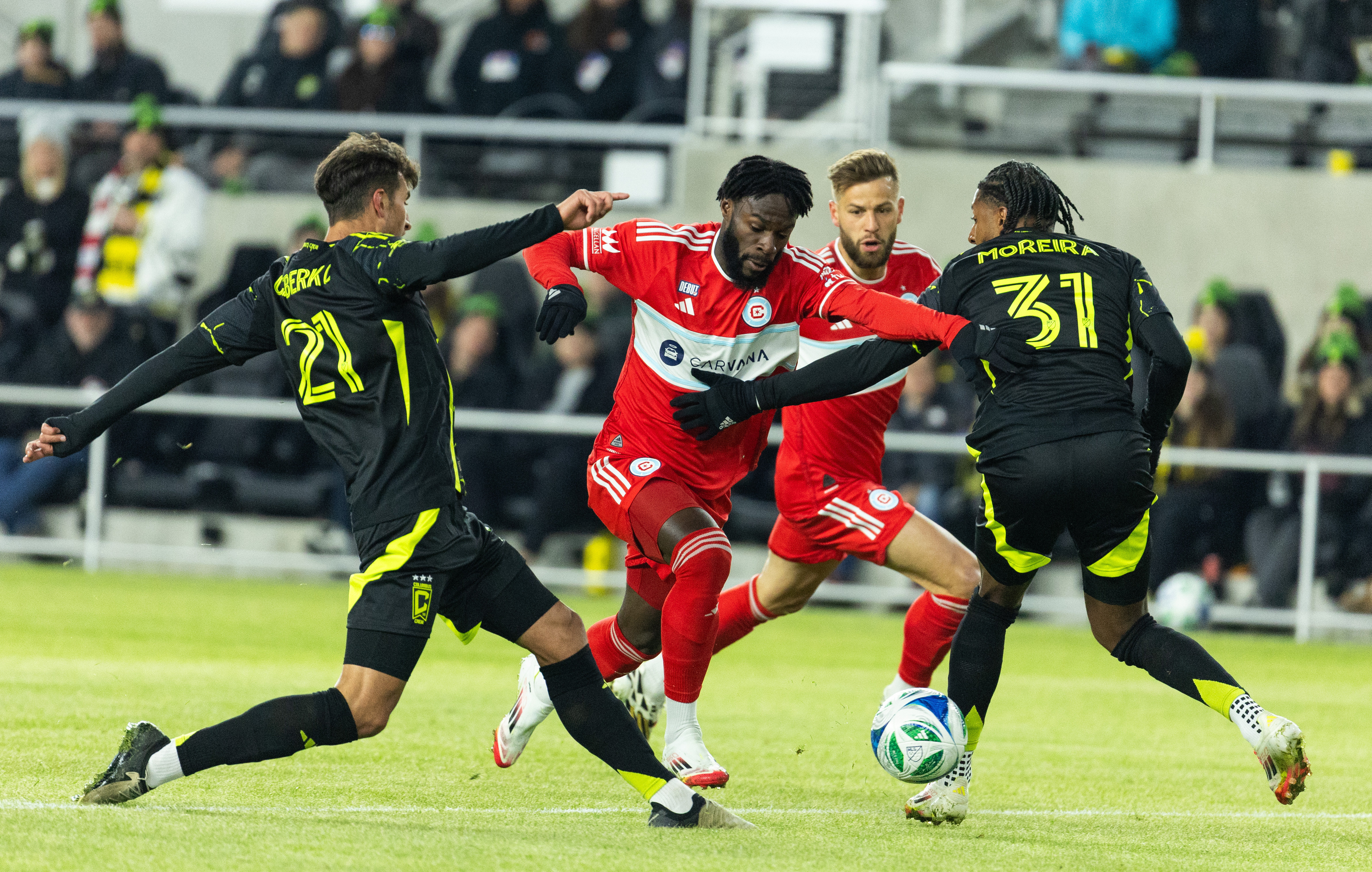
Berhalter's system earned the team strong attacking moments, but also lead to defensive lapses. (photo: Trevor Ruszkowski-Imagn Images)Even though the Fire wound up with 43% possession (as Berhalter said when asked before the game about the fact that both teams want to control possession, “something’s got to give”), the Fire coach did ultimately stick to his guns and played the system that he wants the team to play.
There were modifications – the team was more direct and more vertical than I think will be typical in 2025. Part of that is because I think they wanted to limit Sergio Oregel Jr.’s exposure in his first-ever MLS start, and part of it is because Columbus has won many games by winning battles in the midfield and dominating possession afterwards. Overall, though, it was a system that was tailored in execution but kept more or less intact.
Building out of the back helped the Fire get their two goals, while also leading to three of the team’s goals against. That may not sound like a great tradeoff (and it isn’t), but few opponents are going to be as challenging as the Crew and the team will never be less familiar with the system than they were during the first match of the season.
Overall, it’s a promising start for the Fire, and while no victory in MLS is ever close to being guaranteed, the team showed that they’ve got the tools and strategy to beat a team like D.C. United in their home opener.