5 Things We Learned: Chicago Fire vs D.C. United
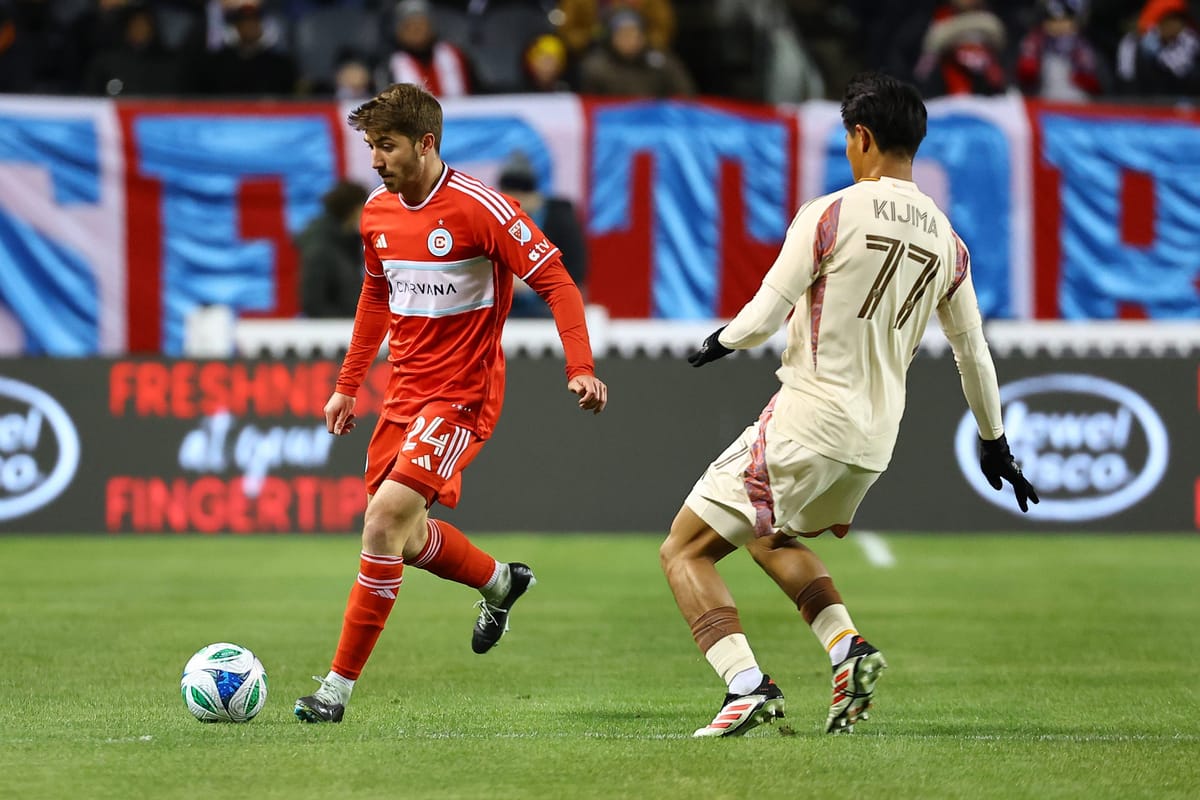
The Fire put points – well, a point – on the board, getting a draw against D.C. United in the coldest home opener in team history. It was also the second-coldest home game in team history, after the team’s 3-3 draw against FC Cincinnati on March 18, 2023.
We saw some new elements of Berhalter’s system, while on the other side of the coin, it’s hard to over-index the rough spots on a team in its second competitive match with no fewer than nine first team players – out of the 28 the team’s signed – unavailable for the match after including Carlos Terán’s pregame injury in the calculations.
1. The Fire are getting more off of set pieces
This isn’t a matter of opinion at this point – both of the Fire’s goals against D.C. United came off of corners. In all of 2024, the Fire had one goal from dead ball situations – that’s corners as well as free kicks, throw-ins, goal kicks and kick offs. Not to get too deep into the math here, but that means they’ve already had more goals off set pieces two games into 2025 than they did in all of 2024.
Both of the Fire’s goals came off of almost identical plays. Philip Zinckernagel’s corner kick made it to Jack Elliott who played the ball on towards Hugo Cuypers at short distance. On the first goal, both Zinckernagel and Elliott were credited with assists, but not the second, where it was ruled to have gone off of a D.C. defender first. Speaking to media after the game, Elliott confirmed he got his head on the second ball that lead to the second goal, and typically incidental contact doesn’t remove the assists, but regardless, it worked.
Regardless, Zinckernagel’s first point in MLS was the secondary assist on the Fire’s opening goal – a fitting introduction to the league, considering that there’s basically no other league in the world (other than Next Pro) where that play would have earned Zinckernagel a mention in the boxscore.
Last year, the Fire lacked both the service that Zinckernagel provided as well as a tall target with Elliott’s awareness to find the right space, both crucial elements in getting Cuypers good service off set pieces. Undoubtedly teams will learn from a play the Fire have done twice already, that combination should continue to pay dividends for the Fire this season. It’s a welcome turnaround and it shows why Gregg Berhalter showed the confidence to keep set piece coach Ryan Needs in his role after most of the Fire’s assistant coaching staff were dismissed.
2. The kids are alright
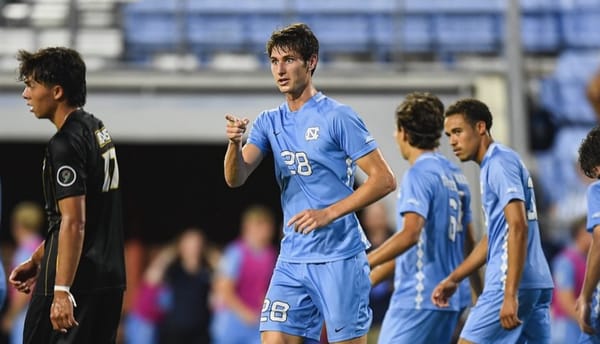
With nine players injured, the Fire were in need of bodies on Saturday, and Gregg Berhalter turned to youth to fill in the gap. 19-year-old Sam Williams was called up from Fire II for the second match in a row, starting and making his MLS debut in a game that was also technically his first appearance as a professional. Williams came up through the New York Red Bulls academy but never signed a pro deal, enabling him to become a college player with North Carolina.
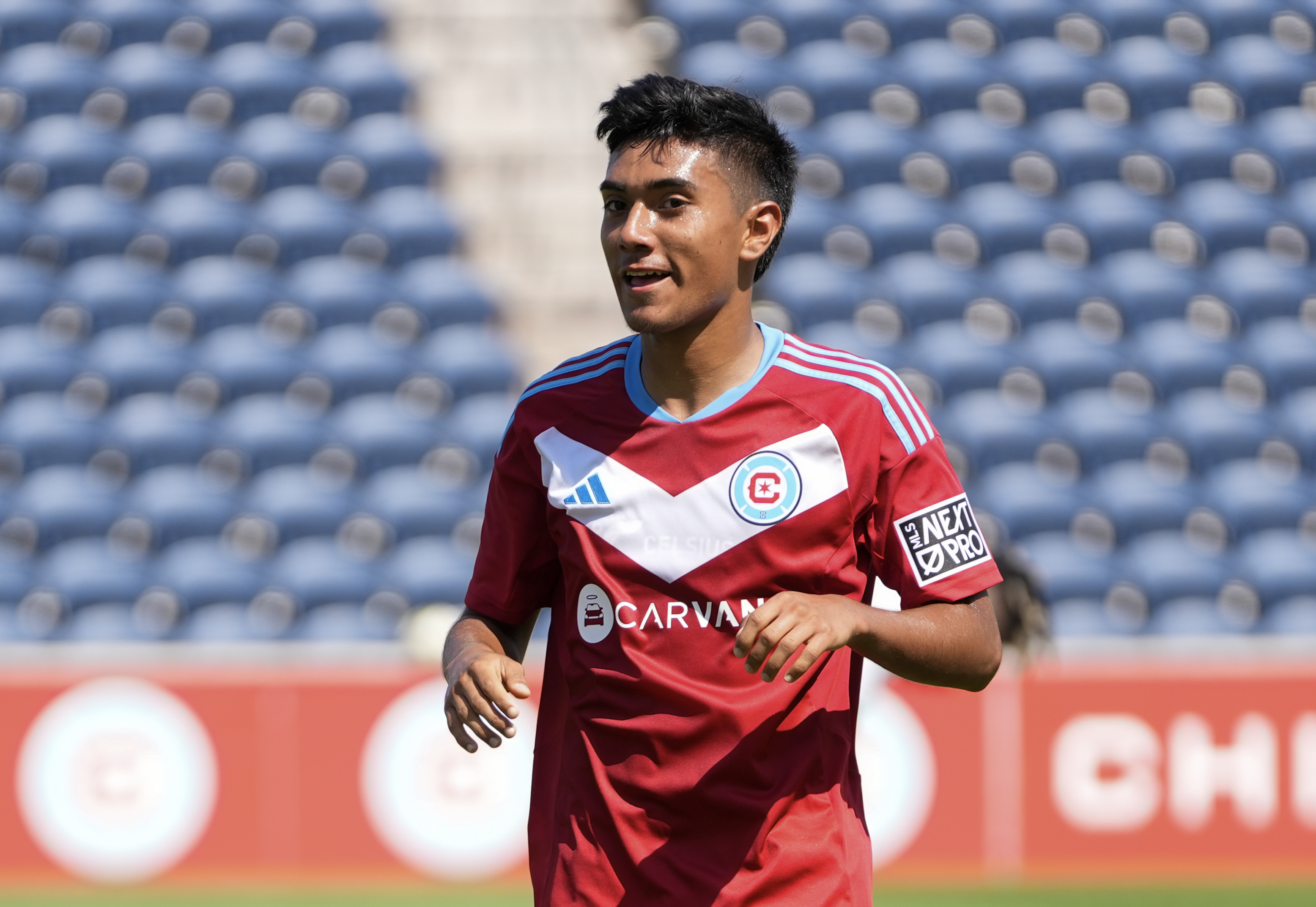
Williams did not look out of place on the field, appearing next to the veteran Kellyn Acosta and Sergio Oregel Jr., in what was Oregel's second-ever MLS start and third appearance. Omari Glasgow, who was in MLS Next Pro last season, also showed flashes of creativity off the bench – it would be interesting to see how he pairs with Cuypers in this edition of the Fire, as the team’s starting striker was already on the bench by the time Glasgow was called off it in the two games so far. Fire II player Harold Osorio also made an appearance off the bench in second half stoppage time.
The contributions from either current or recent Fire II players shows that the two teams are more tightly integrated under Berhalter than they were under former Sporting Director Georg Heitz, where the teams were highly disparate, with each team having a different tactical approach and style of play. While the shift won’t bridge the considerable gap in quality between Next Pro and MLS, it does mean that we’re likely to see more contributions from Fire II players, both this year and in the future. We’re also likely to see more output from the Fire II pipeline to the first team, after Glasgow and the injured David Poreba moved up in the offseason.
3. Still, the midfield needs to do better
Still, the midfield’s inability to contain D.C. led to a number of dangerous attacks from the visitors, and in a game where players in the defense and attack looked strong, the midfield was a weak point. To be fair: It was Oregel’s second start, Williams first game as a pro, and Acosta, whose best work came as the more deeper-lying midfielder, was playing in the more offensively-focused spot that Brian Gutiérrez occupied last week. No one was set up to have a career game, but none of them did.
According to American Soccer Analysis, all three Fire midfielders had added (G+) ratings that were both negative and below the median for midfielders. Goals added looks at how a variety of actions on the field – from passing and dribbling to blocks, clearances or interruptions, amongst others – change a team’s chances of scoring (or conceding) across two possessions. Williams was actually the strongest of the bunch, but he benefited from playing on the stronger side for the Fire in the match, with Bamba ahead of him and Gutman behind him. Acosta had the lowest rating of the group, but it looked like he was being tasked with doing two jobs at once: Getting back and being there to help his less-experienced teammates by being in position to win second balls, available for a short pass out of trouble, and so on, while also being expected to be able to turn and send the ball onwards.
Against D.C., it didn’t work out, and the Fire’s midfield was too easy to play through while also not providing much to the attack. Before the year started, I said it felt like this could be a Kellyn Acosta rebound year after a forgettable 2024, and I still think that, but we just haven’t seen evidence of it yet. I think once Rominigue Kouamé is fit to play and Oregel is given time to adapt to MLS in more controlled situations than full 90 minute starts, Acosta’s numbers should improve.
4. Chris Brady is out of the sophomore slump
Through most of 2023, his first season as the Fire’s go-to starter, goalkeeper Chris Brady was putting up near top-of-the-league numbers in Chicago’s net, both in terms of the overall statistics as well in advanced goalkeeping metrics. Last year, however, that fell apart, and Brady was, according to statistics, below average in almost every statistical category for goalkeepers.
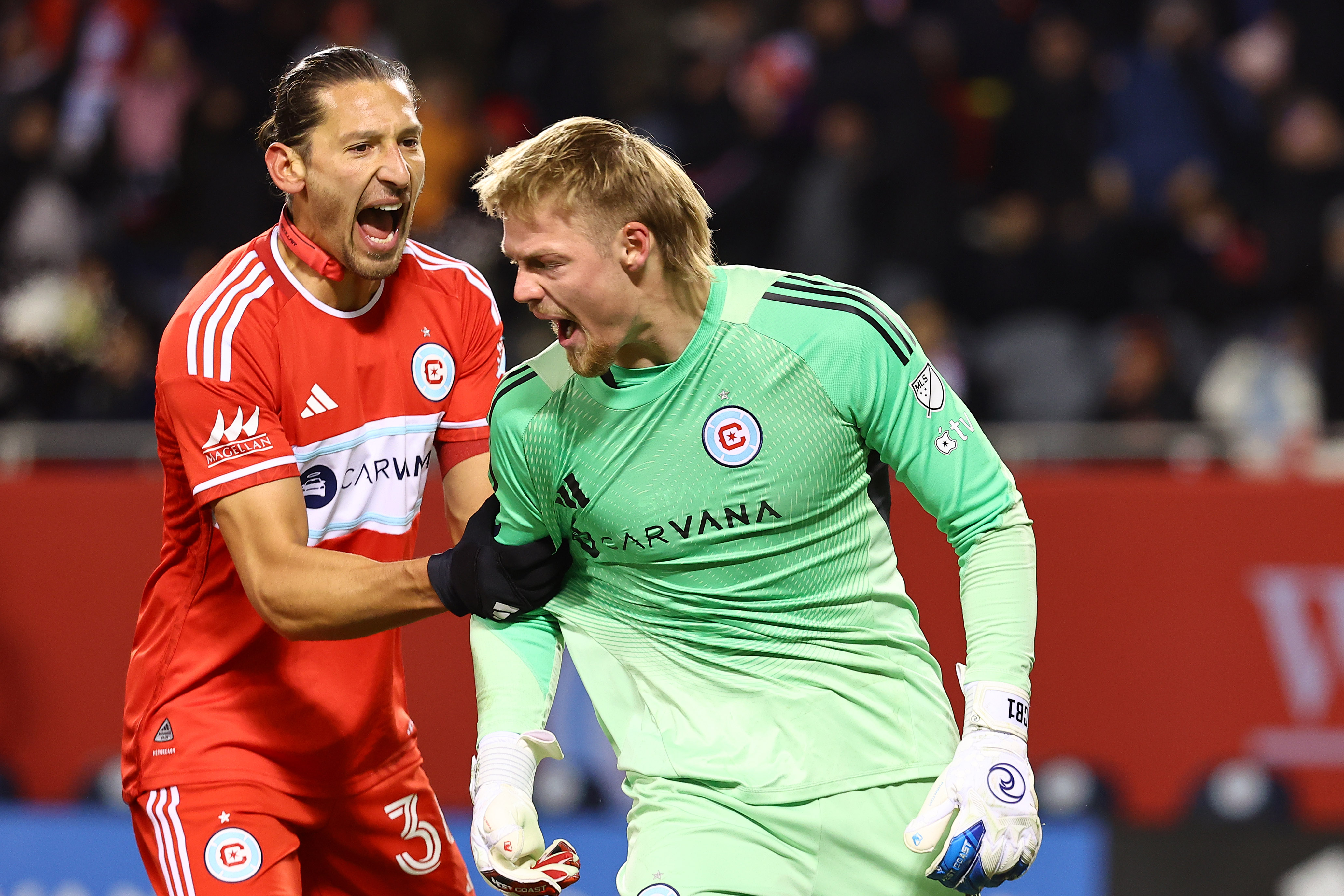
Here’s the thing, though: That was on a team that was also below average, and even if statistics try to isolate for player performance over team performance, a team’s style of play (and how well they play it) affects numbers, even with advanced statistics. The Fire’s defending wasn’t great in 2024, to say the least, and Brady was often, I think, having to play out of the spots where he was thought he should be because the defense was also not where it should have been. This year, we’ve already seen him doing better, and against the D.C., he put in what Berhalter called a “man-of-the-match type performance” up to the tying goal at the end of the game – a goal that I don’t think can really be put on Brady.
That isn’t to say it’s all sunshine in the Fire’s net: Brady is clearly still getting comfortable playing the ball out the way that Berhalter prefers. Remember: with the U.S. Men’s National Team, Berhalter was giving starts to Zack Steffen long after his performance really justified it. The assumption – though never confirmed by the coach himself – was that it was Steffen’s purported skill with his feet that kept him in net for the USMNT. Whether or not that’s true, it’s certainly something Berhalter wants Brady to do, and it clearly isn’t second nature to the now 21-year-old yet. It hasn’t really cost the Fire in any real sense, but it looks like it could someday soon.
5. Berhalter will tweak the system
Although Berhalter dismissed the idea of changing the system up against D.C. given the number of absences and the threat of Benteke, Fire Head Coach Gregg Berhalter demurred, saying “I think we are who we are. We have to be comfortable with our game.” Ultimately, however, the team did show a different tactical approach against D.C. United than what we saw last week in Columbus.
To be clear, it was broadly the same system, but over time, the team found more success in playing the ball through Gutman in buildup, rather than through the midfield. That helped the team speed up the attack against a D.C. United team that seemed able to frustrate the midfield with their press and win every second ball. It’s something ZInckernagel noted, saying he “thought we played a little bit into their circumstances by playing it too short and into too many duels. But once we understood the game and how they pressed that we had space in behind, we could play a little bit longer, and then suddenly the game opened up, then we could find space in between the lines, and I thought that was the key to the game.”
Those kinds of adjustments will (hopefully) come as second nature as the system becomes more deeply ingrained with the players, but for now, being able to see that kind of adjustment 20 minutes in, unlocking the team’s strengths and reducing their opponent’s, is a welcome sight.