5 Things We Learned Chicago Fire vs. FC Cincinnati
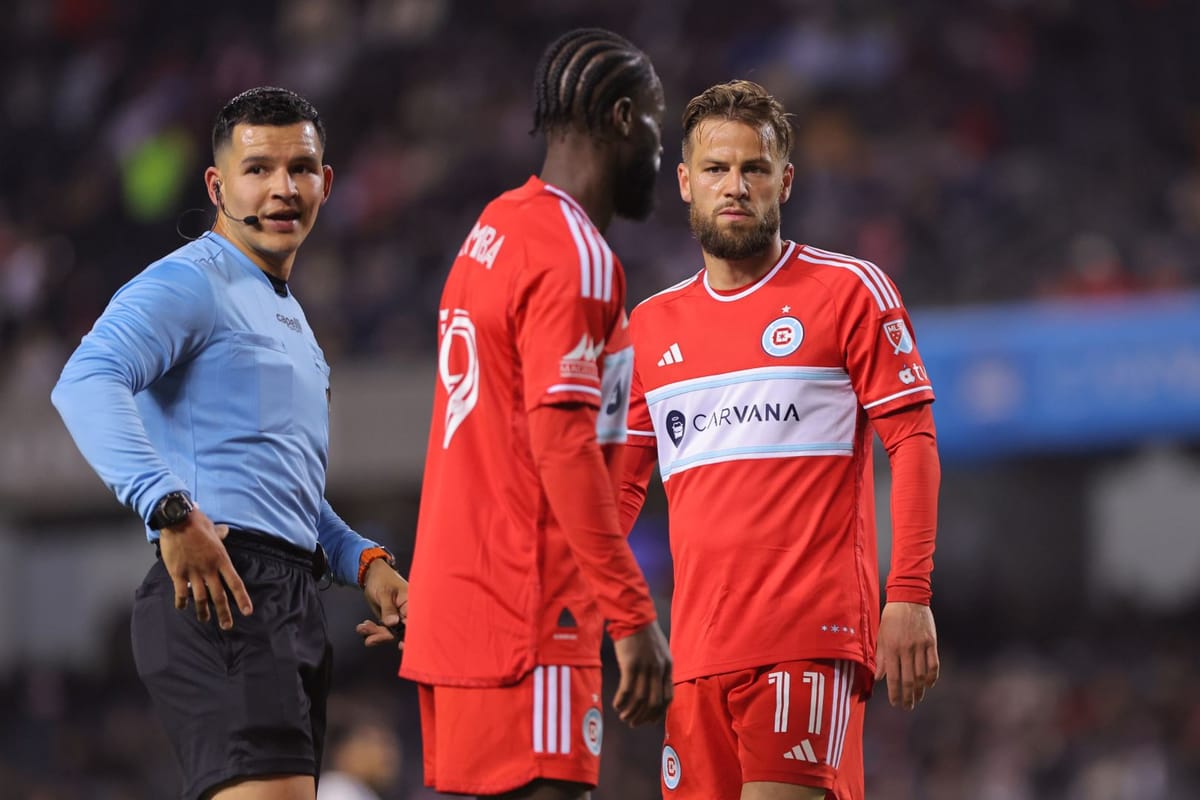
The Fire’s unbeaten record at Soldier Field came to an end with the final whistle against FC Cincinnati. The 3-2 loss knocks the Fire’s record on the year down to a perfect 0.500, with a trio of wins, losses and draws after nine games. Here’s five things we learned after the team’s first defeat in front of a home crowd in 2025.
1. It’s not always going to feel different
Costly, simple defensive mistakes. Shots deflected off a Fire player that wind up in the back of the team’s net. Anonymous matches from key players right when their contributions are most needed. Heck, a Brian Gutiérrez game where the homegrown seemed to wander listlessly around the midfield as he failed to make an impact in open play. That sounds like a Fire game in 2024. Or 2023. Or 2022. Or 2021. Or, well, you get the idea.
It hasn’t sounded like a Fire game in 2025. Even though the team failed to get a result against the New York Red Bulls two weeks ago, they played well enough for a win and as Matt Doyle said, “sometimes ball no go in.”
Against Columbus in the season opener, the Fire just seemed outgunned in Gregg Berhalter’s first game in the dugout for the Fire against Wilfred Nancy’s well-oiled machine. In every other game of the year, the Fire managed to get a result – sometimes displaying grit as the team mounted late-breaking comeback wins.
The game against FC Cincinnati, however, felt a lot like the Fire teams of recent, disappointing seasons, rather than Berhalter’s plucky 2025 edition of the squad. It was enough to give many Fire fans a sense of déjà vu as they watched the team suffer their first defeat at home of the season.
As much as things have changed for the Fire, there will be games where the team just doesn’t feel like they’re playing to win. After the game, Berhalter said plainly “I don't feel like we brought enough today and we didn't deserve to win that game.”
The test for the Fire going forward is how they respond to the poor showing. The ability to bounce back from a bad performance will be, more than any other single thing, the way that the Fire can differentiate 2025 from recent vintages that failed to make the postseason.
2. Sam Rogers needs more time to adjust
This isn’t an attempt to call out Rogers, who was thrown into a difficult situation, having his first minutes back from injury come unexpectedly after Terán’s injury. But being on the bench has to mean you’re ready to play. Several times throughout the night, Rogers made simple mental mistakes that proved costly for his team, and he’s lucky he didn’t end up with an own goal to his name.
Look, I get it: the job of a defender will always be less glamorous than an attacker. Strikers are remembered for the best things they do in a match, while center-backs and goalkeepers are much more likely to get notoriety for the worst mistakes they make. When asked whether the Fire’s injuries affected the outcome of the match (a clear reference to Rogers coming in cold after Carlos Terán’s injury), Berhalter said simply, “I don’t think so, no.”

Many of the issues are mental: FC Cincinnati’s second goal of the night came when Rogers, who had no real help available, tried to see the ball out for a goal kick rather than simply kicking it out to concede a corner. Presenting a gift to someone like Cincinnati’s Sergio Santos, who recovered the ball and sent it to Kévin Denkey, is simply going to cost you far too often.
Overall, Rogers has played well, and has shown promise on the back line for the Fire. Early in the season, it looked like he’d taken the starting spot in the lineup next to Jack Elliott away from Carlos Terán. But he needs to clean up mistakes like the ones he made against Cincinnati.
He may well get a second chance at winning a starting job, however, because….
3. Carlos Terán can’t catch a break.
OK, maybe we’ve known this one for a while. Less than a week after having his best game in a Fire shirt, making life miserable for Lionel Messi, Terán was injured early against Cincinnati and had a very difficult journey off the pitch that suggests he’s not likely to be back against Nashville.
Assuming that he doesn’t have a miraculous recovery by next Saturday, it’ll be the 42nd match Terán will miss due to injury since coming to the Fire late in the 2020 season. Over that stretch, he’s played a total of 84 games. That has made progression and development difficult for the Colombian center-back, who has been the subject of interest from Europe but whose issues staying healthy have turned away suitors.
It’s disappointing, especially considering his strong performance last week Rogers’s difficulties coming into the match cold.
4. Djé D’Avilla needs time but Omari Glasgow has a new job title
It was hard to say much about D’Avilla last week: Ten minutes off the bench just isn’t enough time to make any meaningful conclusions, particularly against a team like Miami. After about a half hour against Cincinnati, it’s still far too early to draw any conclusions.
What we’ve seen from the young Ivorian midfielder, however, wasn’t exactly promising. D’Avilla had a number of loose touches and seemed to struggle with the pace and intensity of Cincinnati. Part of that is that he was thrown into a difficult situation with the Fire down against a team that many have listed as trophy contenders this season, and no one’s future is determined by their first 35 minutes with a club.
D’Avilla has promise, but progress isn’t linear and this all serves as a good reminder: Young players, including fellow U-22 import from Portugal Leonardo Barroso, need time to develop and mistakes will happen along the way.
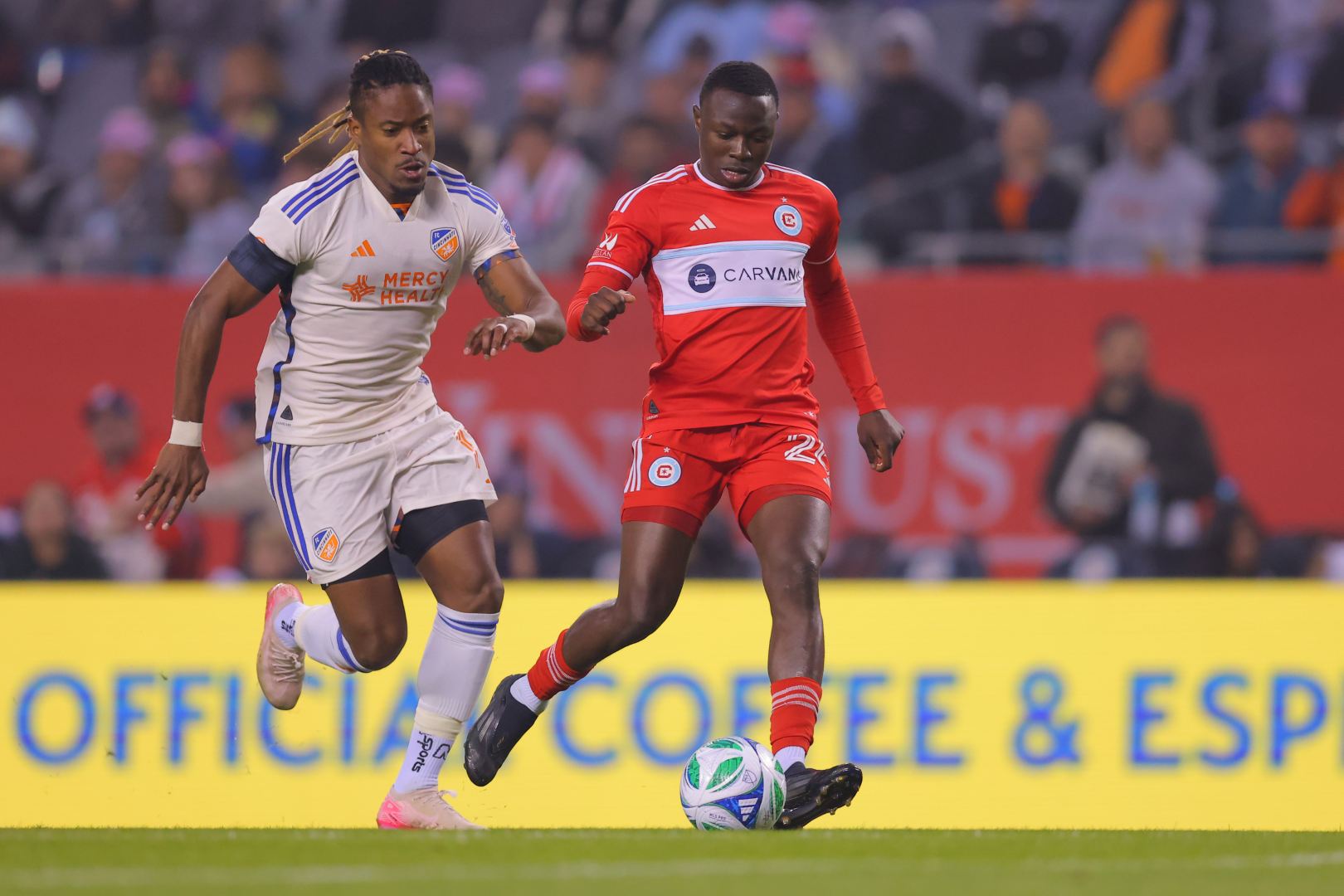
Omari Glasgow, however, had one of the better performances from the Fire during a forgettable night for too many. While Barroso remains out, he's making a case to be the Fire's second-choice player at the position over Jonathan Dean. Dean may be the safer option on defense, but Glasgow is a closer replacement for the offensive parts of the wingback role that Barroso brings.
5. You can’t trust every number you see
There’s an old saying – “lies, damn lies, and statistics.” Statistics, including increasingly advanced metrics, are a useful tool but no number in isolation – other than the scoreline – is ever definitive. Numbers like expected goals (xG) can be useful in ascertaining how a team performed but don’t ever tell the story of a game – instead, they’re a tool that can be used to help tell the story.
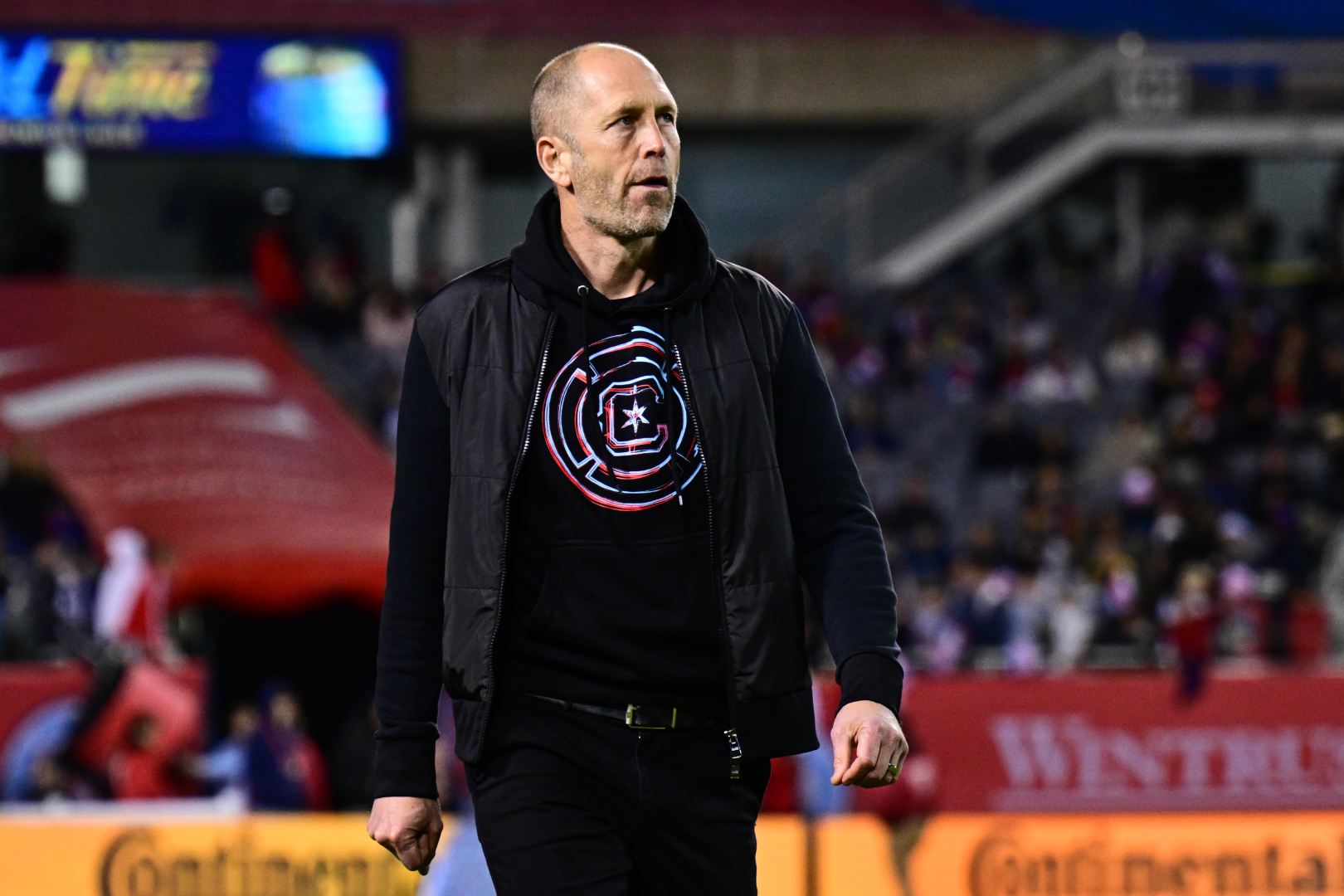
When MIR97 Media asked Berhalter after the match what he thought was lacking in the team’s offensive performance, he said “it’s not a segmented game, right?,” before asking reporters “What was [Cincinnati’s] xG, anyone have an idea?” When this reporter responded with Cincinnati’s sub-two goal performance by that metric (they ended the night with xG of 1.37, including 1.17 from open play, compared to the Fire’s 2.34 xG, including 1.55 xG when excluding Gutiérrez’s penalty), Berhalter went on: “Well, whatever it was, it was too high. We gave them too many clear chances. We gifted them goals. And you can't do that against a team like Cincinnati and win.”
Ultimately, that’s true: All three of Cincinnati’s goals came off of low-percentage shots, but too many of those shots came off of giveaways. Something Brady mentioned when he faced is that as a result of the giveaways, the Fire’s defense wasn’t in position. That means, in turn, that Brady himself can’t be where he wants to be to stop a shot from that angle.
Because Brady was effectively left hung out to dry too often, it looks like a terrible performance for the young netminder by most metrics. While there’s certainly more he could have done, particularly on Evander’s second goal of the night, ultimately, Brady played fine, making six saves, and his poor numbers on the stats sheet are due to team performance around him.
You can’t trust every number you see, especially without context.