5 Things We Learned: Chicago Fire vs. St. Louis City
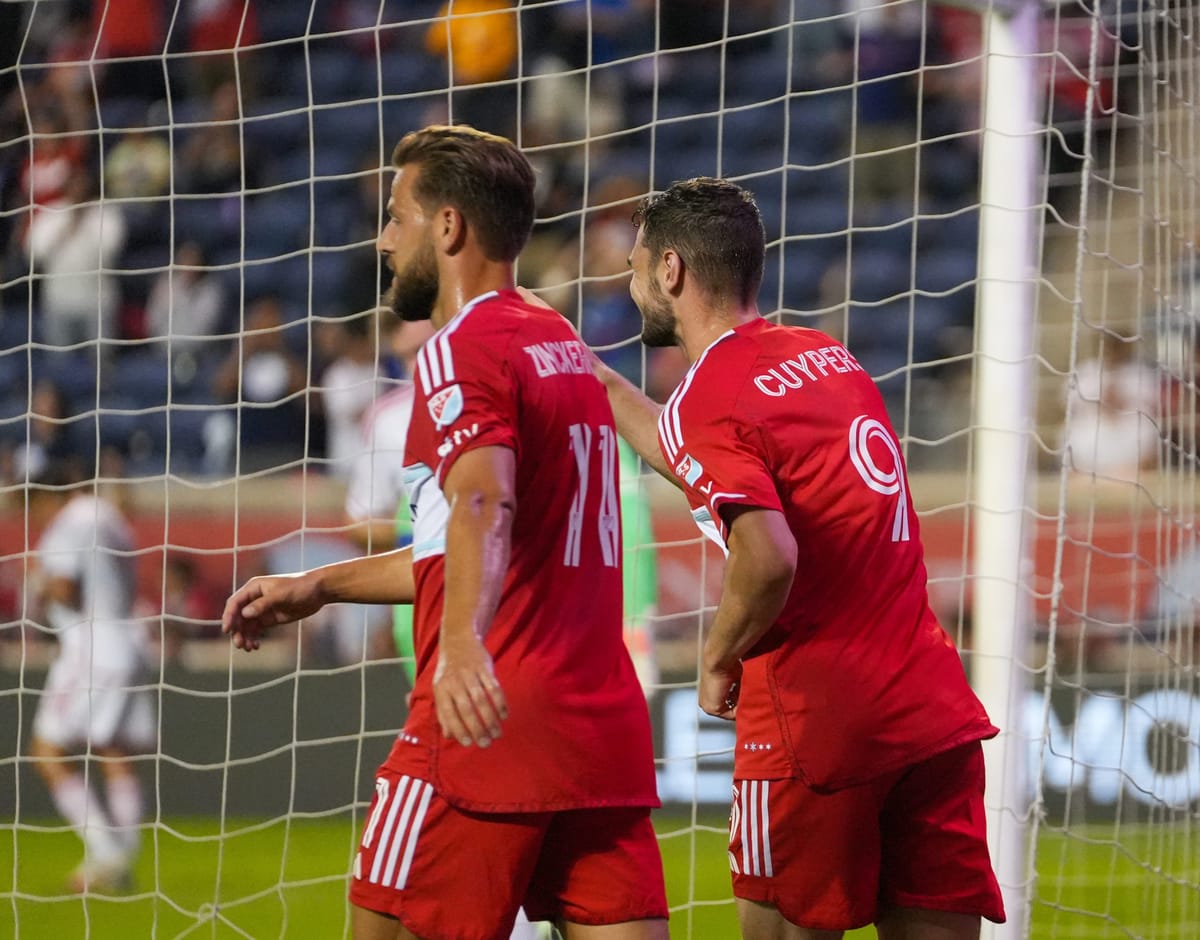
Neither rain nor thunder nor St. Louis could keep the Chicago Fire from victory Saturday night in the team’s second league match at SeatGeek Stadium this year. Brian Gutiérrez scored a game winner and added an assist, Philip Zinckernagel continued his All-Star form and Gregg Berhalter’s side completed their first come-from-behind victory since March 15th against Toronto.
Here’s five things we learned on a hot, rainy night in Bridgeview.
1. The new stadium can’t come soon enough
After the Fire’s second game in a row at SeatGeek, the pluses – and minuses – of playing in the soccer-specific stadium are becoming obvious.
Being a soccer-specific facility, sized for MLS, is an advantage. “It’s a decent stadium that gets filled easily, because it’s smaller and it makes it a more intimate atmosphere, which is nice for football,” Philip Zinckernagel said after the match.
Still, SeatGeek has a number of issues, some of which directly impact the game played. The pitch, which last week LAFC’s Ryan Hollingshead said “felt like each step, it had an extra 20 pounds on your feet,” – something that Zinckernagel agreed with – was in worse shape. Even before the rain, it had clear bare spots and other areas where the grass still looked long. After the rain, the poor pitch quality felt like it actively impeded the Fire’s more possession- and skill-based attacking plan, to the benefit of St. Louis’s transition and counterattacking style.
Before the match, Zinckernagel also noted that Soldier Field’s pitch is “more tough, more hard and firm… it’s more bumpy, for sure,” as the pitch has struggled to recover after a summer that has seen the venue host a full slate of concerts. When the Fire do return to their nominal home, Soldier Field will have hosted four more concerts and two Bears games. That will do little to improve the quality of the field – it’s difficult to justify calling it a “pitch” with gridiron lines on it.
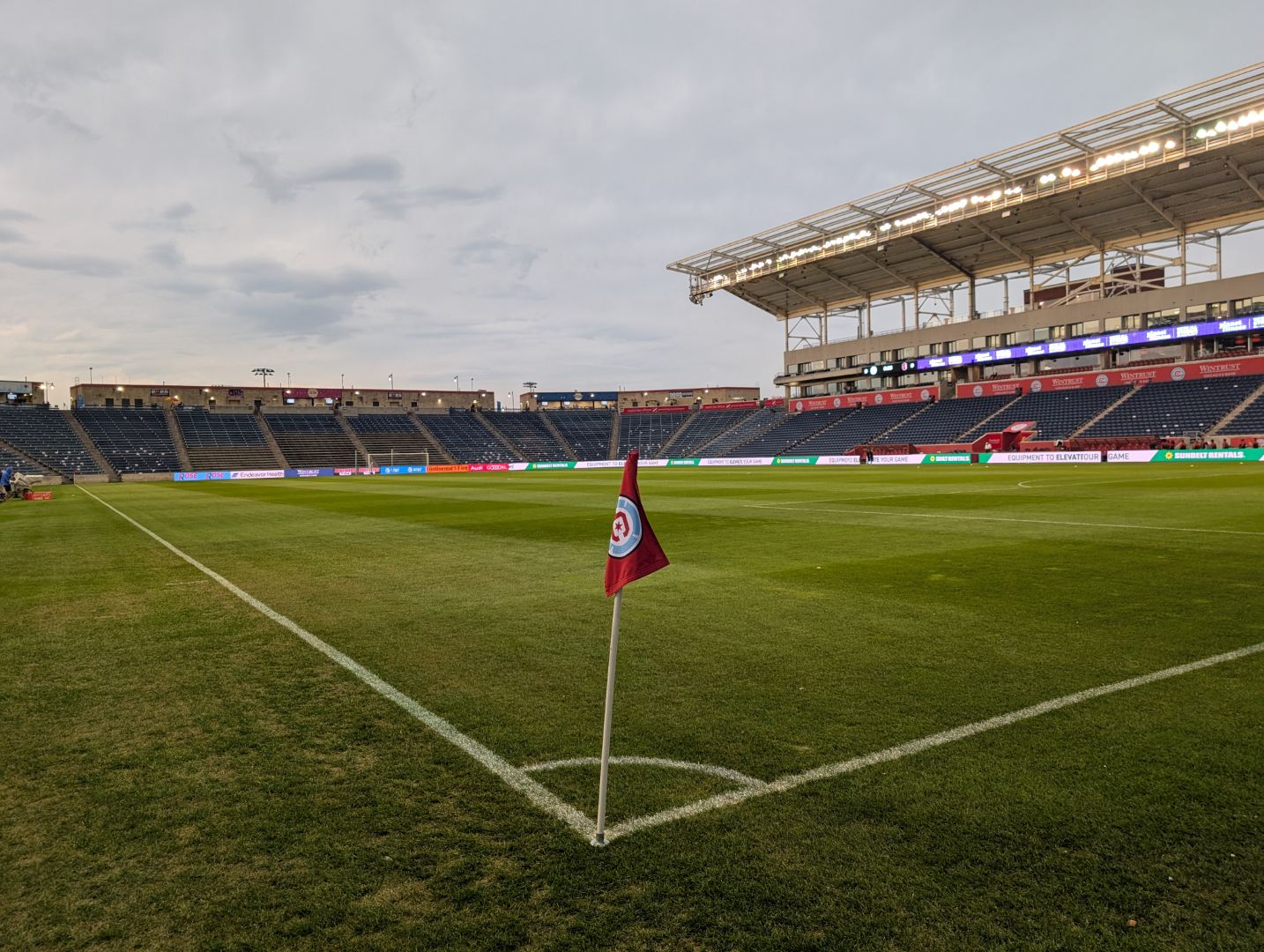
Pitch quality isn’t the only issue with SeatGeek, however: the 19-year-old stadium has real limits for fans – including safety and comfort. After fans’ entrance to the stadium was delayed due to thunderstorms in the area, they were again asked to leave their seats and shelter in place before kickoff. That’s hard to do at SeatGeek, however, where the facility – built on a sub-$100m budget (roughly $150m today) – has no protection from the elements in concourses or common areas.
Facing no better solution, fans were told to return to their vehicles if possible before being allowed to return. With the sound system at SeatGeek being somewhat quiet, the most obvious way fans could have received this information was from the video board – a temporary video board brought in after issues with SeatGeek’s permanent screen rendered it unusable.
And lightning in the area has returned, so we're back to a delay.
Stay safe, #cf97 #VamosFire
[image or embed]
Both SeatGeek and Soldier Field suffer from being built on budgets when new and having not been well-maintained or updated since. While many of these problems can be solved with money, some, like SeatGeek’s location or Soldier Field’s nature as a municipally-owned facility outside of team control – can’t.
Nobody put it better than Zinckernagel: “I think Chicago belongs in Chicago. I think we prefer to be downtown. I think it brings some sort of imagination for how nice the new stadium can be: this type of close-together stadium, just downtown, which is obviously the perfect solution.”
2. This is still the same Chicago Fire team of 2025
Early in the year, the Fire came out storming with one of the most dynamic (and certainly the most-improved) offenses in the league, but defensive lapses were costing them points.
Over time, the defense got better, but still have been guilty of allowing simple – and sometimes dumb – mistakes of costing the team (see: how the team managed to go down to 10 men against Minnesota United, ending their promising U.S. Open Cup run).
Overall, though, the narrative has become that although the team might struggle to get results against the best teams in the league (though they did manage a point against LAFC last week alongside a victory against Vancouver and a draw against Inter Miami earlier in the season), they can mostly take care of business against the middle and bottom of the table.
But man, have they not made it easy on themselves: Against St. Louis, a team with the third worst record in the league, the Fire gave up a lead and then went behind before fighting their way to victory.
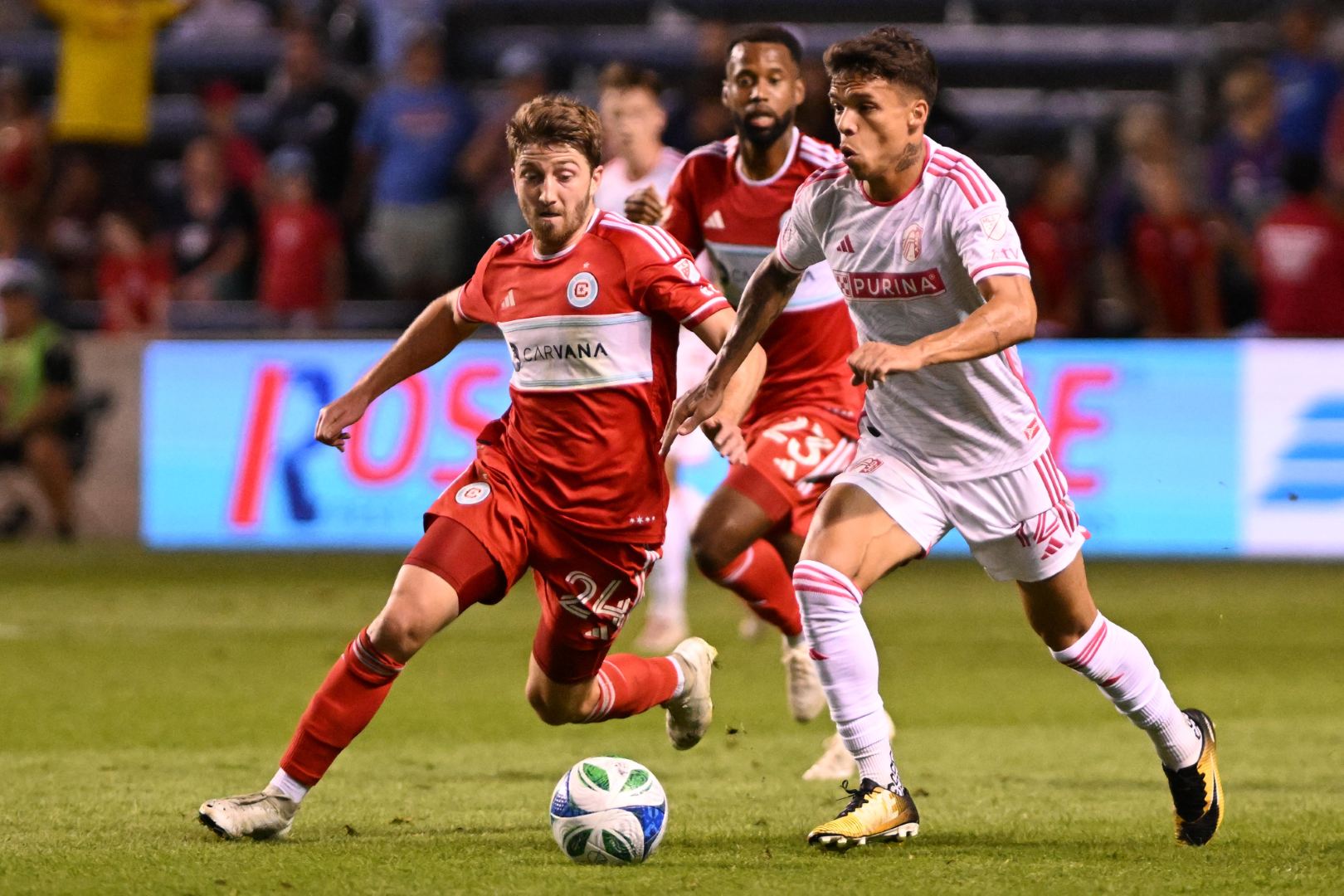
Glass half full: The win gave the Fire their second five game undefeated streak of the season following three wins and two draws throughout March. Glass half empty: The Fire also had two stretches of five games undefeated in 2022 and wound up in 12th place in the conference and out of the playoffs.
While they aren’t likely to finish that low in the standings this year and the Fire are in control of their own destiny, the margin is narrow. They have just three games against opponents that are largely out of the playoff picture: Two against New England and at home against Toronto. Even winning all three of those games may not be enough: The postseason line on a points-per-game basis is currently at a record-setting 49 points, and although its likely that opponents around them will stumble, the fact of the matter is that the team doesn’t want to put itself in a position of needing three points and a win on Decision Day away at New England at the end of the season.
Longtime Fire fans have enough memories of the Fire playing games in the fall in Foxborough to know that that isn’t a situation the team wants to put itself in.
3. Gutiérrez can change the game for the Fire
Between written articles and The Bonfire podcast, a common refrain from MIR97 about Brian Gutiérrez this season is that despite his talent level, he hadn’t really single-handedly changed the game for the Fire this season.
That changed Saturday night in Bridgeview, where Gutiérrez scored a late game winner that kept the Fire in a postseason spot. The goal, his eighth of the season, was the first game winner for the Fire homegrown in 2025. The tally capped off a performance where the Fire homegrown also got an assist – his third of the season – on the opening goal of the night, marking the third time this year that the Fire homegrown had multiple goal contributions in a single match.
On top of the offense, Gutiérrez also contributed defensively – words that would have been unimaginable to write last season. He had four recoveries and won three tackles over the course of the match, where he played the full 90 minutes for the second week in a row.
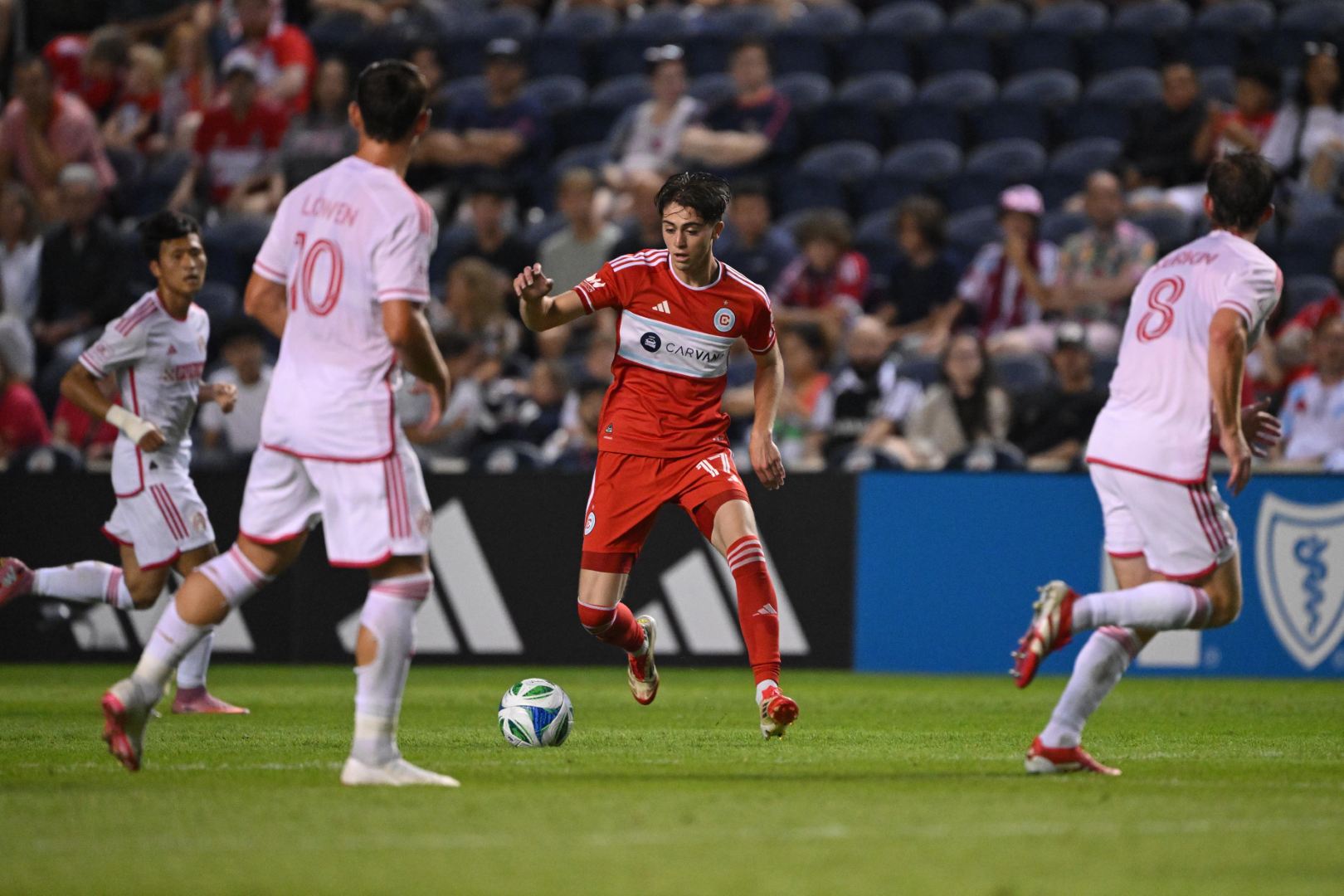
His defending was far from perfect – he lost two tackles, both in the Fire’s box, including the one that led to St. Louis’s equalizing goal in the 47th minute. With the Fire defending on the “hard end” of the pitch(see point 1 above) in the second half, Gutiérrez got a toe on the ball but then it ping-ponged around his legs before Tomas Ostrák got it back and sent it past Brady. That might not be on the Berwyn native, but the fact that between the time he lost the tackle and Ostrák’s shot, he froze, with Djé D’Avilla too far to get in on the Czech midfielder and Gutman sprawled on the ground.
It also wasn’t the kind of game where it ever felt like Gutiérrez single-handedly (footedly?) took the team on his back to create a victory, benefiting from good service from Zinckernagel on the winning goal. Then again, it didn’t have to be, and it’s still a positive seeing Gutiérrez having an eye for goal, something we didn’t see from him earlier in his career.
4. … but Zinckernagel still can steal the show
Two Fire players had both a goal and an assist Saturday night. Brian Gutiérrez was one. Philip Zinckernagel was the other.
Zinckernagel continued his historic season, scoring his 11th goal and adding his 13th assist of the year – tying him with Ante Razov (18 goals, six assists in 2000) on the #2 spot for single-season goal contributions by a Fire player. His also just four goal contributions behind the team record set by Nemanja Nikolić in 2017 with eight games left on the schedule.
Against St. Louis, Zinckernagel surpassed Diego Gutiérrez (12 assists in 1998) for the #2 place for most assists by a Fire player in a single season, putting him just one assist behind the team record co-owned by Jerzy Podbrożny (in 1998) and Piotr Nowak (in 2000). Zinckernagel’s tally is rendered all the more impressive by the fact that early in MLS’s history, the rules for what counted as a secondary assist were significantly looser than they are today.
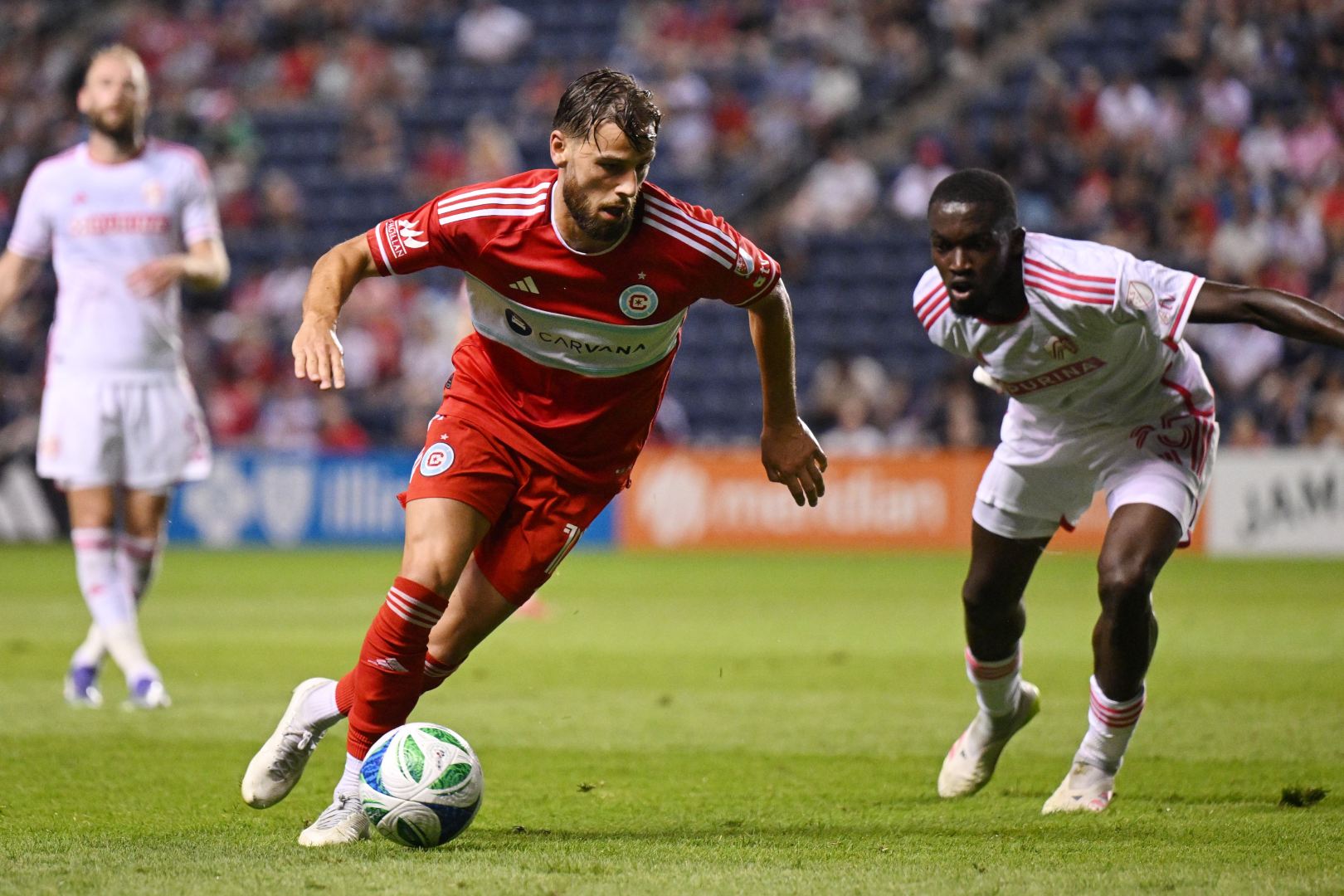
“He’s great,” Berhalter said of the All-Star winger. “I think he can get to 15 [goals] and 15 [assists] before the year is over. There’s not too many people in the league that can do that. He’s been a consistent contributor to our offense,” crediting Zinckernagel’s “winning mentality” with helping the group. If Zinckernagel meets the numbers set by his coach, he’ll have had the single best offensive seasons for the Fire in team history.
Quiz time: Out of the two players with a goal and on the assist for the Fire against St. Louis, which one had the more important game?
Is it the homegrown player whose (secondary) assist helped his team open scoring early and went on to score the game winner late, getting a quick shot off from distance – but may have let the opponent find the equalizer – and find new life – early in the second-half after it felt like the Fire, according to Berhalter were “in control of the game?”
Or is the man of the match the veteran player in his first year with the team who set up that game winner with a (primary) assist and scored the equalizer for his squad just seven minutes after the team went down for the first time in the match, and who didn’t really have a foot out of place for the team defensively?
Option A, Brian Gutiérrez, was given the match ball for his performance by Berhalter. Option B, Philip Zinckernagel, had the better game statistically on American Soccer Analysis’s Goals Added (g+) metric, the best single number in the business for quantifying a player’s performance.
But, dear reader, it’s a trick question: It’s Zinckernagel, because of this. (MIR97 doesn’t normally discuss pitch invaders because well, that’s not something we want to see happening and don’t want to give them the attention, but well, every rule has exceptions.)
https://twitter.com/amcalabrese12/status/1956919792117416305
He’s a gentleman and a scorer, folks.
5. The Fire have their new No. 10
Although the Fire had previously announced that André Franco would be coming to the Fire on loan for the rest of the season, he was officially unveiled – though not in the lineup – for the Fire at SeatGeek Stadium Saturday night.
Although the weather delay scuttled plans for a pre-match unveiling that probably would have felt more ceremonious, Franco was welcomed by Fire fans at halftime as he was photographed carrying a Fire jersey with his name and the number 10 on the back.

At one point, it seemed like that was the number that would be worn by Manchester City legend Kevin de Bruyne, rather than a loanee from Portugal who was never able to find favor with his club after a reported €4 move earlier in his career.
Still, that club was FC Porto, one of the biggest clubs in Europe, a former Champions League winner whose squad is valued like a number of teams in the Premier League. Franco joined Porto with longtime coach Sérgio Conceição at the helm but after just one season, Conceição left after a change in leadership at the club, despite having just been signed to a new eight year deal. Since then, it’s been a rotating cast at manager, and in those situations, it’s often hard for players to find real opportunities for minutes.
How did the Fire get him? Well, here’s what Gregg Berhalter had to say earlier shortly after the signing was announced.
“Yeah, it's interesting because this is a player that contacted us, and through a connection with Felipe [Çelikkaya], reached out to him and said, hey, I would love to come to MLS. I would love to come to Chicago.”
I’m just going to put that down again: He contacted the Fire and asked to come here. He’s arriving on a deal that MIR97 Media has confirmed is very cap friendly, both during the loan and if the team make the move permanent. This isn’t an example of a player approaching an MLS team because they think they can get a paycheck at the end of their career, but instead, an in-prime 27-year-old looking to for his next opportunity with the team.
That is a night-and-day difference from where the club was even a year ago under Georg Heitz’s tenure, when the team would regularly overpay for underperforming talent.
Look: I don’t know if Franco will work out for the fire, or if he will have a forgettable handful of games before returning to Europe, and I understand the disappointment that it is him, not a player of de Bruyne, looks like the highest-profile signing for the Fire this summer. (It's likely he is, but I wouldn't stake much money on Berhalter and the Fire front office being out of tricks here. Some, sure. But not anything I'd miss.)
But if you want to see how much things have changed for the Fire this year, run the above back again. Chicago has gone from a place where footballers had to come by begging or bribing (well, overpaying) to one where they’re asking to join.