5 Things We Learned: FC Cincinnati vs. Chicago Fire

The Chicago Fire kicked off their run of 5 games in 14 days last night, travelling to Cincinnati to face the league leaders. It didn’t go to plan as they lost 2-1, but there were several positives to take away from the performance as they went toe-to-toe with MLS’ current best team.
1. Defensive lapses haven’t gone anywhere
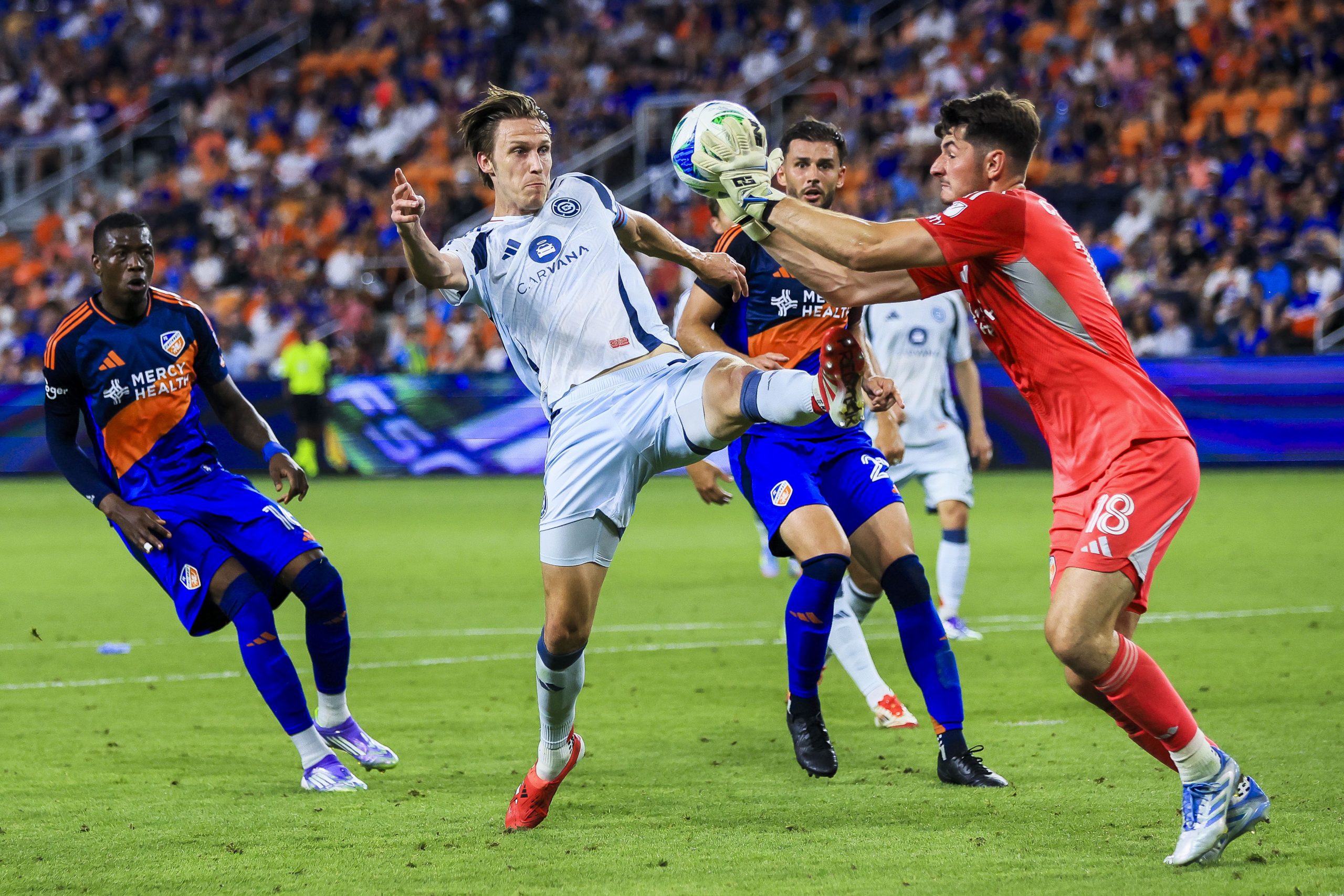
Despite the 2-1 defeat, the Fire were actually the team in control of most of last night’s game. They had a slight 53-47 edge in the possession numbers, but beyond that, they outshot Cincinnati 15-13 and won ten corners to the hosts’ one. Evander Ferreira’s opening goal in the 19th minute came firmly against the run of play but put the Fire in a hole for the rest of the night.
Both Cincinnati goals came from collective defensive lapses in which the Fire failed to shut down space around Cincy’s best players. On the first goal, Evander, an MVP frontrunner, was left with 10 to 15 meters of open space in all directions. Brian Gutiérrez was nominally the left-sided central midfielder at that moment, and he reacted slowly enough that he never came close to closing down Evander. Jack Elliott also failed to fill that gap as Evander charged toward the goal, allowing the Brazilian to rip a shot through the gap between Elliott and Andrew Gutman (who had been pulled wide by a run by DeAndre Yedlin).
The second goal came equally as out of the blue, with Cincinnati once again finding a glaring hole on the Fire’s setup that enabled them to double their lead. Elliott was drawn high up the field in a transition moment, leaving Sam Rogers as the only defender to manage Evander and Kévin Denkey’s lightning-fast two-on-one counter attack. As Kei Kamara arrived at the top of the box, Rogers was left trapped in no man’s land, and Denkey was left unmarked at the back post for a simple finish.
These errors have been present throughout the season and a rotating cast of defensive partners for Elliott due to injury (with Carlos Terán and Christopher Cupps both still out) has not helped. Next week’s return of starting goalkeeper Chris Brady will also help with organization. But a team like Cincinnati will still punish even the slightest errors, and they’re something the Fire will have to clean up however possible.

2. Gutiérrez’s inconsistency hasn’t changed
After an excellent, complete performance in the win over Charlotte and being a spark in the 1-0 loss to Philadelphia, Gutiérrez seemed to be rolling into form in time for this busy stretch. Unfortunately for the Fire, he was a non-factor offensively in Cincinnati and struggled with his defensive responsibilities in the midfield.
As mentioned previously, the 22-year-old bears a fair amount of responsibility for FCC’s first goal. Gutiérrez was the closest midfielder to Evander when he found acres of space to score his goal, and his slow reaction has been a hallmark of his season as a member of the central trio. Even though he again lined up as an attacking #10 for large parts of this game, especially in possession when Andrew Gutman filled into left central midfield, Gutiérrez still has plenty of defensive responsibilities in the system as did not have his best outing in that regard.
Shortcomings out of possession aside, Gutiérrez was also ineffective on the ball. He did not touch the ball inside the penalty box, only recorded three shots from outside the 18 (all of which were blocked before breaching the box), and went 0-for-3 on dribbles. He was also the Fire’s first change, exiting in the 73rd minute for Maren Haile-Selassie.

3. Gutman can excel as an inverted wingback
The most interesting tactical wrinkle against Cincinnati was that of the fullbacks. Pat Noonan has remained committed to a 5-3-2 shape, relying heavily on his star wingbacks DeAndre Yedlin and Luca Orellano on both sides of the ball. Berhalter responded by trying to pack the midfield and get in behind Cincinnati’s full backs.
Andrew Gutman, who has often been tasked with attacking the left wing, was the key part of that approach. Instead of hugging the line and allowing Bamba to drop in the center, Gutman played as a fourth central midfielder in possession. It’s an approach that has become common at the highest levels of the game, but is not something we’ve seen much of yet this season in Chicago. Gutman performed well in that role, suggesting it won’t be the last time the strategy is used.
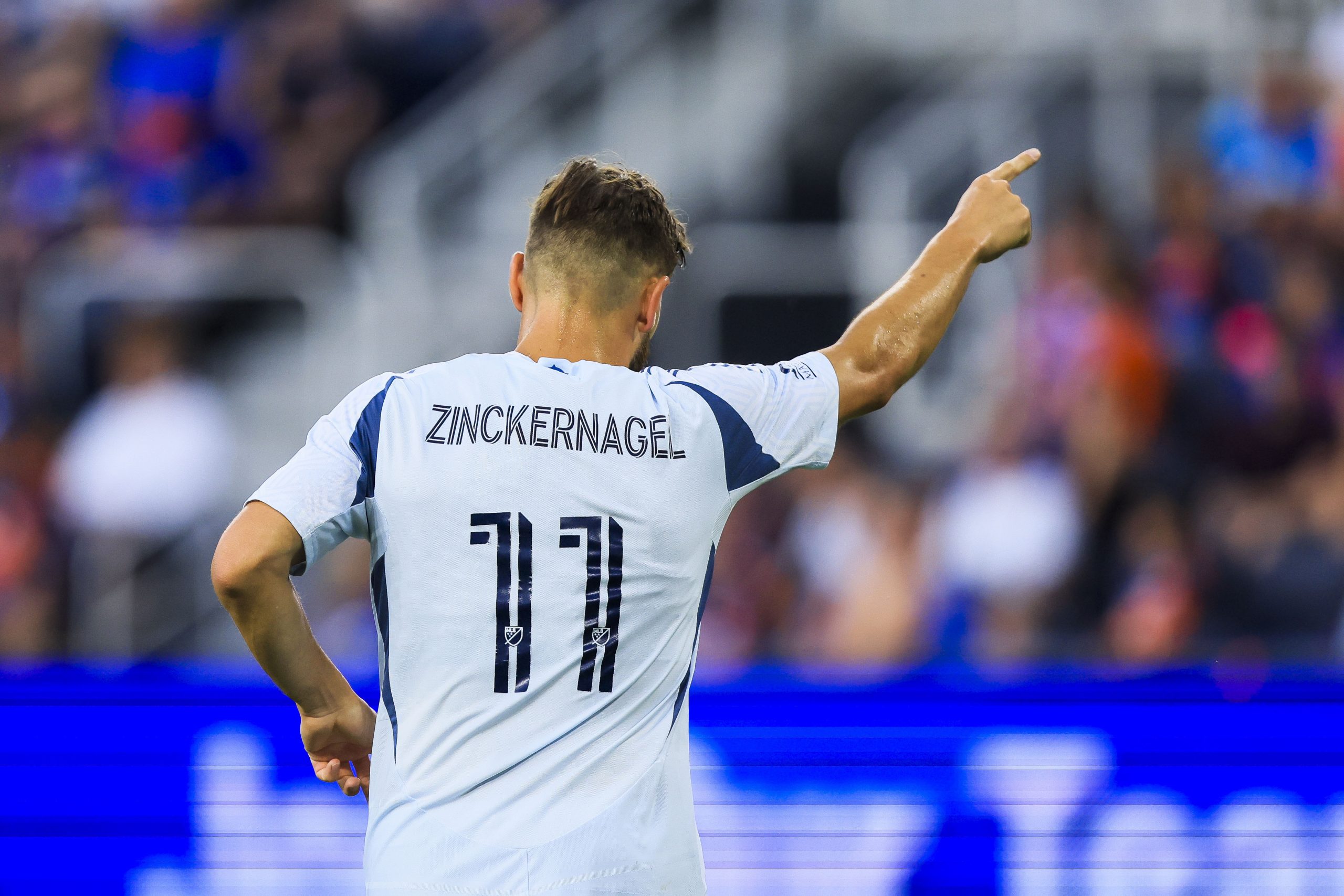
While the result ultimately didn’t follow, Gutman did leave the game with a signature assist, setting up Philip Zinckernagel’s ninth goal of the year. For Gutman, it was his fifth assist of the year, extended a career-high total, and tied his best-ever production of seven goals and assists in MLS. The 28-year-old is continuing to show why he’s among the most important players to Berhalter’s system as he plays some of the best soccer of his career.

4. Unlocking a compact defense remains a challenge
While the Fire got lots of the ball and plenty of opportunities, Cincinnati’s back five held firm for the most part and only let one goal slip through the cracks. That was despite only having one recognized center back in Matt Miazga, with typical options Miles Robinson and Nick Hagglund each missing the game for different reasons.
Even as the Fire hurled numbers forward in the second half, they too often resorted to hopeless balls over the top or long-range efforts. Hugo Cuypers’ best attribute still isn’t aerial balls in the attacking penalty box, so a priority for the Fire must be to get the ball at his feet in the 18-yard box more than they’ve been able to. Against Cincy, the Belgian had just two touches in the box.
In three of the Fire’s last four games, they’ve been victim to a compact defense that they were unable to unlock. Nashville, Philadelphia, and Cincinnati – the three best teams in the Eastern Conference (and Major League Soccer as a whole) – have all effectively identified this and limited the Fire to just one goal across 270 minutes of play. Cuypers has been made anonymous in those outings. Once this limitation can be sorted, the Fire will have the piece they’re missing to compete with the league’s best, and it might just be a new creator in the middle of the park.

5. Berhalter isn’t afraid to go all-in
The Fire have been excellent on the road this season, and even in defeat, they’ve looked dangerous. In the final stages against Cincinnati, Berhalter went all-out attack in a game he felt the Fire could have won, similarly to how he pushed all his chips across the table in what was ultimately a similar 2-1 loss at the New York Red Bulls in April.
On Saturday, the Fire finished the game in a hyper-attacking 4-2-4 shape. Andrew Gutman and Jonathan Dean were both joining the attack as attacking full backs, and for roughly 15 minutes, star winger Philip Zinckernagel was lining up as a member of a two-man midfield alongside Mauricio Pineda. The Dane has appeared in midfield once this season, as a #10 in the 7-1 win over D.C. United, but never with that much responsibility in a “desperation mode” formation.
Even though FCC is one of the top teams in MLS, and TQL Stadium is a difficult place to play away, Berhalter demonstrated in the second half that he thought it was a winnable game, and was willing to take the risks that could make that happen. It didn’t, and they came up just short, but the willingness to go all-in on trying to scramble in an equalizing goal by throwing numbers forward into the attack is a change from years past and a sign that the Fire are closer to competing with the top teams in the East than we thought.