5 Things We Learned: New England Revolution 2, Chicago Fire 2
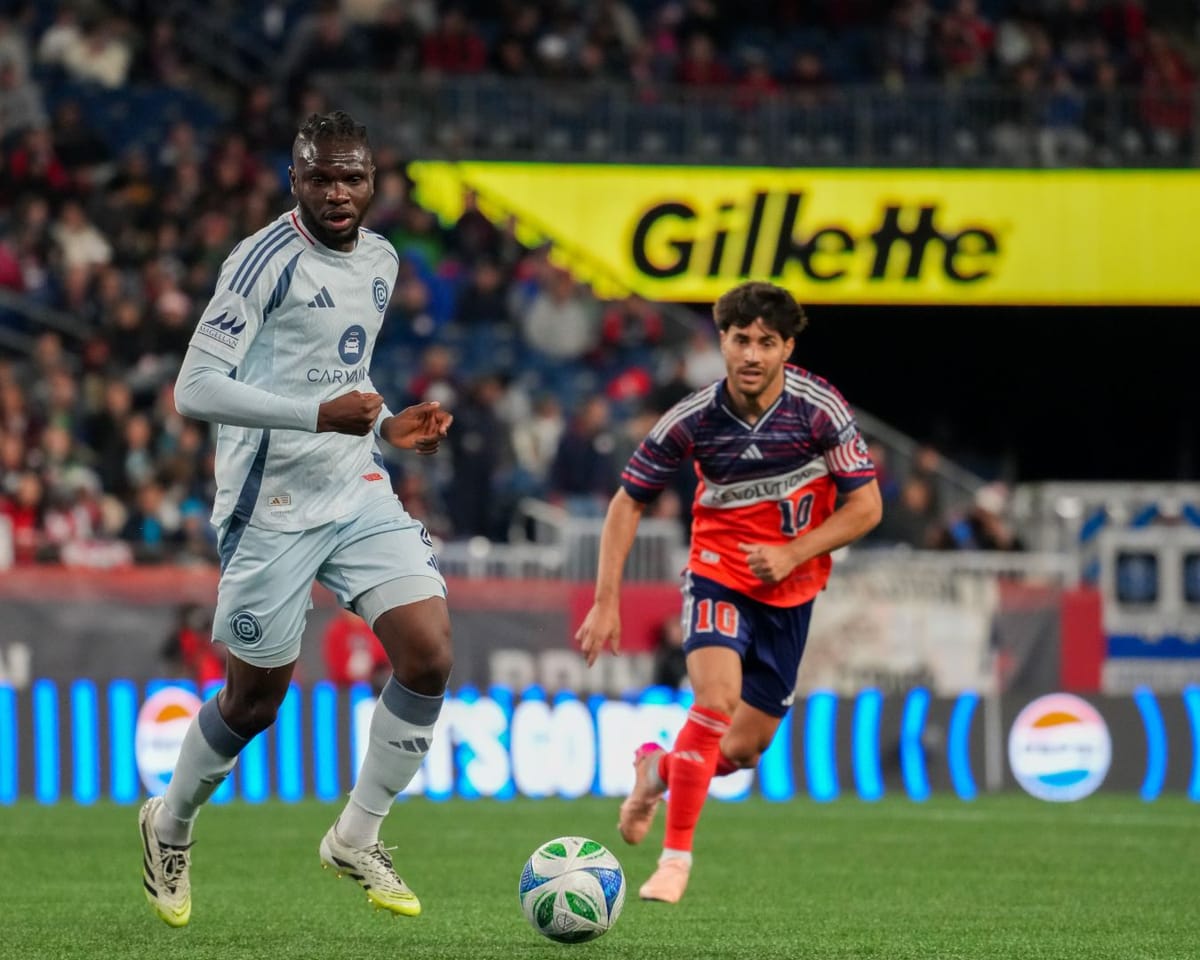
The Chicago Fire’s 2025 regular season ended not with a bang nor with a whimper but rather, something in between. A late, clutch goal – scored by the prolific, if tragically under-recognized, Own Goal, but coming off of Philip Zinckernagel and Joel Waterman – secured a draw for the Fire where the team had to battle back twice to get a result.
The point was enough to secure the team eighth place in the Eastern Conference, the team’s highest finish since 2019, when the Fire finished with 42 points in what was then a 24 team league. That means the team are now riding a five game undefeated streak into the postseason, starting with a must-win meetup against Orlando City at SeatGeek Stadium, where the Fire are undefeated in 2025.
With 3,060 minutes now in the books, we’re still learning more about this Chicago Fire team – here’s five things we learned from the action last night in Foxborough.
1) Bad habits are hard to break
In their first game of the season, the Chicago Fire came out flying against the Columbus Crew, with Jonathan Bamba’s dynamic play on the left wing a surprise to almost everyone watching – including those on the pitch in yellow, as the Crew saw Bamba set up Brian Gutiérrez for two goals in the first half. In far too many other games, however, particularly early in the season, the Fire often took 15, 20, or even 30 minutes to grow into the game.
That’s a habit the team had mostly grown out of, but it flared up again in Foxborough on Decision Day – and it was a particularly nasty case of it. Center back Joel Waterman said simply, “we weren’t good in the first half at all.” That’s a fair – if not actually generous – assessment of the Men In Red’s play for the first 45 minutes.
The game started off entirely wrong for the Fire, giving up a first minute goal after trying to build out from the back – another bad habit that had cost the Fire dearly early in the campaign but which the team had mostly been able to grow past. Playing down a goal, the Fire seemed completely unable to organize themselves to break down New England’s low block. As a result, the Fire entered the half with just two shots – neither on target – and 0.11 expected goals (xG) per MLS’s statistics.

Give the Fire get credit for battling back – twice – in the second half and Gregg Berhalter should get also credit for changing things up at the intermission (more on this in a bit), but the simple fact is, neither of those bad habits can re-emerge from this point onwards on unless the Fire want to make their first trip to the postseason a short one.
2) The Fire can’t come from behind with a back five
We previously called this the “chicken and egg” problem for the Fire: The Fire had notable wins against Minnesota, Inter Miami and the Columbus Crew – all but ending the Supporters Shield chances two of those teams – after the team made two changes: The team started playing three central defenders in the back, and André Franco in the midfield. So which was it that led to the success? The back five or the play of Franco?
After the Fire’s last game Toronto – also a 2-2 draw against an opponent whose season ended on Decision Day – we talked about Berhalter’s willingness to stick with the formation even without Franco. It wasn’t a perfect experiment, however: The game came when the Fire were on short rest, having played midweek against Inter Miami, forcing some rotation from Gregg Berhalter.
Last night, Berhalter again started three center backs, though this time, it was Rominigue Kouamé and Djé D’Avilla instead of Sergio Oregel Jr. and Mauricio Pineda in the midfield. Last time, we said that a draw technically made the experiment “void,” but let’s be honest: we’ve seen enough.
For the second game in a row, Berhalter switched up formations during the game, and for the second game in a row, the Fire got on the scoreboard shortly after moving to a back four from a back five. Against Toronto, the shift came in the 61st minute. Last night in Foxborough, the switch came at half.
Explaining why the formation looked ineffective against the Revs, Berhalter called it a “very preventative shape, and [when] you’re behind, it doesn’t help you that much. So we needed to be more aggressive in the second half, therefore, we had to change formation.”
That’s true as far as it goes. During the team’s wins playing in a back five, the team never trailed, so never had to break down a team sitting back and defending a lead. Still, looking at the game played on the pitch, it felt like the team was capable of doing that with Franco pulling the strings in the midfield. Without him, they haven’t looked like that.
Berhalter now has a choice against Orlando, a team that finished the regular season sixth in goals for but in a three way tie for 13th in goals against: He could start some variation of a 3-4-3 or 3-5-2, possibly with a different midfield setup – we still haven’t seen Brian Gutiérrez as the attacking midfielder in that formation – possibly because with just two midfielders, both need to be able to take care of business defending to a greater extent than we’ve seen consistently from the Fire homegrown. That essentially plays it “safe,” hoping the Fire don’t go down by a goal. Or Berhalter could just start where the last two games have ended, playing out of a 4-3-3 that the team relied on before Franco’s first start for the Fire in September.

Considering how little of a spark the Fire have shown in a 3-4-3 in the past two games, against an Óscar Pareja team that has been content to sit back defensively (often to their own detriment), I know what I’d do in the situation.
3) This team goes as far as Philip Zinckernagel takes them
The Fire have plenty of attacking talent – but when they need to get something started, the burden all too often falls on the shoulders of Philip Zinckernagel, the team’s Golden Boot winner in the 2025 season.
The winger has made a case for best newcomer in 2025, notching his 30th goal contribution against New England – the first time any Fire player has reached that mark – and making the undisputed case for the team MVP award. After the game, Berhalter said, “sometimes when we’re struggling, he’s struggling. And you know how Phil goes, the team usually goes,” adding that “We need him in the playoffs to be who he is” if the Fire want to continue through the postseason.

The Fire aren't the first team to rely on their star to have a chance to make a postseason run, but especially since the injury to André Franco it seems the weight on the Dane’s shoulder has increased significantly. After contributing both assists on Jack Elliott’s brace against Toronto, once again, when the team needed a spark, it came from Zinckernagel.
His goal in the 81st minute not only leveled things for the Fire, it seemed to breathe new energy into the rest of the squad. On the restart, the Fire’s intensity level ratcheted up another notch, and it felt like the team had a good chance of going ahead for the first time in the game.
As the Fire welcome Orlando City to Seat Geek Stadium midweek, if the Fire do need one player to carry the load of all 11 men on the pitch, there’s every chance that it will be the man wearing the no. 11 shirt who does it.
4) Joel Waterman is the center back the Fire needed this year
One thing we’ve said time and time again – in particular on The Bonfire – is that the Fire have precious few players who can play with an edge on the squad. While we’ve seen intensity on the pitch, the team has very, very few players who can dabble in the Dark Arts to get under the skin of opposition.
As a result, we’ve argued that it makes sense to throw Kellyn Acosta into the lineup, because he can bring that brand of craphousery into games – typically without getting sent off as a result, something that has been a challenge for ahem some other players on the squad. That’s an important skill, particularly since some of the Fire’s talented players are liable to getting bullied on the pitch. With Acosta on the bench, however, the Fire have had no one who can really fill that role.
Enter Joel Waterman.
After a rough outing in his first match, Waterman has found his role as the tough, no nonsense center back to pair alongside the more technical Jack Elliott. After the match, when asked about the presence Waterman brings to the squad Berhalter said “the second half turnaround wasn't just because of the goals,” but rather it was from the “aggressiveness demonstrated by a lot of guys ,but especially Joel.”
The mentality Waterman brings to the back line offers not only the veteran calm and stability that allows Jack Elliott to play at his best, but the aggressiveness and edge that allows the Fire to cut back against opponents when games get hotly contested. You blend together that mentality with the ability of Waterman, and it quickly shows the reasons why the back line has improved in recent weeks.

That’s exactly the kind of presence the Fire needed throughout 2025, with Sam Rogers adapting to the league in his first real season in MLS, and Carlos Terán unavailable – and gaffe prone when he was.
The chances that the Fire’s first trip to the postseason will be a lengthy one goes up significantly with Waterman in the squad, and his role as one of the only Fire players
5) The Fire still have a lot of lessons to learn
The Fire have achieved their stated goal for the 2025 campaign: Making the postseason. Berhalter and the rest of the team’s front office have also set the team up for more success in 2026 and beyond, reworking more than half the roster while also providing a framework that has led to career years from a number of returning players, including Andrew Gutman and Brian Gutiérrez.
Despite that success, the Fire still have a lot of lessons to learn. That’s especially true now that much of the squad is entering what, for them, are uncharted waters: The postseason.
Reflecting on the flat start from his squad Saturday night, Berhalter said “The biggest thing we're taking away is…learning about the start of the game and what [they] need to look like, and so I think it's going to help us moving forward.”
Half of the squad are newcomers to the Fire, and many significant contributors – including the aforementioned Zinckernagel – are newcomers to the league as a whole. Combined with the Fire’s playoff drought before this season, that means that playoff experience on the squad is scant: Of the Fire’s recent starters, only Jack Elliott and Joel Waterman have significant time in the MLS postseason. While the team does have other veteran presences in the locker room – notably, Kellyn Acosta and Omar González have both won MLS Cup – for most of the players likely to be on the pitch from here on out, the postseason will be a new experience.

The big test for the rest of 2025 is whether the Fire will be able to learn new lessons while also putting together results in intensely-fought playoff matches.