Academy Products Power Chicago Fire’s Rise In Historic Fashion
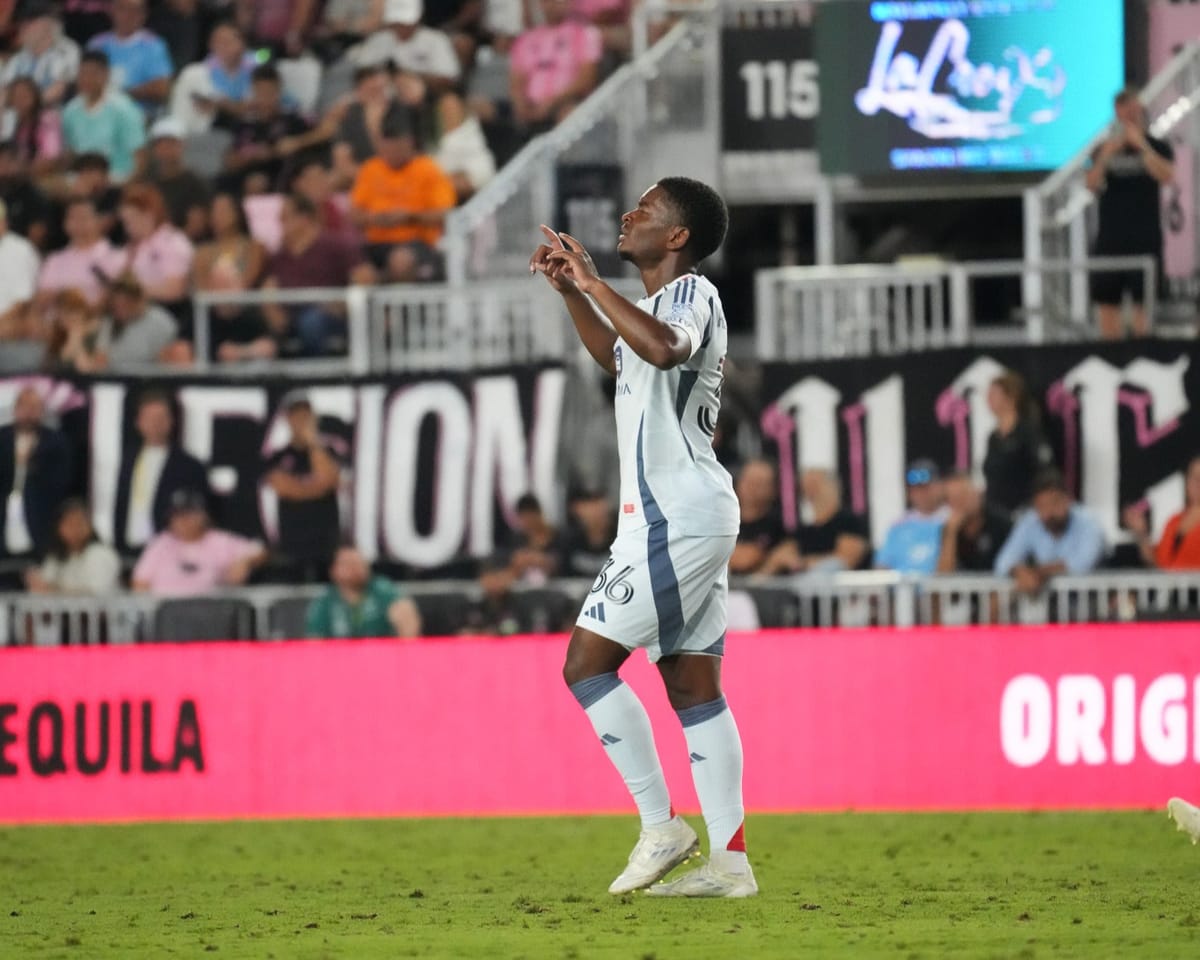
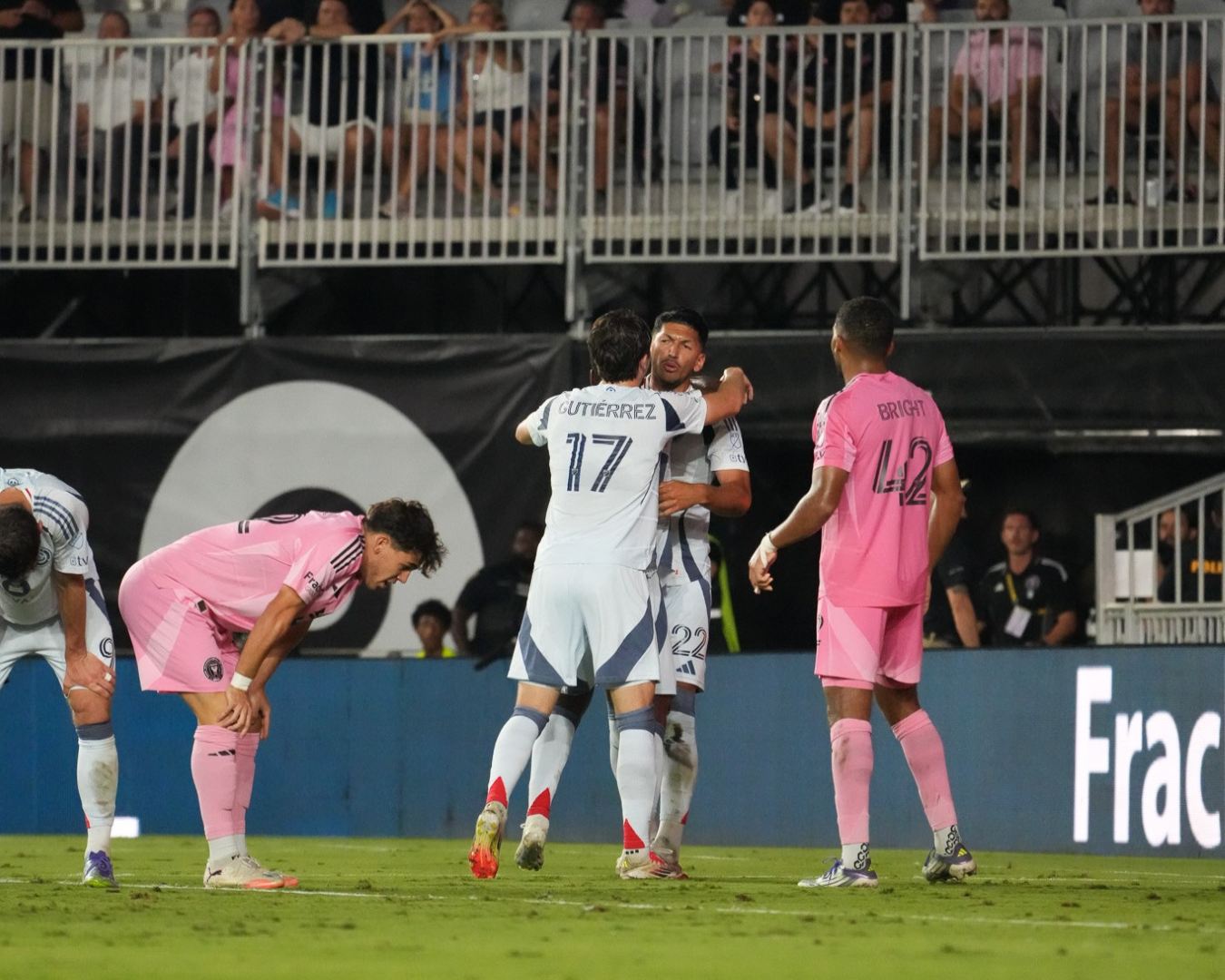
Tuesday night at Chase Stadium in Ft. Lauderdale, when Justin Reynolds scored the game winner over Inter Miami with a redirection off a perfectly-timed pass from Mauricio Pineda on a play set up by Brian Gutiérrez, the trio were part of something historic in the history of Major League Soccer.
No, it wasn’t qualifying for the postseason – something that, while a salve to a long-suffering fanbase, is still accomplished by 18 teams every year. Nor is it the 64 goals that the team has scored – a figure that is still second to Inter Miami’s total of 68 this season.
Instead, the three Fire homegrowns involved in the goal were playing as part of a total of 10,776 minutes played players who developed primarily in the Chicago Fire academy as youth in the 2025 season. That eclipses the previous record of 10,304 set by Real Salt Lake in 2021 for the most in league history. (The Seattle Sounders had a total of 12,349 minutes in 2024 from players who had been in their academy, however, that total includes 4,222 minutes from Jackson Ragen and Paul Rothrock who joined the academy at 17 and moved to the team now known as Tacoma Defiance within a year. The bulk of both players' youth careers was spent at Seattle United, the elite development club from the Seattle Youth Soccer Association.)
The Fire's total represents more than one-third of the team’s total squad minutes this year and is more than the single-season number achieved by the much-lauded academies in Philadelphia or Dallas, and reflects the team’s philosophy under owner Joe Mansueto.
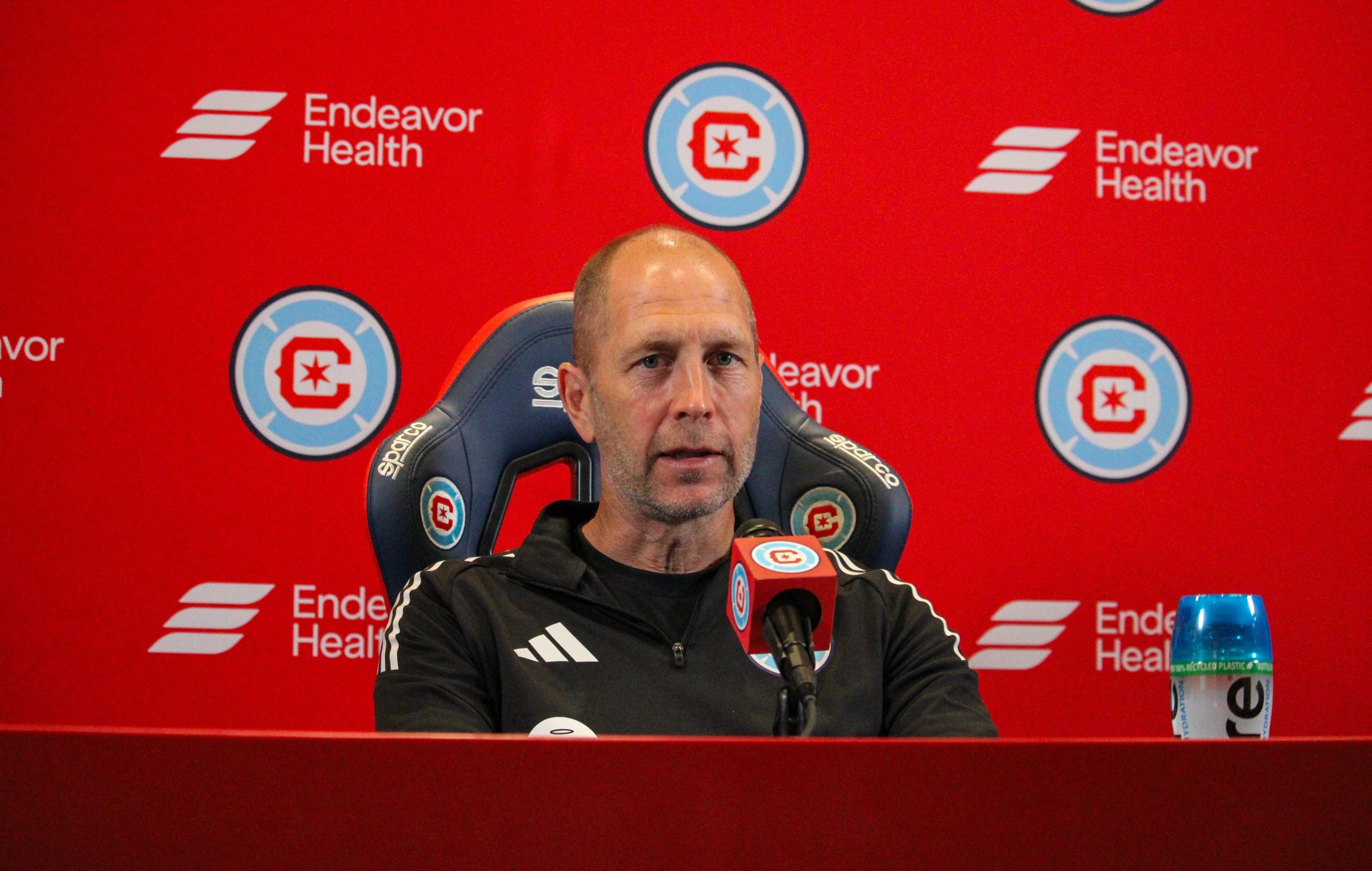
Reflecting on the importance of homegrowns to the team’s roster, Gregg Berhalter, who serves both as a coach of the first team and as the director of the sporting side of the organization, said “You know, for us, the connections between the City, I can't stress this enough, building the connection with the city is extremely important. You know, one thing I've learned about Chicago is they take care of their own and they like to stick together and for us, it's really important to have Homegrown products on the field.”
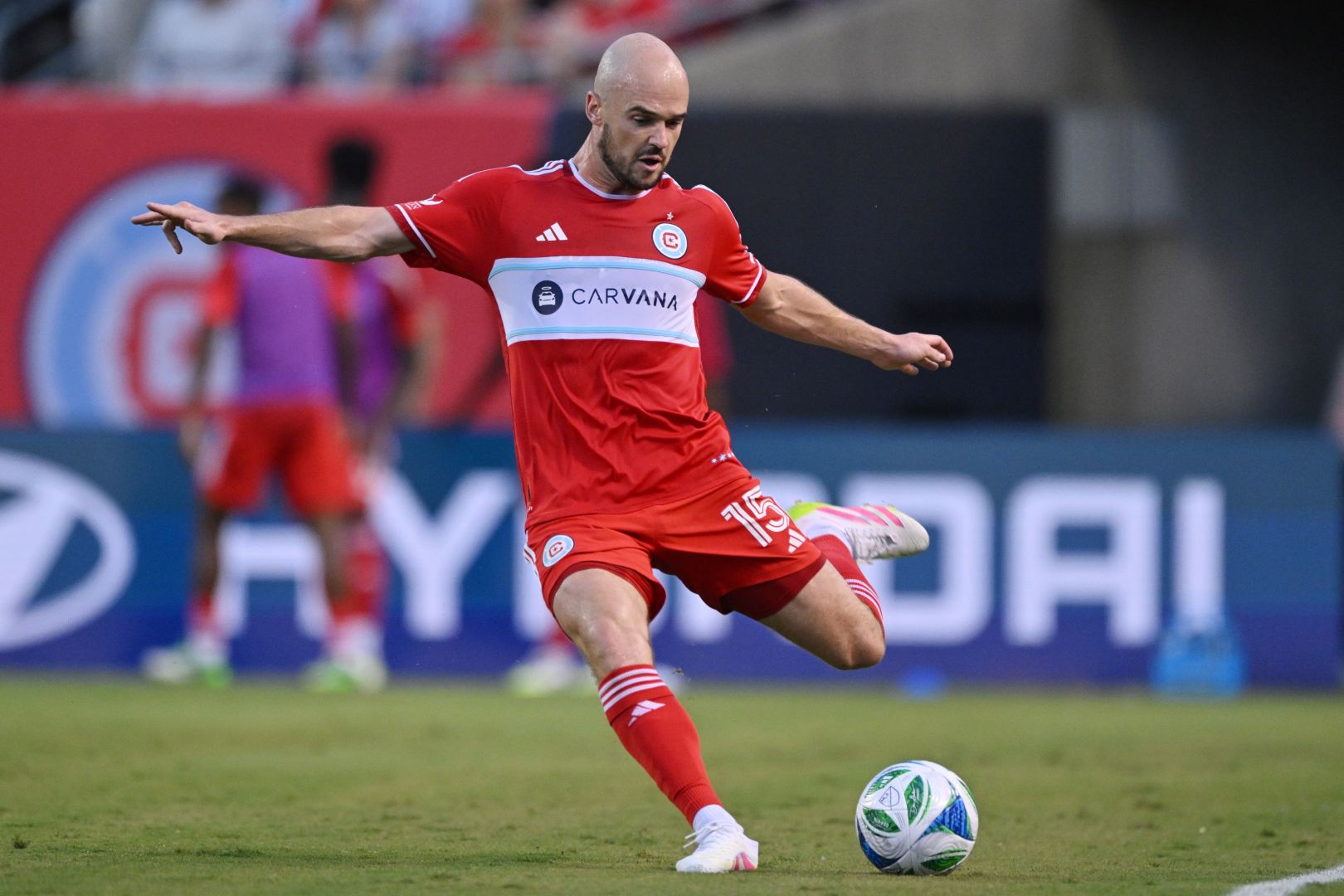
The total includes minutes from five homegrown players who have played their entire careers with the team: Chris Brady, Christopher Cupps, Brian Gutiérrez, Sergio Oregel Jr., Justin Reynolds, as well as Andrew Gutman and Mauricio Pineda, both of whom trained in the Chicago Fire academy before leaving for university.
In addition to those seven players, two young homegrowns on the team’s roster in Dylan Borso and Robert Turdean have yet to make a first-team appearance (Borso came up through the Fire academy before spending 2024 at Wake Forest University).
The total does not include minutes played by players Jeff Gal, a Chicagoland native who played elite club soccer in the area but never joined the Fire academy, and would also not have included minutes from Chris Mueller had he been able to feature. Mueller also graduated from another academy before going to Wisconsin for college.
Although the new record is safe this year, it may not stand for long: With the team placing more emphasis on the academy than ever and young players like Cupps and Turdean set to increase their minutes – and impact – in coming seasons, the Fire may soon shatter their own record.
Academy a point of emphasis under owner Joe Mansueto
The Chicago Fire’s academy has long been one of the stronger player pipelines in MLS, even if it has often been overlooked when compared to some of its peers.
Under owner Joe Mansueto, who has called his ownership of the team a “civic project,” however, the academy has taken on a new emphasis – even as it has shifted focus.
Many MLS academies have a large catchment area, with talent scouts scouring not just their local metropolitan area but sometimes several adjacent states. Since Mansueto has taken control of the team, the Fire’s academy has become focused on finding and developing talent from within Chicagoland.
When the final whistle blew in Ft. Lauderdale, officially ending the Fire’s postseason drought, five of the 11 players on the pitch for the Fire came up through the academy.
Asked about the significance of having that many local products on the field at that pivotal moment in the club’s 28 year history, Berhalter said “That's an important part of our team composition. We love to have players that the fans can identify with that are from the local area that know what they are playing for. It's a really important part of what we do. You know, the owner has invested a ton of money in the academy. He really believes in the academy, and moments like this really validate that.”
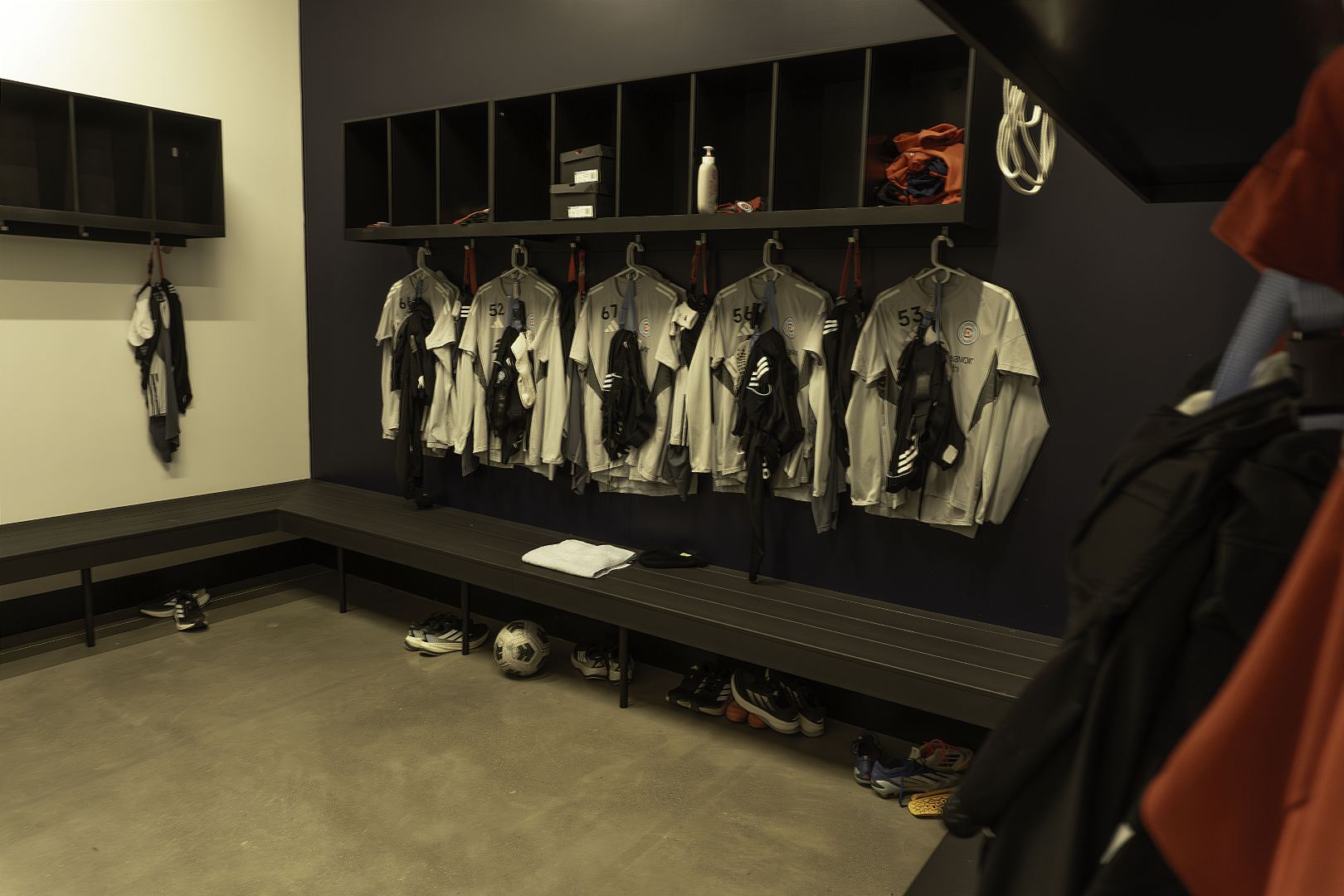
Even as the team has poured money into the academy and new facilities – academy players, for the first time, have locker and shower rooms in the team’s new $100 million training facility – the academy is just the pinnacle of the team’s investment in the sport throughout the city.
The Fire recently purchased an indoor soccer league which uses facilities throughout Chicagoland, with plans to expand the league’s impact while keeping it separate from the team’s academy setup, functioning, as team executive Paul Cadwell said, as a “service provider” for the other youth soccer clubs in the city.
The Fire also run the Chicago Fire Youth Soccer Club programs for boys and girls aged five to 19, with over 35,000 participants per year, according to the team. The youth soccer clubs have a dual purpose. One fits in with the team’s mission as a “civic project” in the words of Mansueto: On several public occasions, the Fire owner has spoken of soccer’s benefits to youth, both physically and with their social-emotional development. He’s also spoken of soccer’s ability to bring Chicagoans of diverse backgrounds together – a key reason behind the team’s rec league programs for adults.
In addition to altruistic reasons, however, the youth soccer system also allows the team to help shape the development of talent years before the academy program begins in the under-13 age bracket and gives Fire scouts familiarity with some of the top talent in the region.
Commitment to “people and players”
The Fire are committing more than just resources to the academy: Beginning this season, all players entering the academy at the U-13 age bracket will be guaranteed three years with the team, through the U-15 age group. If they continue, it will, again, be a second commitment, this time through the U-18 bracket.
Providing a multi-year commitment removes one of the pressures normally associated with top-level competitive youth soccer (and many other sports) across the country, where players are assessed at the end of each season and where they are not guaranteed an opportunity to return.
“This isn’t just about soccer,” Chicago Fire FC Academy Director Gary Lewis said in a statement. “This is about creating the right environment for young athletes to grow, learn, and feel secure. By committing to our players for multiple years, we’re taking away the anxiety of yearly renewals and giving them the time and stability they need to truly thrive.”
Annual reassessments mean that anything from an injury, a late growth spurt, or simply the mental and physical demands of growing up can end a player’s academy career. Exiting the academy means not only losing a place where they play soccer – it means being separated from friends.
For some players, having to leave an MLS academy sets off a scramble to find a spot in another high-level youth club that might provide a similar opportunity for advancing to collegiate scholarships or professional soccer.
For others, leaving an academy can represent the end of the line: MLS academies, including the Fire’s, are free for participants, while other elite-level clubs can cost over $10,000 per year once all costs are factored in. While most teams offer financial aid, typically that is limited only to club fees, leaving families on the hook for equipment and traveling costs.
Asked how the team’s multi-year commitment might help players, Andrew Gutman – once a standout of the Fire’s academy – thinks the commitment could be significant.
“If I was that age now,” the veteran with seven years of professional experience said, “as a kid obviously, you want to be a part of a professional club, so being part of the Fire is amazing. Moreso, I think it's very helpful for the parents. You know your kid is getting a commitment, he is getting a three-year development plan. It's not like if he doesn't do well in one year you're out.”
The last part particularly resonated with the Fire left back. “Especially for my journey with the Fire, my first year and a half I barely played in the academy, but they stuck with me. I kept growing and growing and I got better and better and earned more playing time. It's great for the kid and the family that they know they're getting a three-year development plan, and hopefully each kid makes the most of it and they can do something with it.”
Gutman also noted that the academy experience of the children entering today was very different than the one he encountered in the 2010s. “I think most of these kids go to online school. When I was in the Academy I just went to normal school and then at 5:00 or 6:00 p.m. I would come and train at Bridgeview. So it's a lot different.” Today, the Fire offer an in-house education program, combining online school with on-site educators, allowing academy children to receive an education while being in an environment that more closely mirrors that of professional athletes.
First team “the tip of the iceberg”
On September 18th, the Fire held a press conference to announce new deals for Brady, Oregel, and Pineda. At the time, the Fire’s academy products had just crossed 10,000 minutes but had not yet broken the record for most in MLS history.
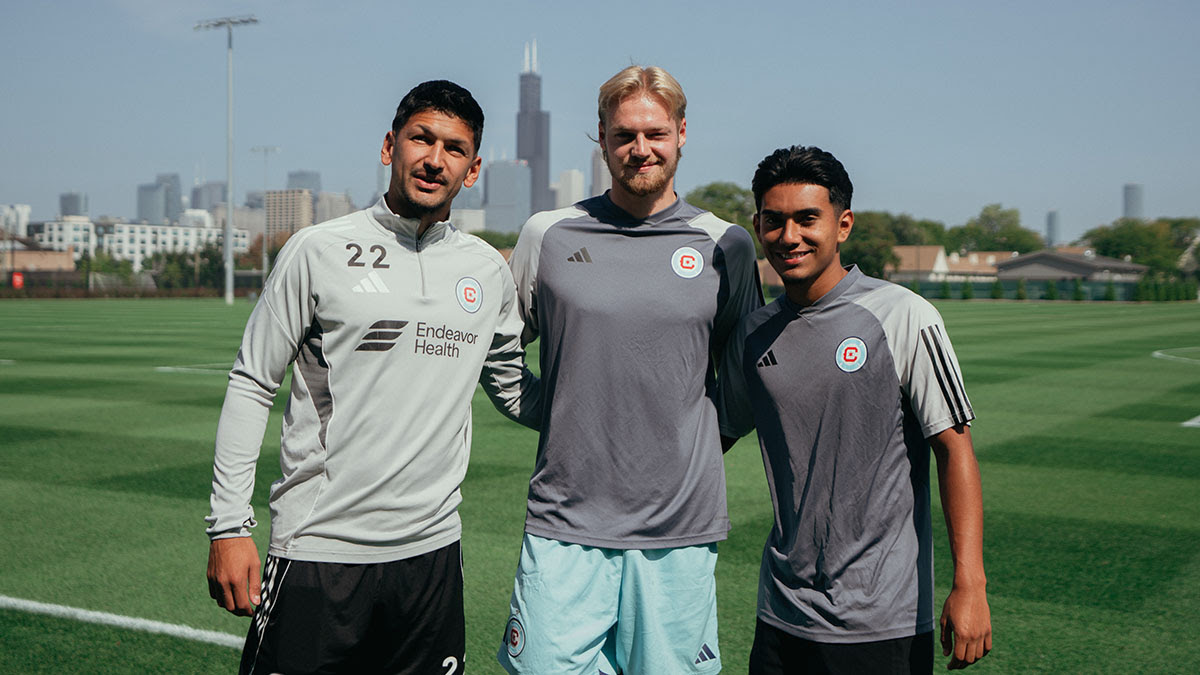
Asked about how that accomplishment and the new contracts reflected the club’s vision, Berhalter said “It's everything. I think this is the pinnacle, right. This is the tip of the iceberg, when you get to see these guys on the stadium field with the first team but there's so much more that goes into it. There's so much investment that goes into our youth academy. There's so much investment of time, money, sweat, tears, you name it, you have that in the academy. But it's nice to see that it's possible.”
That tip of the iceberg had been showing more and more throughout the season. In their game in Toronto on March 15th, the Fire started five academy products – a team record that they have since eclipsed – featuring, for the first time, an all-homegrown midfield of Brian Gutiérrez, Sergio Oregel Jr., and Mauricio Pineda.
“We did realize that at one point, the three of us [homegrowns] were in the midfield, so that was a pretty cool moment for us,” Pineda said in an interview with MenInRed97. “I think even in the offseason or growing up, I always knew Guti. We always train together with Sergio, Gutman, all those guys that were in the lineup are always training together. So I think that makes it that much more special when we’re all on the field together.”
Although Toronto, like Chicago, is a hotbed of soccer talent, and they did have three academy products, including longtime player Jonathan Osorio, in the starting lineup for that game, most of the talent that has come through Toronto’s academy has never wound up playing elsewhere. That makes the contract with the Fire striking.
As Berhalter noted months later in announcing the new deals for the trio of homegrown products, the signings were a “great message to the academy players that it’s possible to make the first team, and it’s possible to thrive in the first team, not just get there.”
Just under a month later, after that game in Toronto, the Fire also had five academy products on the field facing Inter Miami in front of a sellout crowd at Soldier Field.
Asked about what it means to him to have four other academy products on the field as he earned the clean sheet against Lionel Messi and his teammates, Brady said “I feel prideful that this club has grown in that. It’s definitely a testament to the whole developmental system, not just the first team, but our ability to develop players and turn them into professional players, but also professional people. It's crazy, and we've got more guys to help, so I think we're definitely the best club with that.”
“A Dream Come True” for “Family” of Homegrowns
The professional soccer landscape – global, stratified by talent, crosshatched by style, soaked in money or parched for cash – means that many players have careers that span not just clubs but countries and continents as they look for an environment where they can compete and their clubs look for lucrative transfer deals.
While players are often quick to gel with others in the locker room and the shared experiences of training, travel, and competition can unite a group even if they haven’t spent much time together, the bonds can be far stronger between players with a shared history going back to youth careers in the same academy.
Even for players who didn’t play together, the connections to city and club can run very deep: Mauricio Pineda, the longest-tenured player on the Fire’s roster, is the younger brother of Victor Pineda, the first-ever Fire homegrown, signing with the club back in 2010. Their younger brother Oscar has played primarily with the Fire U-18s but has appeared for Fire II in MLS Next Pro. Justin Reynolds’s older brother, Andre, played with Fire from 2019 through 2022.
The shared identity of having come through the same club creates a bond. “Playing with all of them,” Oregel said in an interview with MenInRed97, listing fellow homegrowns and academy products ranging from 29-year-old Andrew Gutman to 15-year-old Robert Turdean, “is just I mean, you get this kind of connection, like the chemistry is different. So being able to play with them is very good.”
That chemistry was on display Tuesday night when Justin Reynolds’s first MLS goal sent the Fire back into the postseason for the first time since 2017. Asked about what it meant to have been one of five academy products on the field in that moment, Gutiérrez said “think it's an honor and a privilege for all of us. I think we can all say the same thing; that being all from Chicago and representing your hometown, it's a dream come true as you are coming from Chicago and you strive to make it to the first team. Honestly, being all together is honestly, it's an amazing feeling.”
Reynolds, the goal scorer, noting that he’s played for the club since he was 12, meaning the now-21-year-old defender was with the academy during the first team’s last playoff appearance, said, “Obviously we've known each other forever. So it's like family more so than just a teammate. So we all want to fight for each other and win for each other.”
That family-like connection was on display moments earlier, when Pineda and Gutiérrez embraced Reynolds in a bear hug tight enough to render him almost invisible, celebrating their teammate’s goal, which they helped create.
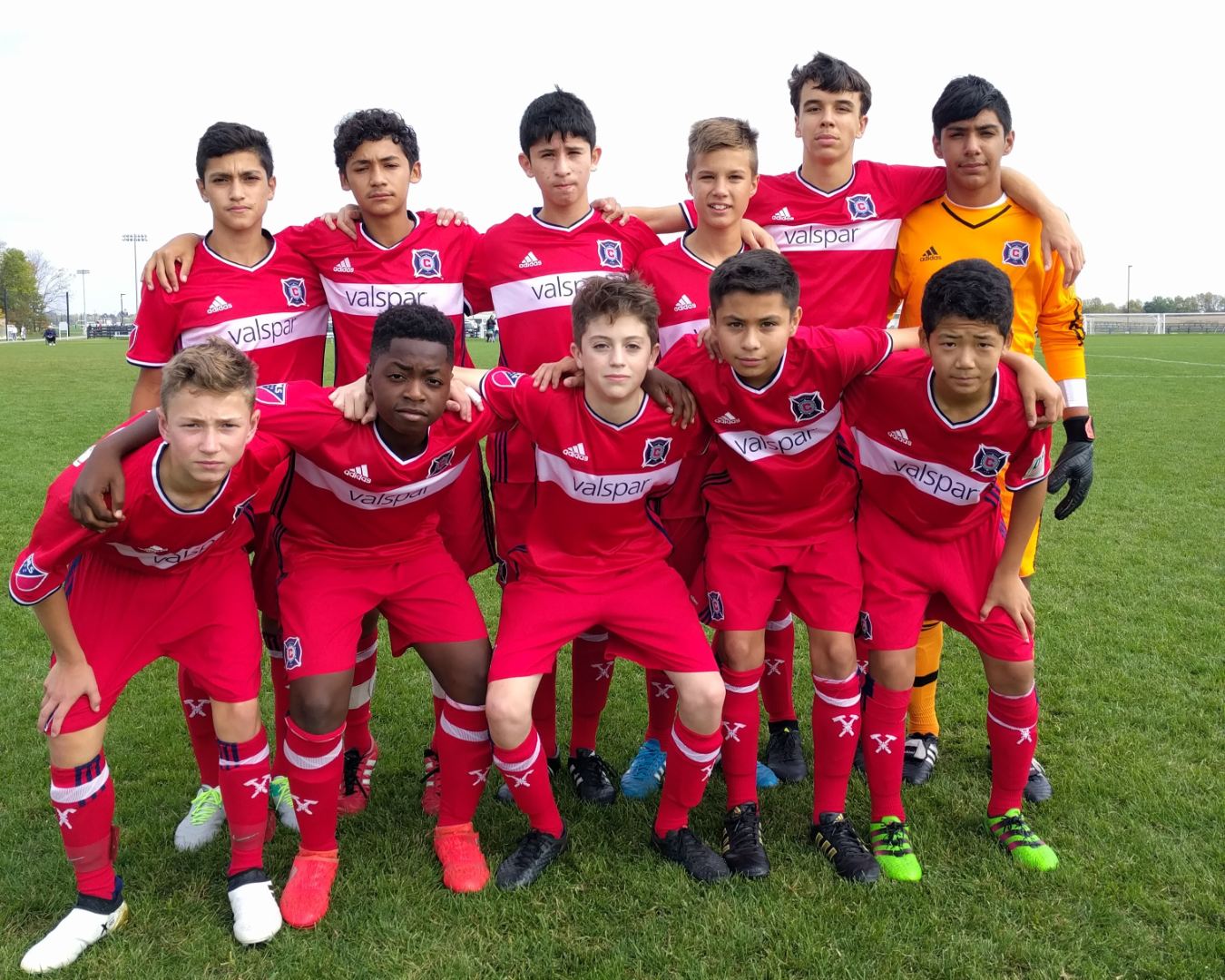
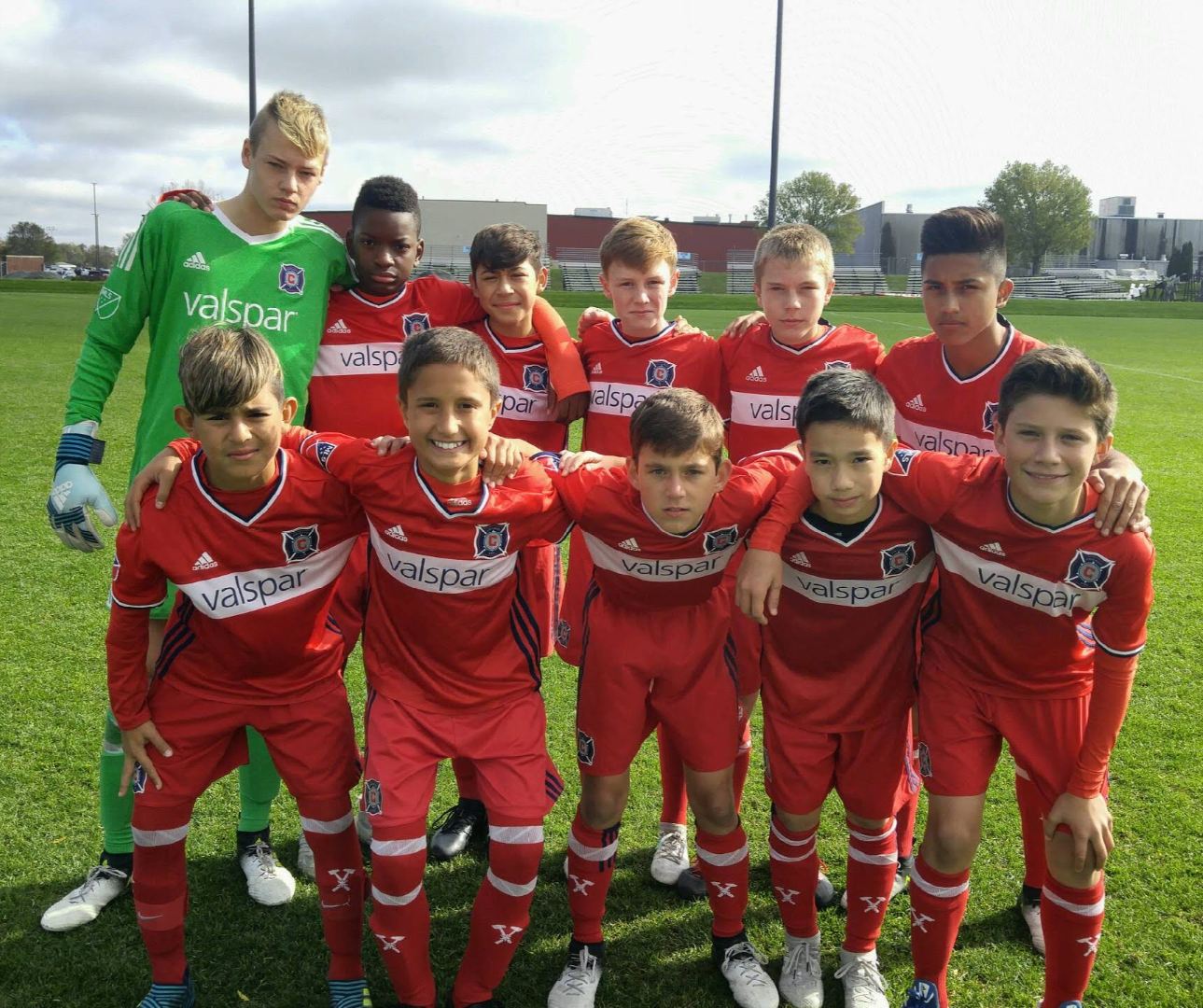
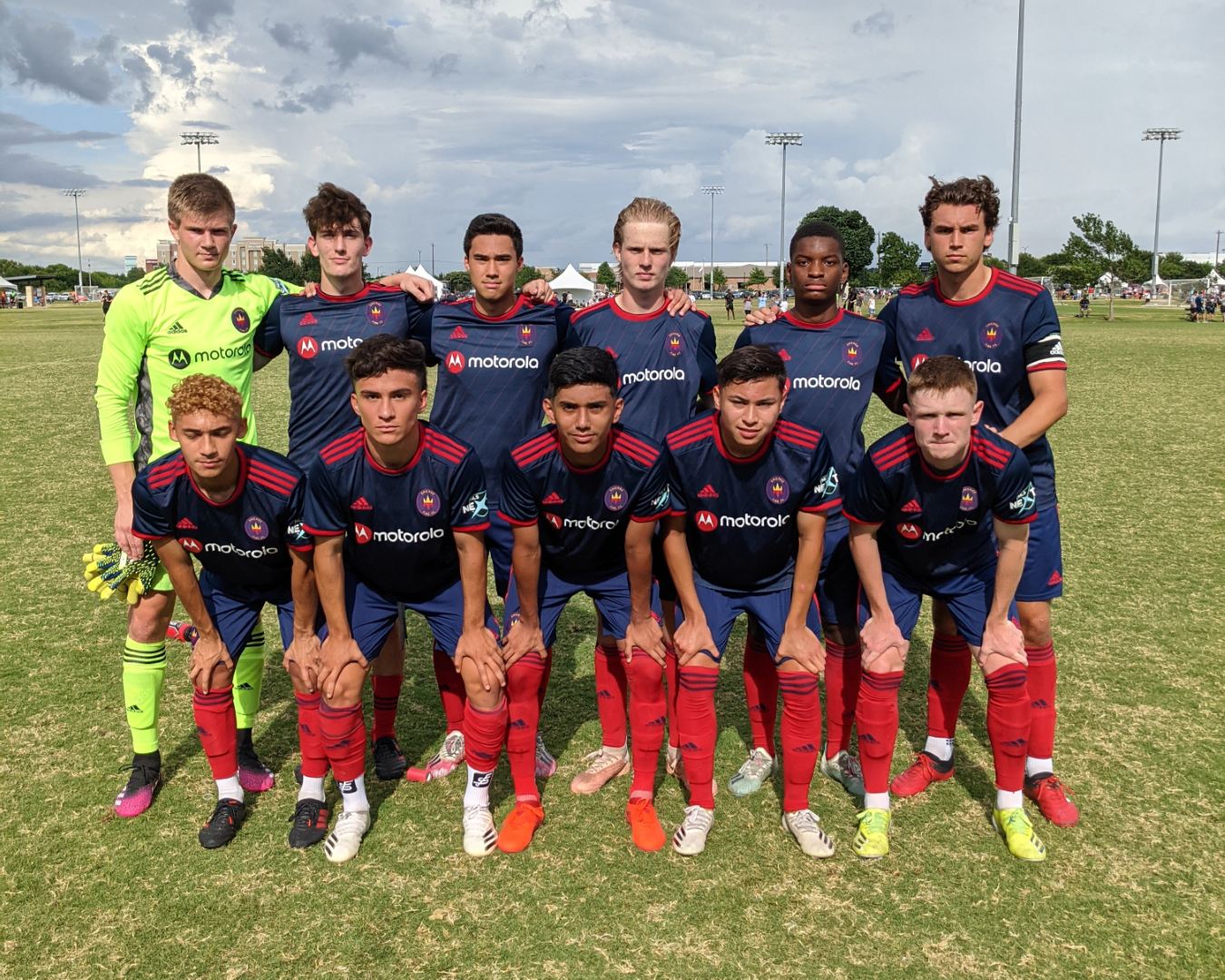
Special thanks to Chicago Fire FC’s communications staff for finding archival academy photographs and their work coordinating interviews for this story.
Note: This post has been updated from the initial version to clarify the definition after Jeremiah Oshan from Sounder at Heart stated out that in 2024, the Sounders had 12,349 minutes from academy products. This is accurate but that figure includes the 4,222 minutes from Jackson Ragen and Paul Rothrock, both of whom joined the Sounders academy at 17 and left the academy for Seattle's reserve team in less than a year and therefore spent the bulk of their youth careers elsewhere.