5 Things We Learned: Chicago Fire vs. Orlando City
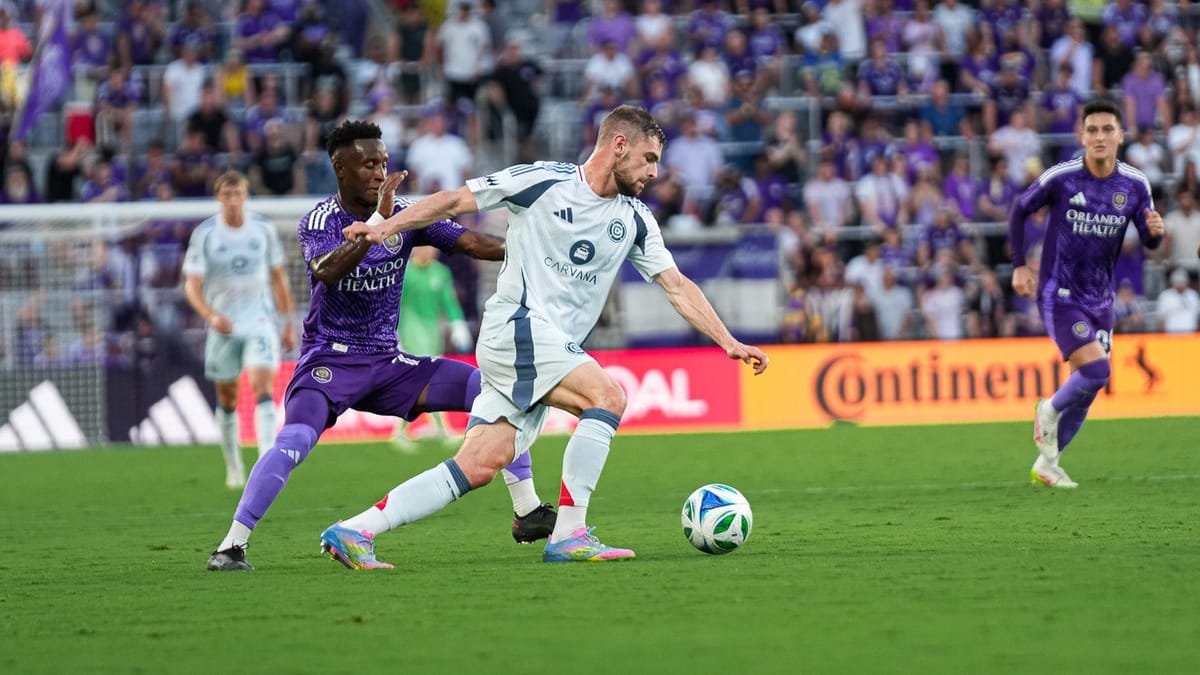
The Chicago Fire bookended what turned out to be a strong month, bookending May with games against Orlando City. Four weeks after keeping Orlando off the scoresheet despite being down a man for a majority of the game, the Fire walked away with a 3-1 victory.
The win gave the Fire a 5W-1D-1L record across all competitions in May (3W-1D-1L in MLS regular season matches), and the team found a new way to win before turning the calendar to June. Going up 3-0 early, the team ground its way to a 3-1 result where the team looked surprisingly comfortable, even if they weren’t firmly in control.
Here’s five things we learned in Orlando.
1. The Fire can hold on and grind out results
If you turned on the game after about the first half hour and couldn’t see the score bug, you’d have thought that the Fire were getting steamrolled. Throughout the match, the Fire were out-possessed 57-43, outshot 25 to 10, and lost the xG battle (though per Opta’s model – which I’d generally trust more than the one that MLS uses, it was by 1.6 to 1.1, not the almost-three-to-one margin that MLS reported at the end of the broadcast).
Yet the Fire won the game 3-1. Even if it didn’t feel like they were really in the driver’s seat of the game on the pitch, it also never really felt like they lost control. The Fire were strong defensively, with an incredible 45 clearances throughout the match, and made 18 tackles and 36 recoveries.
Their bend-but-don’t-break play limited Orlando to five shots on target, good for just 20% of their total shots. Even that isn’t entirely out of character for Orlando – on the year, they’ve managed to get just 31.8% of their shots on frame, good for 24th in the league – it’s telling: The Fire’s defending meant a lot of Orlando’s shots came from distance or bad angles.
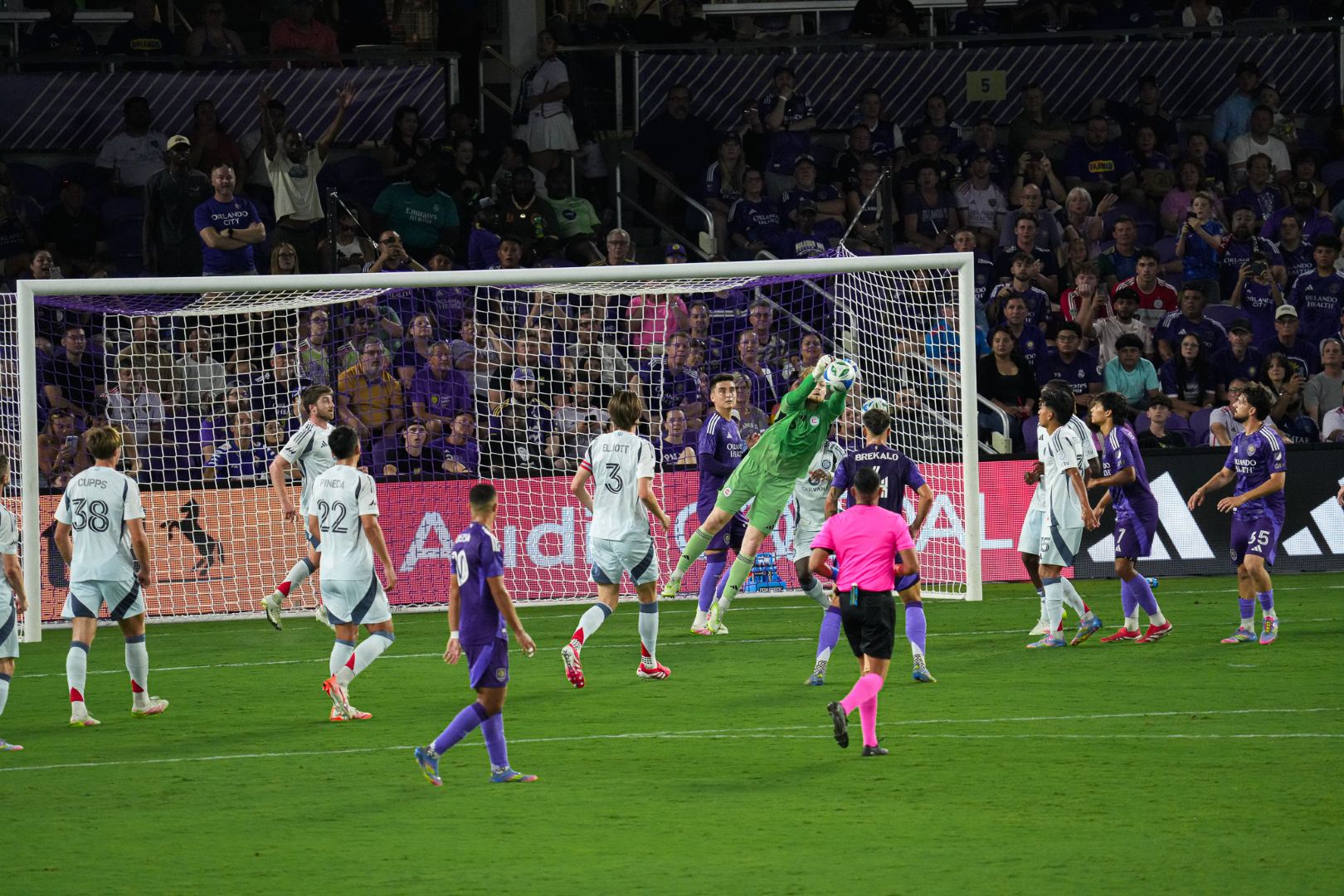
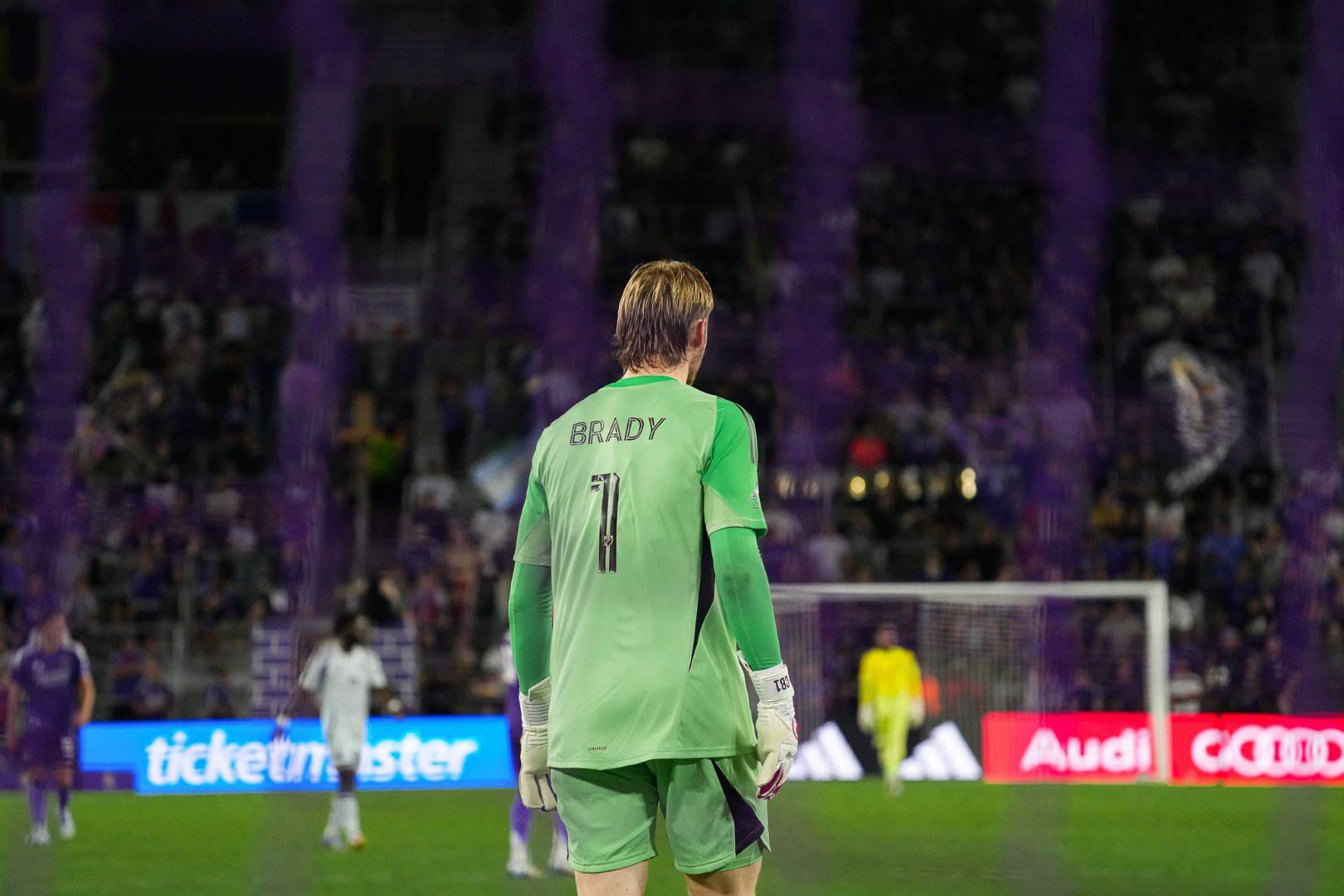
When the hosts did manage to get a shot from a good position, a Fire defender was frequently there with a block. And when they didn’t, the Fire’s defending meant that Chris Brady (who was excellent on the night) was in a position to make a save. Getting outshot and out-possessed (game state is a major factor there) isn’t how the team would prefer to play, but it’s still refreshing seeing the team grind out a win, rather than just a result.
Asked after the game about the team’s ability to hold on and get a gritty road win, Philip Zinckernagel said “It's massive. The atmosphere in the dressing room after this game is so good. The group is getting stronger and the group is getting closer, and yeah, this was a solid performance, especially defending for a long time. Sometimes you have to suffer, and if you suffer together, you can make it and the game was a good example of it.”
The result was a team that now looks way more comfortable defending than the squad that took to the pitch against Columbus back at the end of February.
2. Christopher Cupps really looks ready
It was another rock solid performance from the Fire’s teenage center-back. When asked about the performance postgame, Fire Head Coach Gregg Berhalter said “if you just watch and didn't know anyone's age or anything, you wouldn't believe that he just turned 17 years old and that's the incredible thing.”
The Fire are no strangers to young prospects turning into lineup mainstays but even by those standards, Cupps’s performance has been eye opening. His awareness in positioning, confidence with the ball at his feet both in distribution and under pressure looks like a player far beyond his years, and the physicality he injects into the Fire defense is one that has lacked since Carlos Terán was placed on the injury list.
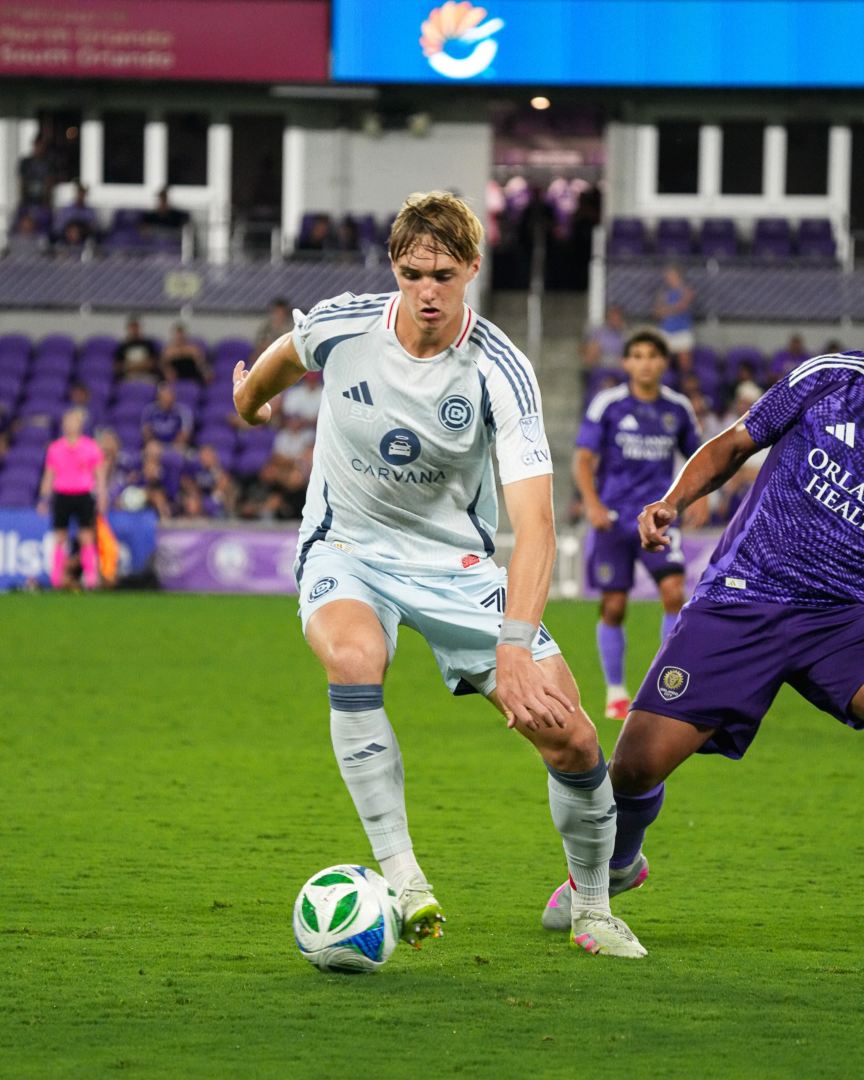
Twice now Cupps has lined up across the field from one of the more potent attacks in MLS and played a large part in keeping Luis Muriel and company quiet for the second time this season: Once when down a man and once under siege for over a half while defending a lead.
Cupps now heads to join the U.S. Youth National Team U-17 squad in Spain for a trio of friendly matches against Sweden, Canada and Japan, forcing him to miss the Fire’s rematch with DC United.
While Berhalter has seemed reluctant to make Cupps a regular piece in the back line, his performances may soon start to press the issue and warrant more minutes on the field with the first team.
3. And the fullbacks look better than ever
On a night where Alex Freeman was the fullback in focus as he’s set to join the U.S. Men’s National Team in the coming days, we saw the Fire fullbacks put together another strong performance on both ends of the field. The Fire have turned a question mark at the position into a strength through the course of the season.
Andrew Gutman is having something of a breakout year after developing a reputation as a reliable, but unspectacular, journeyman. He currently sits one goal contribution from his career high before even reaching the halfway point of the year, and has been excellent winning aerials on both ends of the pitch. He’s also been one of the Fire’s best defenders at breaking up oncoming attacks.
Opposite Gutman, we’ve seen an assorted cast of players spending time in the role due to availability issues, and all finding some level of success. U-22 Initiative signing Leonardo Barroso brought in from Portugal this winter headlines the cast. From his first game with the team, he provided a massive spark in the attack while showcasing a high level of defensive ability and looked like he was becoming a locked-in starter before he suffered a lower body injury that kept him out of the lineup for multiple weeks.
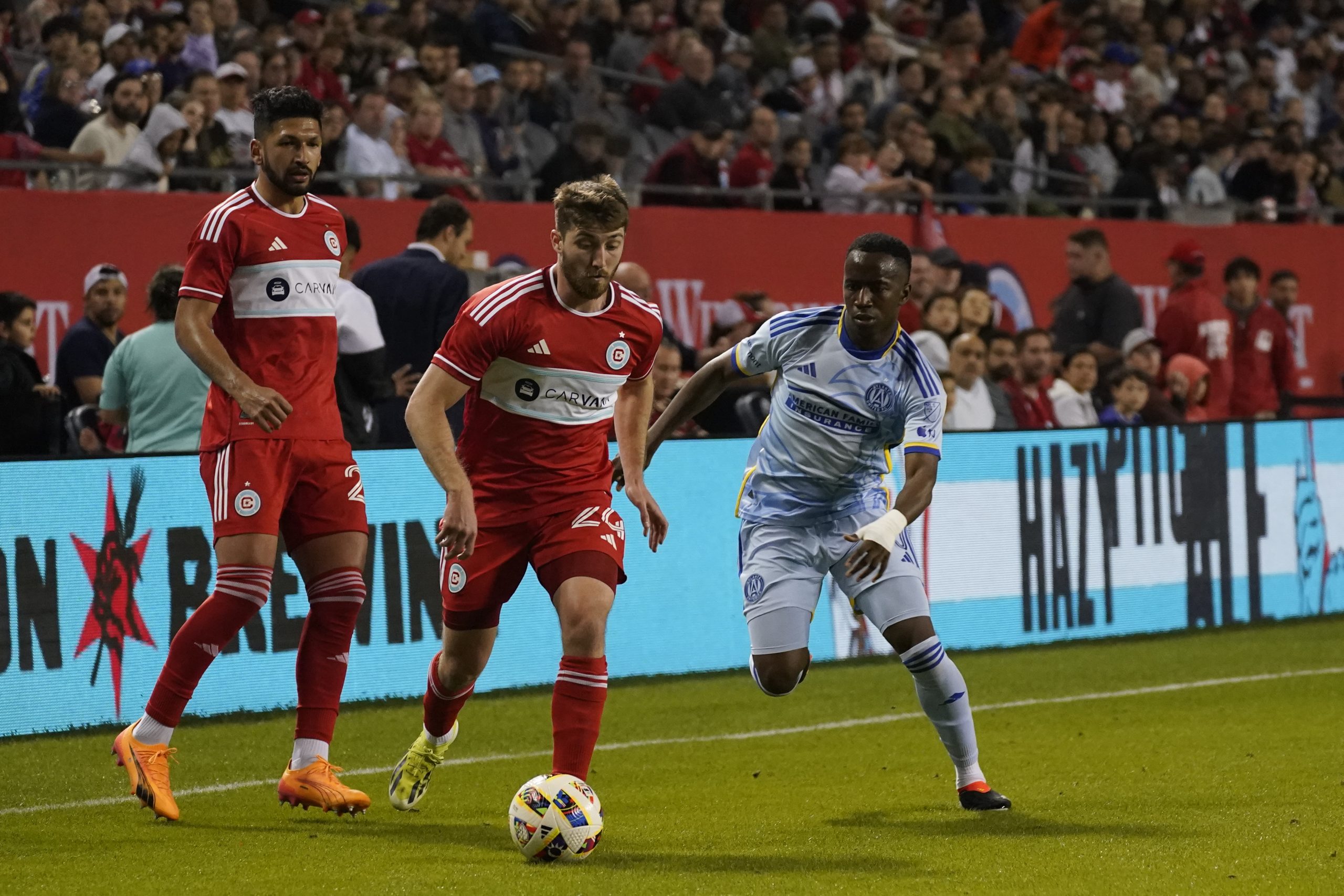
Absent Barroso, the team played a rotating cast including Jonathan Dean, a USL product who logged his second assist in league play vs Orlando last night and Omari Glasgow, signed from Fire II in the offseason to play as a winger. Both outpacing their expectations.
After struggling to find minutes as a winger, Glasgow was deputized into the right fullback spot and has thrived in the role, showcasing an unexpected level of defensive ability and providing overlap options for Philip Zinckernagel. Dean has also improved notably, having shown his defensive ability in the past he has now taken the opportunity to become more involved in the attack and seems to be growing more confident with the ball at his feet, providing an extra layer in the attack we hadn’t seen from him prior.
4. The team is getting more comfortable building out of the back
Fullbacks looking more comfortable? The emergence a young center-back out of the academy? Those are two of the ingredients of a team that is growing increasingly comfortable in Gregg Berhalter’s system.
Early in the year, when the Fire attempted to build out from the back the way they did against Orlando, and the team often made highlight reels around the league for all the wrong reasons because of it. A misplaced pass, a player out of position, the squad unable to get back in time to defend, and the Fire gave opposition attackers – and pundits – plenty to feast on at their expense.
Still, Berhalter persisted in pursuing the style of play. Over time, the team grew more comfortable and are now worlds away from where they were early in the year. Chris Brady, in particular, has shown significant improvement. Early on against Orlando, with the game still very much up for grabs, he looked comfortable holding the ball at his feet, inviting Orlando attackers in – and thereby creating space elsewhere on the pitch.
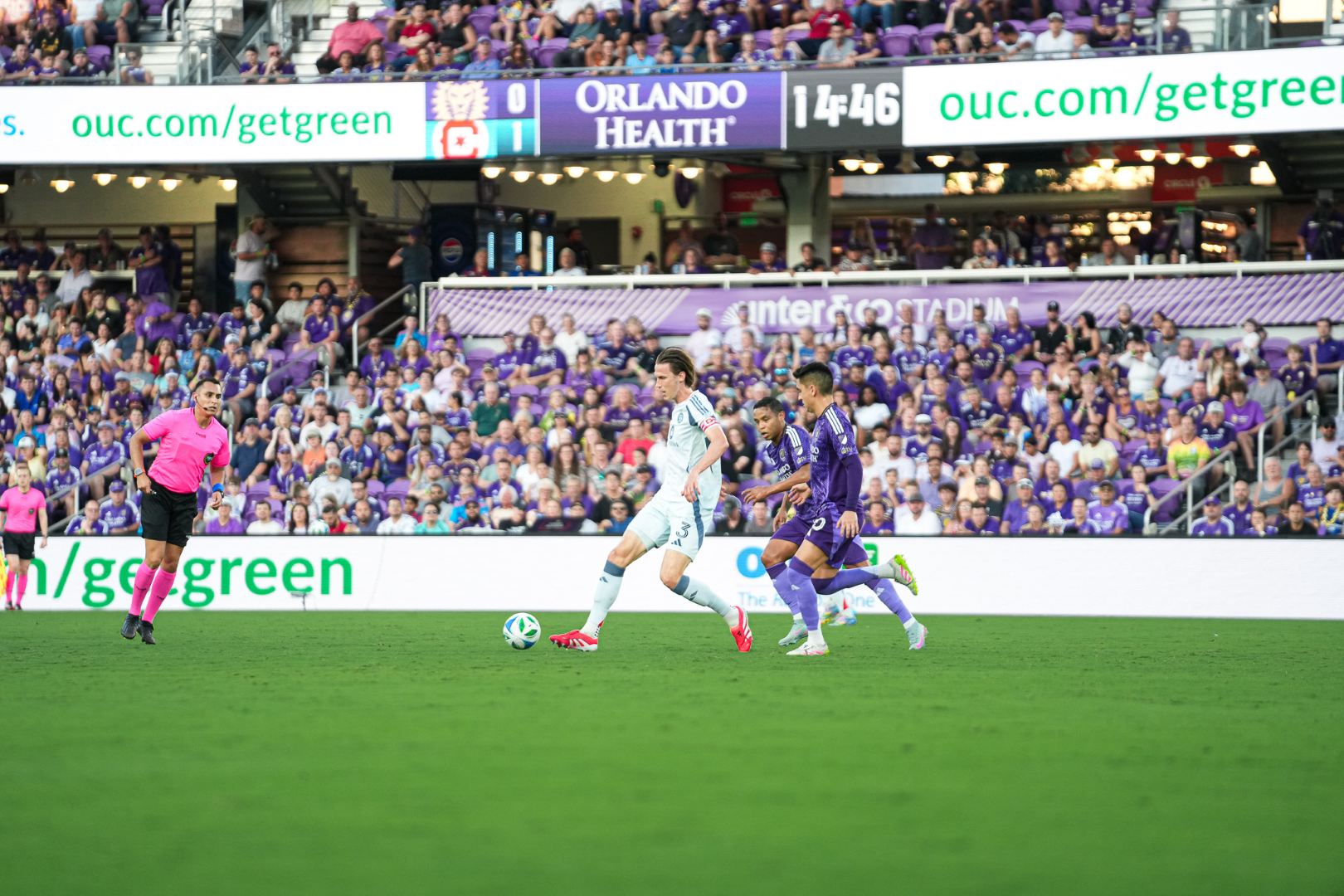
Cupps looked like a veteran player when Brady passed him the ball, and paced the team with 58 attempted passes, completing 54 of them, good for a 93% accuracy rate. We’ve frequently used American Soccer Analysis’s goals added metric, and although it’s a useful tool, it isn’t perfect. The model dinged the academy product because of the number of short back-passes he made, but don’t be fooled: That was part of the plan to lure Orlando in so the team could get numbers elsewhere on the pitch, and if frequently worked.
Yes, Brady had to make four saves and yes, the team didn’t keep a clean sheet, but it looks like Berhalter is finally getting what he needs out of his defense on both sides of the ball. The Fire’s biggest “if” coming into the middle part of the season centered around finding a way to keep building out of the back but avoiding the mistakes. It’s not quite time to call the problem done and dusted, but the team has made big strides in the right direction.
5. The Fire can deal with absences to key players – but that’s about to get tested a lot
As we discussed on The Bonfire (episode coming out Monday), on average, the Fire actually score more goals and concede fewer without Brian Gutiérrez in the lineup. With Gutiérrez, the team scores an average of 1.8 goals per game and concedes an average of 2.2. Without him, they score 2.0 and concede 1.2 goals per match.
Sure, The statistic is skewed based on the fact that Gutiérrez was there for the team’s 7-2 defeat to Nashville, but even if you exclude that game, the statistic (which drops to 1.6 goals for and 1.5 goals against) holds. Small sample sizes, etc., but the team has faced some quality opponents without Gutiérrez, including Vancouver, the New York Red Bulls, and, most recently, this game in Orlando. (He also missed the team’s games against CF Montréal and D.C. United.).
Is the team better without Guti? No, not by the eye test, but it says a lot about the team’s depth. They faced a midfield crisis earlier in the year and found results. Against Orlando, the team was without Carlos Terán and Sam Rogers, who projected to be the team’s #1 and #2 options in the depth chart next to Jack Elliott, a locked-in starter when available.
Still, that depth is about to be severely tested: Mauricio Pineda will be out due to yellow card accumulation, and fellow midfielder Sergio Oregel Jr. will be with the U.S. Youth National Team U-20 squad. Chrsopher Cupps was called up to the USYNT U-17s, and Omari Glasgow will be with the Guyanese National Team for crucial World Cup qualifiers. Carlos Terán is dealing with a long-term injury, and although Sam Rogers will likely be available next week, he was out of the lineup with an injury against Orlando.
The biggest absence, however, will be Chris Brady. Brady was excellent against Orlando and has been called up to the USMNT as an injury replacement for Patrick Schulte. While you’d think the fifth goalkeeper called into camp would likely be cut early, Brady could miss substantial time: Zack Steffen is one of the other goalkeepers called up but has missed the past few weeks with injury. If he’s unable to recover in time for the start of the Gold Cup on June 15th, Brady will likely will likely miss more than just the team’s next game against D.C. United.
If USMNT Head Coach Mauricio Pochettino elects to keep Brady and his team advances to the final, Brady would miss the Fire’s next five matches, including the reverse fixture against Nashville and matchups against league heavyweights FC Cincinnati and the Philadelphia Union.