Fire at Charlotte: Tactics and Starting XI
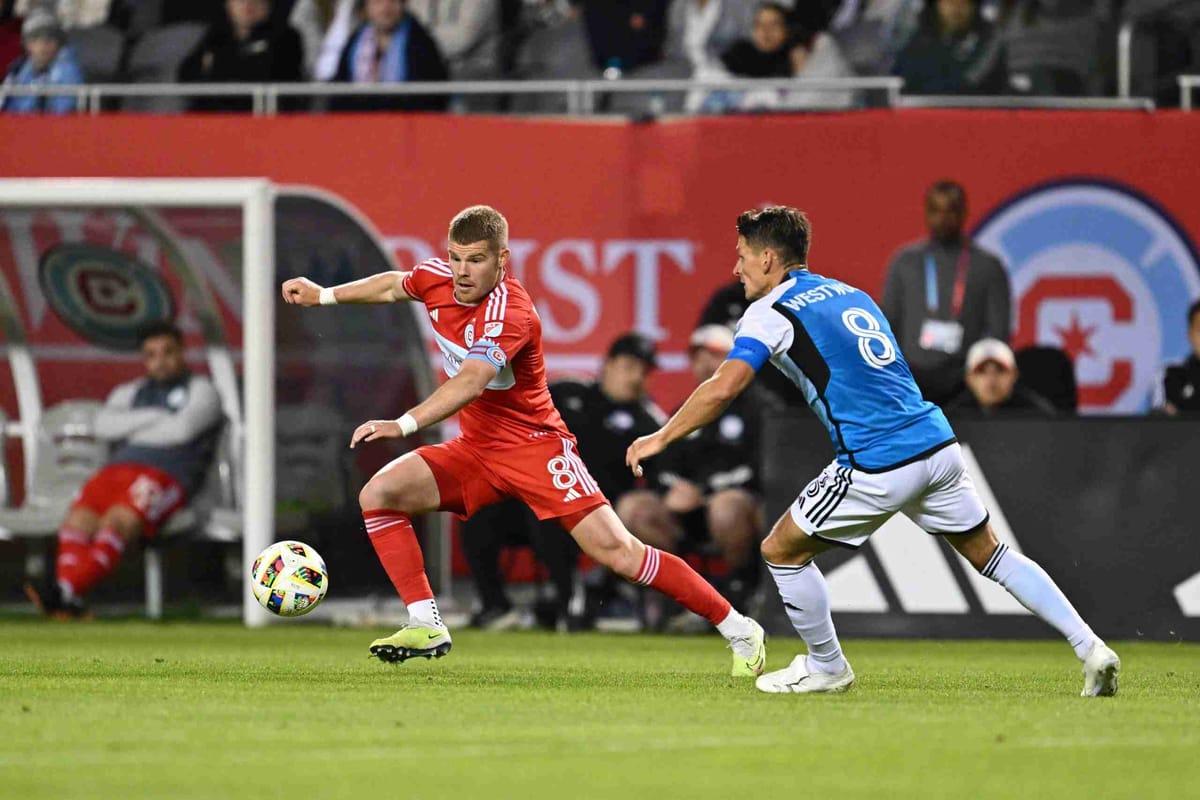
The Fire face Charlotte, the team that, for all intents and purposes, pushed past the team into the playoffs last year in the team’s last home game of the season. Hosting Charlotte three days after the Fire’s 4-1 win over Miami, the Fire had 40 points to Charlotte’s 36, and though results around them still mattered, mathematically the Fire knew that a victory over Charlotte could well be all the team needed.
Instead, Charlotte emerged the victors and then went on to get four points off of Inter Miami in their final two matches of the year, giving the team 43 points and the ninth and final postseason spot.
This year, under new Head Coach Dean Smith, Charlotte clinched a second postseason spot in all but the mathematical sense, but with three games remaining are in seventh place and if the playoffs started today, would face the Columbus Crew in the first round as the Ohio team begins defending its MLS Cup title, and it’s possible, though unlikely, that Charlotte could fall into the wild card spots – or push their way into fourth place and secure home field advantage in the first round.
In other words, the Fire can return the favor that Charlotte gave them last year.
Note: For a more general overview of Charlotte’s tactics and style of play, check out our overview from when the Fire played them earlier this year.
Charlotte FC
Defensive Strength Has Powered Charlotte to Results
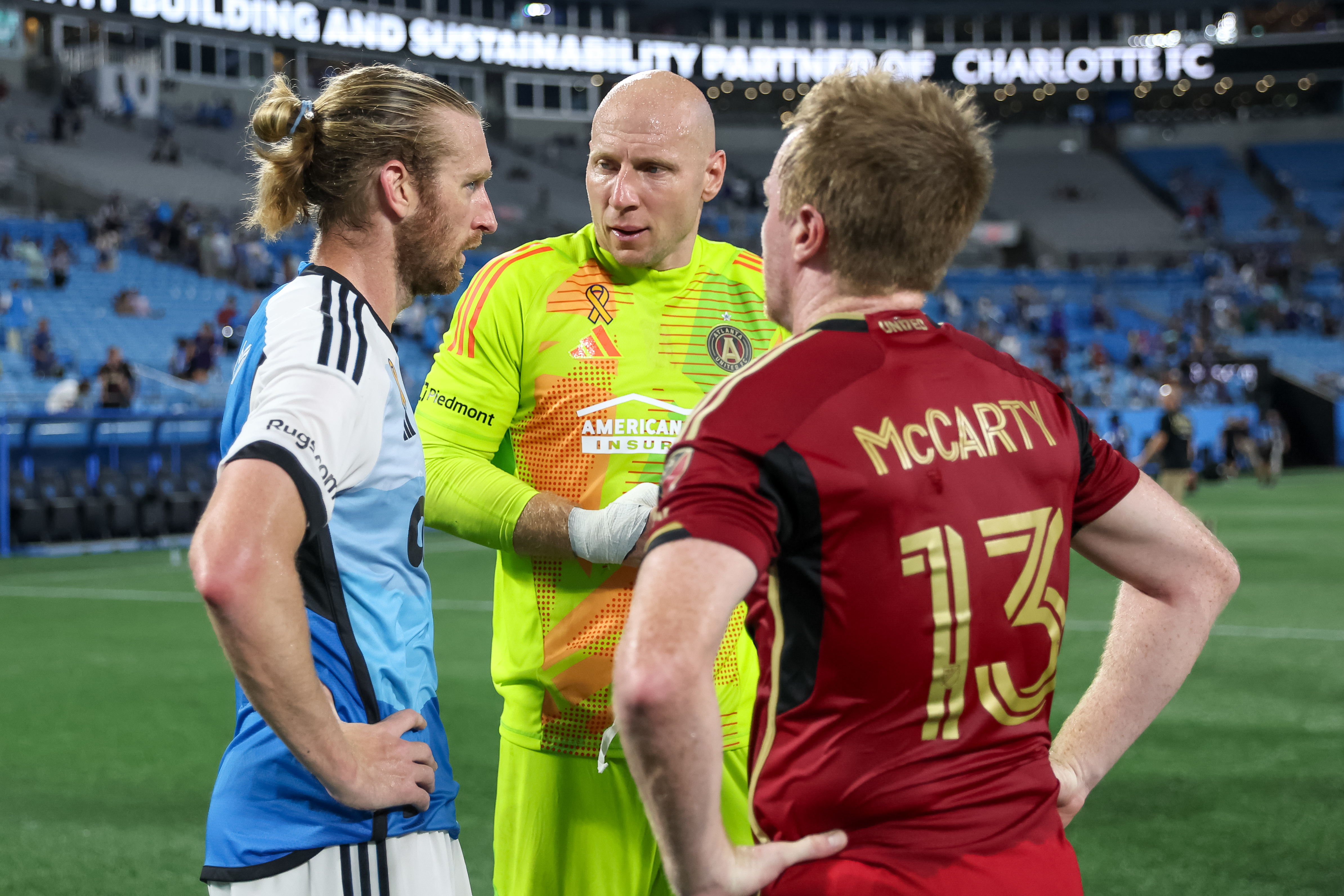
This is still fundamentally the same Charlotte team that the Fire played back in May, despite some notable changes to squad composition.
Their biggest strength: They’ve allowed 34 goals on the year, just one more than league-leading Columbus.
Two things have been powering Charlotte’s defensive prowess. The first is excellent goalkeeping. According to American Soccer Analysis’s goals added metric, Charlotte’s Kristijan Kahlina leads the league at 11.87, mostly from his shots-topping ability. He’s allowed 11.64 fewer goals than the model suggests he should have , and his 10 clean sheets on the year are tied for the league lead with Los Angeles FC’s Hugo Lloris – though Lloris has a much better squad playing in front of him.
Second, the team has done a decent job at preventing shots from dangerous areas. Kahlina has had to face down 143 shots, tied for 8th most in the league (compared to Chris Brady’s 148), per FBRef, their non-penalty expected goals per shot on target (npxG/SoT) is one of the lowest in the league, at 0.10. By keeping shots out of difficult places, they’re making Kahlina’s job easier. (The Fire’s npxG/SoT is also around 0.10, but Chris Brady has been a below-average shot-stopper this year after being fantastic for the opening two-thirds of last season).
Offensive Woes Have Held Charlotte Back

While Charlotte have been one of the teams in the league defensively this year, they’ve been towards the bottom at the other end of the pitch: Their 37 goals put them in a three-way tie for fourth-worst in the league alongside the Fire and Wooden Spoon winners San Jose.
Part of it is that Charlotte have lacked high-end attacking talent. Enzo Copetti, signed to Designated Player deal in 2023, was clearly a bust, however, and he was shipped off to South America the day after the Fire last played Charlotte, freeing a DP slot. The team eventually brought in attacking midfielder Pep Biel on loan from Olympiacos, who has been fine-but-not great. Liel Abada, a Young DP brought in before the start of the season, has likewise been a performer that would be adequate if surrounded by better attackers, but he hasn’t been.
Karol Świderski, one of Charlotte’s first DPs, was likewise an adequate-if-not-special attacker. As a result, he was loaned out to Helles Verona through the summer with an option for the Serie A club to make the move permanent if things worked out. It didn’t so they didn’t, and while many assumed that the team would ship Świderski out somewhere else, he returned to Charlotte and has been playing fairly well – to my eye, better under the new head coach than he did before he left – but, again, not well enough to lead the offense on a top-end team in MLS.
They also brought in veteran attacking Jamie Paterson, formerly of Swansea City on a free in late August. Paterson previously played for Smith earlier in his career, so the move is understandable but Paterson has yet to make an impact, having played just 29 minutes with the first team and spending time at Charlotte’s MLS Next Pro affiliate.
Instead, it’s been Patrick Ageyemang, a 2023 MLS SuperDraft pick, who’s the team’s leading scorer, and while he’s a young, exciting looking player, the simple fact is that Charlotte needed to shop for the kind of player that the Fire believe they’ve found in Hugo Cuypers, and they didn’t.
Charlotte FC Starting XI Prediction
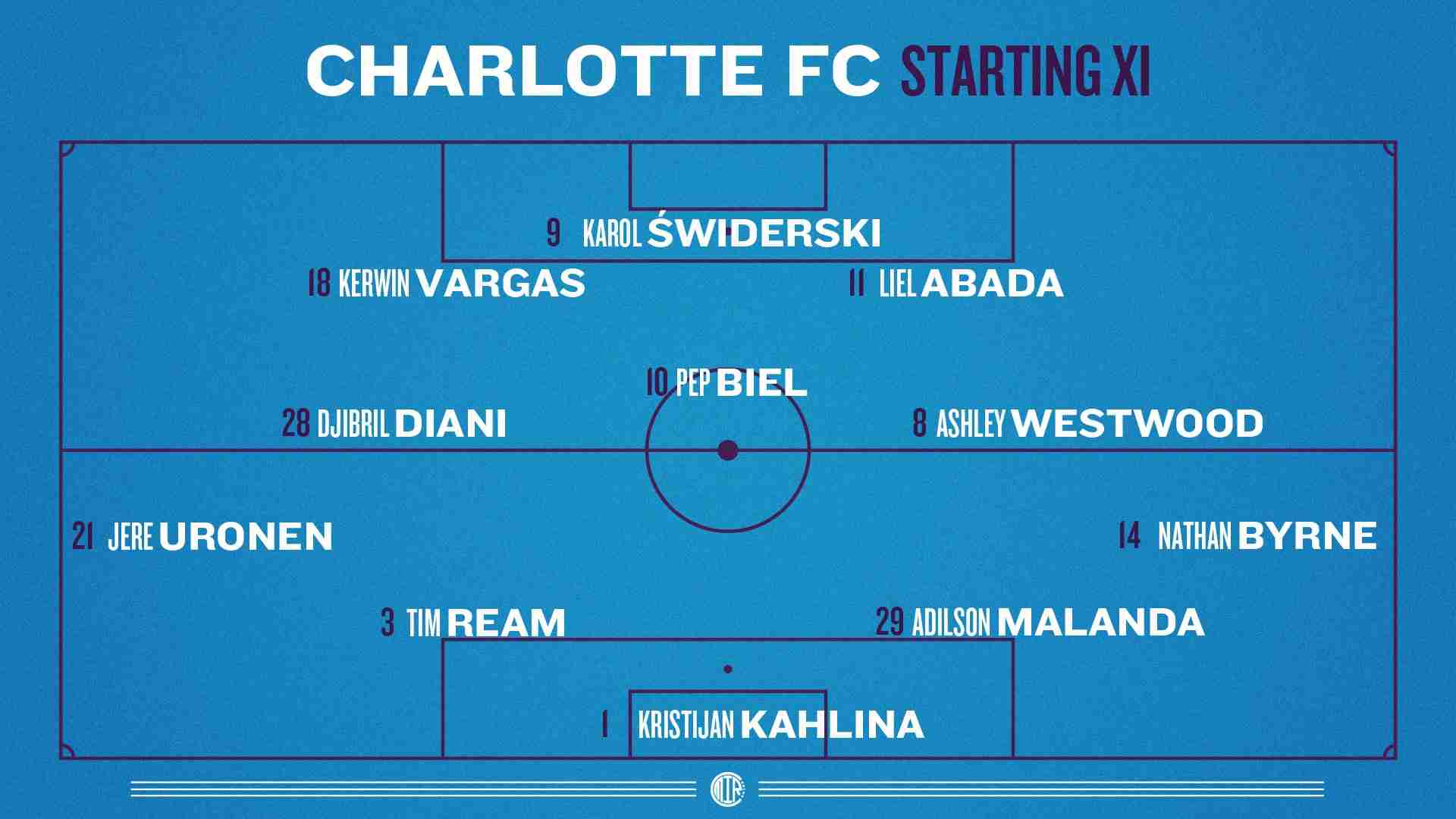
Charlotte FC are mostly healthy and although they may rotate for this match as they host CF Montréal on Saturday, realistically, the team needs every point they can get and the vast majority of the squad will have time off after during the October international break.
This season, Charlotte have universally been playing with a four man back line, typically out of a 4-2-3-1 although they’ve occasionally played a 4-3-3 and tried a 4-4-2 against Inter Miami. (Smith was no doubt concerned that if he made it through the season without playing in that formation, he might have to surrender his British passport and he’d never be allowed back in England.)
Chicago Fire
What should the goal be for the Fire’s two remaining games?
With the Fire officially out of the playoffs and San Jose having clinched the Wooden Spoon, although there are valid team objectives – trying to climb out of 15th place in the East, adding to the team’s point total – they all pale in comparison to what the one that is no longer in the team’s reach.
Speaking after the team was eliminated, Fire Head Coach Frank Klopas said his goal was “finishing strong,” but also noted that the upcoming offseason was “an opportunity,” calling it “the most critical” in Fire history, with “a lot of contracts that are up, a lot of option years that you need to make decisions on.”
Presumably, most – if not all – of those decisions will be left to Sporting Director Georg Heitz’s replacement, but Klopas can help the incoming director by giving them things to consider.
That can mean giving players looks at real game minutes – albeit, not in a high-pressure situation with the season’s fate already decided – or it can mean showcasing how players work in different positions or situations than they’ve otherwise been in.
The End of The Third Center-back
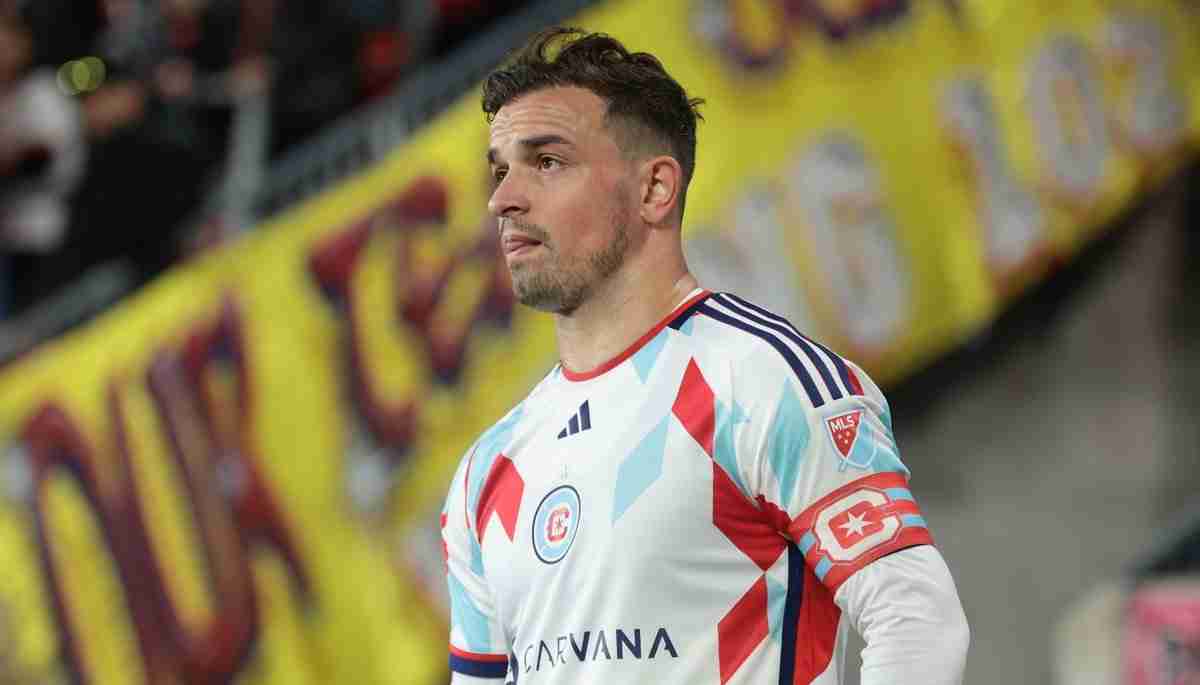
After Xherdan Shaqiri's departure, the Fire switched formations and whether you call it a 5-3-2, 3-5-2, 3-5-1-1, or any other variation thereof, the fact is, they added a third center-back. At times, that’s been Arnaud Souquet, a converted right-back, but the fact of the matter is it essentially gave the Fire one more defensive player.
That’s fine – and can actually help a team generate more offense – if the center-backs liberate the wingbacks to perform more like wingers (and if they’ve got the offensive chops to be real scoring threats), or if they can link up effectively with the offense and find the right moments to join in, but with a few exceptions – like Rafael Czichos’s goal in Ft. Lauderdale – that hasn’t really happened, so on net, the Fire pulled put on one more deep-lying defender in exchange for an attacking piece.
Sometimes, it worked. All too often, it didn’t, and at times, Klopas let his frustration slip through, ever so slightly. When asked whether absences contributed to the goal in 1-0 loss in Nashville on September 18th, he noted that the team was playing with three center-backs and while clearly stating that the failure was the team’s rather than on an individual player, he seemed to be coming close to (but stopping short of) saying the quiet part out loud: That with three center-backs and two fullbacks, there is no reason that Sam Surridge should have had the space that he did on Nashville’s goal.
If you look at the Fire’s rest defense in the latter half of 2024 and compare it with say, the middle of 2023, you’ll see the Fire often hold a more defensive posture when they’ve got the ball this year than they did last year, and it’s hampering the team’s offense.
Even though the Fire dominated possession and won the xG battle against Nashville, they still finished with just 0.5 xG off of 10 shots. If you wind up with 0.5 xG in a game, you can’t really be too upset when you don’t score.
I see the logic in conservative when trying to battle for results, but the Fire didn’t get enough results to go their way, they’ve managed just 37 goals in 32 matches and the pressure is off. The Fire have still been conceding; the team hasn’t been producing offensively, and they’re out of postseason contention.
Chicago Fire Starting XI and Formation Prediction
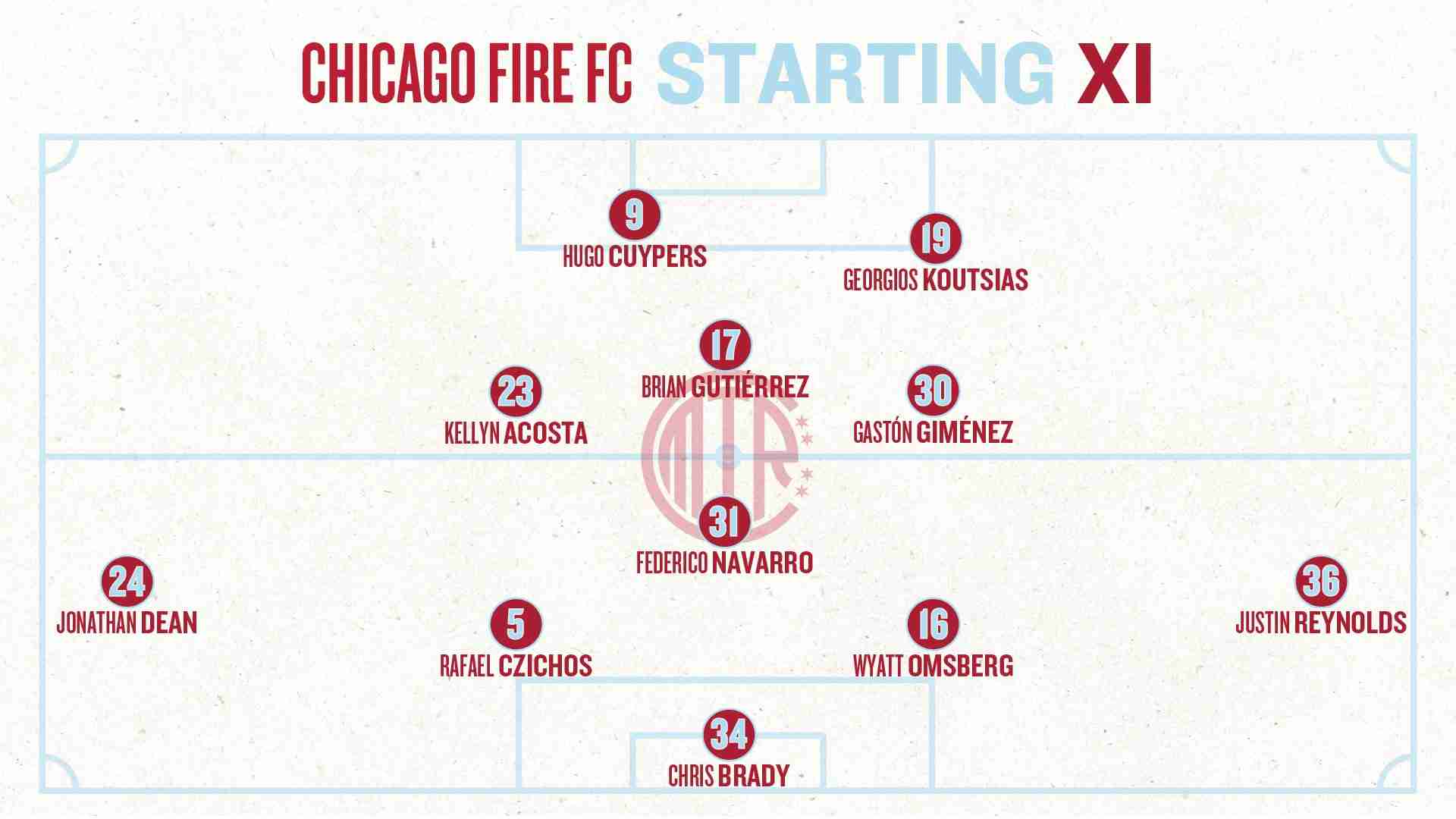
Hear me out here: Four-four-two (diamond).
Frank Klopas has loosely mirrored opponents formations several times this season, which means playing four in the back against Charlotte’s likely 4-2-3-1 is hardly a radical suggestion. He could revert to the formation that the team played almost exclusively from 2022 through the middle of this season, or they could play out of another formation with a four player back line.
Georgios Koutsias has been quietly emerging as an offensive contributor. Even though he’s been quiet in the past couple of games, he has still been making runs into the box, he is one of the best players the Fire have for progressive carries and his skillset makes him work well as a second striker alongside Cuypers.
Koutsias has come off the bench and played with Cuypers several times, but they’ve only started together three times: Two early in the season and, most recently, against Toronto. There’s a real chance they could develop chemistry, and their skill sets feel like they could be complimentary, but that could take time. This is an ideal chance to test it out.
At the opposite end of the pitch, a four man back line means the Fire can play natural center-backs in position. Rafael Czichos has two games left on his deal. There’s an argument for giving the spot to Mauricio Pineda for the sake of recent footage for the next regime, but Czichos also deserves to make the case for a new contract after being the team captain through a largely joyless period in the locker room. Wyatt Omsberg has been given the absolute shortest possible end of the stick with injuries in recent seasons and is in a contract year and deserves minutes, whether to fight for a new Fire deal or to make a case for money elsewhere.
Also in a contract year is Jonathan Dean, and being the only goal-scorer in the past three matches for the Fire is as good of an argument as any to start. Justin Reynolds has looked like an MLS player as he’s earned more minutes, and deserves more game time for experience and to have more game tape to his account.
In the midfield: Playing in a midfield diamond gives Brian Gutiérrez another shot at playing the No. 10 central playmaking role. I don’t know, but I suspect, that a big part of the Fire’s decision to switch to some version of 3-5-2 after Shaqiri left – first temporarily, then permanently – was to move away from needing to play a singular No. 10 as the focal point of the attack – the role the Fire tried and failed to get Shaqiri to fill for over two years. Gutiérrez’s talent ceiling is high, but he hasn’t reached for it nearly often enough; this gives him the chance while also giving him players that have offensive upside in Gastón Giménez and Kellyn Acosta around him.
Likewise, Federico Navarro started off looking like a smart U-22 initiative signing from the front office but his progress largely stopped and 2024 will be the fewest minutes he’s played since joining the Fire – including 2021, when was signed in August. Can he show flashes of the promise that he had in his first two seasons with the Fire?
This is his chance to find out. This isn’t a lineup built to have the lowest possible chance of losing, but there’s a lot of possible upside, both individually and collectively.