Fire at D.C.: Tactics and Starting XI

In the main match preview, I noted that D.C. has the second longest active playoff drought in the league, after the Fire, and in trying to get back to the postseason, they essentially pursued opposite strategies: The Fire made more changes to the squad, particularly at the top end, bringing in Hugo Cuypers, while keeping the front office steady, while D.C. brought in a new Chief Soccer Officer – Ally MacKay, formerly a top lieutenant in Nashville – and a new head coach in Troy Lesesne. It’s the second MLS head coaching gig for Lesesne, who was in charge of the New York Red Bulls last year but was dropped in a move that surprised many given his decent performance the year before.
So far, D.C.’s approach has borne fruit, while the Fire’s… well, can’t argue with being 28th in a 29 team table.
D.C. United
Overview

One thing Lesesne brought with him was a high-energy pressing system based on a high line of attack. In an interview on ExtraTime earlier this year, he said that his system had more to it than a vintage Red Bull-style play-against-the-ball-press, but that it’d take time for him to fully develop the tactics and style of play he wanted to see from his squad.
So far, though, the tactics have largely been working: D.C. currently occupy the 9th and final postseason spot in the Eastern Conference, and what’s more, they’re significantly underperforming their core numbers, suggesting that some combination of bad luck and an adjustment period under the new gaffer.
D.C.’s new tactics are something that hasn’t been lost on Fire Head Coach Frank Klopas, who called his opponent “A very direct team. A lot of crosses in the box… They’re pretty direct and then I think a lot has to do with if they can win second balls. And [Aaron] Herrera does a really good job getting forward and creating overloads on the right side. Comes inside, gets a lot of crosses and [Christian] Benteke is a big target for them.”
“I think they press at certain moments,” Klopas continued, “[they’re] good in transition because of the front three with [Jared] Stroud, [Ted] Ku-Dipietro, Benteke, they don’t recover as much defensively, and once they win the ball, there’s always that threat with their ability to find Benteke and link up play with those guys. It’s another area for concern for us in transition moments.”
Honestly, I couldn’t have said it better myself. There’s a lot of criticism that can fairly be lobbed in Klopas’s direction given the results this season, but you have to give him this: He’s got a keen understanding of the game, and his preparation for each match is meticulous.
Air Benteke
Klopas was right in bringing up Christian Benteke, currently tied for second in the league’s Golden Boot race. Benteke had a slow start in MLS in 2022 before scoring a respectable 14 goals in the league last season; this year, he’s already up to 11 tallies and we’re not even at the halfway point of the campaign.
No fewer than seven of Benteke’s goals this season come off of headers, and he leads the league in aerial duels by an absolutely insane amount: He’s won 154 of them; the next most in the league is Toronto’s Kevin Long at 54 (D.C. United’s Lucas Bartlett isn’t far off that mark, at 51). Put another way: His win percentage of 79.2% puts him fifth overall in that category (Long leads at 81.8%), and Benteke has lost (43) almost as many duels as Long has attempted (66).
Lionel Messi may be the GOAT, but he doesn’t often triple the numbers of his next-closest competitor in any statistic.
What formation will D.C. United play? What are their tactics?
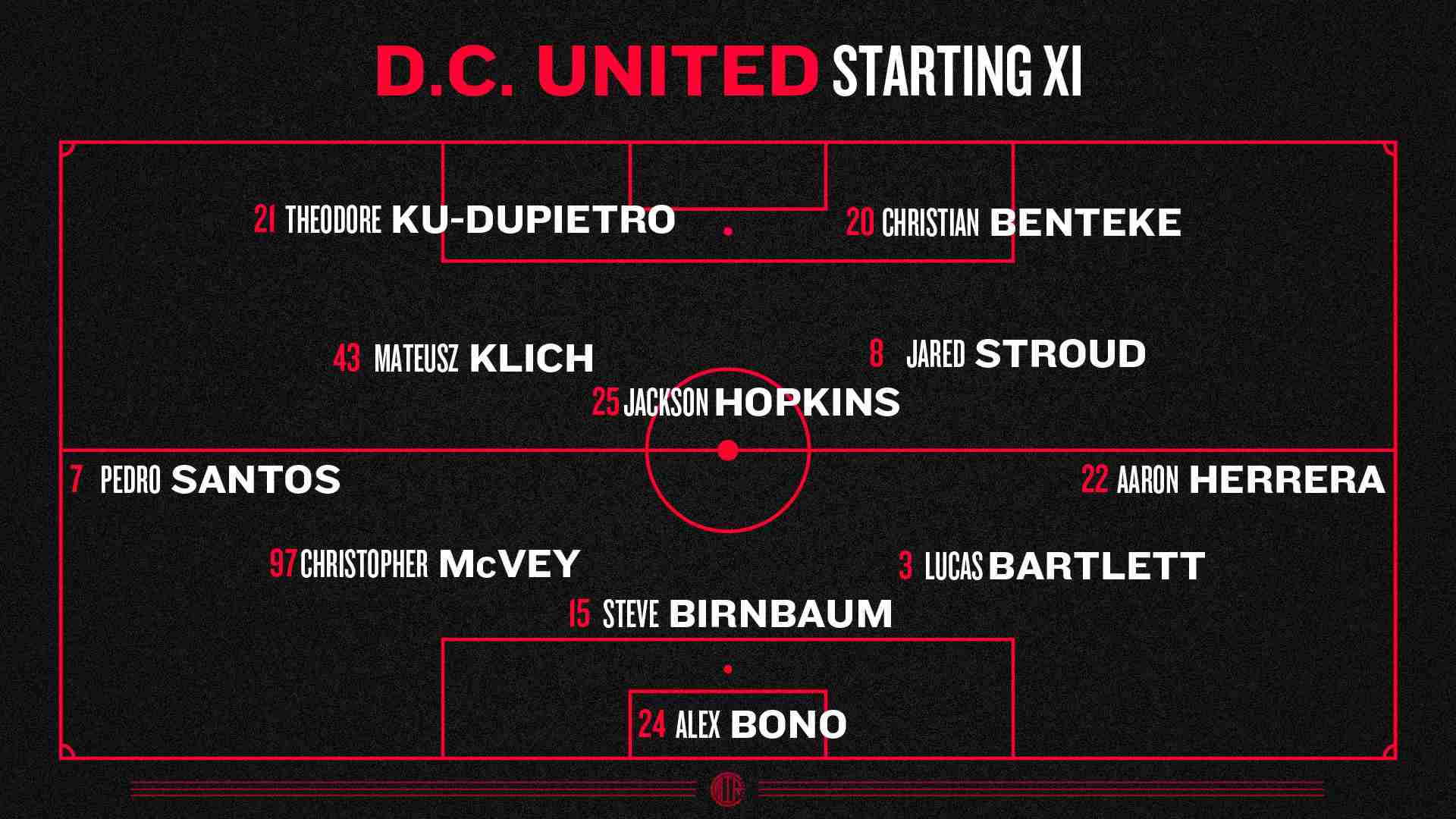
D.C. United have played a variety of formations this year: A 4-2-3-1 (six times), a 4-1-3-2 (twice), a 3-4-3 (twice), and a 4-3-3 (once). Most recently, however, they’ve been playing out of a nominal 5-3-2, but don’t let the numbers fool you: It isn’t an overly defensive formation, with the outside fullbacks normally Pedro Santos on the left, Aaron Herrera on the right – fully joining in the attack in possession, while leaving D.C.’s three natural centerbacks – likely Lucas Bartlett, Christopher McVey and team captain Steve Birnbaum – further behind to take care of defensive duties.
The midfield has proven capable of winning the ball back and making 50/50s, well, something more than 50 in favor of the team, lead by Mateus Klich (who still hasn’t been as much of a contributor in jumpstarting the attack as I think he was intended to be when the the Polish international was brought to the league).
I’ve said before – crosses aren’t a high-percentage play in soccer, since you’re essentially taking possession converting it into a 50/50 ball. Maybe you connect, maybe the other team recovers, maybe it’s a goal kick, maybe it’s a corner. Fine, I guess, but it’s a lot better to actually get a chance if you can, rather than turning it into a coin flip.
D.C., however, are a big into crosses (currently sixth in the league, with 228), but make them work a disproportionate amount of the time, because Benteke is more of an aerial threat than a squadron of A-10s bearing down on you.
Chicago Fire

The Fire’s issues remain the same: Though the goalless droughts are over, both at home and on the road, the team has still only managed four goals since Easter, two against Houston, and two in the seven matches since.
The problems remain the same, and Klopas – who’s often preached the importance of mentality in getting results – has admitted it’s starting to seep into the squad. “The mental state of the team is obviously down,” he told reporters in the midweek press conference, “I think that’s expected when you don’t get results.”
That necessitates changes: “Every game, we have to try something different. We’ve tried some different ways of playing 4-4-2, 4-2-3-1, 3-4-3, but we have to at this point. And even though there’s no relegation battle in this league, we have to approach every game right now like it’s a relegation fight until we get out of the situation we’re in, and have the mentality that we’re going to go in and leave everything on the field and have that kind of commitment by everyone.”
Again – say what you want, but the gaffer gets it. The question becomes, is this the match where the changes – be they formations or tactics – change the outcome?
Was Shaqiri Benched?
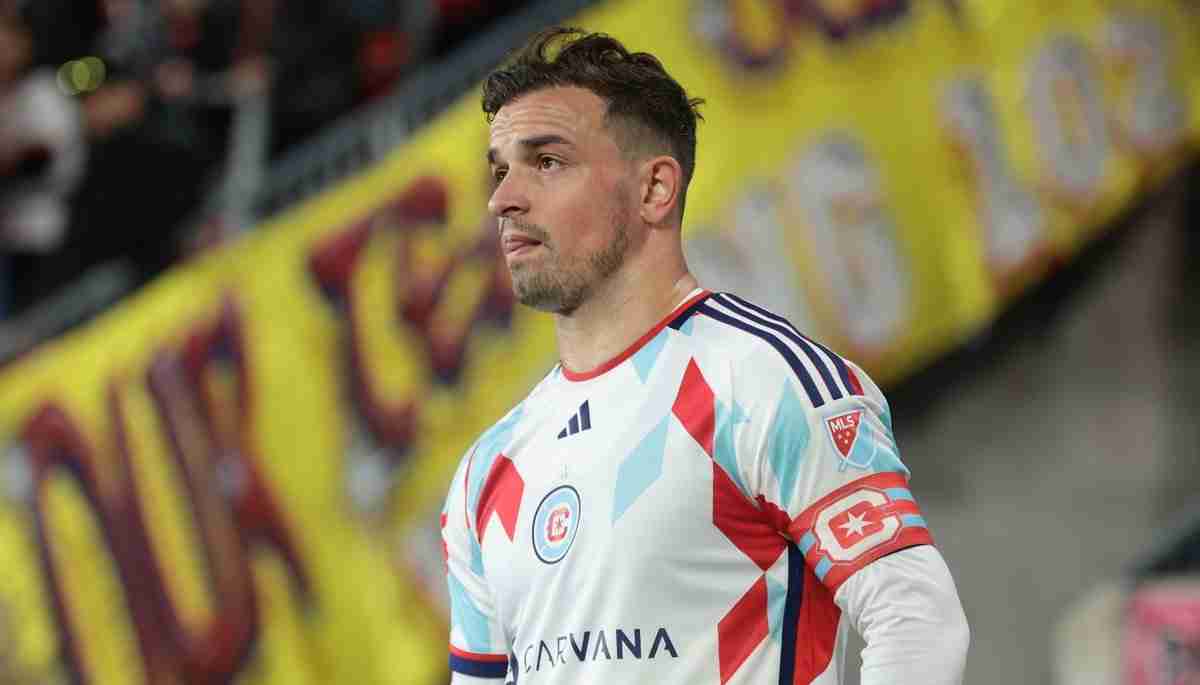
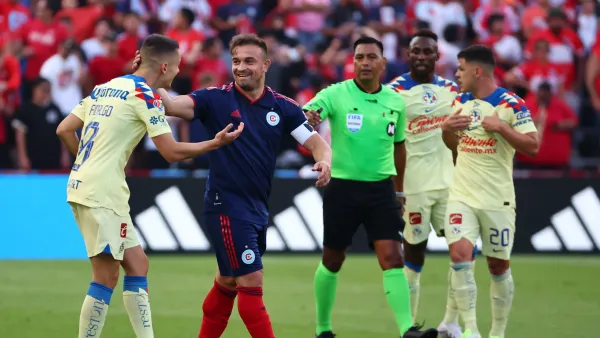
For the first time in memory, Xherdan Shaqiri didn’t start a match, at a point when there wasn’t an injury concern or when he wasn’t freshly arrived in the country after international duty.
When asked about it midweek, Klopas said “I don’t want to use the term ‘benched” because I think we played three games in a week and I would say more ‘rotation’ because it happened with some other players, too.”
Maybe, Frank, but I’m not sure I buy that: Shaqiri hasn’t been performing up to expectations, and when the chips are down, you start playing your version of the XI, not the one that you’re supposed to play.
Lies, Damn Lies and Statistics

The Fire, like D.C. United, are now significantly underperforming their underlying numbers.
In their current winless streak (7 matches), the Fire have scored twice and conceded 12 times, for a -10 goal differential over that stretch. Over the same span, however, the Fire’s expected goals (xG) are 7.2 and expected goals against (xGA) are 9.1
On offense, that means the underlying numbers suggest the Fire should have five more goals than they actually do, while they’ve allowed 3 more in than the numbers think they should have. Scoring seven goals in as many matches isn’t exactly Manchester City-level dominance, but it’s a heck of a lot better than two goals.
On the year, the Fire have underperformed their xG by 3.8, while allowing 26 goals, versus an xGA of 21. Add that all up, and it becomes striking: The numbers say the Fire should have about a -5 goal differential, when in actuality, it’s -13.
Over short periods of time, deviations from xG are normal, but the larger the deviation, and the longer it endures, the more that it looks like something is up. For starters, the FIre outperformed their expected numbers early in the year, so a bit of it is reversion to the mean, but just passing it off as normal statistical fluctuations risks missing something important. xG models typically look at where a shot is taken and compare that to how often a shot from that location becomes a goal (using some dataset, which varies by source). They don’t look at things like, how many defenders are between the shot taker and the goal, how long it took for the shot-taker to get the ball off their feet, etc.
Part of the reason he Fire are underperforming their xG, I’d argue, is because the offense has been too slow to set up, and by the time that what would have been a high-value chance is taken, there’s bodies in the way that can intercept or block the shot, the opposition goalkeeper is in position, and so on.
And on the other end of the ball, the Fire are underperforming their xGA because of the same defensive miscues we’ve seen from the squad for years: Leaving players – even the opposition’s leading scorer – unmarked in the box, giving up second and even third chances, and so on.
One of the hidden assumptions in xG models is that, at a certain level, most professional athletes are good enough where performance between them is about equal, and the differences between team performances are more about how many opportunities are created, more than who is getting the chance. As always, a statistic doesn’t prove anything – but gives you a starting point to see what’s actually going on. In this case, the Fire are underperforming them models in part because they’re underperforming.
Who will be in the Chicago Fire’s Starting XI vs D.C.?
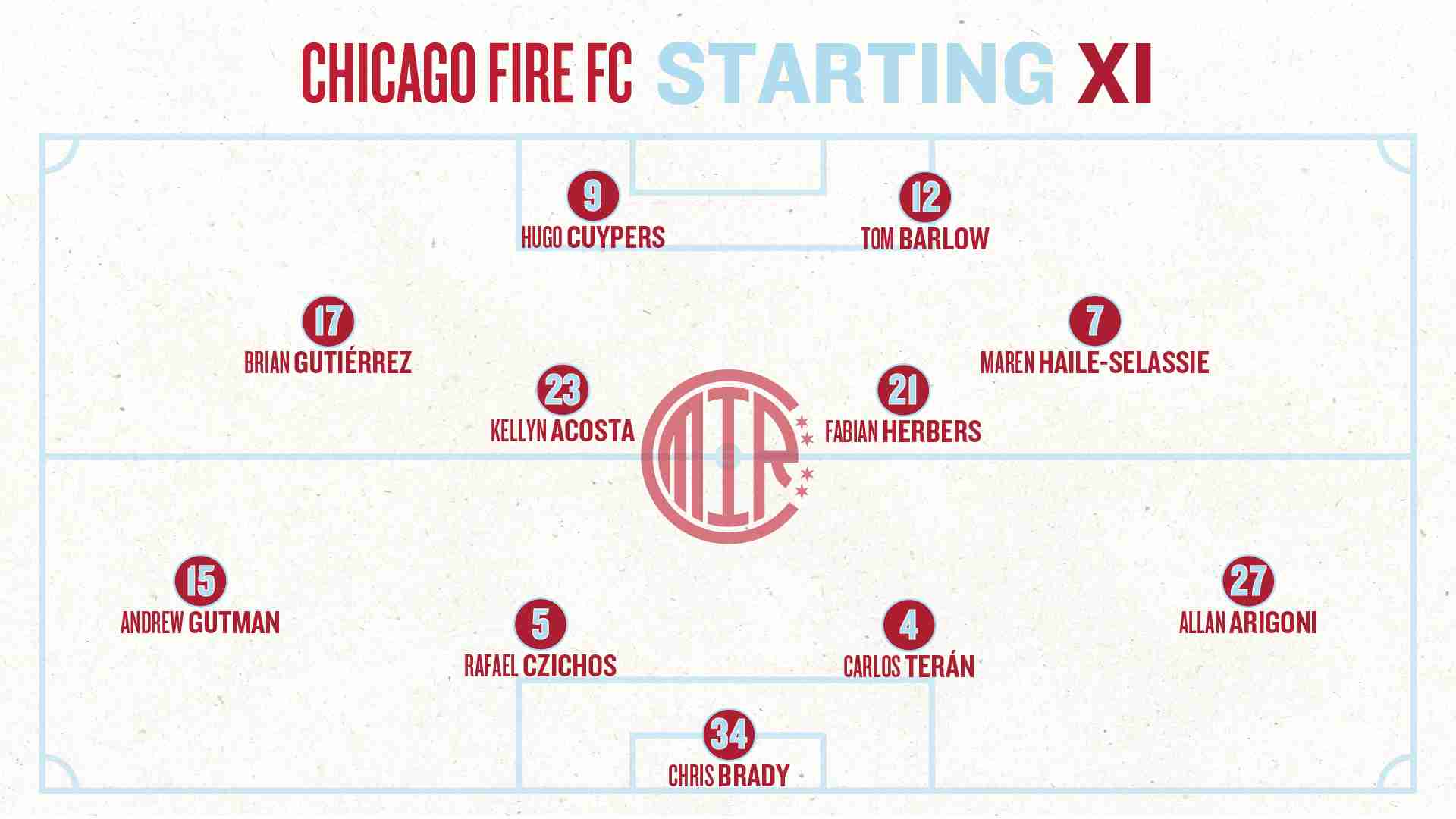
At the risk of being the writer who called wolf: For the third week in a row, I think there’s a chance that Klopas moves away from the 4-2-3-1 that’s been the team’s bread and butter over the past two and a half seasons, but this time, I think the odds go over 50%.
He mentioned the 3-4-3 and 4-4-2 in his press conference, both of which the team has tried; a 4-3-3 is the obvious gap but I think a return to the 4-4-2 is most likely, and Tom Barlow may get his first start in a Fire uniform. Barlow played for Lesesne with RBNY last year, and so knows his system, his pressing triggers, and Barlow, himself, is a very capable presser. (I genuinely hope that the Fire don’t mimic D.C.’s setup and put three center backs on the field – something Klopas has been known to do in the past. Whatever the Fire’s biggest problems have been of late, adding a center back and taking off a more offensively-oriented piece is not going to solve things for the team).
Adding a second striker naturally means that someone else has to move off; that might well be Shaqiri based on his recent performance, but he’s departing soon for the Swiss national team camp before the Euros, and with three games this week, there’s an argument to get minutes out of him now to make squad rotation for the rest of the week easier.
On top of Barlow, it’s likely that we could see Maren Haile-Selassie return to the starting XI after an appearance off the bench last week as he returns from injury. Flanking him, Brian Gutiérrez may replace Chris Mueller in the starting XI, nominally starting on the outside but with a brief to move centrally and help distribute when given the opportunity. In between them, Kellyn Acosta and Fabian Herbers are the best options, even if both have had, like most of the squad, a dip in form lately.
In front of Chris Brady, I wouldn’t expect any changes from the lineup last week, with Rafael Czichos and Carlos Terán playing between Andrew Gutman and Allan Arigoni. Both Arigoni and Czichos need to be careful: They’re both on four yellows, putting them one card away from a one-match suspension. If Arigoni can make two more appearances (including against D.C.) without being booked, the league’s Good Behavior Incentive will reduce his card total by one; Czichos was carded against Columbus, so he’ll need to make it five matches without a writeup.
Will this be the match that the Fire finally get a result? Will they hold a lead for the first time in seven matches? Time will tell. D.C. have shown that they can play a good game of football this season, but they’ve also been doing it with a simple, no-frills tactical setup and the Fire have the skill, on paper at least, to come home with three points. Whether that performance on paper can be realized is, as always, a different matter.