Fire at St. Louis City: Tactics and Starting XI

After a three match homestand that was rendered distinctly anhedonic for hometown fans by the Fire’s inability to score a goal during the stretch, the team is back on the road to face their nearest – and newest – MLS neighbor in St. Louis City, a developing rival that the team dispatched twice in less than a week last season.
St. Louis do not generally play the most aesthetically pleasing soccer, relying heavily on a high press and quick counters in a style that’s been called “murderball” by more than one commentator, making this game winnable for the Fire – presuming, of course, that they can overcome their offensive timorousness and find a way to reacquaint themselves with the business end of the opposition’s goal.
St. Louis
Overview
Before the Fire faced the New York Red Bulls, I described the team’s tactical evolution away from traditional, dyed-in-the-wool “Red Bull soccer,” as imported from the team’s sister clubs in Salzburg and (originally) Leipzig. In so doing, here’s what I said about the O.G. Red Bull system:
For years the Red Bull game model virtually set in stone: Press, repress, press again. Bomb the ball down the pitch, get on defenders before they have time to advance the ball themselves, make them cough up the ball and then you’ve got possession in a dangerous area with an unsettled opponent. From there, either you score, or you give your opponent the ball in the least-dangerous area of the pitch – deep in their own half. And then you win the ball back, rinse, repress, repeat. And run. The system involves a lot of running.
St. Louis still does that. A lot.
Press It Hard
As I mentioned in the main preview, St. Louis has passed the ball fewer yards than any other team in MLS, and they’ve carried the ball fewer yards than any other team in MLS. To be clear: They’ve also attempted fewer passes than any other MLS team (though their passing completion rate, at 72.2%, is second-to-last in the league behind D.C. United – though for both teams, that’s more of a feature than a bug, as they’ll gladly pass the ball into dangerous areas. If it works – great! If not, no great loss, as they’ll then press the player that just won the ball and try to create a turnover).
As a result, St. Louis’s possession numbers are towards the bottom of the league’s and they have the second-fewest touches on the ball in the league at 5,396, after only the Philadelphia Union, who ultimately play a not-too-dissimilar system. (And lest you think that’s because St. Louis are one of the handful of teams that have played only 10 games – so have the Columbus Crew, who have 7,163 touches on the ball, nearly a third more than St. Louis).
Last week, I said that there were, broadly, two paths to successful attacks in soccer: Fast and direct, and slow and intricate, and used St. Louis as an example of fast and direct.
They are the fastest attack, averaging just under 2.3 meters per second (the next fastest is Los Angeles at 2.22 m/s), and the most direct at 2.55 passes per sequence, a smidge ahead of D.C. United. (The Fire’s figures are 1.79 m/s and 3.27 passes per sequence.)
The connection between those numbers isn’t lost on Fire Head Coach Frank Klopas: “I think they are the quickest because they are a very direct team. They are probably the one team that from all the teams, their ability to -- the trigger points that they have with the press, once they win the ball, you go back to the old Red Bull days where it's just their first option is always to play vertical and then they get numbers forward, they look to counter-press and create a lot of opportunities like that.”
The team simply doesn’t like to build through possession: They’ve had just 39 sequences of 10+ passes this season, dead last in the league. The Fire are 20th but still have 95 such sequences.
Backpass Goals: More than Just Comedy
St. Louis made it to the top of a relatively weak Western Conference last year on the back of a five game winning streak to start their time in the league. That five game winning streak was, in turn, powered by a number of goals of opposing players apparently gifting the ball to St. Louis attackers, starting with their team’s opening game against Austin, in what one English paper called the “funniest goal ever.’
https://twitter.com/stlCITYsc/status/1629698906744299522
The first time it happened, it was explained away by the fact that Stroud played for Austin the year prior, but it happened time and time again.
Two things can be true at once, and one of them is that St. Louis was extremely lucky early on, and in fact, over the course of the campaign the team outperformed its expected goals (xG) by nearly 20 goals for, while allowing 5 fewer goals against (xGA) than the model suggested. The net result is that St. Louis had a +17 goal differential (GD), while statistically, their actual goal differential should have been negative (-7.5, per fbref).
The other thing that’s true is that a lot of those backpass goals happened because St. Louis’s style of play put attackers into positions to receive gifts from opposing teams, and even if the opportunities haven’t been quite as comically endowed as they were last year, the whole idea of St. Louis’s game model is to get teams to cough up the ball in dangerous areas.
This year, however, reality has caught up with the team and although they’re statistically playing better than they were last year – they actually have a positive xGD so far – the results hew much more close to where the underlying numbers say they should have been all along.
Who Will Be in the Starting XI for St. Louis
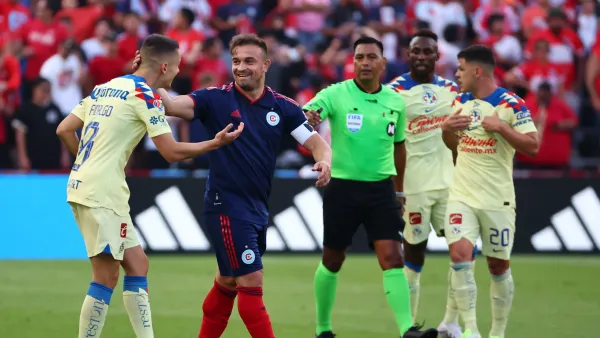
The biggest going hard into the Red Bulls-inspired system is that it’s designed to paper over a great number of roster deficiencies. That’s good, because on the whole, this isn’t an expensive roster: Based on last year’s salary data, Xherdan Shaqiri made more money than St. Louis’s top eight earners combined.
St. Louis lacks a great chance creator, well, the high press creates chances for you. Don’t have a skilled backline and midfield that can build through pressure? Don’t worry about building – just play a long ball, hope that you recover, and if not? Press and hope that the opposition gives up the ball.
That doesn’t mean there isn’t skill on the roster: João Klauss has significantly outperformed his $1.4m salary, and GK Roman Bürki – the most expensive goalkeeper in the league and St. Louis’s most expensive player, at $1.6m a season – was statistically the best goalkeeper in the league last year.
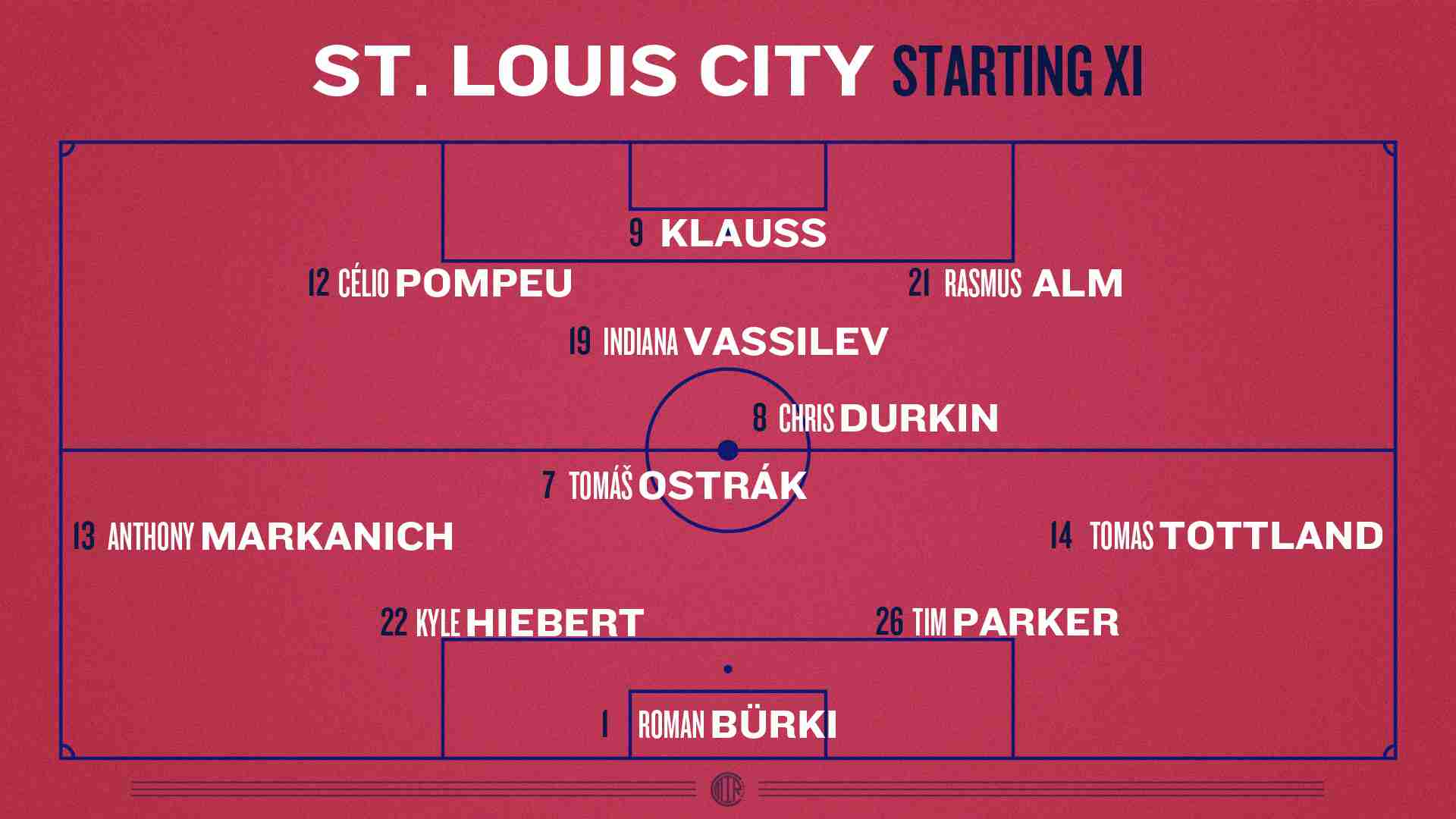
Around them, they’ve found players that have stepped up and played well. One of them is midfielder Edward Löwen, but he’s out with a hamstring injury. Partly as a result, and partly because playing with a formation with multiple forwards when Klauss is really the one carrying the load doesn’t make a ton of sense, the team’s switched to a 4-2-3-1 over the past few matches, with Indiana Vassilev playing the #10 role, flanked, typically, by Célio Pompeu and Rasmus Alm.
Chris Durkin, one of the team’s key offseason acquisitions, joins Tomás Ostrák in the double pivot ahead of Anthony Markanivich, Kyle Hiebert, Tim Parker and Tomas Tottland, another new member of the squad this season.
Chicago Fire

Six Hours and Counting
Six hours. 372 minutes. That’s how many minutes of competitive soccer the Fire have played without finding the back of the net. In all of April, the team scored just two goals, both at home against the Houston Dynamo. The team was shutout the week prior in Atlanta, so the last time the Fire scored an away goal was in New England on March 23rd – 49 days before the match against St. Louis.
In other words, it’s time. The Fire have been getting into dangerous areas, and the team – including Hugo Cuypers – actually had opportunities in the box against the Revolution, but the shots were either blocked (as happened to a great chance for Cuypers) or went wide.
During the team’s offensive struggles, I’ve asked both Klopas and several members of his squad how you keep up confidence when the team hasn’t been scoring. After the loss against New England, Klopas said “we just need one; something to fall our way and it seems like nothing is going our way and everything is going against us…. With confidence, I just think that, like I keep saying, it's just putting the guys in situations that they're going to face in the game. I know it's a repetition and cliche that I'm saying the same things, but there's no other way to tell you; it's just back on the pitch in training and continue to gain confidence with what you're doing in training, that's the only way. The important thing is to stick together.”
Players also echoed the importance of training. In the locker room shortly after Klopas said those words, Xherdan Shaqiri said “In this game you have to score, and this was the only thing we missed today – that we didn’t score a goal. I hope we can work a lot in training this week and to do things better because the quality is here, but we need to bring it also in the games, not only in training.”
Following the stinging loss against Real Salt Lake two weeks prior, Kellyn Acosta said “It’s about communication, about sticking together. In moments like this, it’s important for us to come together, now more than ever. I think the blame game, pointing fingers, doesn’t get you anywhere… It starts in training.”
Set Piece Reset

I’ll give this to Klopas: He’s right – sometimes it just takes one goal to restore confidence. After that, suddenly, passes get weighted better, shots go on target rather than sailing around it, players enter the box thinking about how they’ll score instead of wondering if they can.
Set pieces are an ideal way to get that first goal in: There’s just fewer variables. They’re less game-state dependent. And you can drill them again and again, and they (mostly) work the same way.
The Fire became one of the only teams in MLS to hire a dedicated set pieces coach when they brought in Ryan Needs this season to address an area where the team had obviously underperformed its potential over the past few seasons, conceding on set pieces but all too often failing to score.
So far, the results have been slow in coming: The Fire have only one goal from dead ball scenarios, and are tied for last with just 10 shot creating actions from dead balls, while they’ve conceded three goals off dead balls. The only teams that have given up more goals from those situations are LA Galaxy (whose game model seems to be an experiment to see what happens if you combine a great offense with a terrible defense) and Portland Timbers (who’ve conceded 23 goals, second most in the league).
It needs to be better, because it’s such an obvious way to break the team out of the scoring slump. A team that’s likely to field Hugo Cuypers, Xherdan Shaqiri, Kellyn Acosta, Brian Gutiérrez and two talented wingbacks in Andrew Gutman and Allan Arigoni on Saturday should be able to generate goals off of corners and free kicks.
Stuck In the Middle

Given St. Louis CIty’s propensity for long balls and using counter-pressing to generate offense rather than building up through the back and carrying the ball up field, one part of the defensive midfield’s job – keeping opposition attacks from playing through you – is largely obviated.
Asking Fabian Herbers about this, he said “oftentimes what happens is the ball goes over your head, and then you try to recover and then win second balls…. So once we have the ball at our feet, you know, even though they are pressing, we still have to try to find the spaces and try to play through the lines because I feel like that's our strength more than just hitting long balls and trying to win second balls.”
He’s right: The Fire’s back line needs to be ready for the St. Louis to try to close down on them quickly. The defensive midfield - likely Kellyn Acosta and Fabian Herbers - needs to be available for the pass from those players so that they can get the ball away before giving St. Louis an opportunity to win the ball; in turn, they also need to be ready to get into position to win the ball back for those times when that doesn’t happen.
Once the ball makes it to the midfield, they need to play quickly – St. Louis commits a lot of bodies forward, meaning that they’re out of position if the Fire maintain possession and can start getting the play moving the other way. By being aware of what cues St. Louis uses to start the press, the Fire can turn them against their opponent.
Back to the Future: How Will the Fire Line Up Against St. Louis?
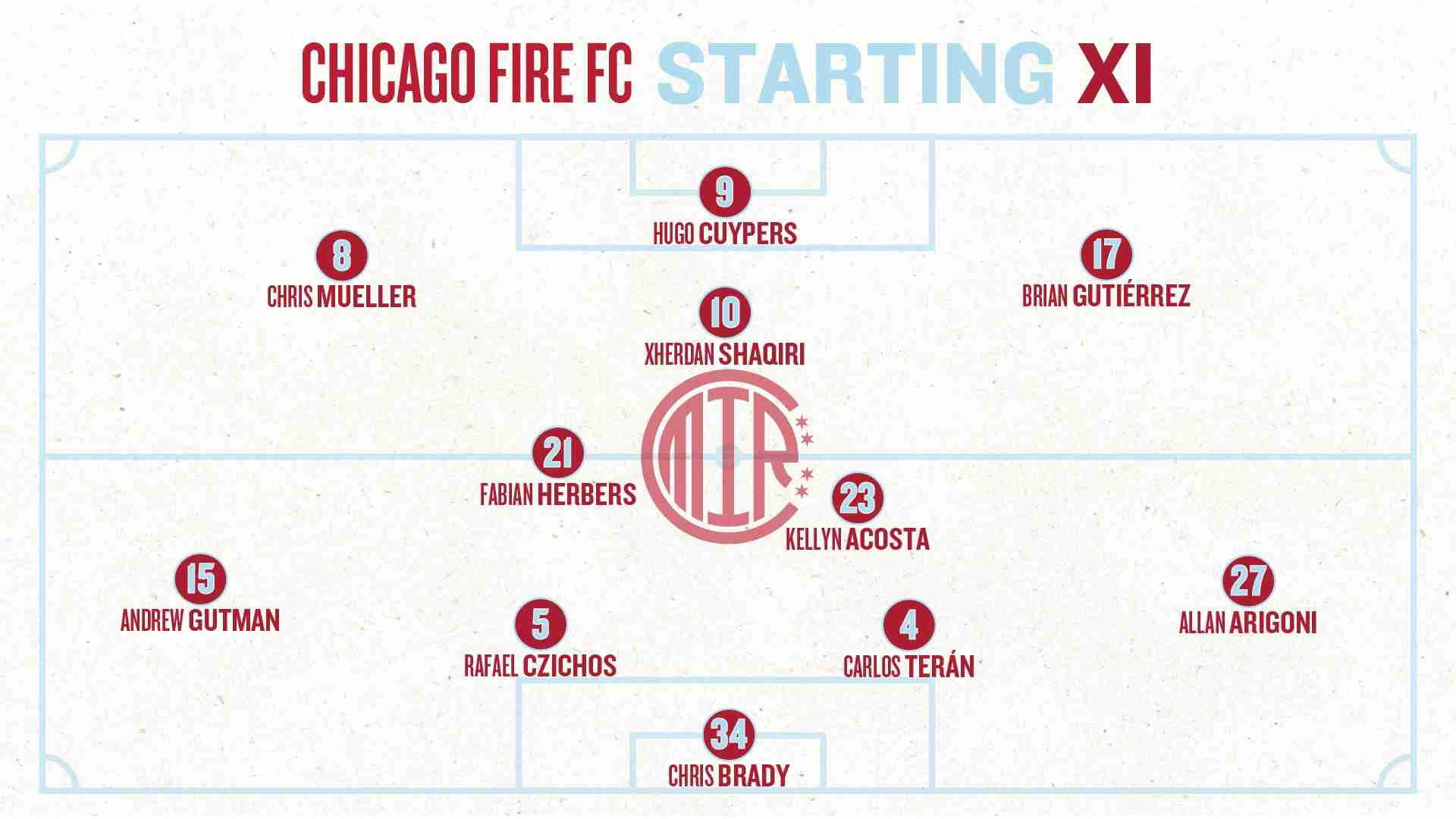
I thought that the 4-4-2 used against Atlanta two weeks ago would be a one-off, but I was wrong, and it stuck around last week, with the only change coming in the XI coming due to Tobias Salquist’s injury and Gutiérrez’s readiness to return to starting duties (though several players did swap sides or switch positions).
I may be wrong again, but I suspect that this time we’ll see a return to the team’s traditional 4-2-3-1. One motivating factor for the switch was doubtless the fact that Shaqiri wasn’t in the lineup. He’s been training with the full group and seemed to dismiss reporters’ questions about his health following the match last week, so he’ll probably get the start.
With Maren Haile-Selassie out for this match (he’s been training separately, as has Gastón Giménez), that makes Klopas’s task somewhat easier: Shaqiri will start centrally flanked by Mueller on the left (thankfully, the failed experiment of playing him on the opposite side is over), and Gutiérrez on the right. Do many Fire fans wish that Shaq and Guti would swap positions? Yes. Will that be what happens on the lineup sheet? No. But in practice, Gutiérrez has been cutting inside and Shaqiri has been drifting wide and as long as everyone is on the same page, it isn’t really a major issue.
That leaves Hugo Cuypers as the sole striker. Georgios Koutsias has shown some impressive work on the ball in his previous two starts, but the team’s lack of production and availability of something closer to the preferred XI probably pushes him to being an option off the bench.
In the defensive midfield, Kellyn Acosta will likely be joined by Herbers, with Mauricio Pineda and Federico Navarro as bench options.
Ahead of Chris Brady, Gutman (who has played well since is return, and will likely be improving as he works back into full game rhythm, although his giveaway did lead to New England’s goal last week) and Arigoni (who, likewise, has played well) will start at wingback on the left and right, respectively. At center back, it seems that Rafael Czhichos, who was taken out midway through last week’s game with a knock, is good to go. Those were the only minutes of the Fire’s 2024 campaign that he hasn’t played, so he’ll almost certainly return to the XI alongside Carlos Terán, whose ability to win aerial duels will be useful given St. Louis’s propensity for long balls; Pineda is likely the next man up if Czichos isn’t ready to start.
On a sheer talent level, this match should be no contest. Player for player, the Fire have more skill at virtually every position – goalkeeper being the one possible exception, but make no mistake: Chris Brady is far from a slouch – and yet St. Louis finished 2023 with more points (56) than the Fire have earned in all of last season and a third of 2024 combined (50).
St. Louis’s system gives the team a high floor – but that and the limited talent of their roster also gives them a comparatively low ceiling. If the Fire can exploit the gaps that their system creates, they can do two things for the first time in over a month: Score goals, and win a soccer game.