Fire vs Columbus: Tactics and Starting XI

After the loss in St. Louis, Frank Klopas and Xherdan Shaqiri both mentioned that it was still “early” in the season, causing me to do a bit of math.
With two matches coming up that week, if the Fire won both, they’d have to be a slightly-better-than-average MLS team for the remainder of the season and they’d have a good shot at a postseason spot. After the loss against Charlotte, that’s obviously not a possibility, but if the Fire win against the Crew, their task for the rest of the season is basically reset: On a points per game (ppg) basis, they need to hit almost exactly the same number they needed to hit after the St. Louis game to make the postseason.
That’s not exactly an easy task – over the next 20 games, they need to perform about as well as LAFC did last year over the course of the 34 game regular season – basically, at the same level as the top five or six teams in the league – but it’s an easier hill to climb than if the team loses or draws Columbus: A draw means at least as good as Columbus or St. Louis was all of last season from here on out just to have a shot at the play in spot; a loss means the team needs to be one of the top two or three teams in the league from here on out. Math is catching up to the Fire’s results, and after the matchup against the Crew, a full two-fifths of the season will have been accounted for.
That makes getting a win critical, but it’s not an easy task against a Crew team that plays some of the best soccer in the league. Despite the team’s skill and strong play, however, results haven’t been going their way, and their win on Wednesday against CF Montréal was only victory in their past eight league matches.
Note: Earlier this season, this is an abbreviated article focused on updates. For an overview of Columbus’s tactical approach, check out our earlier piece.
Columbus
Overview
Despite the lack of results in recent matches, it’s still basically the same Crew team: They lead the league in possession, according to FBRef, edging out Houston, Miami and the L.A. Galaxy, and their model remains based around using possession to take apart opposing teams’ defenses before using surgical passes through opposing lines.
Columbus leads the league in pass completion percentage, and is third in the league for both short and medium passes attempted and completed, according to FBRef.
They don’t rely on long passes because they want to take teams apart line by line, unsettling oppositions and giving them time and space to make attacks on their preferred terms.
Why haven’t Columbus been winning?
Until Wednesday, the Crew had been on somewhat of a slide in MLS, and even now, they’ve only won four games so far this season, alongside six draws and two losses.
The reason most often cited for the Crew’s lack of league success has been that they’ve been preoccupied with continental competition, and that’s got a ring of verisimilitude to it: MLS rosters are not large, and even though the addition of MLS Next Pro gives teams additional roster flexibility they haven’t had previously, that doesn’t give you access to the kind of high-end talent that wins games n the league, let alone beats the top teams in the continent, as the Crew have had to do to advance to the CONCACAF Champions Cup final, slated to be played on June 1.
That’s not the whole story, however: At some point over the past decade, most teams around the league adopted a transition-heavy style of play. It wasn’t all as “high press and kill ‘em on counters” as the New York Red Bulls (or more recently, St. Louis City) have adopted, few teams in the league really tried to beat you with possession.
Enter Wilfred Nancy. In a league where pressing triggers (certain events that cause defenders to rush to opposition players) are the norm, Nancy’s teams – first in Montréal, now in Columbus – have flipped that, using play with the ball to convince opposition players to come and try to win the ball back, at which point, the time and space that onrushing defenders create by moving to the player with the ball is used against them.
A near paradigmatic example happened CF Monterrey – one of the top teams on the continent.
https://twitter.com/herculezg/status/1783526985907777669
Look at how the Rayados start mobbing whichever Columbus player has the ball. For every player in blue rushing to Columbus’s ball possessor, some other Crew player is left unmarked. By using patterns of play - you’ll see Columbus players running backwards, to the side –the player with the ball knows that they’ll have outlets, they make short, crisp passes and then that player has more space and time, and either they advance it, or the cycle repeats.
A lot of what makes that system work, however, is based on the idea that multiple players are going to advance on the ball to create a turnover, using a press, in something akin-ish to the Red Bull style. MLS teams don’t sit in low blocks; they do play in transition.
Columbus exploited that fact – heavily – last year, and even though I’m sure every team had video sessions of showing how it happens, it takes a while for things to sink in.
So the other part of the reason behind Colmbus’s changing fortunes is that it’s really begun to sink in for oppositions, and at least some of them aren’t going to commit numbers onto the counter attacking the way that Columbus wants them to. That doesn’t destroy Colmubus’s game model, but it does make it less effective
If the Fire can avoid falling into the traps Columbus likes to set – and that’s a big if – their chances of a result go way up.
Who Will Be in the Starting XI for Columbus
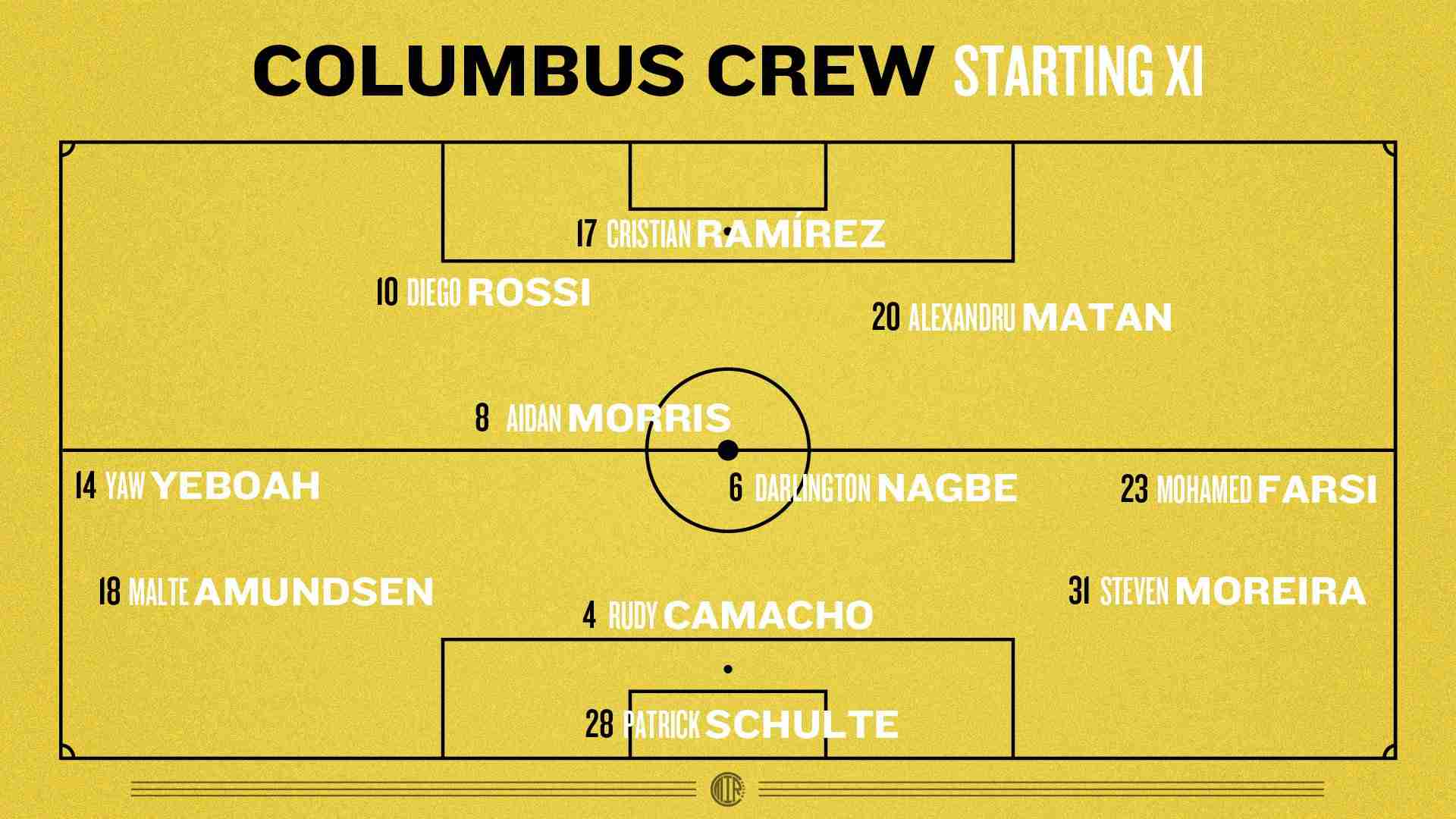
On top of the team’s tactics, one true strength of Wilfred Nancy has been player growth and development. It’s something we saw in Montréal, where players like former Chicago Fire product Djordje Mihailovic were able to take the next step.
In Columbus, he’s taken players like former Indiana Hoosier Aidan Morris and helped them take the next step in their development, with Morris rapidly gaining a reputation as one of the top defensive midfielders in the league. He’s also taken players like Mohamad Farsi (ironically, a Montréal native who was never in the CF Montréal pathway), who projected to be maybe a bench option in MLS, and turned him into a starting-quality wingback on a championship-caliber roster.
“Next man up” mentality only gets you so far, though, and the Crew are likely to be without Cucho, the DP center forward who led the team in goal contributions last year, with 27 (16G, 11A) in 27 matches played (all starts); he’s also been their leading scorer this year. He’s listed as “questionable” but with the team just two weeks away from a continental cup final, I suspect that even if he’s available, he’ll likely be a bench option, to be used if need be, rather than risking re-injury with starting minutes.
Christian Ramírez is likely the next man up for the Crew, but he’s failed to find the back of the net so far this season (in very limited minutes).
Chicago Fire
Why Can’t The Fire Score?
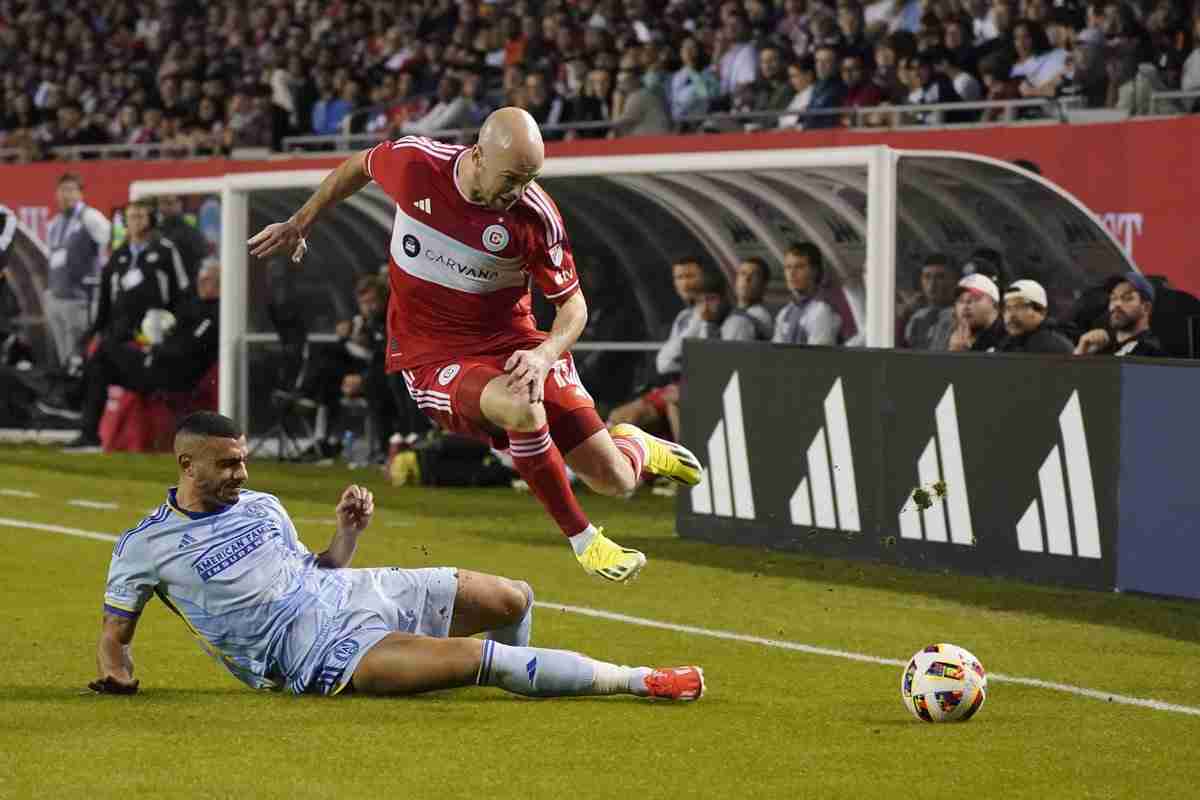
This is the critical question on everyone’s mind, including Fire Head Coach Frank Klopas, who, in an emotional press conference following the loss against Charlotte on Wednesday, said “I come up here all the time, you know, it's the same questions, I'm trying to find solutions and answers. And that's the difficult part. We tried different things and I know it's the old, same thing I can say: we just have to keep going somehow and find a way out of this, and for me and my staff, try to find the right group of guys right now. And up to this point, we haven't.”
One argument, of course, is that it’s bad luck: Since the team’s most recent win against the Houston Dynamo, the team has 5.9 expected goals (xG), according to FBRef’s model, but has scored exactly one actual goal. They doubled up on Charlotte’s xG on Wednesday (1.0 to 0.5), and also slightly edged out the New England Revolution earlier this month (1.1 to 0.9). If the Fire had won both of those matches and lost all of the others (including matches against the Red Bulls and Atlanta, which were draws), they’d be sitting with 14 points and in the final postseason spot due to tiebreakers, though the Union and Nashville both would be level on with a game in hand.
Still, the Fire didn’t score them, and sometimes, when teams underperform their xG over a period of time, it’s not an issue of bad luck or small sample sizes, but instead an issue of the team on the pitch not performing the way they “look” in the model.
That could be the case here. Even though the Fire have been getting shots off (which add up to create the xG), when they do, opposition defenses are often set, giving the other team a close-to-ideal opportunity to stop the goal.
In previous tactical guides, going as far back as the start of the month, I’ve discussed what I think is the fundamental flaw, which is that the Fire have been playing fairly direct but they’ve been doing it slowly, almost as if they are trying to be a possession-based team but without the kinds of passing networks that unsettle opposition defenses that Columbus uses.
In addition to being slow, the model has been predictable: The Fire have a midfielder play the ball long and wide to the wings, and rely on what are normally called “hopeful crosses” into the box to create offense. In reality, crosses are a relatively low-percentage play in terms of turning possession into goals, and in the Fire’s case, in the unlikely event that the ball doesn’t fly over everyone and out for an throw-in for the opposition or a goal kick, chances are roughly equal that the ball will land to a Fire player or an opposition defender.
With crosses high in the air, it means that a player normally needs to take too many touches to settle the ball and get a shot off, which is a particularly big problem when the attack has been slow, since by that point, every opposition player is exactly where they want to be. That’s happened enough where it seems like few players have much hope either when passing or receiving a “hopeful cross.”
There aren’t simple solutions – if there were, the team would have tried them – and even if one issue for the Fire is that the attack is predictable, the idea that the team could practice and implement new patterns of attacking football in the 70-ish hours between the end of the match against Charlotte and the kickoff against Columbus seems far-fetched to say the least.
Instead, the best solution is realistically to focus on the existing gameplan, but work on having players get into slightly better positions and making sure that passes are as crisp as possible and play players take as few touches as possible to progress the ball.
Who will be in the Chicago Fire’s Starting XI vs Columbus?
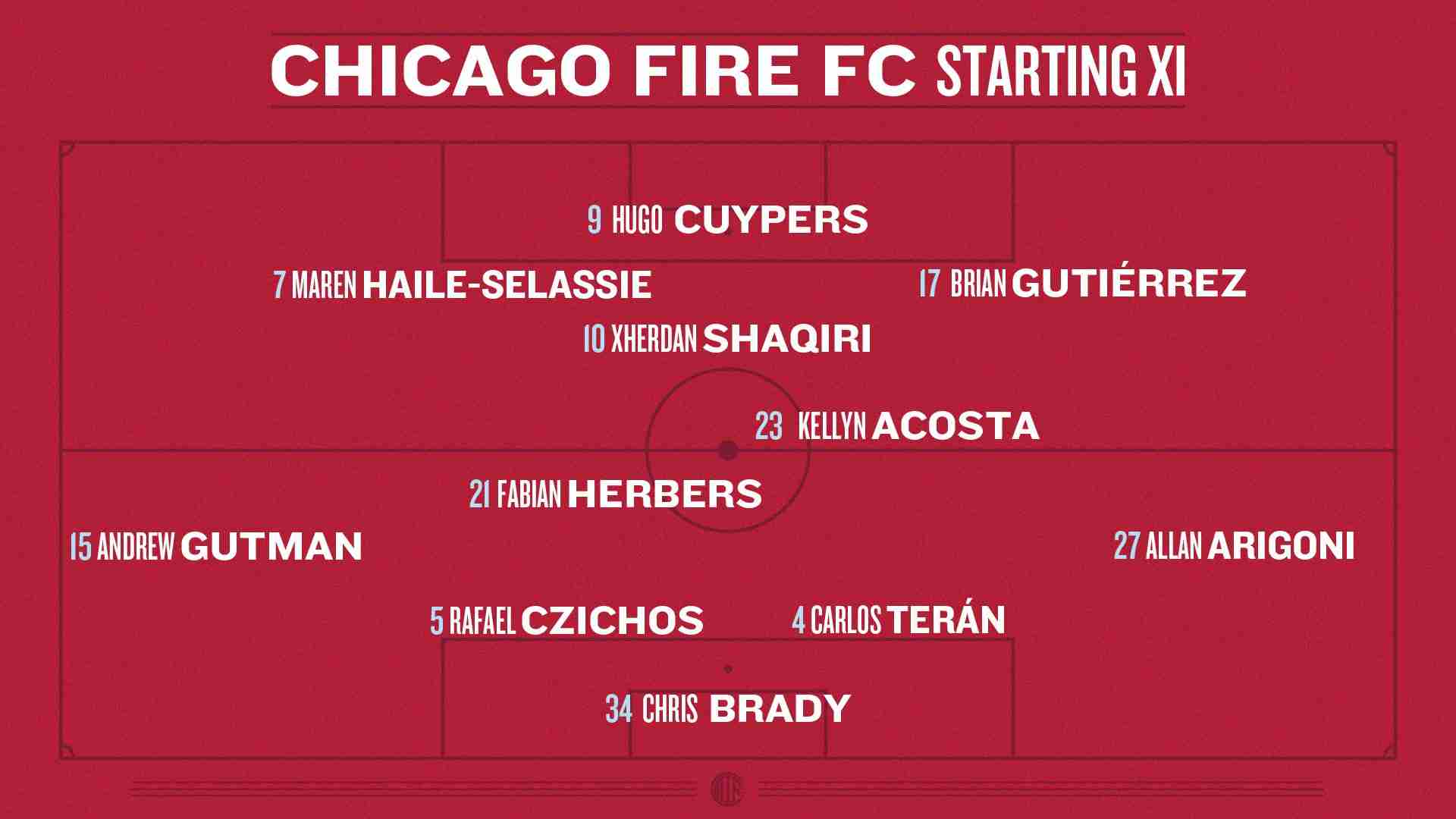
I said on Wednesday that it felt like the kind of game where Klopas might try and run out a new formation; he didn’t – it isn’t out of the question here, and in the past, when the team has faced teams with three center backs, he’s mirrored the opposition formation. I think it’s more likely he’ll stick with the familiar 4-2-3-1, and in general, I think moving to a different system than what players are familiar with – especially with little time to practice and when there’s already pressure to get results – is a recipe for defensive miscues; but at the same time, it’s hard to argue that change isn’t necessary and anything is worth a shot after the team has scored a total of three goals since Easter.
One thing that’s limited the Fire’s attack lately has been that Maren Haile-Selassie has been unavailable due to injury. He’s been practicing with the full squad this week, as has Allan Arigoni, who picked up a slight knock.
Klopas has normally been conservative with reintegrating players into the Starting XI when they come back from injury, but at this point, there really isn’t a lot of choice here: He needs to play the best lineup he’s got available, even if it’s not ideal. It’s better, given the team’s lack of offensive output, to sub players off if need be rather than to try to preemptively manage minutes by starting them on the bench. Both Haile-Selassie and Arigoni should start.
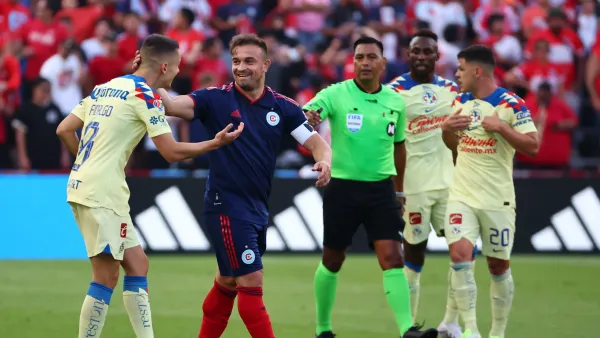
That brings back the age-old problem of finding room for both Xherdan Shaqiri and Brian Gutiérrez; as much as fans would like Shaqiri to play on the wing as he does with the Swiss National Team, that’s unlikely to happen against the Crew. Instead, Gutiérrez could start on the right and Haile-Selassie on the left (though both have played more on the opposite side so far this year). In a perfect world, Shaqiri would feel free to roam wide, with Gutiérrez moving in the middle.
Behind them, Kellyn Acosta hasn’t looked like the same player that fans saw earlier this season, but he remains the best option in the defensive midfield. Fabian Herbers was removed from the starting lineup for the first time of the season on Wednesday; that could have been in recognition of the fact that he hasn’t been performing at the high level he was at the beginning of the season. I suspect he’ll be back, though, with his speed and pressing ability an asset against the Crew.
If Herbers is out, Mauricio Pineda is the best option at this stage, though Gastón Giménez is capable of playing the kind of ball that can work against Columbus.
In the back line, Andrew Gutman – who has provided real offensive spark in a wingback role – and Allan Arigoni – who has integrated well into MLS so far – will get the nod near the touchlines, with Rafael Czichos and Carlos Terán at center back ahead of Chris Brady.
If Klopas does opt to play three in the back, one option is to have the versatile Maurico Pineda start in the back line, pushing forward into the double pivot if and when Fabian Herbers or Kellyn Acosta joins the attack; that means someone from the team’s attack will have to start on the bench. It’s most likely to be Haile-Selassie, given his recent injury.
Can the Fire get a Result Against Columbus?

To the extent that there’s a positive spin on the team’s recent form, it’s this: Statistically, they’ve been underperforming their underlying numbers in this stretch, scoring 4.9 fewer goals than expected, while allowing 0.8 more than expected. Even if Columbus don’t have continental play for two more weeks, that, really, has been the team’s focus and will continue to be.
The team has played well against Columbus in recent years, and it took a miraculous, late (very late) stoppage time winner for the Crew to beat the Fire in Columbus. Replay that match in Chicago, with the home crowd behind the Fire’s back, and there’s every reason to think the result could be flipped.
Surprising results happen all the time in this league, and you could argue that if any team is due at this point, it’s the snakebit Fire. Confidence is a fickle thing: You don’t have it, but put your nose to the grindstone and get a little luck your way and it comes rushing back. A result against the reigning MLS Cup Champions could be just what the Fire need to get that back.