Fire vs. New England: Tactics and Starting XI
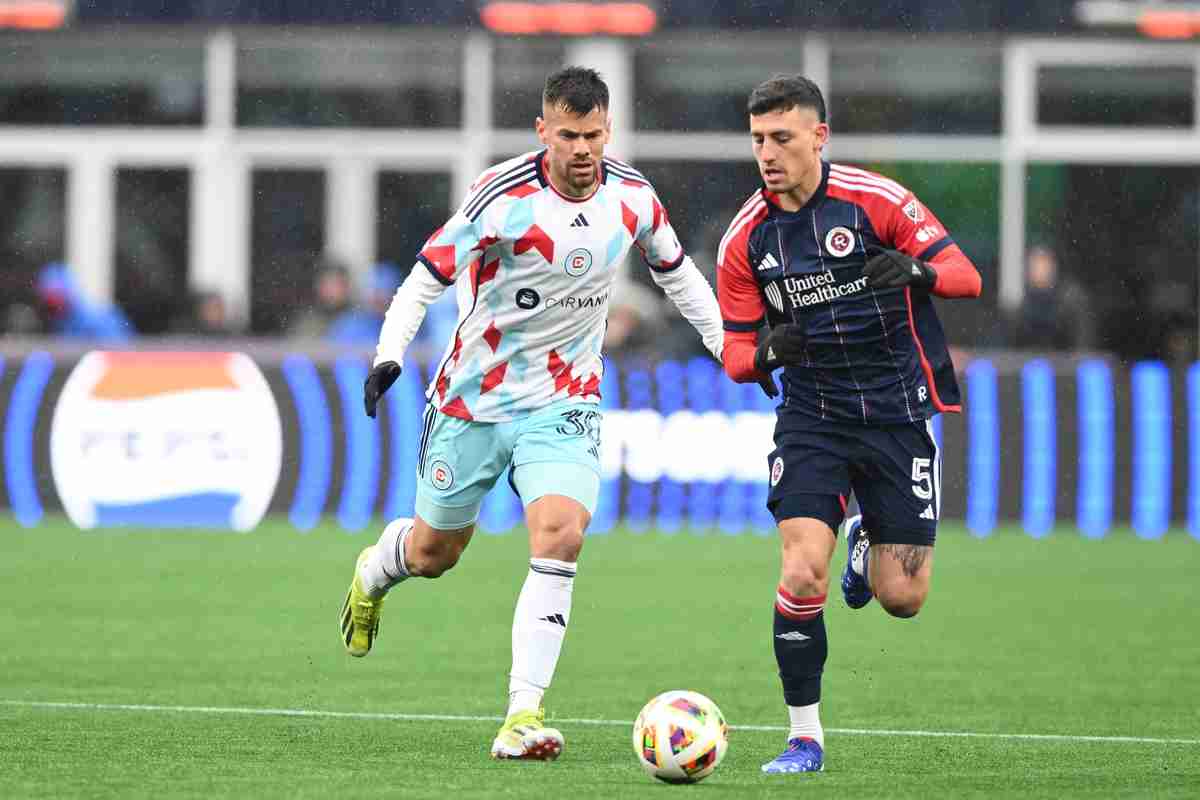
Before the start of the Fire’s current three-game homestand, I wrote that the team should be looking for seven points out of the three: Although five would likely put the team high enough in the standings to be in one of the playoff spots, given the homefield advantage, the Fire need more from home results to take pressure off of future road games
Well, with just one point out of the first two games, that isn’t possible, but four points is. The team is currently two points behind Atlanta for the 9th and final postseason spot, and three points behind Philadelphia for the final playoffs-proper spot; both those teams have a game in hand so there is a good chance that given results above them (two teams sit on 13 points, two have 12 and Charlotte has 11), even a win won’t propel the team up to 9th place. MLS’s playoffs structure is permissive, but in reality, every time the team drops points at home, they make the task for the rest of the seasons that much harder.
More than just results, though, is form: The Fire scored just one goal in open play in April. In fact, the second-most-recent goal the team scored in open play came off Hugo Cuyper’s foot against the Revolution back on March 23rd. The clean sheets – two in the past three games – are welcome, but the team needs to start scoring.
There’s no better opportunity to do that than against New England, who have allowed 18 goals, tied with the Fire for most goals allowed in the Eastern Conference.
New England
Overview

The core of New England’s squad has been together for several seasons, and the team broke the MLS single-season points record in 2021, with 73 in 34 matches, before falling back to earth (and out of the playoffs) in 2022. In 2023, it looked like the team was finding its 2021 form, and briefly looked like they might make a run to the top of the standings before a series of disasters struck, including the removal of Bruce Arena as head coach for non-sporting reasons.
The team just couldn’t really hold it together afterwards, and although they still made the playoffs (thanks largely to their record early in the season), they made a quick and quiet exit.
Despite being an inaugural MLS club and making it to the MLS Cup final five times, the team has never won the trophy, and has just one U.S. Open Cup (2007) and Supporters’ Shield, so sporting director Curt Onalfo decided to hire Caleb Porter as head coach in the offseason. Porter has a track record of winning, leading both Portland and Columbus to MLS Cup titles, and a reputation for leaving clubs with locker rooms full of players more than happy to see the coach leave.
Porter is a “win-now” hire, and yet that’s the one thing the Revs haven’t done: Although they beat Central American competition in the CONCACAF Champions Cup, they wilted against Club América, their first Liga MX opponent, losing 9-2 on aggregate (it’s a different competition, but the Fire played the same team to a 0-1 loss in the Leagues Cup last August), and they have just one win and one draw 10 matches into the campaign.
No One Bats 1.000 at GK
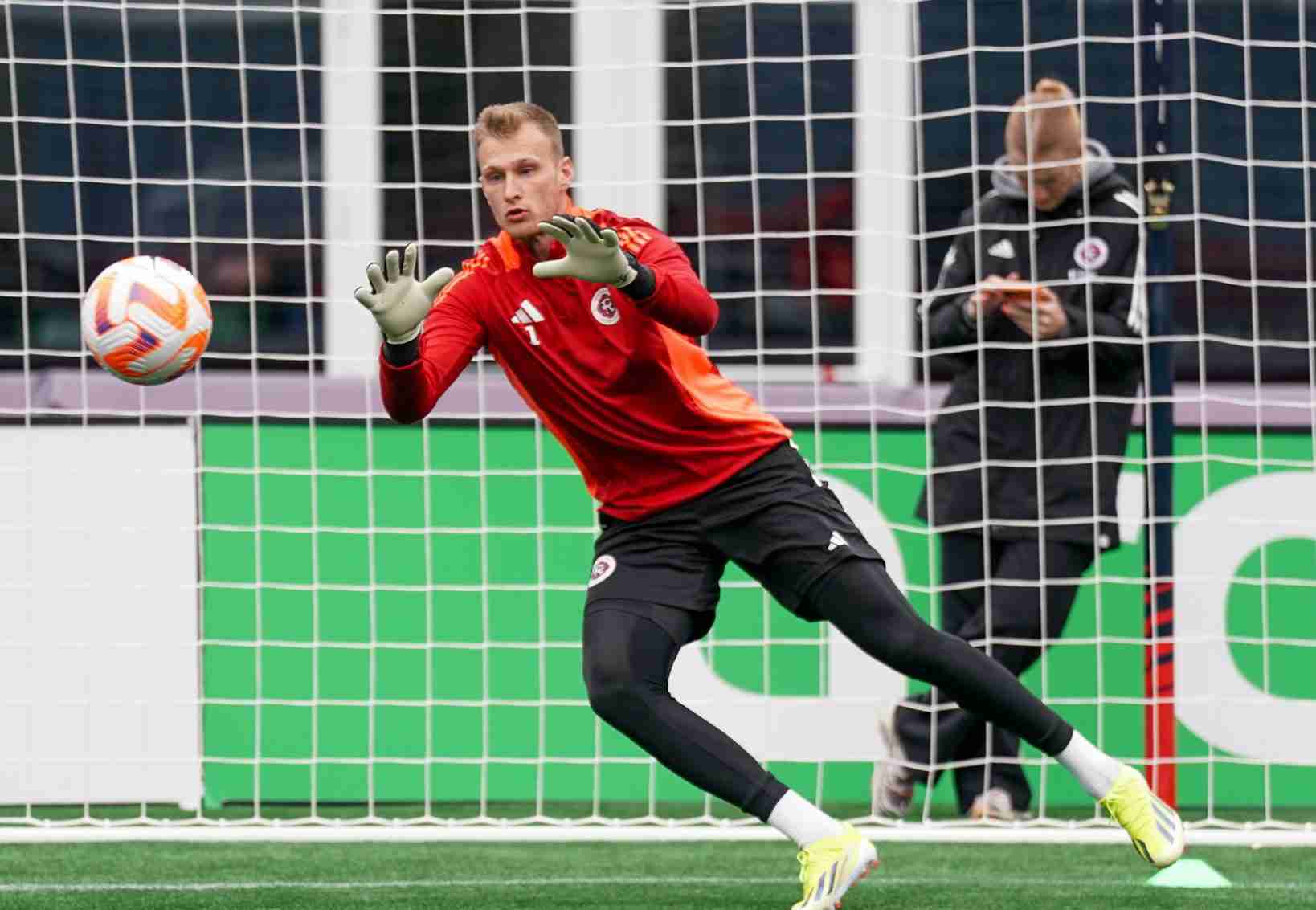
Part of the success for the Revs squads over the past few seasons has come from the fact that the team has consistently had excellent goaltending, whether from Matt Turner or, until midway through 2023, from Đorđe Petrović, who left MLS to join Chelsea last summer.
This year…. They haven’t, and the team is currently 25th in the 29 team league in save percentage (at 64.4%). On top of that, the team is middle of the pack in allowing shots on target. Combine the two, and you’ve got a recipe for allowing goals, and that’s just what the Revs have done so far this year, with 18 goals against, putting the team in a three-way tie (alongside the Fire and Sporting Kansas City) for third-most goals allowed in MLS in 2024, despite the fact that the Revs have played just nine games, one fewer than the Fire or any of the other teams that have allowed 18 or more goals.
Henrich Ravas just hasn’t been at the level of his predecessors, and that’s been costing the Revs dearly. Looking for a solution at GK, the Revs claimed Aljaž Ivačič off of waivers in late April, and it wouldn’t be surprising to see him start on Saturday.
DPs Struggling

One adage about successful MLS teams is that they get production from their Designated Players (DPs). For years, the Revs Carles Gil was the poster child for a successful DP selection: Coming to MLS from Spanish club Deportivo de La Coruña, then of Spain’s second division after a loan from Aston Villa off a reported $1.5m transfer fee and earning about $3.3m a season, Gil is far from the most expensive player in the league but he’s certainly been one of the most effective since arriving before the 2019 season.
This year, however, the 31-year-old has struggled to make as much of an impact for the Revs as he has in previous seasons: Although Gil has three goals on the campaign, his primary strength has been as a connector, getting 14-18 assists in every season where he’s been relatively healthy, but he has just one assist so far this season.
Part of that might be due to the fact that another one of the Revs’ DPs, center forward Giacomo Vrioni, has been a disappointment bordering on being a flop since arriving in New England midway through the 2022 campaign, leading to him being benched last week against Inter Miami.
In his stead, Porter has been starting their third DP, Tomás Chancalay, as the sole forward, and that also hasn’t been working out. Chancalay showed promise after arriving last summer - scoring six goals in 864 minutes (10 starts) as a winger. This year, however, he has just one goal in 738 minutes (8 starts), and just hasn’t looked effective as a primary attacker. To boot: His six goals last season came off of 41 shots (12 on target); this year he’s already got 40 shots (11 on target) yet is still searching for his second tally of the season.
Who Will Be in the Starting XI for the Revolution
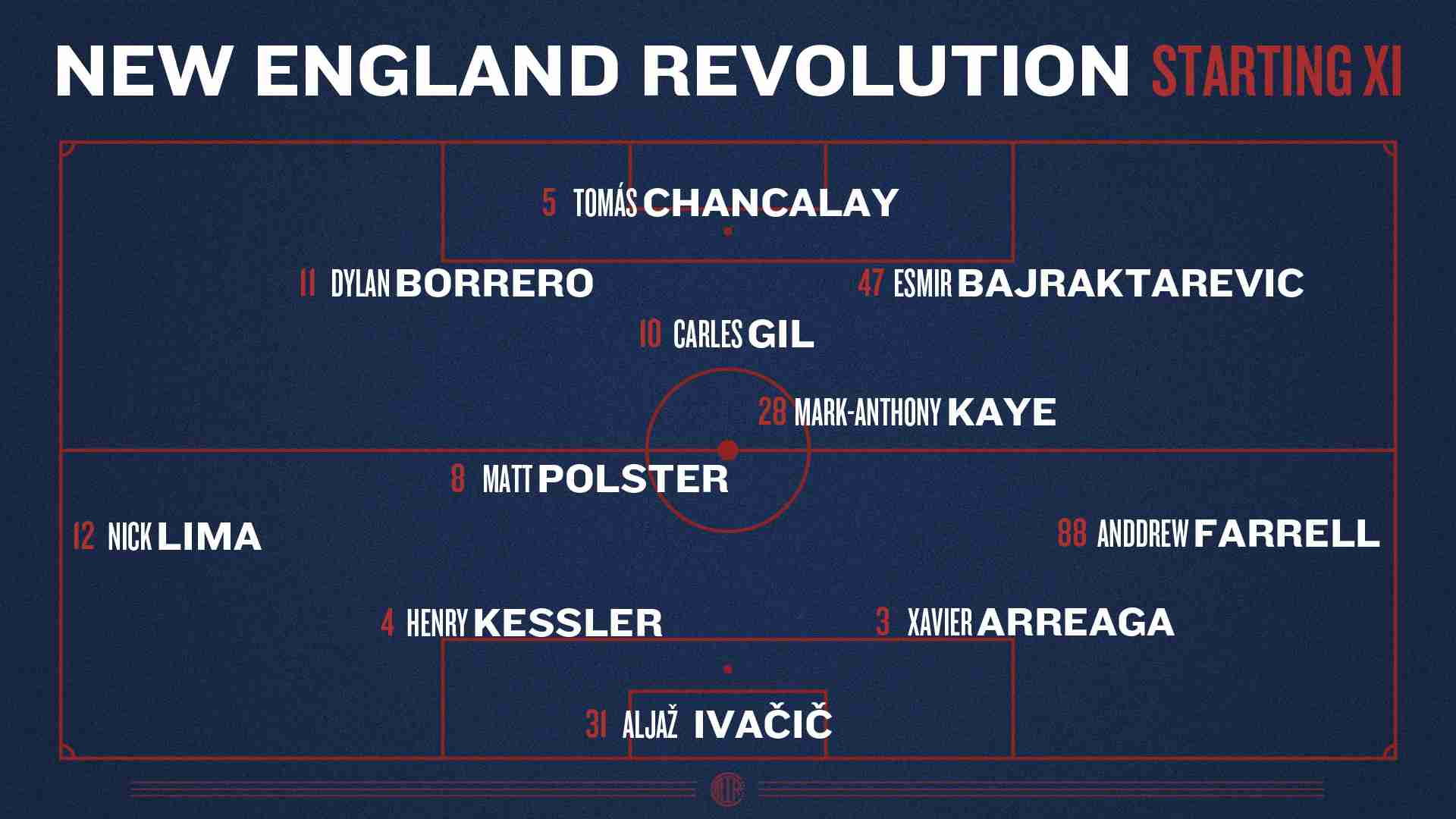
So far, Porter has made no indication that he wants to move away from the 4-2-3-1 that’s served him well in his previous MLS coaching gigs, and we'll likely see that continue here.
Dylan Borrero was poised to have a breakout season in 2023, before a season-ending injury derailed those plans. He made his return last week, coming on as a sub in the 81st minute, a welcome bit of good news as it happened during a match when they lost Nacho Gil (Carles’s brother) to a similar knee injury, putting the Spanish winger out of the lineup for at least a few months. He’ll likely slide into the spot Nacho Gil occupied on the wing, next to Carles Gil and Esmir Bajraktarevic.
In the defensive midfield, former Fire player Matt Polster typically starts next to Mark-Anthony Kaye, but Polster was one of those stricken with an illness that sent him to the ER in the hours before their match last week. If he’s recovered, he’ll resume starting duties; if not, look for Ian Harkes to take his place.
Porter is likely to start the same back line that played against Inter Miami last week.
Chicago Fire
Offensive Struggles

The Fire have now failed to find the back of the net in three consecutive matches, and four of the last five. The team’s goalless streak now extends to 282 minutes and counting, a troubling sign considering the team just brought in Hugo Cuypers at striker in a team-record deal this offseason.
It isn’t just bad luck affecting the Fire: The Fire are 26th in the 29 team league in American Soccer Analysis’s goals added (g+) metric at 8.49, which looks at how each touch on the ball affects a team’s chances of scoring.
A common refrain has been “Hugo Cuypers isn’t scoring because he isn’t getting good service,” and that’s true, but it’s more than just that: The team isn’t getting the ball into spots where they could serve Cuypers. It isn’t an issue of the final pass not being there, but the pass before that, and sometimes, the one before that. In other words, on net, the Fire aren’t getting the ball into dangerous positions and aren’t advancing the ball into positions where they could get the ball somewhere dangerous.
The Fire have just 34% of control in Zone 14 according to data from Opta, the area in the middle of the pitch immediately outside the penalty area, in the bottom third of the league. That would be fine if the team was getting possession in wider areas, but that’s really only happening on the right side of the pitch next to the goalline (Zone 18), meaning the team has to rely on relatively low-value crosses rather than more controlled entry into the box. What’s more, when the team does control possession wide and deep, they often do it by playing the ball to wingers like Maren Haile-Selassie (injured for this match), rather than through fullbacks, which means that generally, when the cross comes, there’s fewer players in the box to connect with the cross or chase after a contested ball.
Slow & Steady Wins Races, Not Goals
Part of the reason the Fire haven’t been getting the ball into dangerous places (or places that get the ball into dangerous places) is that they’ve been slow at advancing the ball. By the time they start earring a dangerous place on the pitch, opposition defenses have had plenty of time to get into position.
The Fire’s direct speed on attack is a shade under 1.72 meters/second, just below the league average, but they’re also averaging a below-average 3.31 passes per sequence, according to Opta.
Tactics change and styles evolve, but broadly speaking, there’s two schools of thought for scoring: Be fast and direct, á la the Red Bulls (stereotypically, the 2024 Red Bulls team has evolved their tactics significantly) or St. Louis City, or slow and intricate.
No team plays fast and direct more than St. Louis City: they average just 2.58 passes per attacking sequence (only D.C. United average fewer, at 2.43), but lead the lead in direct speed, at 2.29 m/s. They will get the ball, advance it quickly, not really caring if they give up possessions doing so because they’ll try to force a turnover and then they’ll have the ball in a dangerous area.
Look at how quickly they advance the ball - relying on just a handful of passes to get the ball to the offensive zone. They’re more than happy to play long balls, but in this cases it’s carried up the pitch, and played centrally while Austin’s defense is literally on their back foot.
The other style of play is often called “slow and intricate” but in reality, it’s about using possession to pull opposition defenders to you. Look at the build up on this play that gave the Crew their go ahead goal against CF Monterrey, one of the biggest clubs in Mexico. The name of the game here is to hold onto the ball until Rayados players start converging on the Crew, carefully trying to goad them out of position.
https://twitter.com/benwright/status/1786001384657015114
In the early part of the sequence, the plan is to pull Rayados players to the right hand side of the pitch then to get the ball to Yah Yeboah on the left touchline, who receives it with screws of time. When Monterrey successfully close down the space, he doesn’t feel the need to carry the ball forward or play a risky pass; instead, he’s content just to play the ball back into the Crew’s side of the pitch and reset. The sequence is 13 passes long, takes 45 seconds to cross two-thirds of the pitch, and results in a goal against one of the best teams in the region.
The Fire, meanwhile, have been playing slow and direct, and it hasn’t been working. They’re one of just two teams along with Austin FC that are below the league average in both attack speed and passes per sequence, and the results just haven't been there.
Fast and direct or slow and intricate. Pick one. Given that the team seems to be more geared towards the former, that means that things need to speed up.
Return to Normalcy: How Will the Fire Line Up Against the Revs?
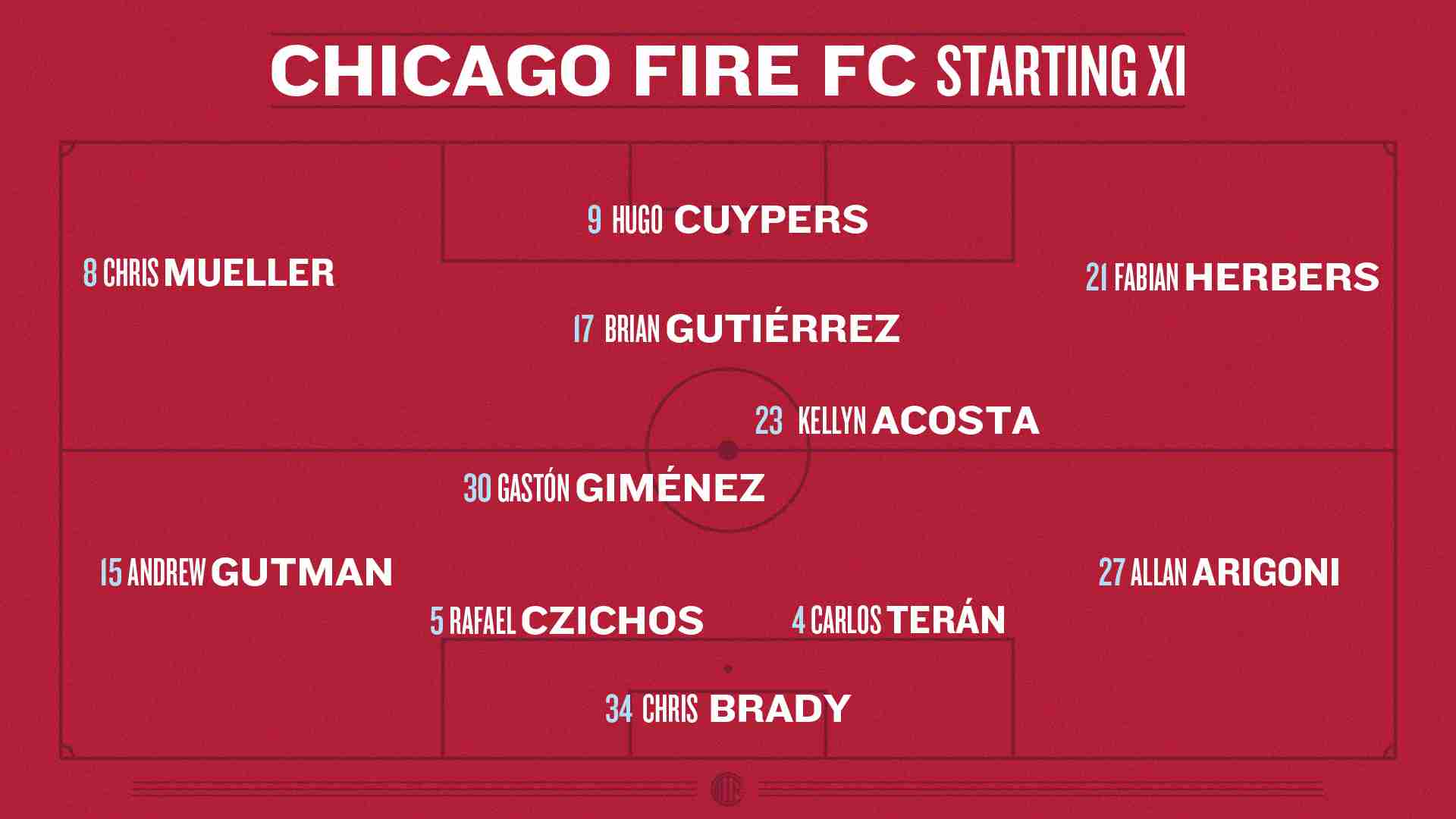
Last week, a number of injuries in the midfield forced Frank Klopas to get creative with his lineup, opting for a 4-4-2 as the team lacked a natural central attacking midfielder to start the match, with Xherdan Shaqiri out of the lineup entirely and Brian Gutiérrez ready only for limited duty.
Both have been practicing with the squad this week, as have Gastón Giménez and Federico Navarro, who were also out with injuries last week, so the Fire will likely revert to their familiar 4-2-3-1.
Unfortunately, Maren Haile-Selassie’s return seems to be some ways away, as is Tobias Salquist’s. (The good news is that it looks like Salquist’s return could come in 1-2 months and he won’t require surgery; welcome news when many had feared that the injury might be season-ending for him.)
Given that Fire Head Coach Frank Klopas likes to be conservative in bringing players back from injury, it’s likely that we’ll see Gutiérrez get the start with Shaqiri an option off the bench, to ease the Swiss star back into the lineup. Given injuries elsewhere, though, it’s likely that we’ll see Gastón Giménez start alongside Kellyn Acosta if he’s able; if not, Mauricio Pineda may keep starting duties from last week, where he had a relatively strong game. (Still, with the Fire down a center back and with multiple defensive midfielders just coming back from injury, there’s logic to keeping Pineda in reserve in case he’s needed).
With Maren Haile-Selassie out, that likely pushes Fabian Herbers back to the wing alongside Chris Mueller .Both of them started on the wing last week, but please, for the love of George Best, put Mueller back on into his natural side on the left. He’s played the last two matches on the right, meaning he’s had to take shots on goal with his much weaker left foot, and it’s clearly been frustrating for him. Given the same service on the mirror side of the pitch, it’s likely he’d have had one, if not two, goals over the past two matches. Herbers has shown more flexibility, but his natural side is on the right.
Stop the madness. Put them back in their proper places. Please.
Ahead of Chris Brady, other than replacing Salquist with Carlos Terán, the back line should stay the same. Gutman, in his first real minutes as a Fire player, looked good and added an extra dimension on both ends of the ball that the team lacked, and allowed Arigoni to revert to his natural side on the right, improving the Fire on both wings.
With just six teams below the Fire in the 29-league table, a match against one of them is a rare but golden opportunity to seize three points. The Fire need to make the most of this chance, and use the match not just to get a much-needed win, but also confidence, especially for their attacking players. The Frie need a win, not just a result, and they need to do it in a way that convinces both the team and the fans in attendance that the result could be the start of something real.