Fire vs. Orlando: Tactics and Starting XI

With two games before the team closes the books on the first half of the season, the Fire look for their third win against Orlando City, a team that many picked to finish at or near the top of the Eastern Conference and compete for hardware but who have fallen significantly back to Earth from the lofty heights they hit last year.
Orlando City
Overview
Last year, Orlando Head Coach Óscar Pareja’s squad had the second most points in the league behind FC Cincinnati, but the team significantly outperformed their underlying numbers – scoring 55 goals with an expected goals (xG) of just 42.1, while also slightly outperforming their expected goals against (xGA). The net result was the team had a goal differential of +16 at the end of the season, versus an expected value of +1.4.
Given that 10 of the team’s 18 wins came by a single goal, it’s obvious how the team’s overperformance fueled their record. This year, there’s been a had reversion to the mean, and the team is underperforming their expected goals while allowing more goals than models expect.
The result is that Orlando, who have statistically looked like a bubble playoff team for the past few seasons (and actually finished 6th and 7th in the East during 2021 and 2022, respectively, during years when seven teams from each conference made the playoffs) are kind of back where they belong, but undershooting things a bit.
Pareja has developed a reputation of having teams play a nose-to-the-grindstone style of football that’s more hardworking than tactically inspired; a reputation that began in Dallas (where he was a former player) and came with him to Orlando. That isn’t to say that his teams can’t be attack minded and score – as the 55 goals Orlando tallied last season proves – just that his teams, like him, are tactically flexible, and he’s frequently had to work with rosters that were built on a budget.
Still, before Pareja took the reins ahead of the 2020 season, Orlando had failed to make the playoffs each of their years in MLS, and since he’s come in, they’ve made it every year.
Can Orlando Run Without Dunkin?

Last year, Orlando’s attack was expected to run through Martín Ojeda and Facundo Torres, two young South American players that came in with significant transfer fees attached, supplemented by Iván Angulo, who the team had just brought in from legendary Brazilian side Palmeiras for a seven-figure transfer fee.
Well, in a way, it did: Torres lead the team in goals and goal contributions (14 goals and three assists for 17 in total); Ojeda came in third on the team with 13 (6G, 7A), and Angulo added 11 (5G, 6A).
Those are respectable, if unsurprising numbers. The surprise came when Duncan McGuire, an MLS SuperDraft pick out of Creighton (Fabian Herbers’s alma mater), came out of nowhere and scored 13 goals alongside three assists in just under 1,400 minutes, earning the former Bluejay transfer interest from the UK and four callups with the U.S. Men’s National Team. A comedy of errors – truly – made a move to England in the January window fall through, keeping McGuire in purple for the first part of the season. (In a further Fire connection, the draft pick used to get McGuire was initially the Fires, but was sent over to Orlando as part of the package to acquire the rights to Chris Mueller).
In 2024, as part of Orlando’s returning to Earth, Torres, Ojeda and Angulo have all seen their production dip (Angulo and Torres have one goal each, while Ojeda has yet to tally), while McGuire hasn’t, scoring five goals in 795 minutes, not far below his production last season. No other Orlando player has more than two tallies, making him truly the most productive part of the team’s offense so far (Nicolás Lodeiro, who was brought in from Seattle in the offseason, is the points leader with a goal and five assists, but is far more a creator than an scorer himself.)
On May 18 against the Earthquakes, however, McGuire left in just the 16th minute with an apparent shoulder injury, and looks like he’ll be out for some time. Orlando managed a 1-0 win in his absence, but failed to score against the Crew in their next match.
A key question is if one of Orlando’s other offensive stars – Angulo, Ojeda and Torres, we’re looking at you – can find the form they had last season and step up in MCGuire’s absence. The talent is there, but this season, so far, the production hasn’t been.
What formation will Orlando City play? What are their tactics?
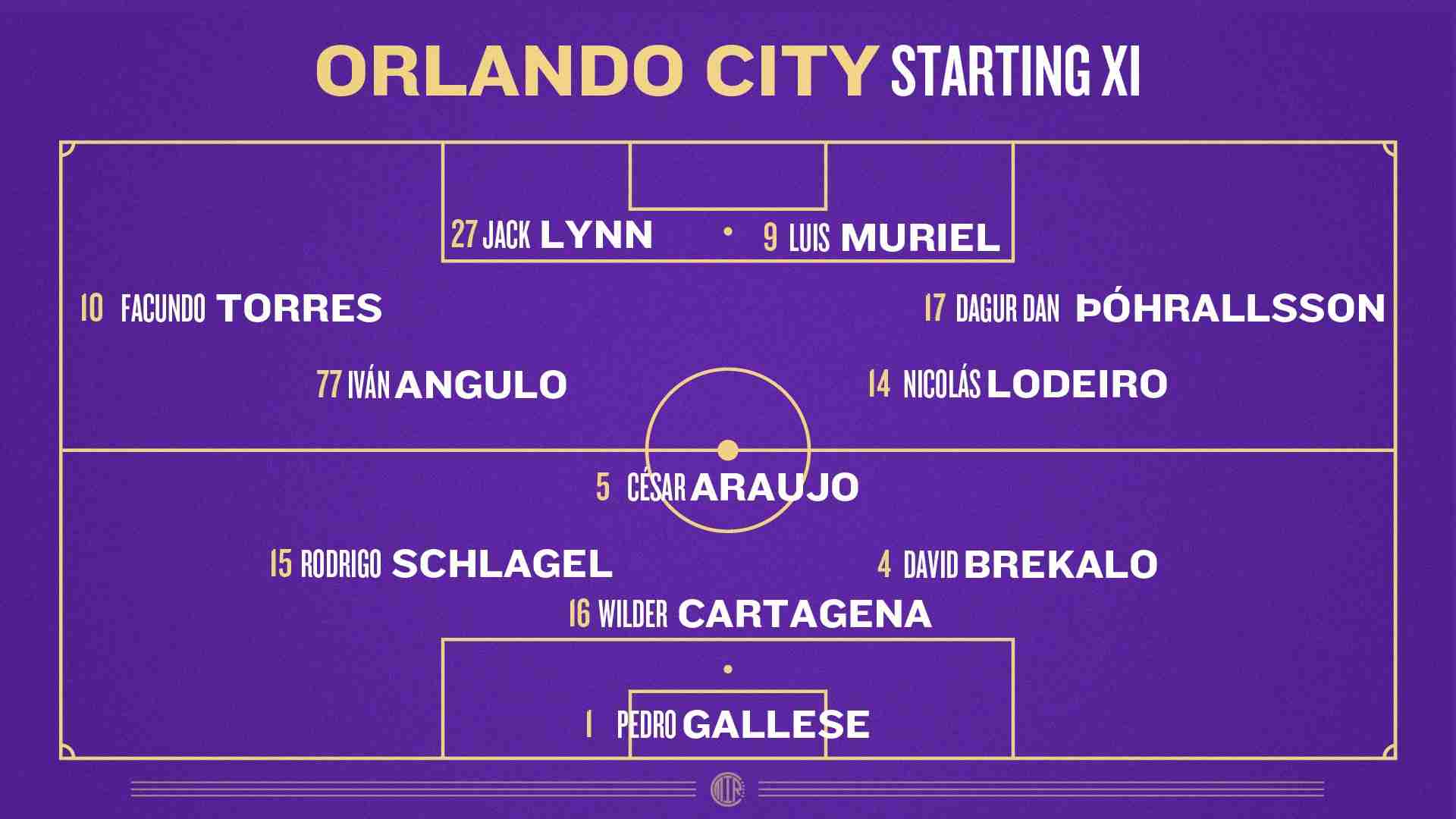
Over the past few seasons, Pareja had been lining up his team consistently in a bread-and-butter 4-2-3-1 over the past few seasons, with only occasional variations. This year, however – perhaps trying to find a pathway to better results, perhaps because they haven’t had a creative playmaker of Lodiero’s caliber until this season – the team’s only played a 4-2-3-1 half the time, and has also played out of a 4-4-2 (though not since March), a 3-5-2 and, most recently, a 3-1-4-2, but which might also be understood as 3-1-2-2-2 (I know, I know) which essentially tasks César Araujo as the only deeplying defensive midfielder, alongside two more attack-minded midfielders (Iván Angulo and Nicolás Lodeiro, both offensively talented players), two wingers (Facu Torres and Dagur Dan Þórhallsson) and two strikers – most recently, Jack Lynn and Luis Muriel.
Will he continue with what worked against the Quakes but didn’t against the Crew? Well, the Fire’ve resembled one of those teams more than the other of late.
Chicago Fire
On Saturday, the Fire put together the best half of football we’ve seen from the team in two months, they outplayed a resurgent D.C. United team in their own building, they rendered one league’s best strikers in Christian Benteke more or less anonymous, and they battled back from being down a goal to get a result.
They just didn’t get a win, and at this stage, points on the board are critically necessary. Still – there were a lot of welcome signs from the Fire, and if they can pick up where they left off in the last two games – both at home – before the international break, then they can start the second half of the season with confidence and maybe, just maybe stage a comeback that’s improbable, but not impossible.
Addition By Subtraction?

A key refrain from MLS coverage is “production from Designated Players (DPs)” – well, the Fire flipped that script and allowed Xherdan Shaqiri to depart early, to arrive in Switzerland before the start of the national team’s camp.
Asked about the decision after the match, Fire Head Coach Frank Klopas said “It’s a last second decision, and I think it’s just normal. I think at the point where we are at the moment, I think we needed and I needed everyone to be focusing on one thing… the guy [Shaqiri] could be thinking with the Euros, it could be the last one (of his career), so I think it’s best that we made that decision, and we wish him the best.”
He then went to talk about the “passion” he saw from his squad, “a huge belief all the way to the end from the guys… this is the kind of team and the effort and mentality that myself, that everyone expects, when you put the Fire jersey on.” Earlier in the week, Klopas was non-committal about Shaqiri’s future in Chicago, noting the coming expiration of his contract. Nothing is decided, but it’s possible that we’ve seen Shaqiri’s last performance in a Fire uniform, with the European transfer market open after the Euros.
What Worked Against D.C.?

In a word, it was a team performance of the kind that we haven’t seen from the Fire in a while. It seemed like half the squad had their best performance in recent memory.
Chris Brady’s performance in net was once again strong, just, this time he wasn’t left out to dry by his teammates.
After largely falling out of favor, Federico Navarro had his third start in a row and looked like the kind of space-eating, ball-destroying No. 6 defensive midfielder that the Fire have sorely needed to complement Kellyn Acosta’s playmaking ability. Having Navarro in a position where he can be trusted to get back on defense further liberates Kellyn Acosta to advance the ball and chip in offensively. Navarro looked like the player that the Fire hoped he’d become when he was brought in as one of the first U-22 signings, repeatedly denying D.C. attackers entry into the box, chasing down loose balls and generally looking dangerous.
Acosta, wearing the armband the first time. In explaining the choice, Klopas said “He’s a World Cup veteran player. You know, when I looked at the field, I just felt maybe it’s something he needed, also for his confidence, to kind of help him and lift him a little bit…. It’s a guy that players respect a lot because of who he is and the quality of player that he is and also the human being [he is].” Acosta rewarded the gesture with his second goal of the season.
Carlos Terán was tasked with man-marking Christian Benteke – no easy feat, considering that he’s in the Golden Boot race – and excelled at it, largely taking Benteke out of the game. It’s refreshing, considering the number of times that the Fire have seemingly lost track of other team’s key attackers – like Real Salt Lake’s Chicho Arango – giving them all the time and space they could ask for earlier this season. Next to him, Rafael Czichos looked like the player that came over from Germany in 2022, rather than the player that looked like he was entering a terminal decline at the beginning of the year, winning back possession then advancing the ball.
Andrew Gutman showed why he was so sought after by the Fire this season, jumpstarting attack after attack, cleaning up on defense, and generally looking like the most dangerous wingback the team have had in recent memory.
Brain Gutiérrez had a quiet start to the match, but looked more and more confident as the game went on. If he keeps playing like he was by the final whistle in D.C., then he’s very much a scoring threat against Orlando.
And Hugo Cuypers returned to the boxscore, even if it was with an assist rather than a goal, with a quick, casual flick of the foot leading to Acosta’s goal – something that looks simple but has to be done perfectly to work; exactly the kind of thing you’d expect from a top-end talent (Cuypers made it look so casual that the broadcast crew initially thought it was a broken play, before correcting themselves).
Missed It By That Much
Despite all the positives the team could rightfully take from the match, they weren’t able to keep a clean sheet after giving D.C. a second look on an attack, and finished with just one goal and a lot of missed chances.
Which, hey, missed chances happen in this sport, but generally, you don’t make a highlight reel of them and post them. The Fire went the unconventional route on this, though and….
https://twitter.com/ChicagoFire/status/1795519358980305301
Oh boy. That’s a minute-long supercut of Fire players trying and failing to score goals. The team was, rightfully, questioned about the thought process in comments and quote tweets.
I’m generally not a fan of the “should have done better there” line of argument you hear on broadcasts, from fans, etc. – most of us have never kicked a ball around professionally, and even when it comes from color commentators who’ve had long and illustrious careers, I guarantee you that every single one of them also has a list of misses – some of which looked like brilliant opportunities – a lot longer than their actual highlight reel.
Still, it shows some of the things the Fire aren’t doing: They didn’t get enough numbers into the box to win second balls, players aren’t shooting right, the tean’s still too cross heavy and some of the passes could be better weighted.
Take the positives, but also, there’s still plenty of room to grow here.
Will the Fire Keep The 3-5-2 against Orlando?
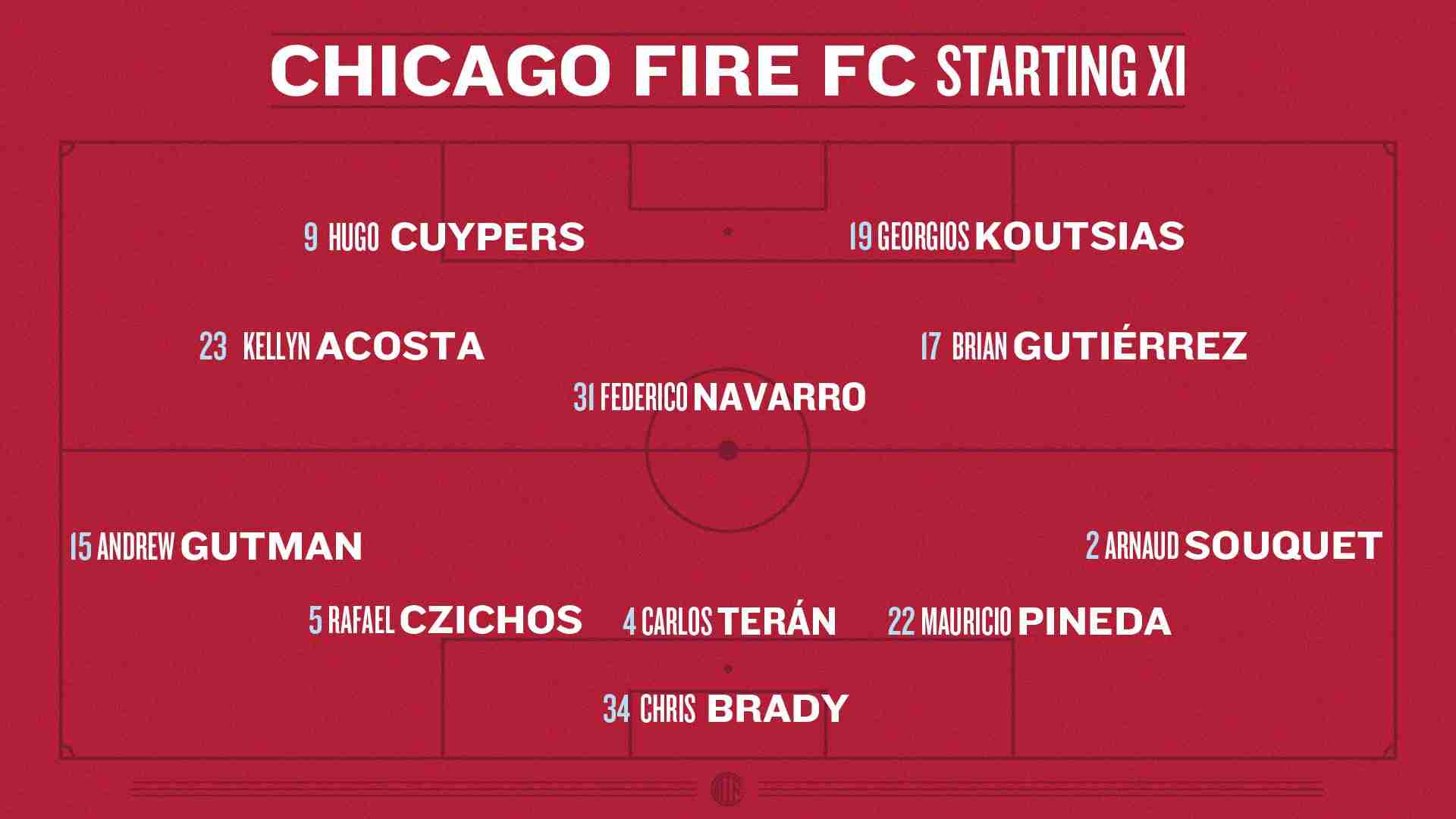
Last week, I said that the chance that the team would break out of its normal 4-2-3-1 went above 50%, and hey! I was right; the team ended up playing a 3-5-2 or 5-3-2 (which is essentially the same formation depending on whether or not you’ve got the ball). I was also right about Barlow getting his first start in a Fire uniform, I also didn’t have Shaqiri in the XI.
On the other hand, I also said that the team shouldn’t put three center backs on the pitch, saying “whatever the Fire’s problems have been of late, adding a center back… is not going to solve things.” Well, I may have been wrong about that part.
I do think that there’s a relatively decent chance Klopas sticks with the three center backs, assuming that Orlando will do the same. With three matches in a week, some rotation is necessary (Acosta didn’t go the full 90), but I’m hoping that, given the performance last week, not too much tinkering occurs.
One change that will happen: Allan Arigoni won’t be playing, having received his fifth yellow card of the season last week. Arnaud Souquet and Jonathan Dean are the options behind him; Souquet is a somewhat more versatile two-way player, and given the team’s need for offense, he’s likely to get the nod.
The only other change I’d expect to see, swapping Tom Barlow for Georgios Koutsias. I suspect a big part of the reason Barlow got the nod last Saturday was because he was familiar with the tactics of Troy Lesesne, coach last year in New York, now in D.C. Koutsias has been the preferred second option at his position, and likely will return to that role, though with another game coming up on Saturday, there’s going to be minutes for all three of them.
The Fire can and should enter the match with more confidence than they’ve had over the past two months, and if they’re going to start getting wins, this is the match to start.