Fire vs. Toronto: Tactics and Starting XI

The Fire entered the international break on a three game undefeated streak and finished the first half of the season with a flourish in the form of a win over the L.A. Galaxy.
Despite the results, the team is actually closer to the bottom of the standings than they were when the whistle blew that day, as the New England Revolution won a match against the New York Red Bulls over the break, giving the Fire a two-point cushion over the last team in the conference even as the Revs hold two games in hand.
Most of the Toronto squad know well the feeling of being in the basement of a conference, having won the Wooden Spoon last year. This year, however, the team currently sits comfortably in an Eastern Conference playoff spot under new Head Coach John Herdman, who’s managed to get buy-in from throughout his roster, including from his expensive Italian DPs, including Lorenzo Insigne.
Their form has dipped somewhat of late, however, and Toronto are currently on a three-game winless streak and had two players sent off with red cards in their most recent match, including DP Federico Bernardeschi, the former Juventus man who had become Toronto’s most effective two-way player.
As such, the match presents a crucial test for the Fire, against a team that has skill and good form this season but not a long-term track record of recent success, as the Fire are looking for their first road win of the season in their quest to slowly climb their way back into the thick of the Eastern Conference standings.
Toronto FC
Overview
After entering the league in 2007, Toronto FC developed a reputation as a league laughingstock; failing to make the playoffs in their first eight seasons in the league, a league-record playoff drought that still stands today (the Fire are currently second on that list, with their six-season-and-counting drought).
After that, however, the team temporarily became a juggernaut, making it to MLS Cup in 2016, winning it in 2017 and winning it again in 2019. After that, the squad form dipped but Toronto’s free-spending front office splurged heavily to bring in Lorenzo Insigne, after the team president noted Italy fans in Canada celebrating the team’s Euro 2020 win.
Bob Bradley was brought in to coach the team after a successful tenure at LAFC, but he was unable to coax results out of Toronto’s squad and reports of a fractured dressing room soon emerged.
Enter John Herdman as head coach. Herdman had lead Canadian men’s national through the most successful period in program history, reaching the team’s second-ever World Cup as they emerged first in CONCACAF Qualifying, but had never coached a club team.
Towards the end of his tenure with the CanMNT, results had fallen off and reports of disharmony in the locker room emerged, and there were questions about whether his approach that worked with a Canadian locker room that knew they were trying to punch above their weight would translate to a club team that contained local talent mixed with stars that had won at the highest levels of the game.
The question was whether or not Herdman could take Toronto’s talented (and expensive) roster and get it to produce in MLS. Half a season in, the answer is “yes,” but questions remain.
What’s been working in Toronto?

Herdman’s pragmatic approach to tactics has continued from his time coaching national teams (more on that below), but really, what he’s done is get buy-in from his squad, from the expensive Italian DPs on down. Federico Bernardeschi (suspended for this match after a red card in Toronto’s last game) has been bought-in enough to the point where he’s playing well on both sides of the ball; Lorenzo Insigne seems, for the first time, dialed in across multiple matches.
On top of the imported talent, the club benefits from the wellspring of soccer talent around the Toronto area, both in the form of homegrown players like Deandre Kerr and Jankeele Marshall-Rutty, and Canadian international Jonathan Osorio who serves as team captain.
Overall, Herdman’s team has been playing a fairly template 3-5-2, which shifts numbers forward in possession and becomes more of a 5-3-2 in defense; a tactical setup that has become popular worldwide over the past couple of seasons (including in Chicago).
It isn’t genius, but it works, and like simple cooking, the plan is to come up with a recipe ha doesn’t complicate things and lets the quality of the ingredients shine through.
What hasn’t been working?
Despite the positive results overall, there have been signs of possible trouble in Toronto: Multiple players, as well as Herdman, were involved in a brawl with NYCFC players and staff following the team’s 3-2 defeat on May 11th, and while the details of what sparked the incident aren’t fully clear, the team has won just one league match since: a 5-1 win over Canadian rivals CF Montréal on May 18 (they have had draws in their last two matches).
The incident was just one of several disciplinary issues around the team, who have had received 57 yellow cards, by far the most in the league, and had five players sent off with red cards (two straight reds), including Federico Bernardeschi and Nicksoen Gomis in their most recent match against D.C. United.
It could be a result of Toronto’s “aggressive” nature and fighting spirit under Herdman, or it could be a sign that things are about to become unhinged.
While he was coach of the Canadian Men’s National Team, Herdman had a custom sword made leading that was used in a pre-match tradition that seemed inspirational – until it wasn’t, feeling like a gimmick when results didn’t go the teams way and he reportedly lost some of the buy in that had seen the team through World Cup qualifying.
There is an element of Cinderella to the team’s performance so far: While not everything has gone right, if you’d asked someone preseason what Toronto needed to be successful, it would have been “buy in” from everyone, including the Italian stars that had underperformed since arriving in MLS. So far, he’s had it, but with results falling off and the cracks showing, you wonder if this is a temporary dip in form, or if the carriage is fast becoming a pumpkin.
How will Toronto Line Up Against The Fire?
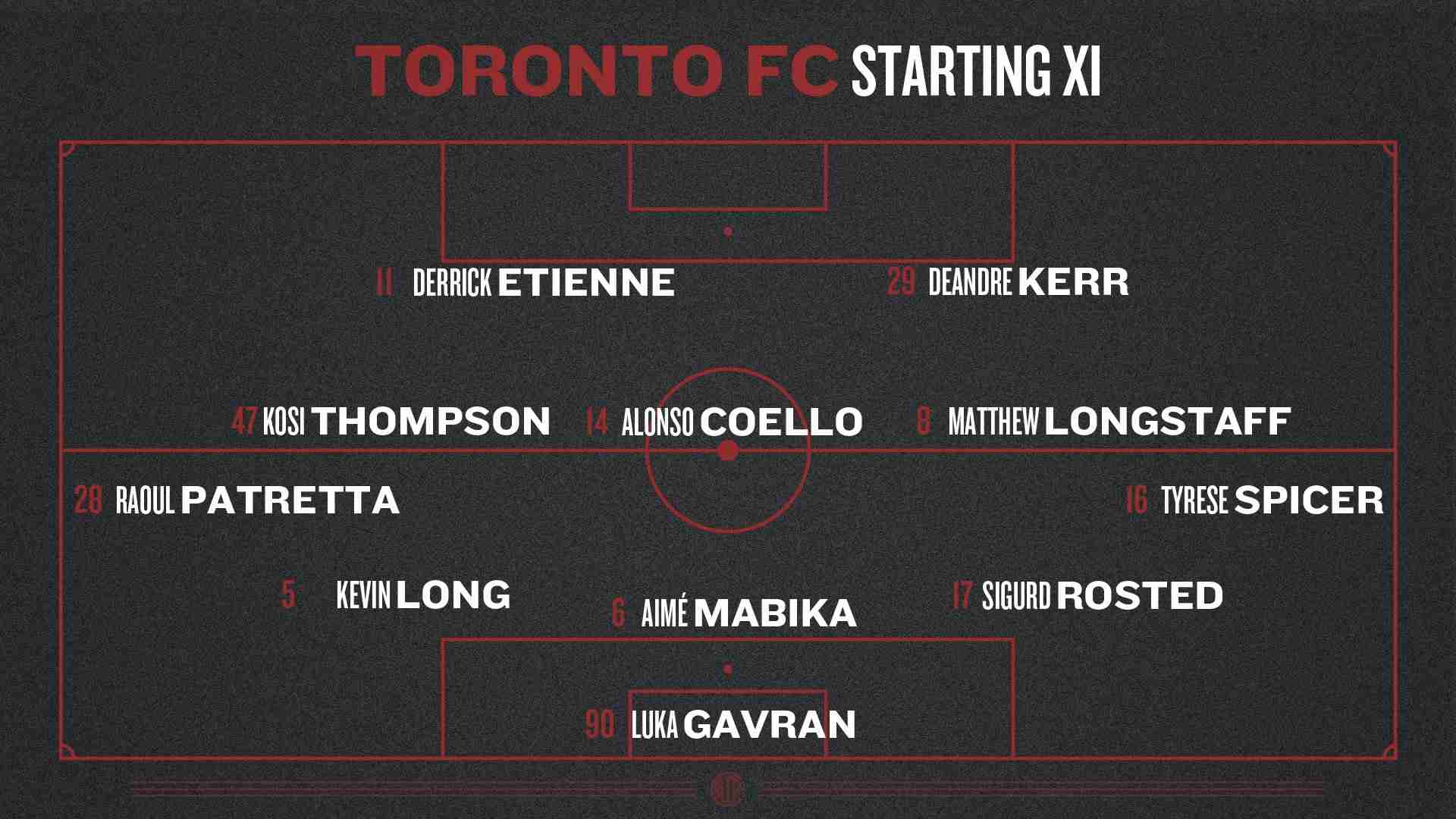
So far, the team has consistently played with a three-deep back line and two forwards; recently that’s been a 3-5-2.
They’ve normally done that in front of former Fire GK Sean Johnson, but he’s with the US Men’s National Team ahead of Copa America, leaving duties to Luka Gavran. Team captain Jonathan Osorio and defender Richie Laryea are both likewise with the Canadian Men’s National Team, and several players are injured, including Prince Owusu, one of the team’s most successful who according to Toronto is fit enough to make the bench but not start against the Fire.
Bernardeschi and Gomis are normal locks to start, but both are suspended.
Altogether, that gives Herdman a very short bench to work with, and you wonder if he might switch things up to deal with the injury, but my bet is that he’ll stick to familiar patterns of play, opting for consistency and hoping that young players step it up.
As to what to expect, I'll turn this over to Fire Head Coach Frank Klopas, who said “It’s a team that’s very organized, a team that’s committed – obviously new leadership and I think new energy also for them. I think all the players are committed… In moments they’re going to press. They’re going to work hard. They have no problems stepping up in moments in 1-v-1 situations. They don’t mind playing really high up and making it difficult for teams.”
Chicago Fire
Starting with the positives: The Fire are now on a three-game undefeated streak, and notched their first win in nearly two months against the L.A. Galaxy, a team far ahead of them in the league table.
If you squint, you can come up with a lot of glass-half-fulls here: The Fire again went down early, and again fought back, this time with a win. When the team has scored multiple goals in a match, they’ve always gotten at least a point for their trouble, three wins alongside their only draw which came in their first game of the season back in late February. Hugo Cuypers is once again scoring, with goals in the team’s two last matches, and even when he hasn’t scored hismself, as in the game against D.C. United on May 25, he’s been engaged in the attack.
Of course, with all of those is comes a glass-half-empty: The Fire have only scored multiple goals in four of their seventeen games, and lost a lot of them 1-0. The team’s first lead since their win over the Houston Dynamo came in their win over the Galaxy. They aren’t making things easy on themselves by conceding early goals (in the seventh minute against the Galaxy, in the fourth against Orlando a few days earlier), and the team’s scored a total of eight goals in ten matches since the start of April.
Will Shaq Be Back?

The team’s recent improved run of form has, not really coincidentally, come alongside Xherdan Shaqiri’s early departure for Euros. Ina pre-Euro press conference, Shaqiri has made clear his desire to return to Europe. His full comments – which have often been reported out of context – acknowledge that his contract ends this winter, and makes it clear he was discussing his future after that, and it’s natural for a player with an expiring contract to express thoughts on their future.
Still, a move out of Chicago this summer – following Euros, which, assuming Shaqiri plays in some matches, would put him in a pretty good-sized window – would likely suit both Shaqiri and the Fire, though money remains a key sticking point: His contract in MLS is far richer than anything he’s likely to be offered in Europe, and any new deal with a European club would supercede his one with the Fire.
The team does have a buyout it could use, but with a packed roster and pressing needs in multiple places, preserving the buyout would be ideal.
Regardless: For the time being, Gutiérrez has been given the keys to the attack.
What’s been working in the 3-5-2?
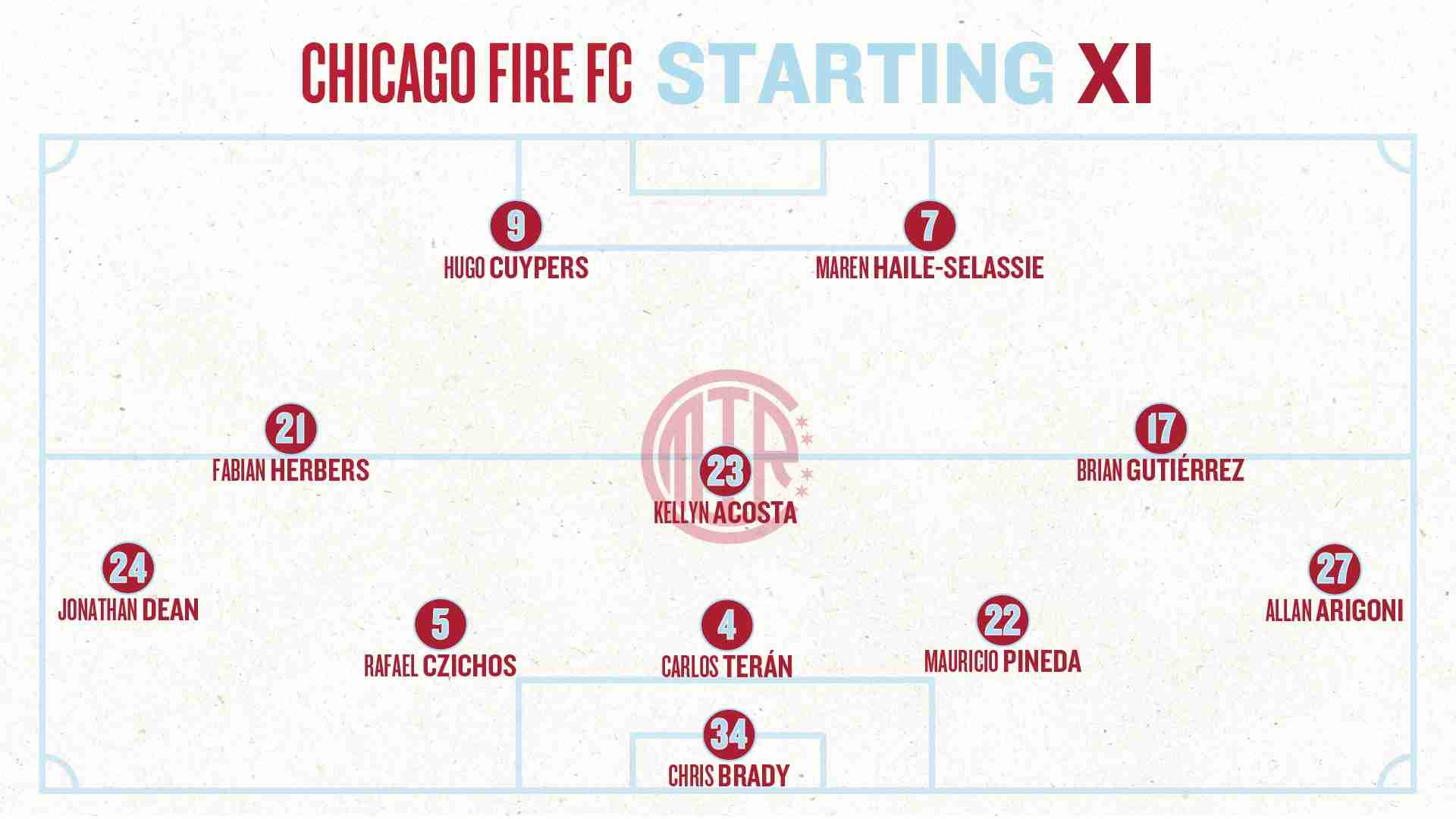
Alongside Shaqiri’s departure was a change in formation which is likely to stick around.
It’s nominally listed as a 3-5-2, but as Fire Head Coach Frank Klopas has noted, formations are just a starting point.
Here’s the way I’ve come to think about it: First and foremost, the team has been playing three center backs. Two – Rafael Czichos and Carlos Terán – are natural center backs; Mauricio Pineda has experience playing both there and in the defensive midfield. In defense, all three play as center backs. Adding a third player has allowed Carlos Terán’s role to shift somewhat, and he’s frequently tasked with man-marking a star opposing player and taking them out of the game.
That’s helped the Fire in two ways: First, adding a back has helped the team keep its structure in defense. Second, it really cuts down on the possibility that a star player from the Fire’s opponent will be left totally unmarked, as happened several times earlier this season, including, notably, with current Golden Boot leader Chicho Arango in the match against Real Salt Lake.
Mauricio Pineda’s defensive play hasn’t always been highlight-reel worthy (but then again, he’s not a big, physical presence the way Terán is, and he’s not being asked to man-mark an opposition player into oblivion), but it’s been solid enough, and don’t underestimate his ability to play long balls.
The formation works best when the team can play out of the back. Rafael Czichos has really stepped up his play in this regard, but it is very much a club Pineda has in his bag, and he shouldn’t be underestimated here. He’ll need to start doing it consistently if he wants to make a case to keep a starting job after Tobias Salquist returns from injury.
The fact that Czichos has been the focal point when the team is building out of the back has made the team susceptible to a high press, something I’d expect Toronto to try. The back line is still susceptible to coughing up the ball when pressed; a task made easier when you really have one primary outlet point.
Ahead of them, the five players nominally in the midfield are somewhat misnamed: Two of the players are wingbacks and join the back line in defensive situations, and the three central midfielders all seem to have different roles.
Kellyn Acosta is tasked with playing a sort of combination No. 6-and-No. 8 role, getting back on defense to break up opposition attacks and being an creative outlet in jumpstarting the attack. Brian Gutiérrez has been tasked with being a more offense-minded quasi-No. 10. The third midfielder – Federico Navarro or Fabian Herbers – has a role that seems more defined by what the specific player is able to give. Navarro (now injured) had some of his best play in a Fire uniform in years when he was tasked as being more of a true defensive-minded No. 6 in the formation. Herbers is more attack-minded, and plays a role closer to Acosta’s.
That’s one of the things that hasn’t been ideal about the formation, as the team really doesn’t have a second great 6/8 option to accompany Acosta here.
The other thing the team hasn’t really had is a great second forward to play next to Hugo Cuypers. Georgios Koutsias and Tom Barlow are the team’s other natural forwards, but in the last game, Cuypers was accompanied by Maren Haile-Selassie who is naturally more of a winger.
Simply adding a second forward has given Cuypers more looks in the box, and it’s also meant that he’s had an outlet for passes, but it frankly hasn’t been great so far (and the team’s managed multiple goals exactly once in the past two months). That isn’t really on one player, but it’s an area of need for the team. I still want to see more numbers entering the box when the team has possession – most teams that play a formation similar to what the Fire do play more of a 3-2-5 in possession, and I’d like to see more players entering the box when the team has the ball.
It hasn’t been perfect, but it’s been a lot better than what we’ve been seeing, and what’s more, I don’t think the team has really been maximizing anyone’s performance yet. There’s still room to grow, and hopefully we’ll see more familiarity with the formation and, as a result, a more incisive attack as a result of the team’s extra time to practice things.