Formations, Positions of Need: Current Chicago Fire Depth Chart
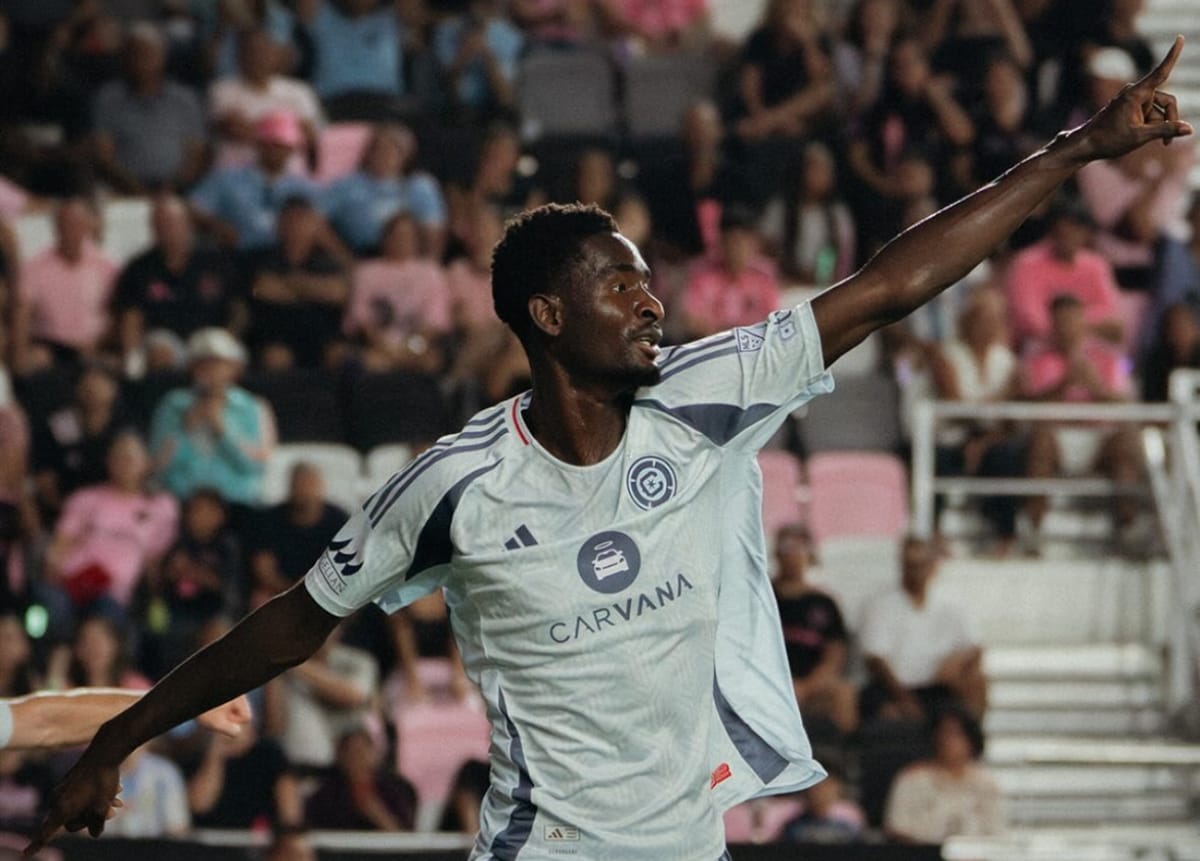
The moves of U22 initiative players Brian Gutiérrez and Georgios Koutsias out has created space on the Fire’s roster – but also made clear the need for reinforcement in key areas of the pitch for the Fire as the team prepares for the 2026 MLS campaign.
At the same time, the additions of Mbekezeli Mbokazi and Anton Salétros look like they could be solutions to issues that vexed the Fire throughout the 2025 campaign and ultimately limited the ceiling of a massively improved season for the Fire.
With those changes here’s a look at where the Fire’s depth chart stands about a month before players are due to report to preseason.
What Formation Will the Fire Play in 2026?
For the bulk of the 2025 season, the Fire played out of a 4-3-3, long the preferred formation of Gregg Berhalter’s squads. Although the Fire achieved a number of notable results, both offensively and defensively, playing out of a 4-3-3, the team struggled defensively throughout the year and ended up giving up 60 goals, the most of any playoff-bound team in the league last year.
Down the stretch as the team sought to secure a spot in the postseason, the team switched to a 3-4-3, essentially adding a third center back to the starting XI and taking out a midfielder. That allowed the Fire to string together three wins late in September, with victories over Minnesota, Columbus and Miami securing the team’s first postseason berth since 2017.
Behind the formation shift was André Franco’s incisive play that enabled the Fire to control games through the middle of the pitch in ways they hadn’t throughout the year, despite playing with one fewer midfielder. After Franco’s injury, however, the team’s sole win came in the 3-1 victory over Orlando City in the wild card round – when the team had reverted to a 4-3-3.
Still, even though Franco’s ACL injury is all but certain to leave him out for much of 2026, as it stands today, although the Fire have nine midfielders under contract, none are really well-suited to the central attacking midfield role necessary in a 4-3-3.
That’s especially true after the sale of Brian Gutiérrez, who fit the right profile, even though he struggled to really take control of the role when given the chance over the past two seasons. Philip Zinckernagel can and has played in the position, but moving him centrally means taking him away from the right wing, where he put up team-record offensive numbers last season.
That leaves the 3-4-3 as the Fire’s default shape going into 2026, particularly since the addition of Mbokazi finally leaves the team with the personnel to play three center backs while having options on the bench in case of injury or suspension.
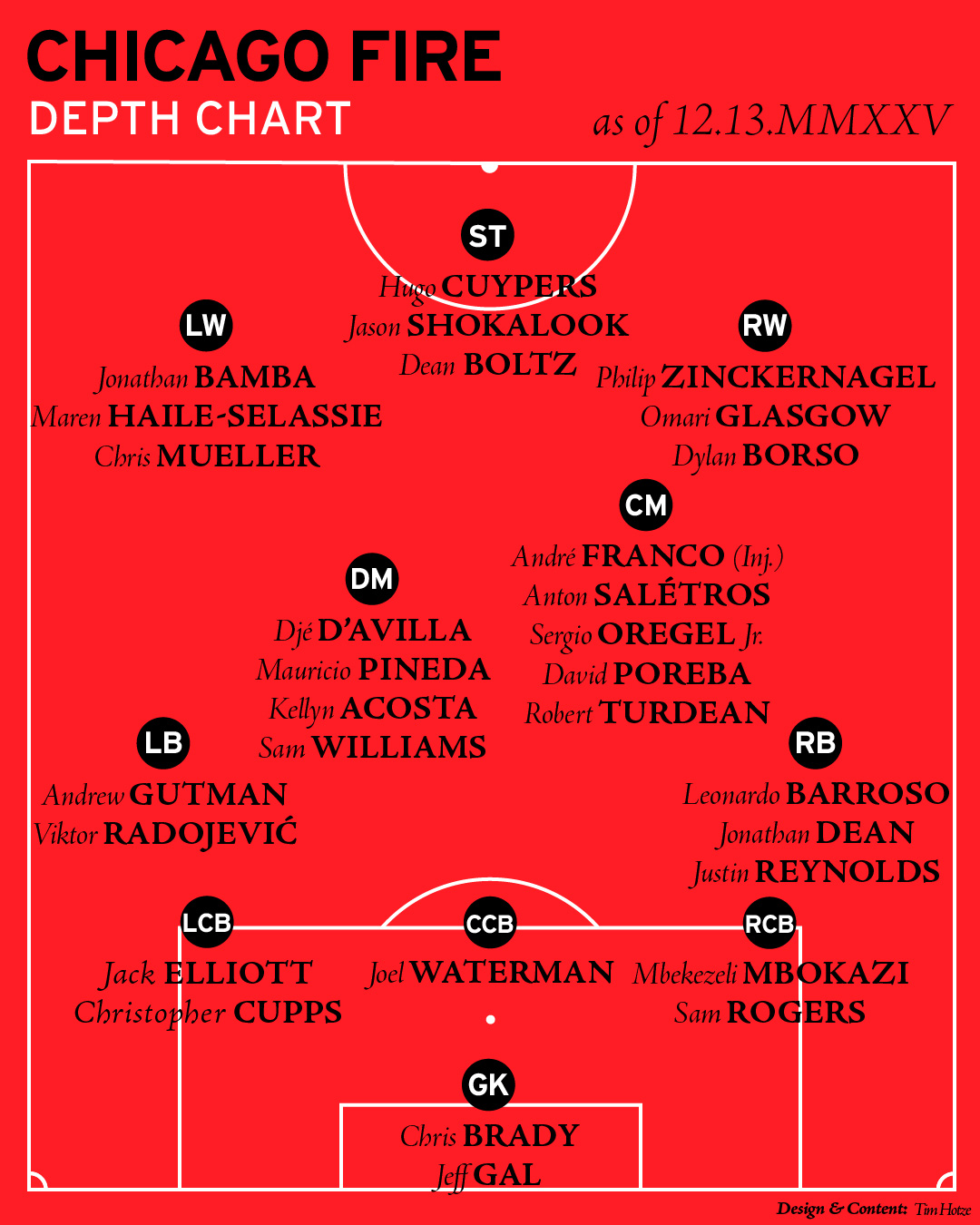
With that in mind, here’s the Fire’s current depth chart, putting each player in only one position although many on the roster are positionally flexible.
Can the Fire add players?
The Fire currently have one senior roster spot open (here is our deep dive into the Fire’s current roster, including an updated roster tracker) and the sale of Brian Gutiérrez, along with the sale last summer of Carlos Terán, all but certainly gave the Fire the maximum $3 million in General Allocation Money (GAM) they are allowed to receive from player sales outside MLS per season. GAM effectively extends the salary cap, allowing teams to spend above the notional (but highly fictional) salary budget cap.
In addition, the salary cap is going up, by a total of $725,000 compared to last year. While teams won’t be free to spend all of that increase – some of it will be swallowed by the various accounting mechanisms MLS uses – some of the increase is real.
Combine the two and the Fire do have salary cap room to add players, in addition to the possibility of adding a marquee Designated Player (DP), which would allow the Fire to spend an unlimited amount on that player’s salary and acquisition costs.
How many players will the Fire add this winter?
Berhalter has hinted that the Fire are looking to add around four players this offseason. That number likely doesn’t include giving first team deals to players already within the system, as just happened to Jason Shokalook, signed to a first team deal after a Golden Boot-winning season with the second team.
That’s a dramatically smaller number than the Fire added last winter, when the Fire moved on from 15 players (including loaning Georgios Koutsias to FC Lugano).
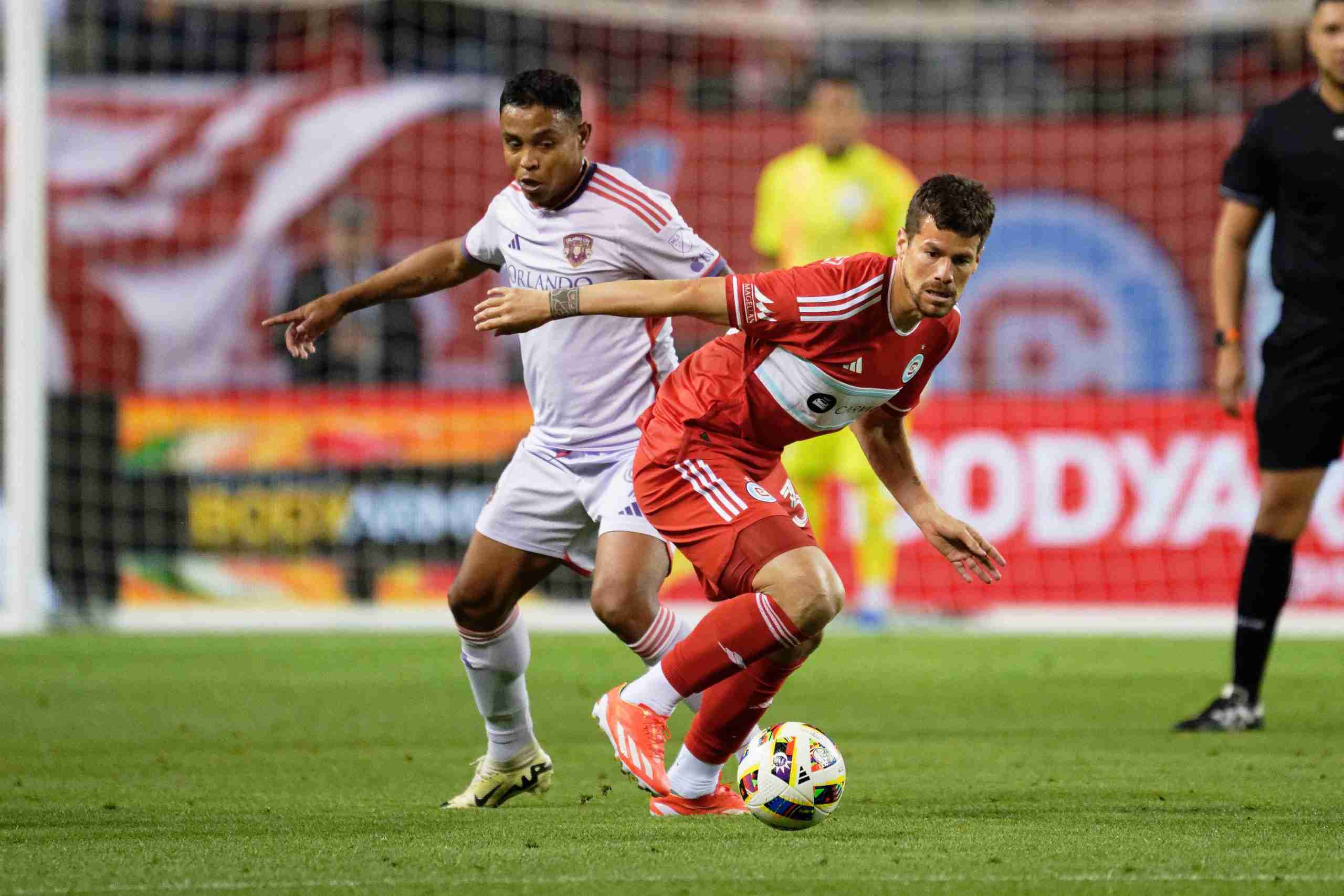
With the additions of Mbekezeli Mbokazi and Anton Salétros, the Fire have added two players from outside the organization. Adding two more would mean the Fire would have to move at least one player currently on the roster, even after the departures of Tom Barlow and Rominigue Kouamé and the retirement of Omar González from the first team.
What are the Fire’s positions of need?
In the long run, Berhalter is likely to want the personnel to effectively play out of a 4-3-3. Whether he’s willing to wait for Franco’s return from injury to do so is an open question. With Franco unavailable, the Berhalter’s options would be to push a midfielder further up the pitch or shifting Zinckernagel to the central attacking role – removing him from the position where he was so effective last year – or using Maren Haile-Selassie, who is a skilled player but only contributed 916 minutes in the 2025 campaign.
Neither option is likely to improve on the Fire’s offensive production from last year. That means the Fire will either have to shift formations, as shown in the current depth chart, or bring in a central attacking midfielder, either on a loan or permanent basis.
In addition to attacking midfielder, the Fire also need reinforcement at striker. While the Fire did sign 2025 MLS Next Pro Golden Boot winner Jason Shokalook to a first-team deal at the position, the departure of Tom Barlow leaves the team without a backup for Hugo Cuypers with first-team experience. Dean Boltz, nominally third on the depth chart, struggled for playing time behind Shokalook as he scored three goals in 703 minutes in MLS Next Pro last year.
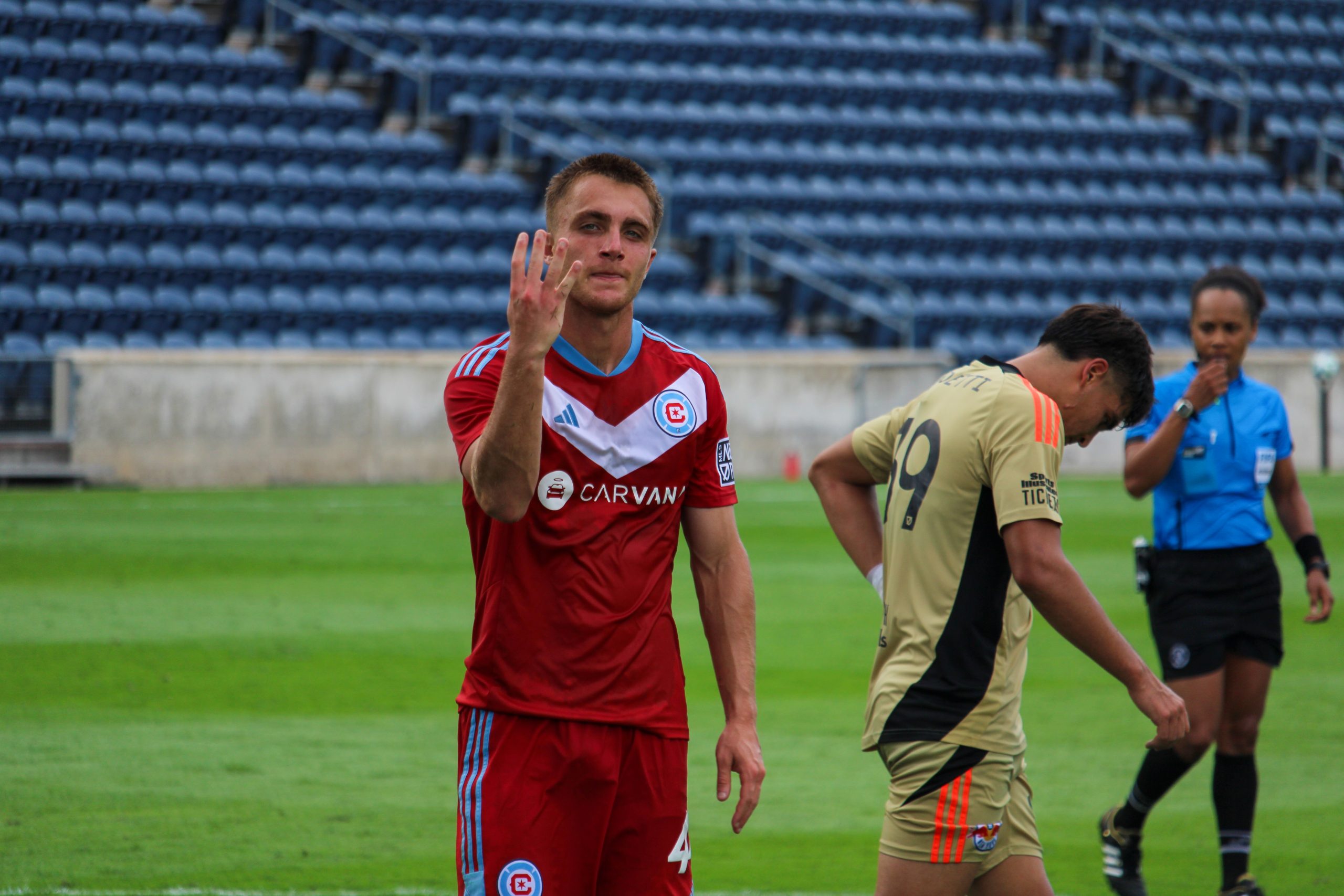
After declining Bryan Dowd’s option, the Fire now have just two goalkeepers with first team deals for 2026 in Chris Brady and Jeff Gal. Despite a rough end to his season, Gal proved competent when asked to play in 2025 but it left the Fire scrambling to find a goalkeeper in games where Gal was asked to start. This year, the Fire have two goalies in their Next Pro squad that are under professional contract, making them eligible for short-term call ups, but each is limited to just two MLS appearances unless they’re signed to a first-team deal.
Most importantly, however, the Fire have made it clear that their long-term vision is to field three DPs. While the Fire will expect the third DP to be a contributor on the pitch, the team has also looked at players whose impact will extend far beyond the pitch.
Over the past year, the team made serious offers for superstars including Neymar and Kevin de Bruyne. The team has also shown interest in Mohamed Salah, whose future in Liverpool was recently put in doubt after a highly-public falling out with Arne Slot, and the Fire are one of the possible landing spots for the Egyptian superstar. Adding Salah – or another player of a similar international profile – wouldn’t be a question of fitting a position of need: You sign them and figure out how to fit the roster together afterwards.
Between the positional flexibility of many of the Fire’s key contributors – Philip Zinckernagel, for example, can play in multiple positions in the attack– or a tactical shift, like moving to a system with a second striker, if the Fire believe they can sign a global superstar, they will likely find a way to make things work on the pitch, regardless of position.