How 2025 Roster Rule Changes Impact the Fire

Last week, MLS released the public version of the 2025 Roster Rules and Regulations. While not a comprehensive (or legally binding) version of the rules that MLS teams need to follow, they work as a guide for the public’s (and media’s) understanding of the myriad rules and exceptions to the MLS salary cap and roster rules.
Here’s some of the major changes, and how the Fire have been – or might be – impacted by the rules.
Two Buyouts Per Season
This is the change that would have impacted the Fire the most over the past few seasons.
Although teams have long been able to buyout one guaranteed contract per season, effectively, paying the player the remainder of their guaranteed salary and making the player a free agent, teams now have two buyouts per year. (In practice, teams sometimes negotiate for this number down, and if a player finds a new deal elsewhere for less money, the amount the team is on the hook for is correspondingly reduced.)
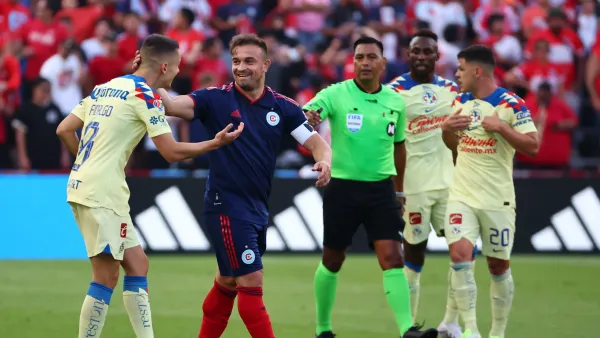
The Fire have often had a reason to use their buyout early, particularly since the league typically considers moves to related-party clubs – like the Fire’s sister club FC Lugano – as buyouts (there can be exceptions, such as when the Fire loaned Georgios Koutsias to Lugano, as there were other offers on the table). That meant that the team’s options to move on from Shaqiri were limited: They couldn’t offer him even a fraction of the roughly $4 million in promised wages he was due to earn in Chicago as the team had already used its buyout on the year.
This year, the Fire have exercised one of their two buyouts in parting ways with Arnaud Souquet, because of the rule change, they retain the ability to move one additional player off the roster. The team did not have to use a buyout to loan Georgios Koutsias to FC Lugano, as there were competing offers on the Greek forward. They can, however, choose to count Gastón Giménez’s mutual termination at the end of the 2024 season as a buyout and receive some cap relief due to complexities that aren’t in the public-facing rules.
In a related move, players put on waivers can now ask to be released for their contracts and sign with a new club, while retaining the pay and benefits they were promised by MLS. This significantly improves the rights and flexibility available to players put on waivers.
Cash Player Trades

Of all the changes announced, this change is likely to have the biggest impact across the league. Since the league’s inception, players could be swapped or traded, as is common in North American sports, in exchange for other players, draft picks or allocation money. They could not, however, be sold for cash, as is common in the sport everywhere outside of MLS, until this rule change was announced.
Around the world, intra-league sales are the bedrock of player movement, and they help set the benchmark for player values externally. That was effectively cut off in MLS, however, as teams were only able to use limited stockpiles of allocation money or other players. As a result, Designated Players (DPs) and other players at the top end of MLS rosters seldom moved from one team to another and MLS lost a number of marketable stars to other leagues.
That is no longer the case, and we have already seen a number of cash transfers (“cashfers” seems set to become the dominant shorthand) take place, including the $5m sale of 2023 MVP Lucho Acosta to FC Dallas, with Evander reportedly close to a similar blockbuster move from Portland in to Cincinnati.
The team selling the player receives actual cash, which is automatically converted into GAM for most trades, but which selling teams may choose to convert to GAM if the sale becomes a Designated Player or U22 Initiative player on the buying team’s roster.
Generally, intra-league cash transfers work the same as they do if the player moved abroad, though there are a few significant changes, most significantly, that the player being sold is eligible for 10% of any sale. Additionally, teams can keep players on their current deals (sales to other leagues involves the player signing a new deal with their new team), or elect to negotiate a new contract with the player.
While the Fire are unlikely to take advantage of that rule this window, it does provide an intriguing opportunity for the Fire to bring in MLS-proven talent in the future, and it gives the team additional sales opportunities for talent they develop.
Changing Roster Paths
Last summer, as part of a number of midseason rule changes, MLS introduced two “Roster Construction Paths.” Teams could choose to have three Designated Player slots and three U22 Initiative player slots, or have two DP slots, four U22 slots, and receive $2 million in General Allocation Money (GAM) to invest in the roster that season.
Teams had to declare which path they were taking by the close of the summer transfer window. The Fire, knowing that Sporting Director Georg Heitz’s time with the club was coming to a close, chose the 2 DP/4 U22 path, as did a number of other clubs with rostres in transition, largely to receive the additional GAM and help with cap management. (Although the GAM from roster construction choices expires at the end of the season, it can be used in lieu of other, non-expiring GAM).
Because the rule was introduced midyear, it was not clear whether or not teams would have to choose one model and stick with it throughout the year, or if they would be able to change roster constructions for the summer transfer window.
Now it is clear that teams are allowed to switch paths midyear, as long as they are compliant with the new number of slots. Teams that selected the 2 DP/4 U22 model will receive only $1 million of the allocation money.
Teams must declare which path they are choosing by no later than the roster compliance date in the winter (this year, February 21), and change paths from July 1 through the close of the summer window on August 21.
Although the Fire can continue to add players (or trade or sell players within MLS) through late April, the team seems poised to stick with the 2 DP/4 U22 model for the time being, as the team entered the window with less available GAM than many other teams and have yet to add a third DP.
If the team does choose the 3 DP/3 U22 model, that would telegraph that the Fire believes they land a third Designated Player before the window closes on April 24.
A (Slightly) Later Summer Window
Throughout the world, a number of deals happen at or near the end of windows, as players and teams become focused on realistic possibilities after sometimes fanciful options do not come to pass.
Because MLS’s winter window is open long after windows in Europe and South America have closed, a number of players have come to the league because, in effect, MLS was the only option for a player who wanted to move and a club who wanted a sale before the summer. (Although the window is open just a few days later than the rest of Europe, a number of players have gone to Turkey for similar reasons.)
In the summer, when far more players typically move, however, the opposite is true: The summer window in MLS closes before it does in Europe. MLS had discussed changing the window – shortening the window in the winter and tacking time onto the summer to compensate.

This year, the window is the same length but has moved back a week, closing now on August 21st instead of August 14. That still leaves over a week with the window open in Europe after the window in MLS is closed.
Part of the concern is, undoubtedly, the limited time left in the season: The Fire have eight games after the window closes, and given the time it takes for players to receive visas, many end-of-the-window signings would only be available for a handful of games to help teams with a playoff push.
Any more significant reworking of the window may have to wait until MLS decides whether they will shift to a summer-to-spring schedule, and moving the windows would require coordination with the US Soccer Federation and Canada Soccer, as well as the other professional leagues in both countries.
Loosened Loan Rules

Loans have often formed a key part of roster and player management in the sport. In MLS, however, their use has been limited by the salary cap rules. Previously, when an MLS team sent a player on loan, he would still occupy a roster slot unless the receiving team covered the player’s entire salary for over the duration of the loan, as well as a prorated portion of any acquisition costs (transfer fees, etc.).
In effect, that made players at the high end of the roster – DPs and U22 Initiative players – unloanable, as many come to the league with significant acquisition costs.
Now, for DPs and U22s only, those rules have been relaxed slightly: After a player’s first year in the league, DPs and U22s may be loaned out – only to international clubs – and the roster slots and cap space are cleared if the receiving club covers their wages alone.
The move is significant, particularly for U22 Initiative players, many of whom are early in their development and who might benefit from time in other leagues. It also allows such players to be “trialed” by teams abroad before a permanent transfer, which may help teams profit from U22 sales.
Bringing “Unwritten” Rules to Light

Despite heated debates from diehard MLS fans on social media, the roster rules and regulations that MLS posts to its website have never been a legally-binding document. Instead, they are, in essence, a summary of the actual rules used by the league in determining roster and cap compliance, serving as a primer to help fans – and the media – explain and understand moves and transfers.
As a result, the public rules often “trail” trades or movements that happen. For example, when the Fire signed Federico Navarro to a contract extension, the team stated that he would remain as a U22 Initiative player – apparently contravening the public rules at that time, which stated that U22 players from abroad had to be on their first contract to qualify. The public rules were later updated to clarify that as long as the new contract meets certain restrictions, the player could still occupy a U22 slot for the length of their initial deal.
This year, the league made a number of updates to the public rules to help explain situations that have long been in place.
They have clarified that proceeds from Designated Player sales cannot be converted into allocation money, unless the player was eligible to be “bought down” off the DP slot (as Gastón Giménez was last year).
They have added a description of “Slot 31,” the previously unofficial name for a young player loaned out to a team in a lower division. The slot effectively allows teams to loan out young talent to a team where they can see real game minutes and free up a roster slot, without having the receiving club cover the player’s full wages.
They have also added a description of off-roster homegrowns. These are homegrown players signed to first team deals but who do not occupy a roster slot. The mechanism is typically used for teenage players, many of whom may spend most of their time playing in academy or Next Pro games.
The public rules now specify that despite having a first-team contract, they do not occupy a roster slot and can play in up to six league matches on short-term callups as well as unlimited games in other competitions. Off-roster homegrowns can be moved onto the senior or supplemental rosters, but such a move is a one-way path: Once on the roster, players cannot be moved back.
This explains the position of players like Robert Turdean, a skilled player who has earned a first-team deal, but who, at 15 years old, still needs time to develop physically and mentally before he can be expected to be a frequent contributor at the first team level.
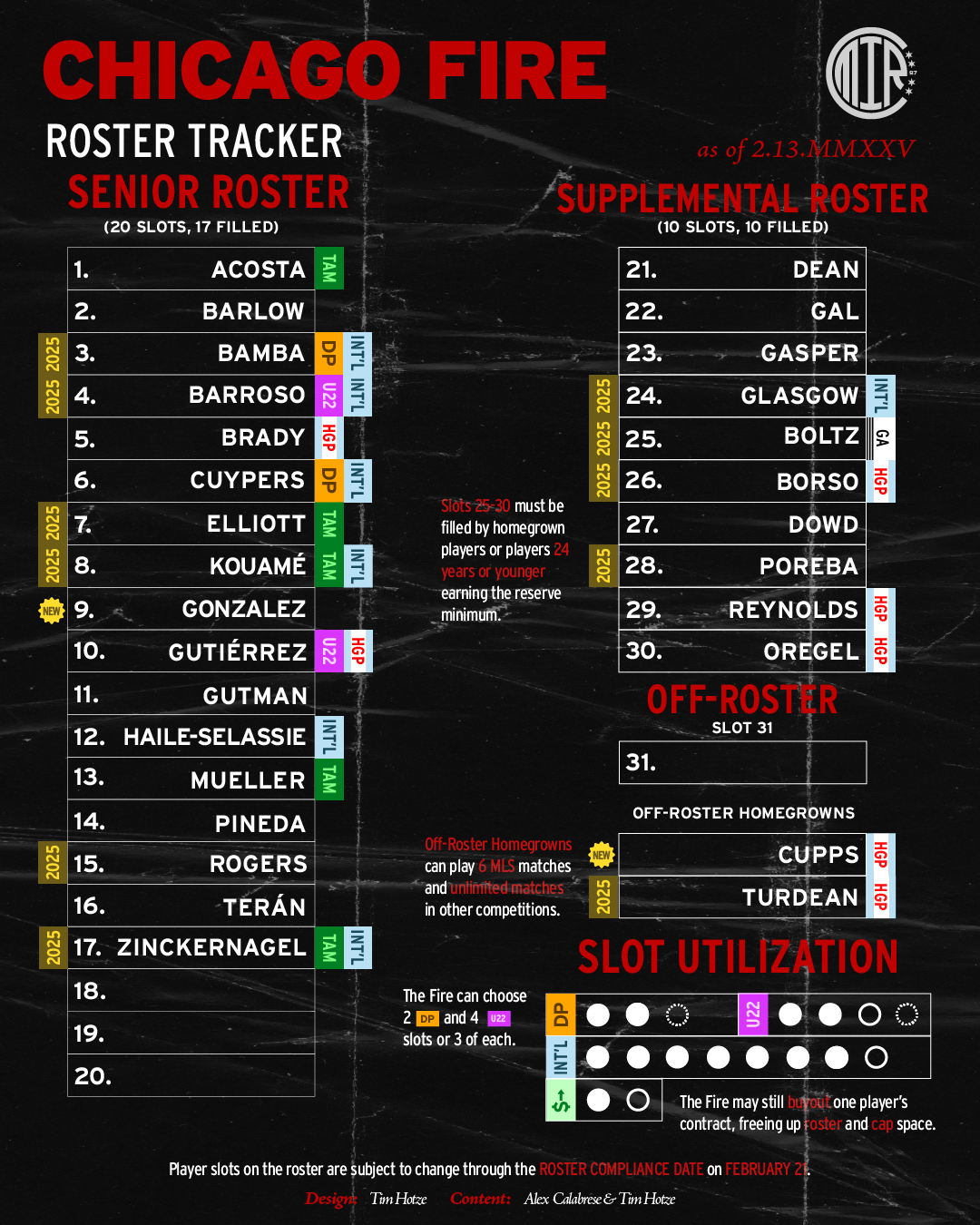
Our roster tracker, which we updated for Arnaud Souquet’s departure, reflects the changes in the public rules, and we will continue to update the chart throughout the season.