Mbokazi in, Gutiérrez and Koutsias out: Updated Chicago Fire Roster

It has been six weeks to the day since the Chicago Fire’s season ended, and one week since Inter Miami’s MLS Cup victory. In that time, the Fire’s front office, led by Gregg Berhalter in his capacity of director of football for the team, has been busy, making three first team acquisitions and finding moves for two of the U-22 Initiative players on the Fire’s roster.
Those moves come in addition to the standard roster decisions announced early every offseason, where the team announced that three players who played with the first team in 2026 will not be returning, including Omar González who will join the Fire II in a unique player-coach role.
With the arrivals of internationals Mbekezeli Mbokazi and Anton Salétros and the departures of Brian Gutiérrez, Georgios Kousias, Tom Barlow and Rominigue Kouamé (in addition to González’s new role), here’s the where the Fire’s roster stands as the team looks to build on their most successful season in over a decade in 2026.

Gutiérrez, Koutsias Clear U-22 Logjam
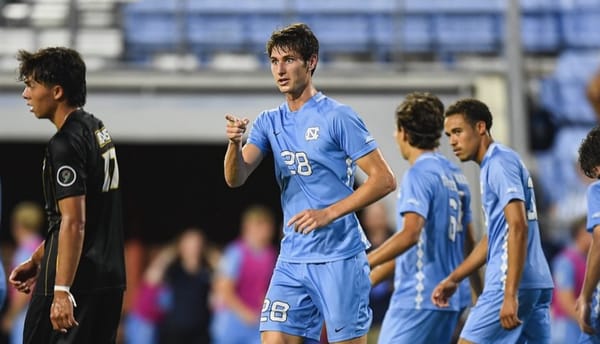
The biggest incoming move of the Fire’s offseason to date has been the arrival of 20-year-old center back Mbekezeli Mbokazi from Orlando Pirates, one of South Africa’s most storied clubs, was both a solution and a problem for the Chicago Fire: The 20-year-old center back, a physical presence with the skill and profile of a high-upside player, was expected to help stabilize the team’s defense after a year when the team often had issues seeing out results despite scoring the second-most goals in the league, behind Inter Miami.
On the other hand, Mbekezeli’s reported transfer fee of around $2.5 million meant that he would be difficult to fit on an MLS roster without using a U-22 Initiative slot.

Mbokazi, however, was the fifth U-22 on the Fire’s roster – with forward Georgious Koutsias set to become the sixth following his return from loan from sister club FC Lugano. Koutsias’s return was never more than theoretical, with the player committed to staying in Europe closer to his family.
Brian Gutiérrez’s departure to Chivas, followed shortly by the announcement that Georgios Koutsias’s move to FC Lugano would be made permanent, solves that hypothetical snag. The Fire are down to four U-22 players, and retain the ability to add a third Designated Player (DP) by giving up one of those spots and increasing the cap hit of the team’s remaining U-22 players.
International Slots Still An Issue
Solving the U-22 Initiative question removes one of two major issues for the Fire in getting cap- and roster-compliant, something that must happen by February 20th, ahead of the regular season’s return that weekend.
The other is international slots. MLS restricts the number of foreign players that can be on a roster, nominally as a way to encourage the growth of domestic soccer talent. Each MLS team is granted eight international slots by default.
The Fire, however, currently have 12 international players on their roster, and although slots can be acquired from other teams via trade, acquiring four slots would be a tall order.
That situation, like the U-22 issue, is likely to be resolved soon: Sources familiar with the Fire’s roster planning tell MIR97 Media that a number of players are in line for permanent resident status (Green Cards), which would make them domestic players for roster purposes.
The process often takes around two years, although that can vary greatly depending on a number of factors including the player’s nationality, what type of visa they initially received when coming to the United States, and the player’s profile, with high-profile or national team players often having an easier path than others.

In addition to green card acquisitions, the supplemental roster is likely to be in a state of flux as the team heads in to 2026: Players on the supplemental roster do not count towards the salary cap, but their use is restricted: Slots 21-24 of the roster can be filled by players of any age earning the Senior Minimum Salary ($113,000 in 2026), while slots 25-30 can be filled by players 24 or younger earning the Reserve Minimum salary ($88,025 next season) with homegrown players eligible to earn slightly more than these amounts.
Other than the fact that supplemental roster players do not hit the team’s salary cap, however. Players on both rosters are eligible to play in all MLS games and related competitions, and teams are free to move eligible players between the supplemental and senior rosters as they work to achieve salary cap compliance.
Looking Forward: Flexibility, With An Asterisk
As it stands today, the Fire currently have 30 players under contract with the first team for 2026. Although that is the total number allowed on MLS first team roasts, homegrown Robert Turdean’s age (he is set to turn 16 next month) enables him to occupy a special “off-roster homegrown” status.
That means that the Fire can add one more player before the team would need to move another player off the roster. That can be accomplished by trades within MLS or sales to other leagues, or by loaning a player out. The team also can buy out up to two players. Doing so takes the player – and their salary cap hit – off of the roster.
With the Fire looking to make more acquisitions for the 2026 campaign, it is likely that Koutsias will not be the last player to depart the squad this winter. Unlike early in the 2025 campaign, this time, Berhatler will have significant cap space to do so.
When Carlos Terán was moved to Brazilian side Athletico Paranaense last summer, the Fire elected to take the proceeds in the form of 2026 General Allocation Money (GAM), which effectively adds to the team’s salary cap. Combined with the proceeds from Gutiérrez’s sale, the Fire have effectively maxed out the $3 million in GAM they can acquire from player sales this season, although they can still add more via intraleague trades.

That puts the Fire in a considerably better position than they were a year ago, when the team’s GAM coffers were relatively bare after failing to make a significant player sale in 2024 after moving a player on to the Premier League in each of the two seasons before that.
That year, the Fire front office led by Berhalter and Gregg Broughton had an incredibly busy off season as they worked to turn over a roster that, despite being one of the most expensive in MLS, finished the 2024 season with the league’s second-worst record
They ultimately were able to turn over more than half the roster, finding creative ways to shed expensive contracts and setting the stage for the Fire’s best regular season performance since 2017.
This year, the workload on the front office is considerably lighter and, with the influx of money from player sales, the team has more tools available as the team looks to close the gap with the league’s elite. With the Fire taking care of so much of their business early, enabling full preseasons for Mbokazi and Salétros, they’ve already been making strides towards closing that gap.