Photos: Chicago Fire’s New Endeavor Health Performance Center
On Monday, MIR97 Media joined other reporters and journalists for a tour of the Endeavor Health Performance Center, the team’s new, state-of-the-art training facility in the Near West Side as part of the team’s official ribbon cutting ceremony.
We were guided through the facility by Paul Cadwell, the team’s senior vice president of community programs, engagement and facilities. Cadwell, who has been with the Fire since before the team’s first competitive game was played, oversaw the project for the Fire. The new facility allows the Fire – as well as the team’s Next Pro affiliate and academy teams – to train in the city after spending 14 years in suburban Bridgeview. The completion of the facility culminates work, Cadwell notes, that started before Joe Mansueto purchased the team in 2019, but which was accelerated and focused by the new owner's requirement that the facility be located in the city limits. After groundbreaking, the facility was opened in less than two years.
Although located in the heart of Chicago, however, the first places Cadwell mentioned were out of the city limits, saying that the team toured both North American and international training facilities, including those by the Bears (in suburban Chicagoland), the Cubs spring training facility, as well as top facilities from within the sport. Cadwell said that he was “fortunate” to have been able to tour Liverpool’s AXA Training Centre – a bold admission coming from the lifelong Manchester United fan.
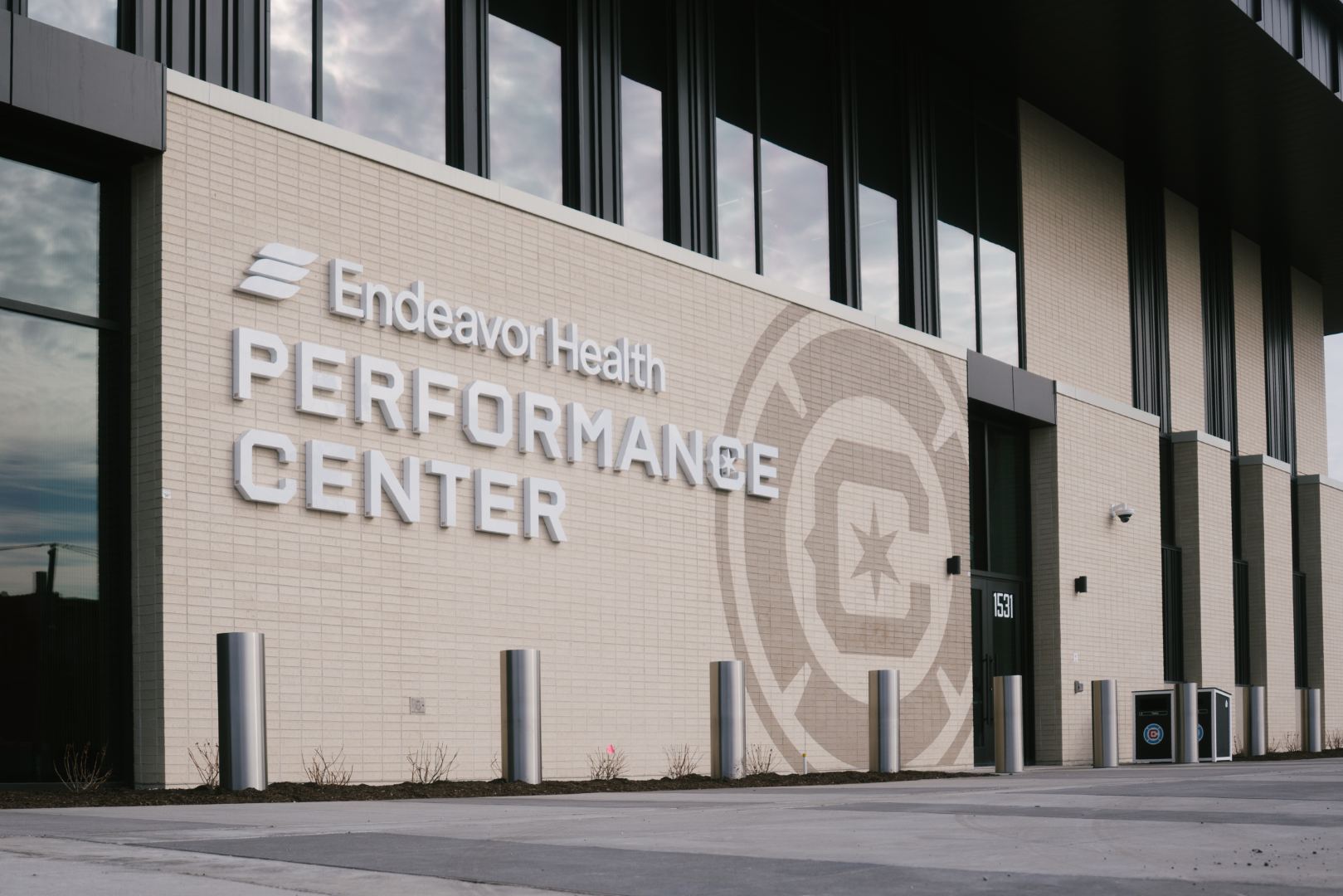
The facility is over 50,000 square feet – with room to expand (“easily expand,” one of the consultants from the construction management team on the premises for the event, quipped) another 15,000 square feet. Cadwell said that this is because a common refrain they heard from other teams, including in MLS, is that when they over time, they outgrew the built footprint of their facilities.
In addition to the areas media were allowed to tour, the facility includes office space for coaching and other sporting staff, and the so-called “war rooms,” for planning purposes. There is also a large cafeteria area on the second floor with panoramic views, being used to host a reception following the ribbon cutting ceremony. Although the Fire have been training at the facility for just over a month, before Monday's tour, media were only allowed into the lobby and room immediately adjacent used for press conferences.
Academy Facilities and Equipment Room
Cadwell’s tour of the facility itself started at the beginning – or at least, the place where players at the beginning of their careers with the Fire will be based. In one part of the building, the team built what they call the academy suite.
Compared to the gleaming entranceway, there is a notable contrast. The academy facilities feel much more minimalist – almost spartan – in their design. That was intentional, Cadwell says. “So what you’re seeing here is basic… We wanted to make sure that we were providing them with everything that would prepare them and recover them, but without pampering them.”
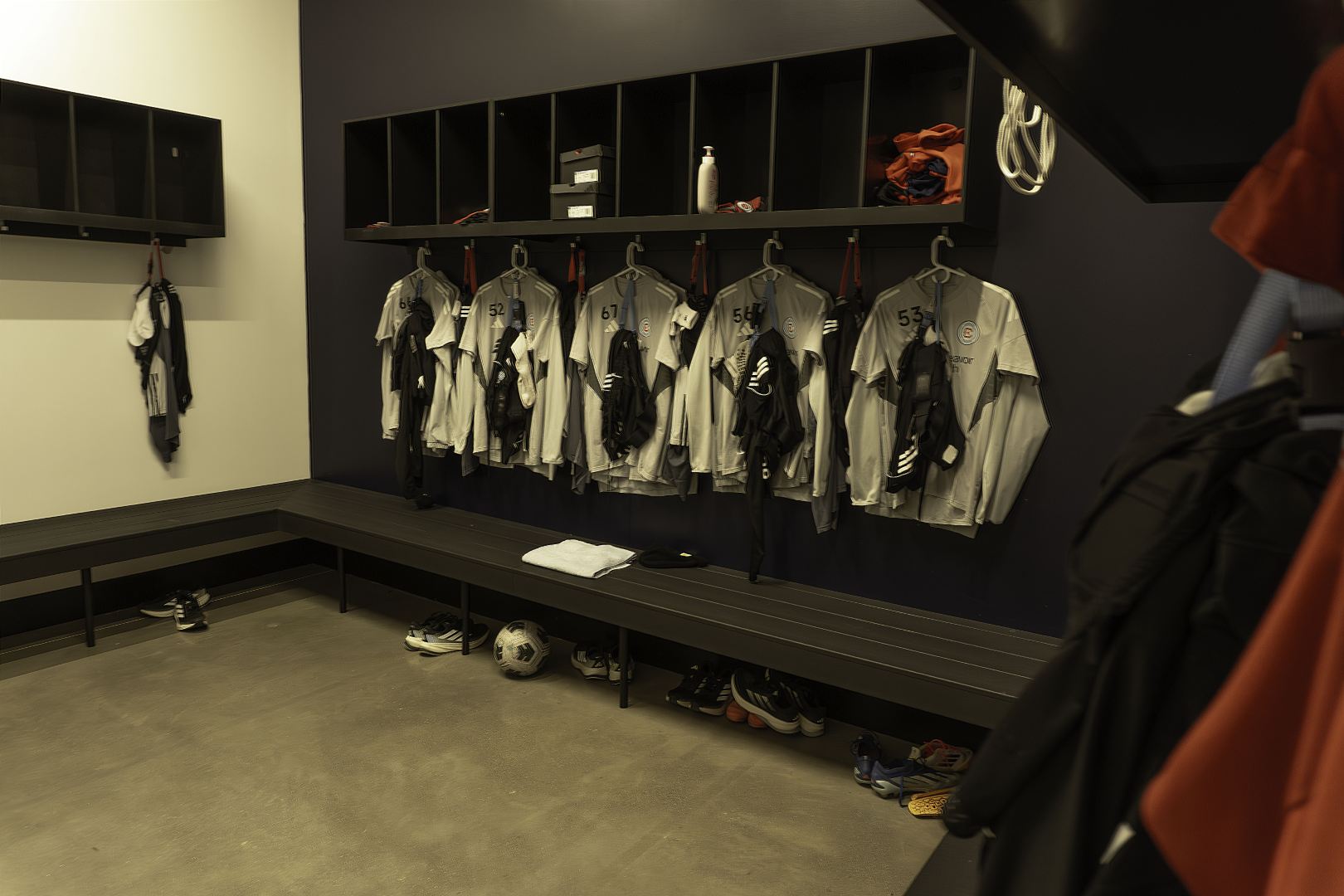
That isn’t to say that the academy facilities aren’t an upgrade on what the current generation of players are used to. Each academy age group has its own locker room. The rooms are, as Cadwell noted, simple, but still an upgrade. “In Bridgeview, we didn’t have locker rooms [for the academy teams], so players would turn up, get dropped straight off the fields with a bag and then go and train, then leave.” The adjustment wasn’t entirely seamless – because they “never had their own space” previously, some of the academy kids still brought their bags out to the field.
The academy has its own sports medicine area, featuring equipment that, frankly, would not feel out of place for first teams around the league, including traditional cold plunge tubs – effective, but decidedly lower-budget than the facilities afforded the first team.
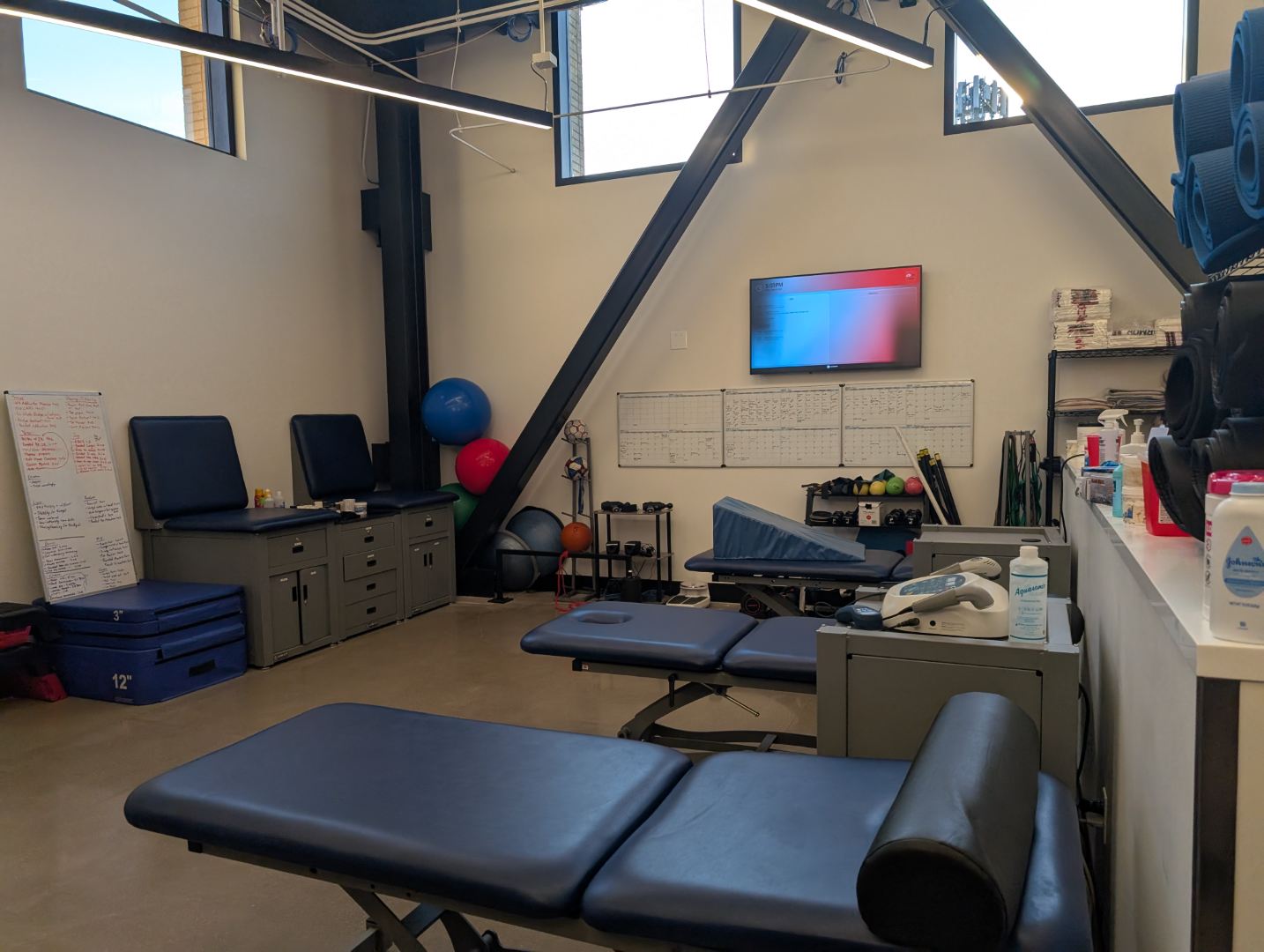
Showers and grooming areas, which might be better described as “functional” than luxurious – are shared for sets of two age groups.
“The goal,” Cadwell explains, “is that it takes five years to get 150 yards down the building” to where the first team facilities are. Some players have already proven that they can make the journey quicker, with 15-year-old Robert Turdean and 16-year-old Christopher Cupps now both sporting first-team contracts – the latter of whom appeared on the bench for the Fire last weekend.
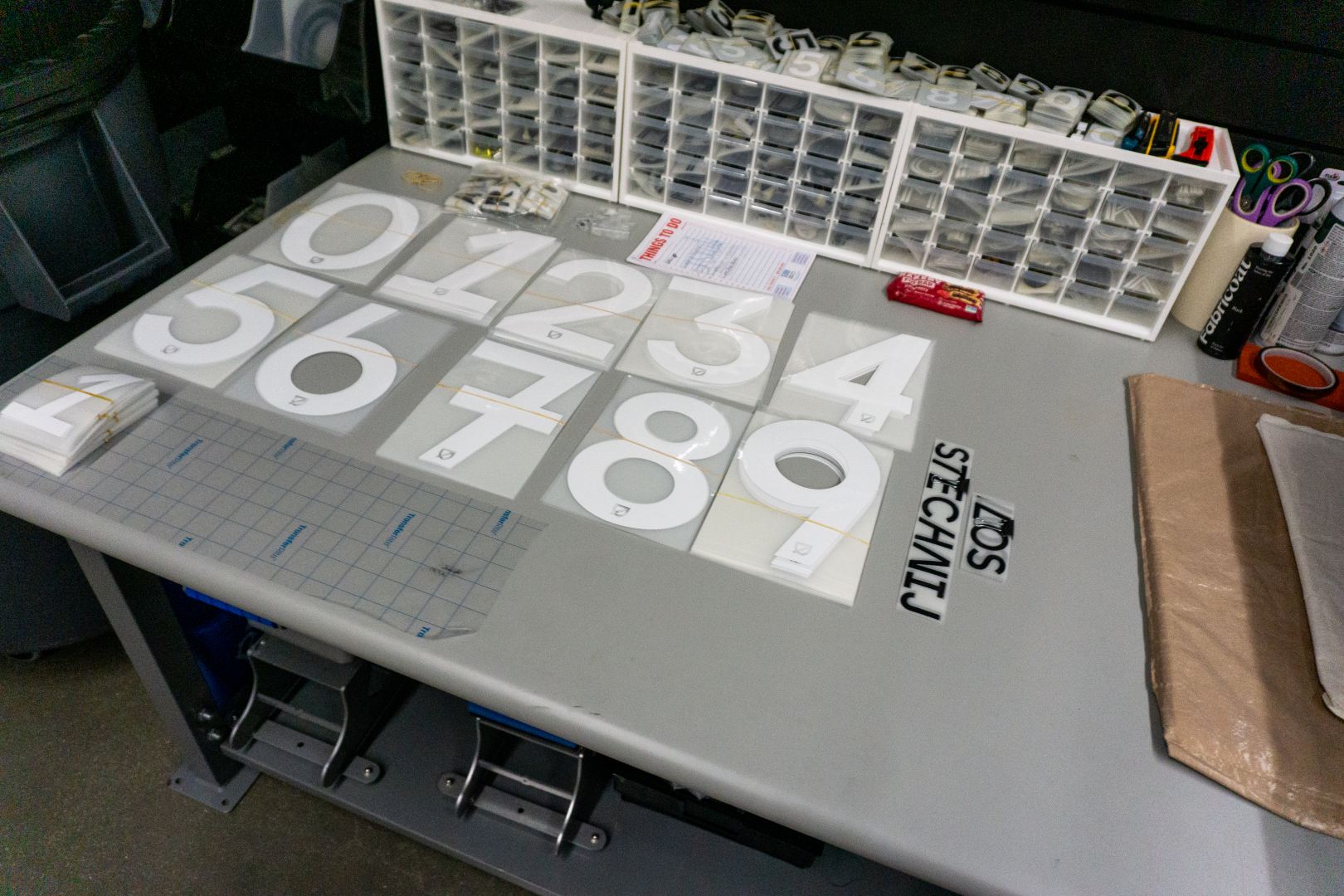
After leaving the academy area, we are taken to the equipment room. The space is understandably utilitarian, giving the feel of accidentally wandering to the portion of a hotel that, when you open the door, is clearly not intended for guests. But, here, too, is an upgrade from Bridgeview: The room is large, with “massive, high density storage” as Cadwell put it, a significant upgrade from the cramped conditions in Bridgeview which, he noted, were also shared with the Chicago Stars and Hounds.
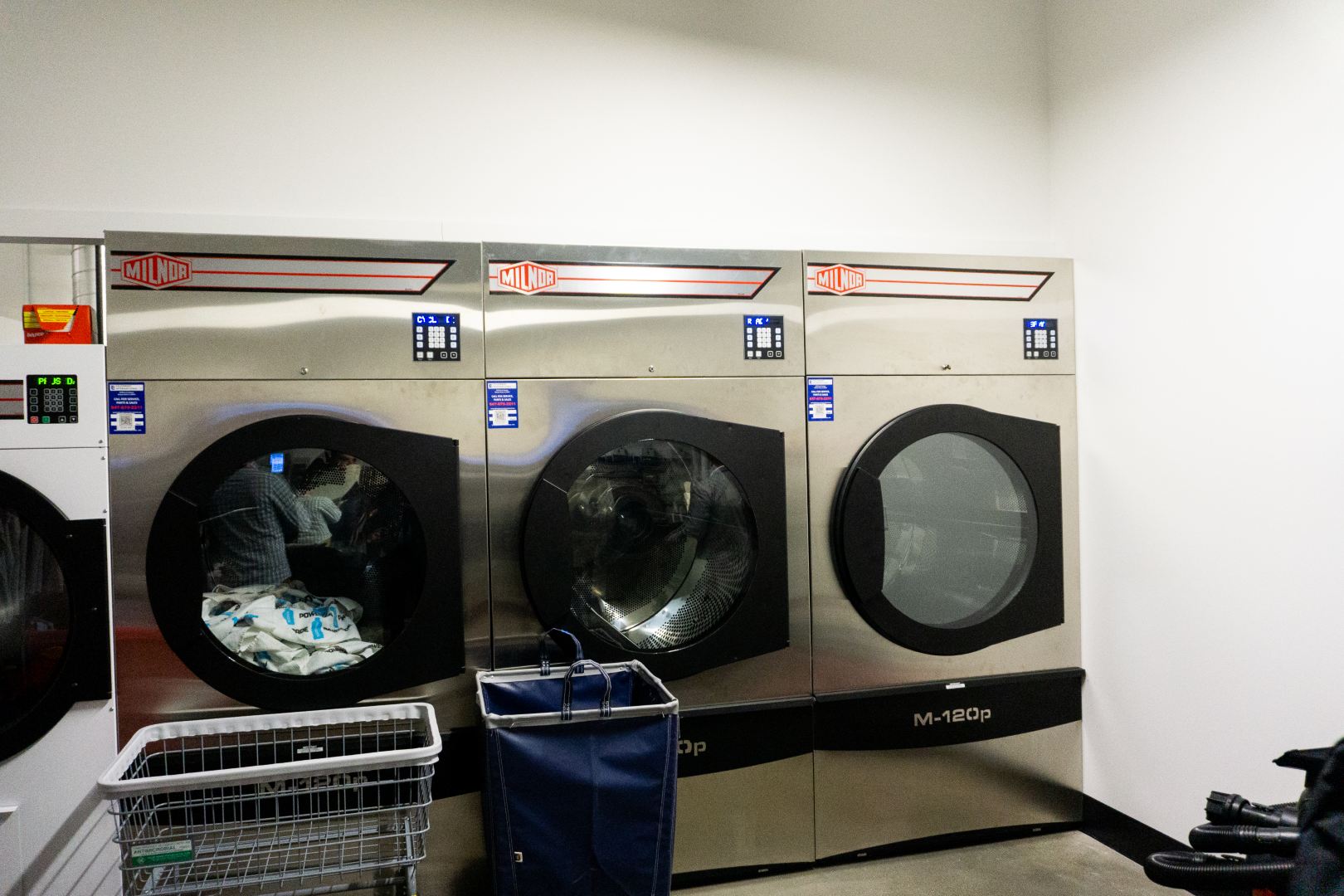
Along the walls are absolutely massive laundry machines, and despite the utilitarian nature of the space, “with all the equipment in here, this is the most expensive room in the building.”
Training Pitches
Although our tour is entirely indoors, the most important part of the facility is, of course, the pitches. The two primary fields and a half-size field for goalkeepers are made of hybrid grass. Hybrid pitches have become the playing surface of choice for top-tier soccer clubs around the world, and most Premier League clubs with new or renovated stadiums play on the surface, and they’re frequently seen in outdoor NFL stadiums as well. They’ve become the material of choice for most new MLS stadiums, including the Crew’s Lower.com Field, Austin’s Q2 Stadium, and FC Cincinnati’s TQL Stadium.
Hybrid pitches use a synthetic mat of fibers which allows real grass to grow underneath. In the Fire’s case, the pitch is 85% natural grass – which can be resown each year – and 15% synthetic. The result is a pitch that feels natural and has similar thermal properties to natural grass (not insignificant, as anyone who had to train on hot days on synthetic surfaces can attest to) and yet plays even more consistently than its natural counterpart, while offering better draining. The synthetic fibers ensure that grass grows at uniform angles and it is much more durable than fully natural grass, important considering that players train five days most weeks.
Both of the full-size pitches also feature a hydronic system for temperature control, as well as an advanced irrigation system so moisture can be added to the soil where needed and removed where it isn’t by adjusting drainage. The goalkeeping half-pitch uses the same synthetic fibers and drainage but lacks the hydronic temperature control, and there were heating pads on that field during our tour.
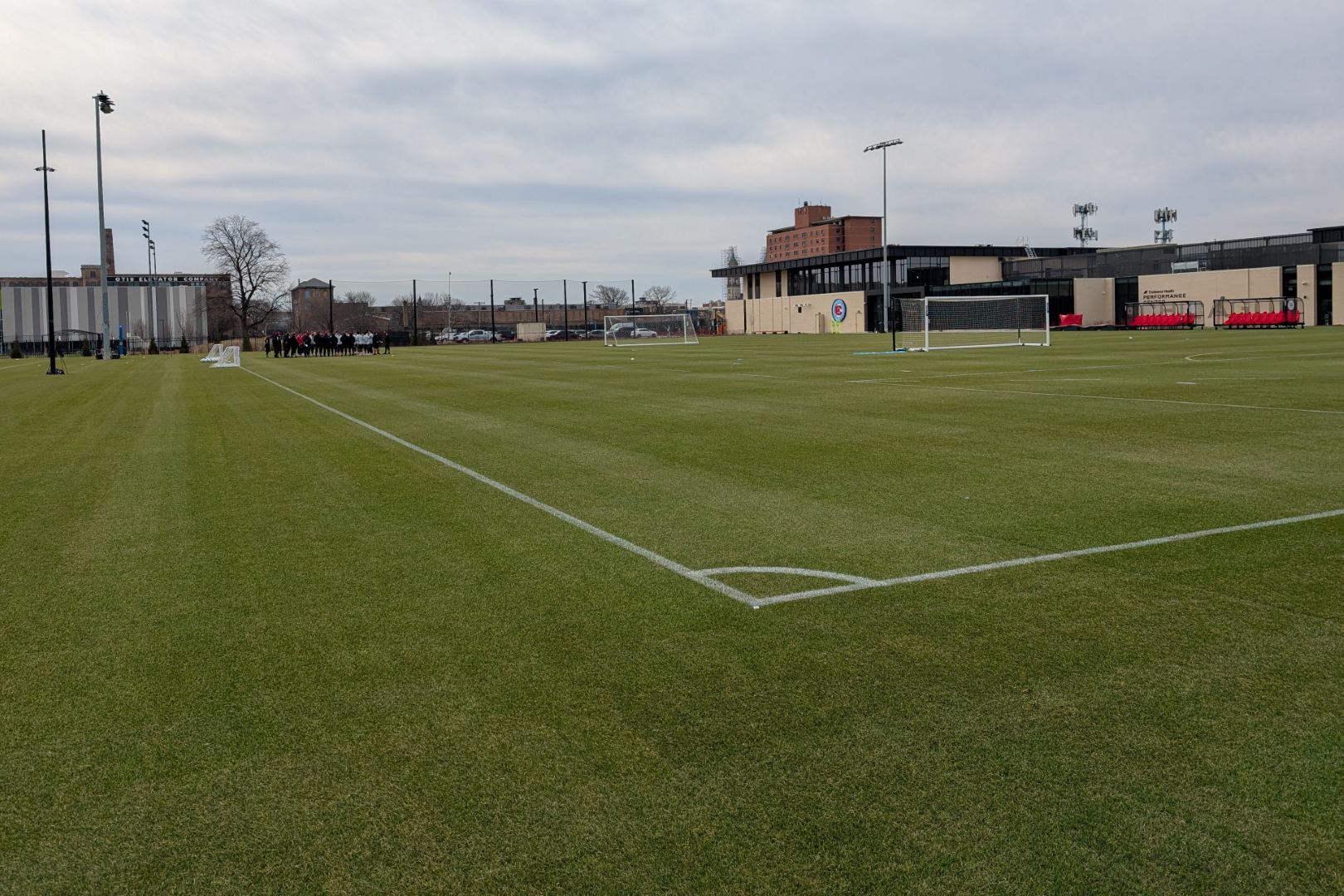
The contractor, Cadwell tells us, said that there are “eight of these [synthetic pitches] in North America, and these are the only two that aren’t in an MLS or NFL stadium.” Cadwell pointed out the large poles at the corners of the field, and notes that they are equipped with cameras so that “real time information is being sent back” for the analytics team “to break down. And they are using the game analysis room for individual player meetings.” The infrastructure underneath, Cadwell notes, was built with fiber optic technology knowing that technology – and analysis – would be advancing in the future as sports science and data analysis grows in both sophistication and importance.
In addition to the hybrid pitches, there are also three synthetic pitches, including one that is covered by a dome during colder months of the year. These will be used for academy training and games, and will eventually include bleachers to accommodate family and supporters for academy matches.
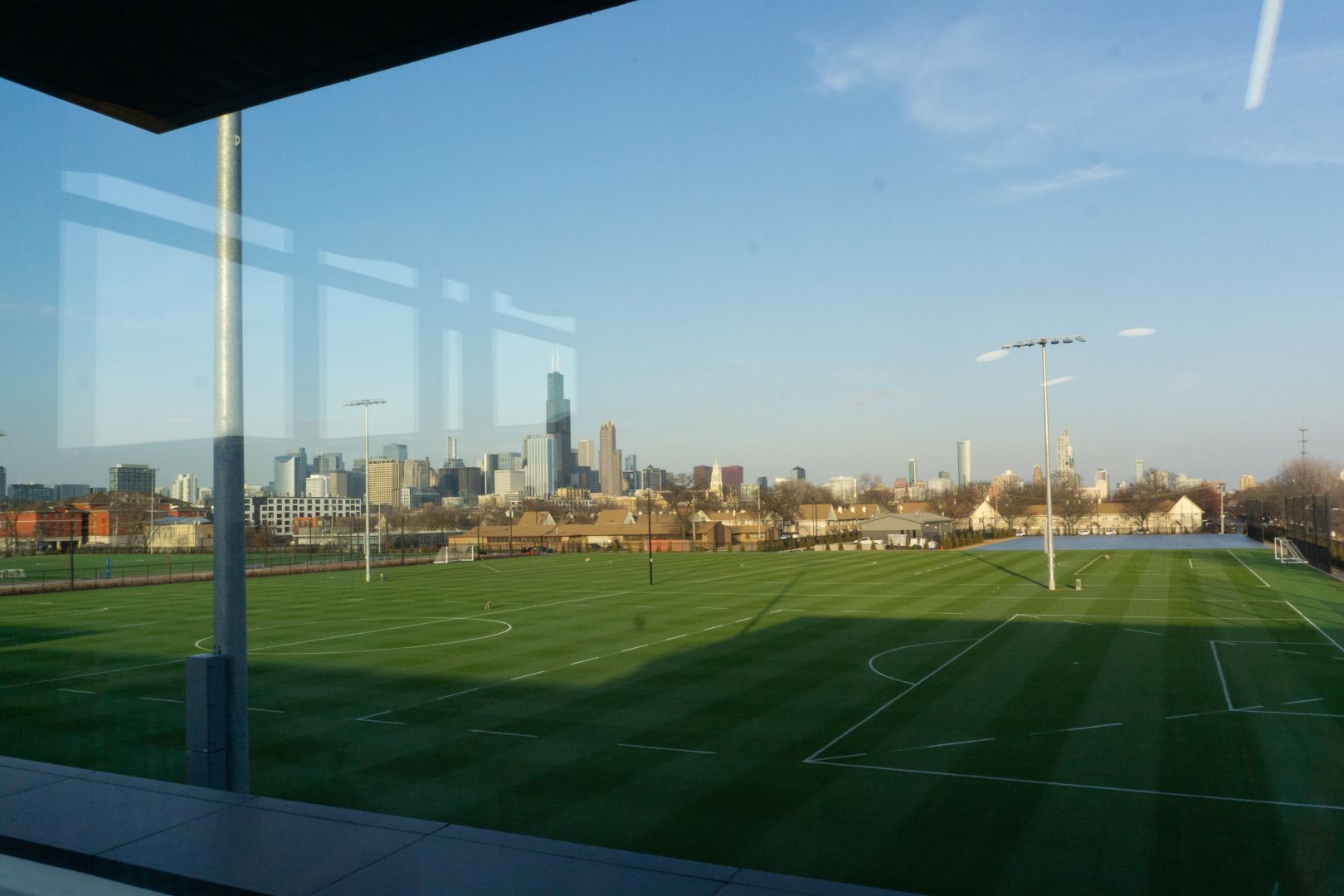
The team, Cadwell said, evaluated the possibility of accommodating Next Pro games in the facility, but the requirements for stands – as well as desire to stick to promises not to bring significant traffic into the neighborhood – quashed that plan.
First team locker and boot room
Starting from the academy areas and walking indoors, we don’t quite follow the path that players would take on training days, but our tour of the first team facilities starts where they’d enter from the pitch after training. Cadwell pointed out the short distance from the training pitches just outside the building to the first team areas. That, too, is intentional, and a contrast from the experience in Bridgeview.
“I call it the half mile walk from the locker room in Bridgeview to the field, and I can remember how embarrassed I was the first time Basti[ian Schweinsteiger, the World Cup winner who played with the Fire from 2017-2019] did it. Basti goes, ‘where are we going?’ I’m like, let’s keep walking and he’d say ‘where’s the field?’ So it was important that you literally walk out of this space, two steps” to get to the pitch, Cadwell explained.
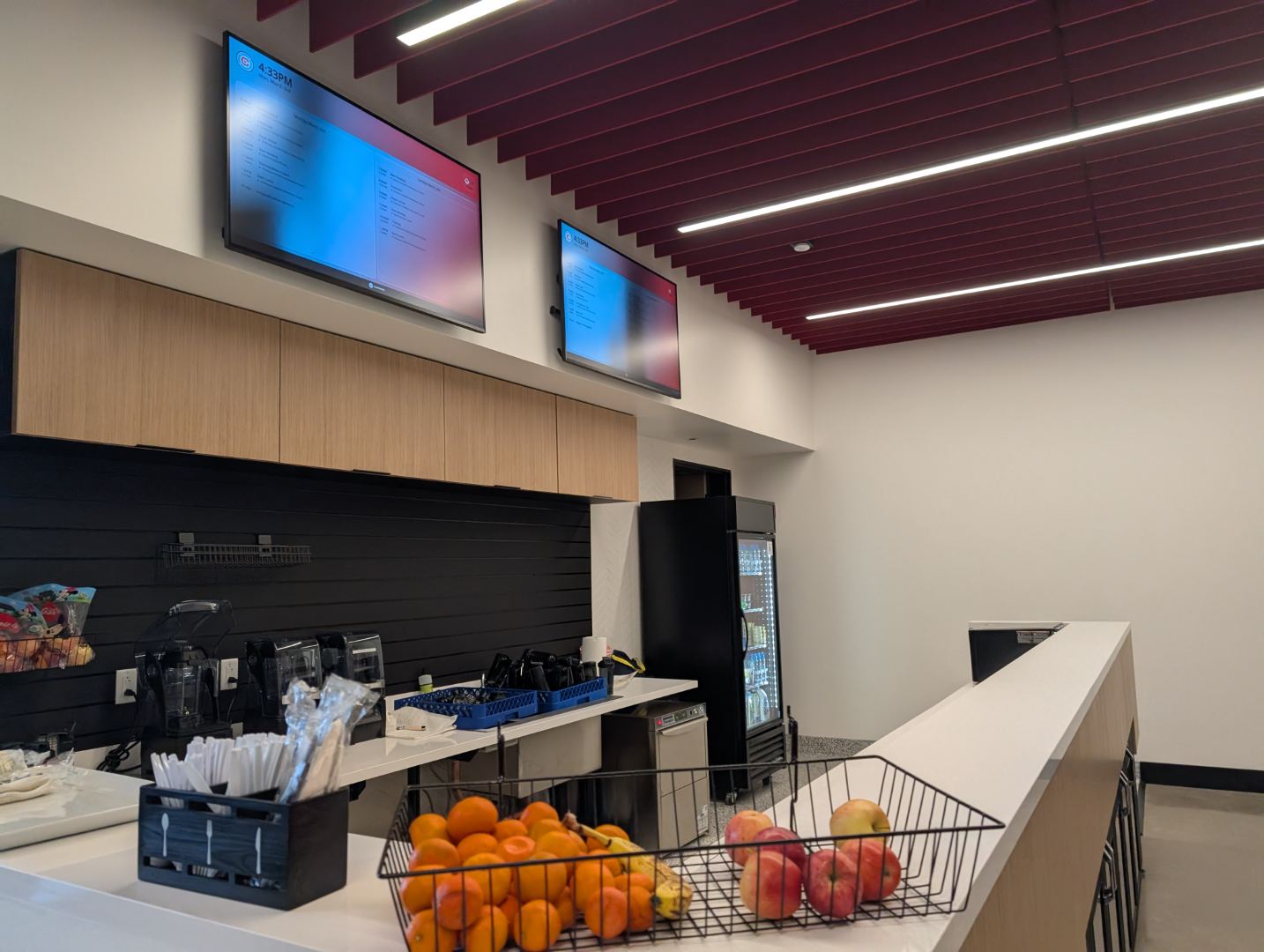
After walking past a nutrition bar area, where players can grab snacks after training, we enter what is technically a boot room. That name, however, conjures up an an antiquated, unloved space but this room is anything but.
Although other rooms have windows for natural light, one entire wall of the boot room overlooks the pitch, and players' cleats are carefully laid out along wooden slats in an L shape starting with the adjacent wall with a bench at the bottom.
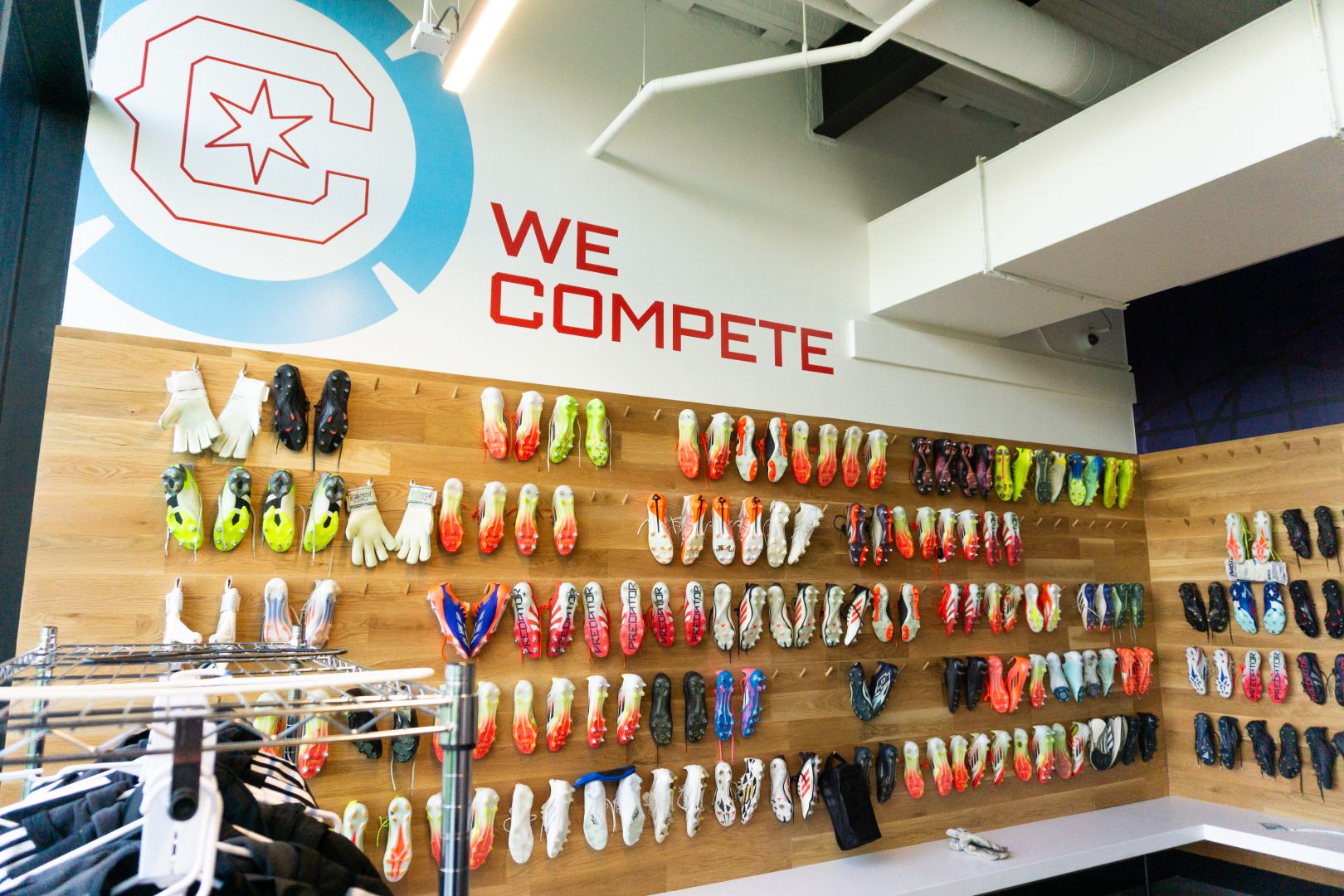
The overall effect feels like a high-end retail store – the sort where, if you have to ask about the price, you know you can’t afford the goods on sale. Immediately next to the boot room is the player’s locker room.
The first team space was designed with careful intentionality. Players and coaches have a separate, secure parking lot, and all of the first team facilities are off of one corridor, with one door and set of entrances on the east side of the rooms for players, and a separate set along the west side for coaching staff.
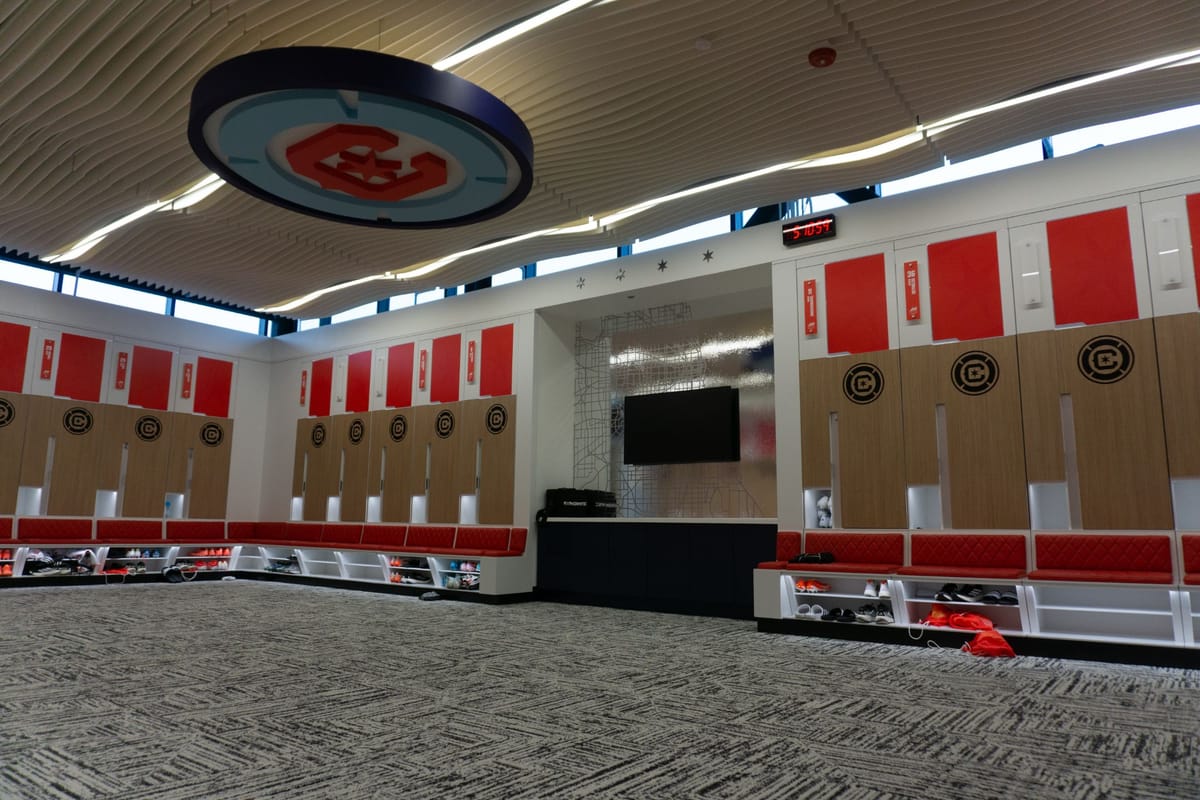
Immediately after the boot room is the locker room, which a source has told MIR97 Media uses the highest-quality lockers in MLS, whether at a training facility or stadium. It certainly looks the part. Here, too, the team thought things through carefully. He noted the natural light in the space, a big contrast from the first purpose-built facilities in the league. “I remember going to the L.A. Galaxy, what was the Home Depot Center all of those years ago, and it’s like a dungeon there. I know it’s been upgraded since, but I spoke to Atlanta, I spoke to the Kansas City guy,” and natural light was listed as an essential amenity.
One thing that Cadwell also took care to note – the space has 34 locker stalls, raising eyebrows considering the league has long held pat at having 30 players between the senior and supplemental rosters available to the first team, even as the number of matches teams play has ballooned, particularly for successful squads. While likely not a subtle hint from Cadwell to the gathered media about an imminent MLS roster change, it shows how deeply the plans for future growth permeated the entire design.
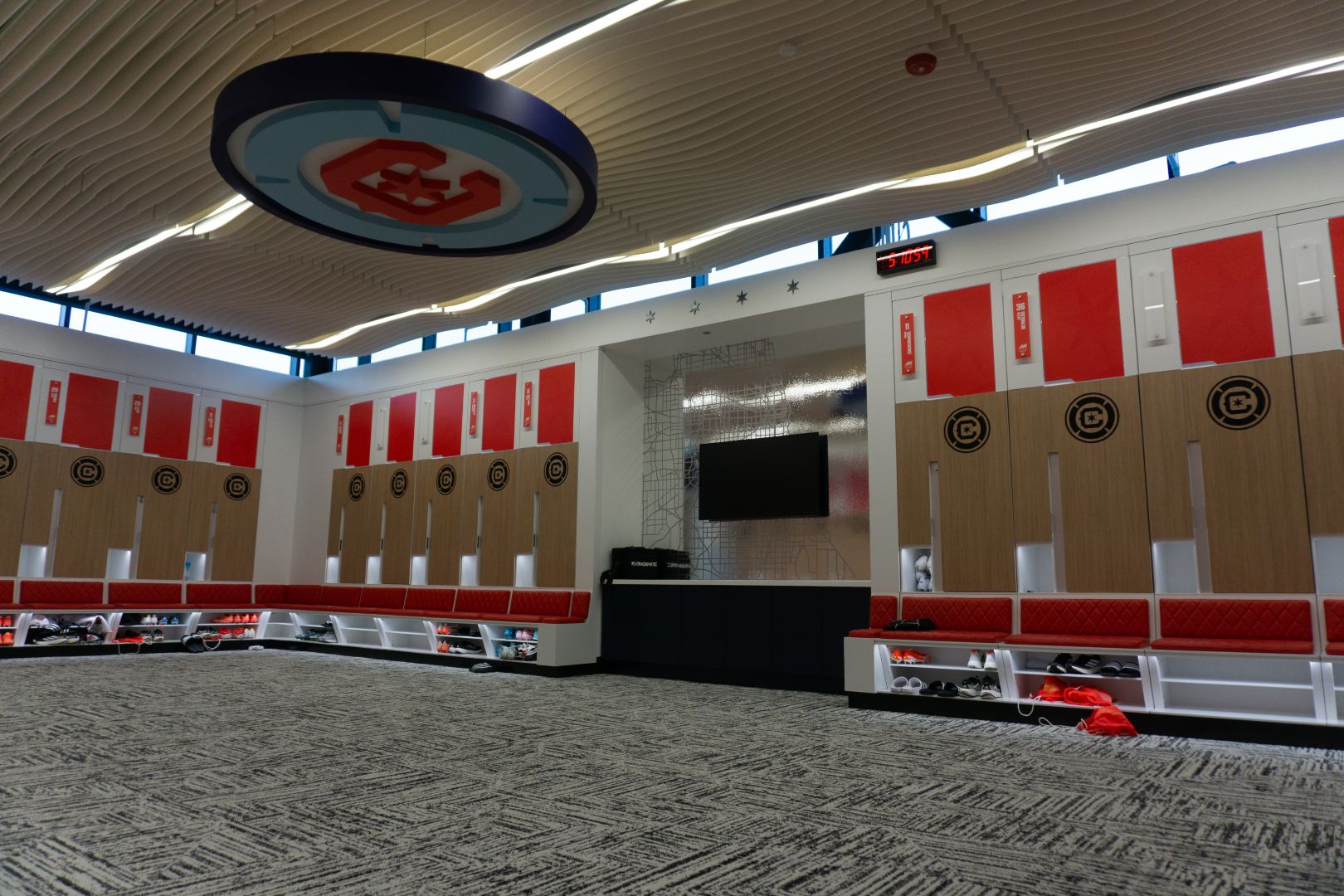
The logo, notably, is on the ceiling – Cadwell pointed that teams (including the Fire) typically have a taboo not to step on the logo, creating wasted space in the locker room. Not all the work that went into the room’s design is visible, however: We are told that the facility uses an array of technology to ensure the health and safety of players, including the flooring material choices, designed to be easy to clean, as well as enhanced air filtration technology to reduce the spread of disease if a player does come to training contagious.
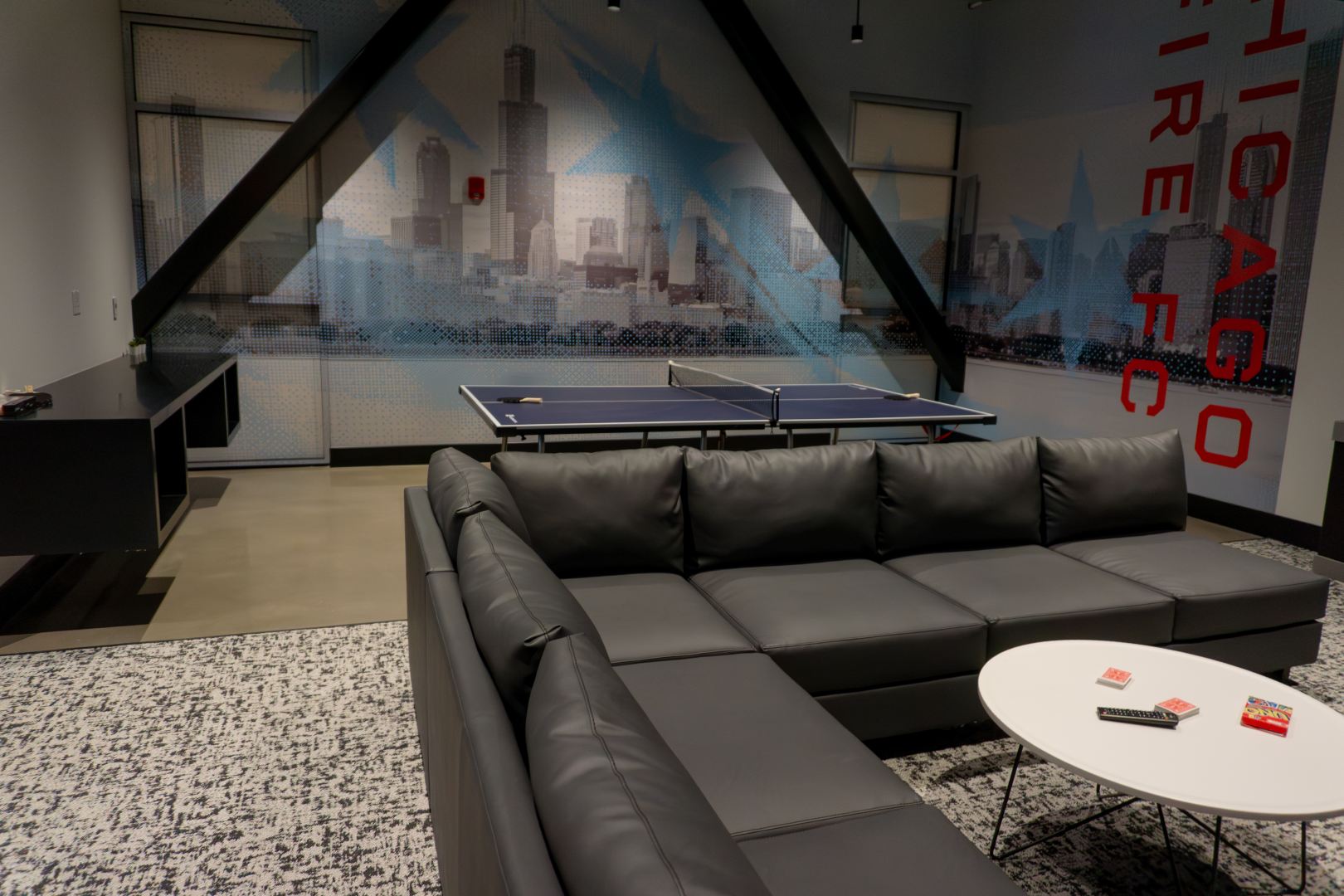
Exiting the locker room, we head next to the first team player lounge. The lounge features a large couch with a TV, video and board games, and a ping-pong table. The room is one of the only spaces which lacks natural light, and it feels comfortable, sedate, almost like a good place to take a nap.
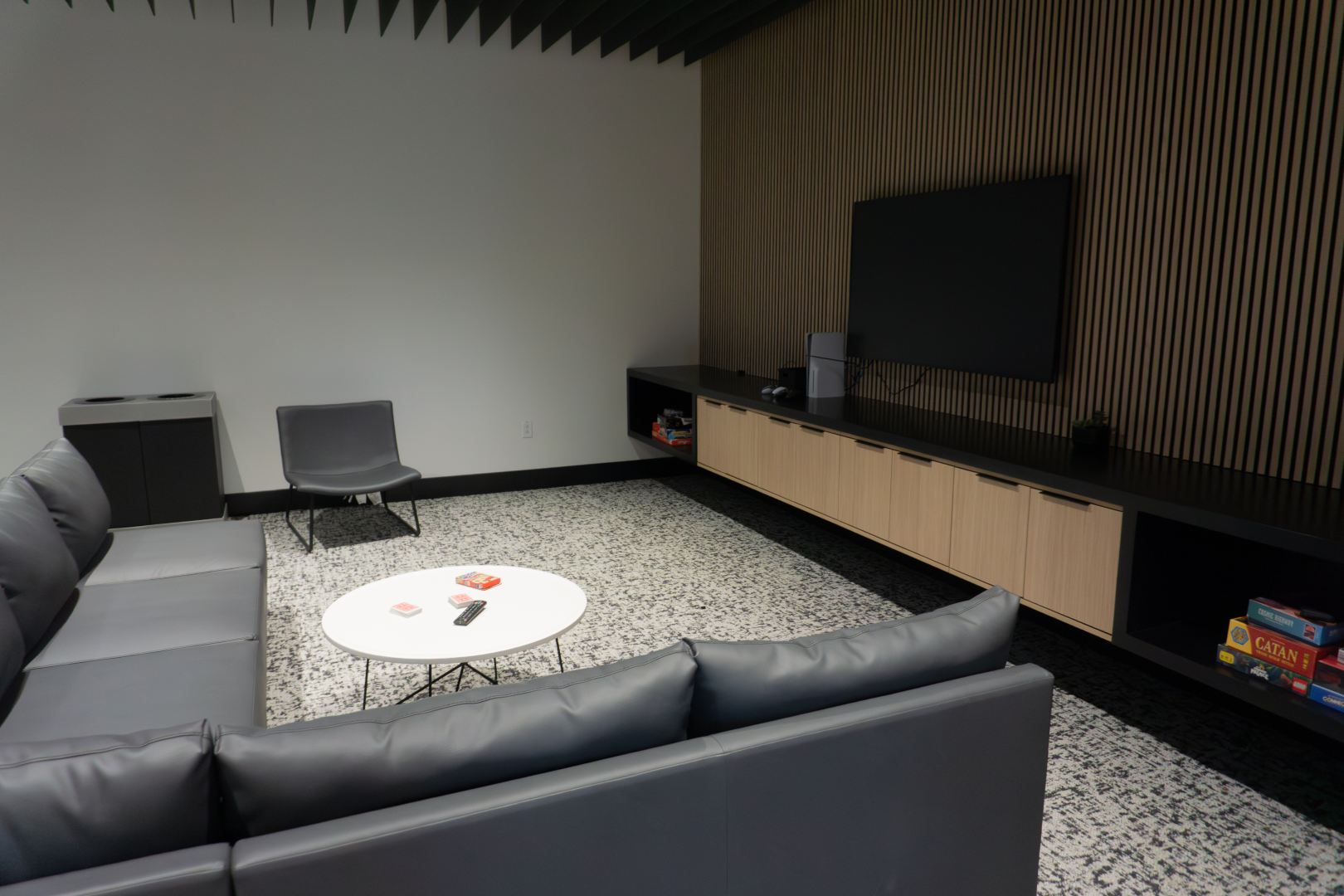
That, too, is by design. Noting the absence of some trendy amenities seen at other training facilities – “there’s no tattoo chairs, no barber chairs. Every inch of space was designed to recover the players or train the players, with nothing wasted in between,” Cadwell says.
Shower and sauna rooms
The first team shower rooms are notably different than those afforded the academy players, and give off the vibe of a high-end health spa or hotel. Cadwell notes that when they would present team owner Joe Mansueto with three finish options – “low, medium and high,” he’d consistently pick the priciest option, “so the building pops as you walk around."
What Cadwell didn’t mention, however, is possibly the most significant upgrade from Bridgeview in the eyes of players. Several players have told MIR97 Media that a continual issue in the former facility was the bathroom facilities that were not only cramped, but inadequate, lacking nearly enough toilets for players as they prepared to leave for training. The facilities here are significantly larger, in both size and number.
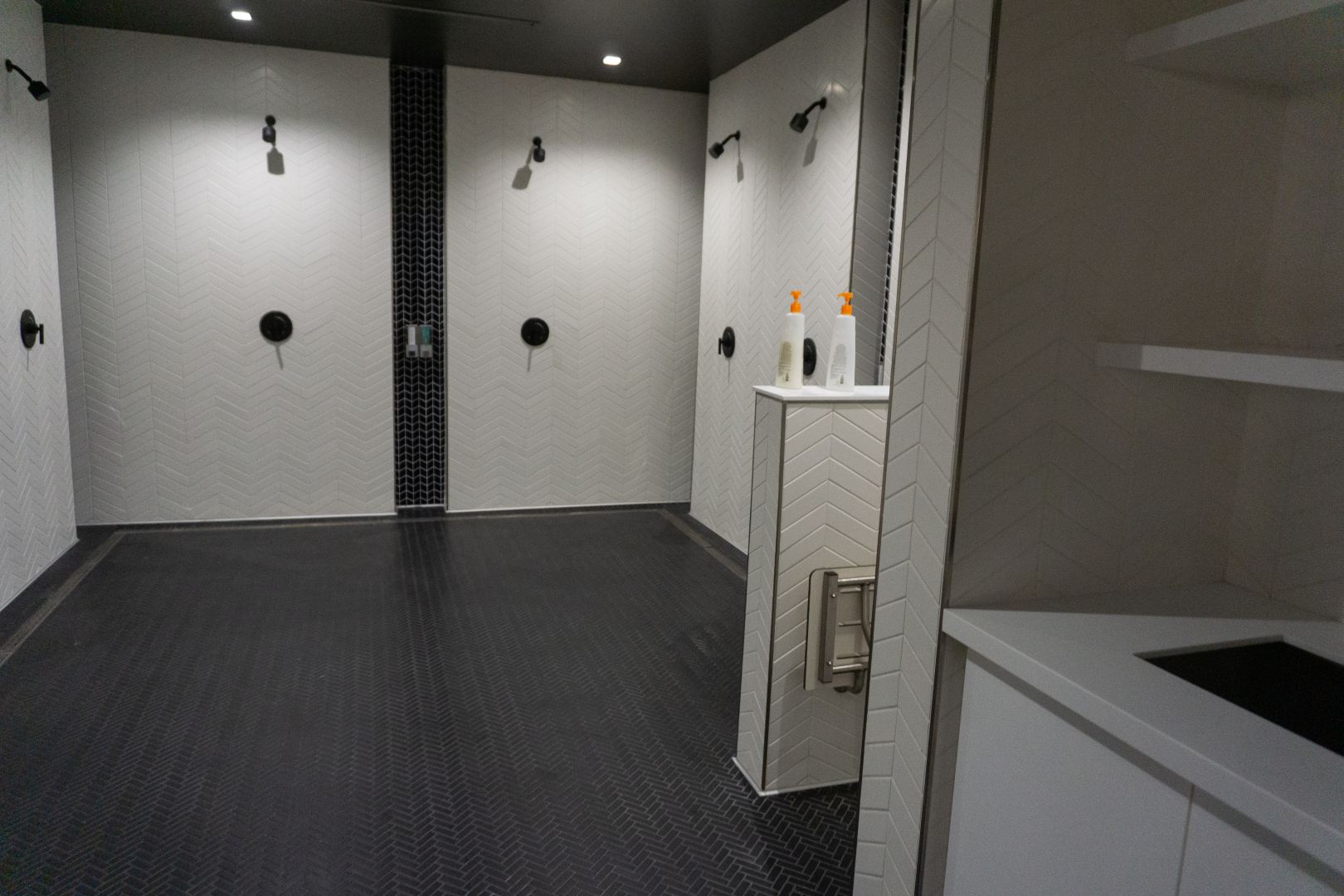
The area also includes sauna rooms, with enough space for the first team between them.
Past the shower area, we follow the path that the players would take following training outdoors to the game analysis room.
Game analysis room
The game analysis room is set up like a cinema, with space for 34 people in comfortable club-style chairs with writing desks at each. There’s a TV, Cadwell noted, on the rear wall so that coaches don’t have to turn around when facing players.
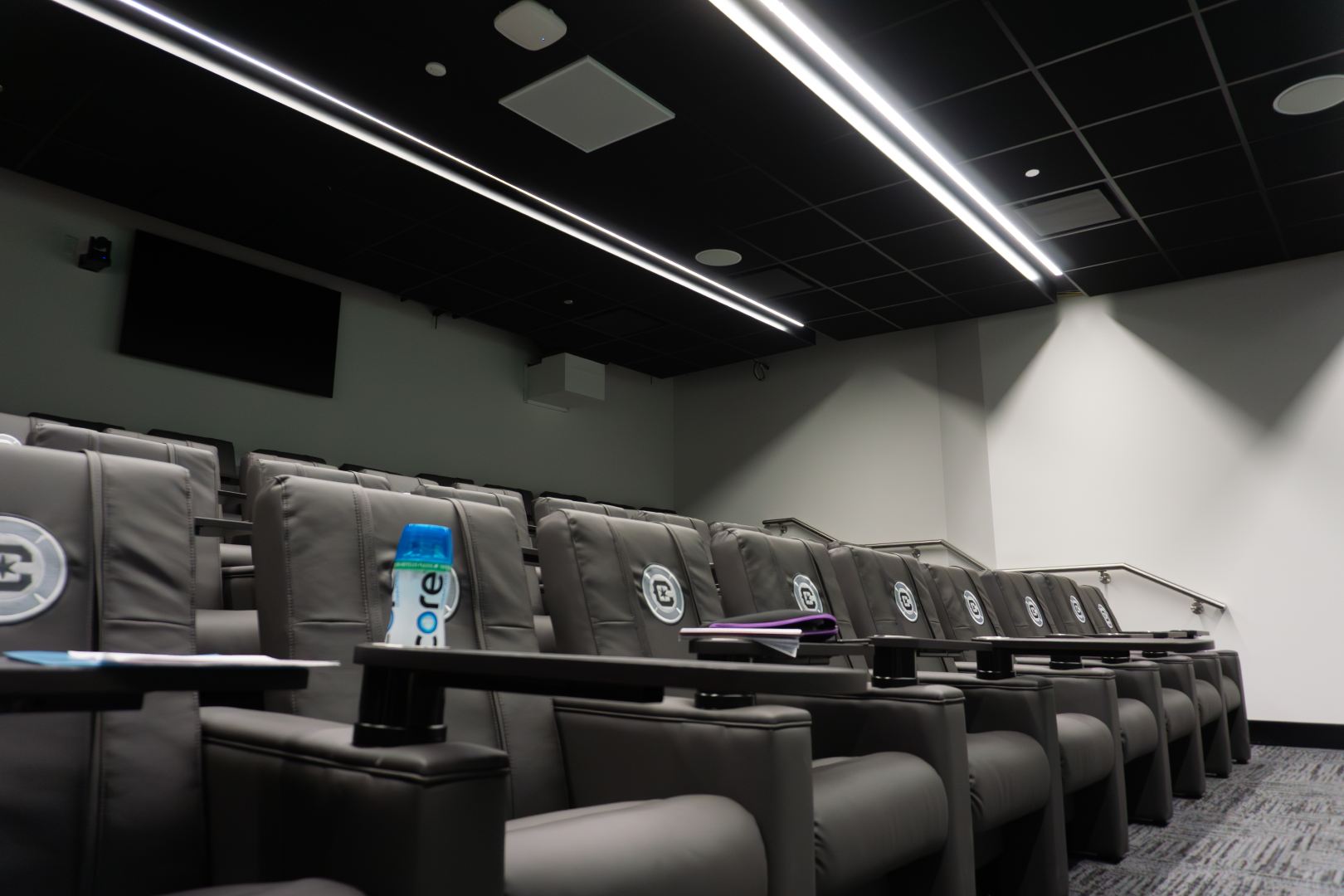
The players face two large screens, with whiteboards on either side, along with a translucent board that can cover either TV so that coaches can physically mark up the contents of the screen. Because the TVs and whiteboards contained material the team is using to prepare for their next match, we were asked not to display photos, but the overall feeling is of a briefing room.
Hydrotherapy rooms and sports medicine suite
The most visible eye-catching amenities, however, are probably the hydrotherapy rooms. The first part of the space features two plunge pools one hot and one cold with room for 10 players each. Although the training facility at Bridgeview did include plunge pools, Cadwell noted that these are upgraded models.
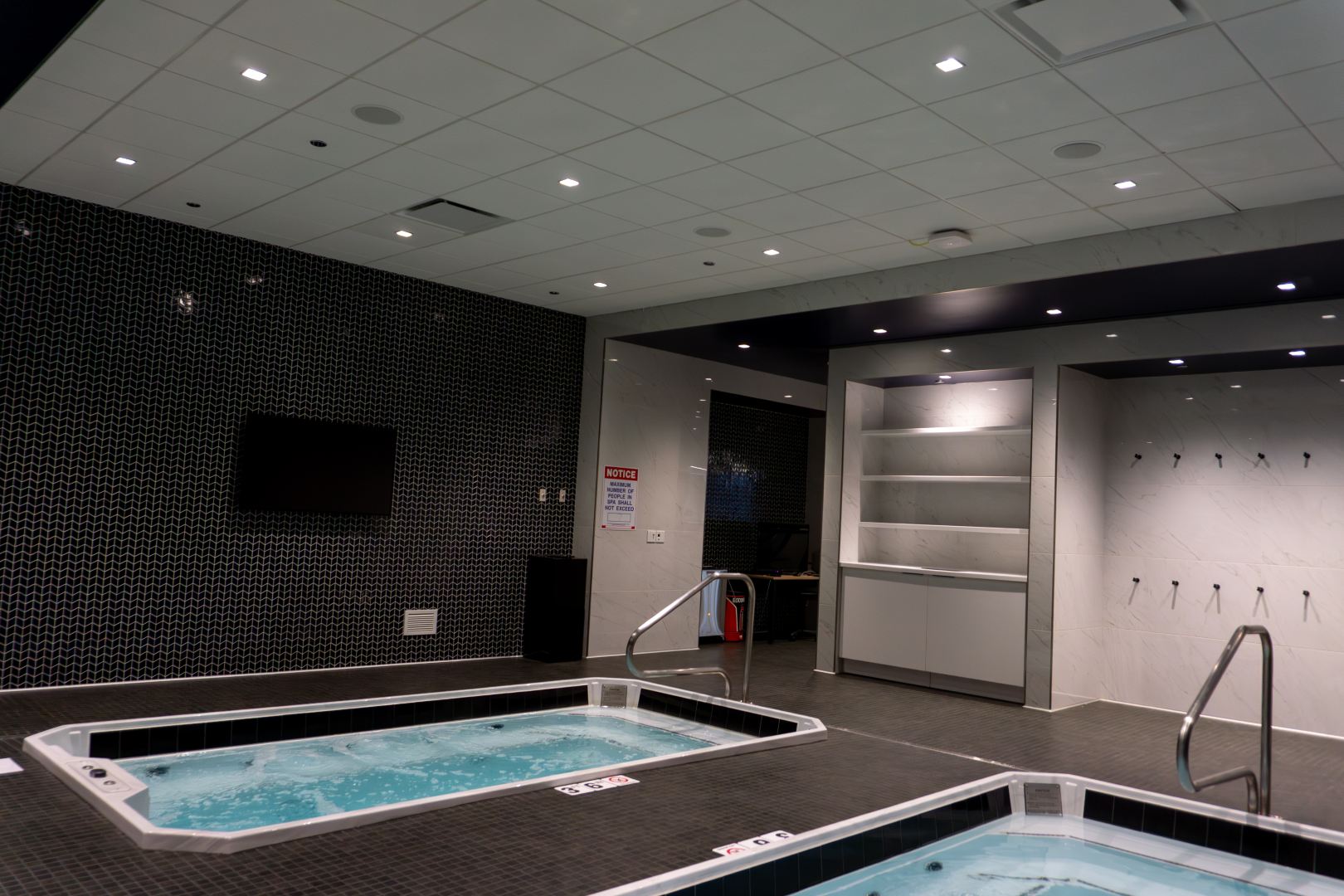
The next room, however, is something that Bridgeview lacked: A built-in treadmill pool, which, he said, all of the performance directors across the time that the facility was built considered a “must have” according to Cadwell, “along with the cryotherapy room.”
The treadmill pool features a variable height, enabling staff to adjust the depth necessary for proper rehabilitation, and the entire floor functions as a variable speed treadmill treadmill that can go up to 8.5 miles per hour, with a cushioned, low-impact floor material. It also features an array of cameras for monitoring athletes, and can accommodate up to four players at once. It also includes resistance jets for training or therapeutic purposes.
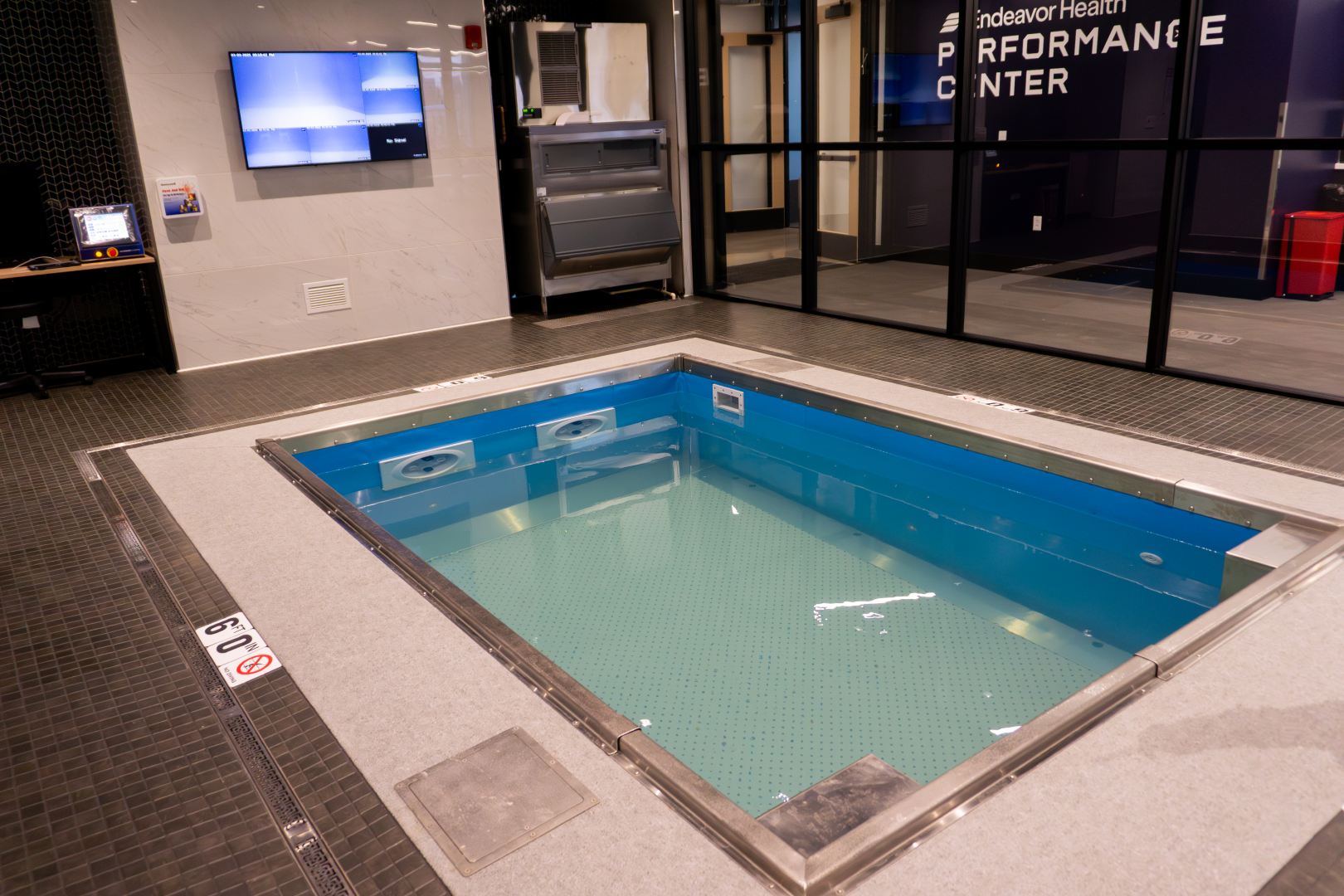
While the equipment room may have had more costly equipment overall, Cadwell says the treadmill pool is the single most expensive equipment item in the facility. “We’ve actually had a number of Premier League clubs come through the facility,” and when they see it and ask about the model the Fire have selected, “they’re like, ‘whoa, well, that’s what we’re looking for in our training center.'” The model is the same as ones used by Aston Villa, Chelsea, Manchester City and a number of NFL teams.
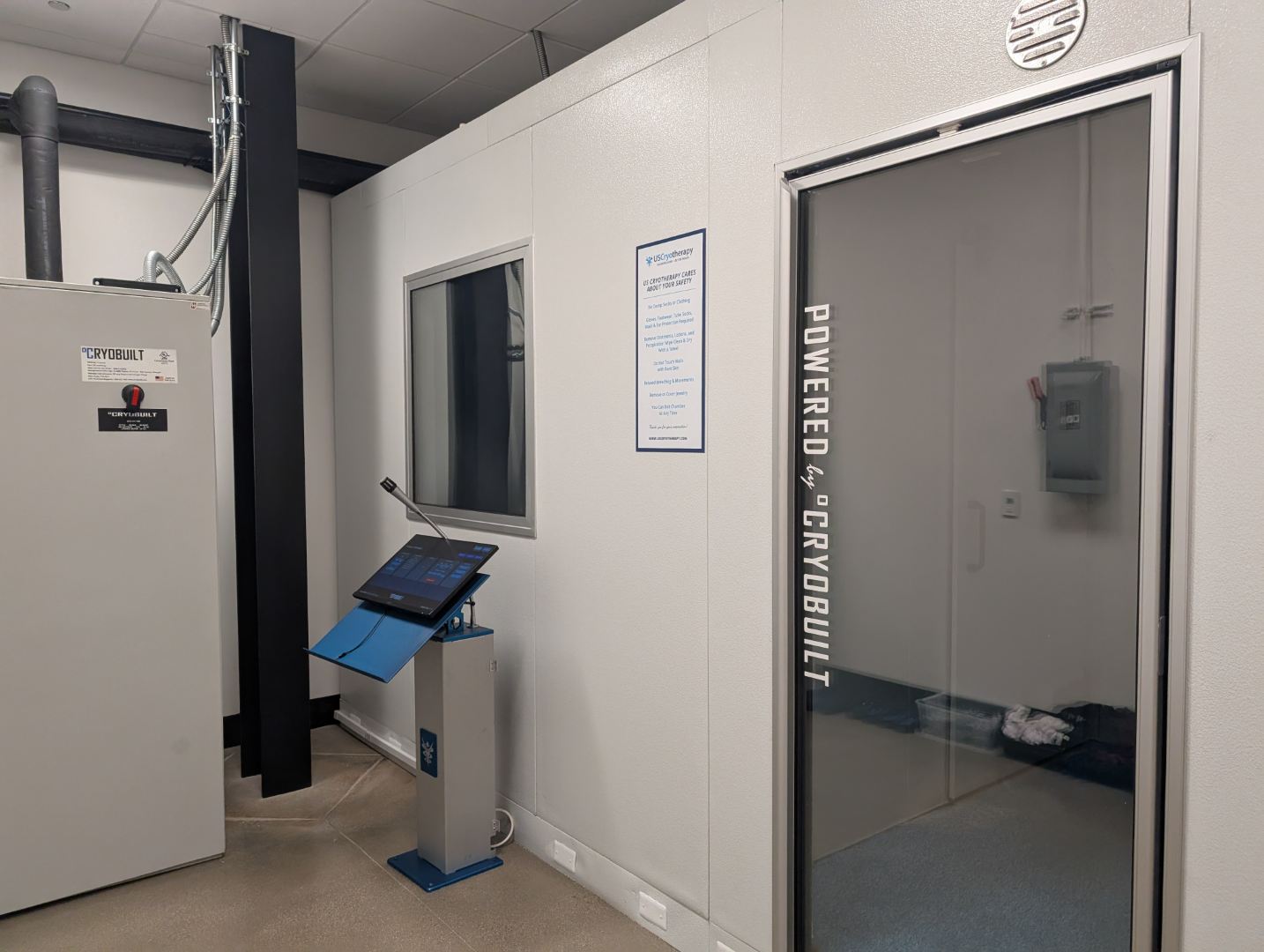
Past the hydrotherapy pools is the cryotherapy room, something that Bridgeview also lacked. Players enter the room for short periods of time, typically 2-4 minutes, which causes reduced blood flow away from the body's core, decreasing inflammation and reducing muscle spasms. After returning to normal temperature, researchers have noted an increased number of anti-inflammatory proteins in the blood. The net effect is increased healing rates and faster recovery.
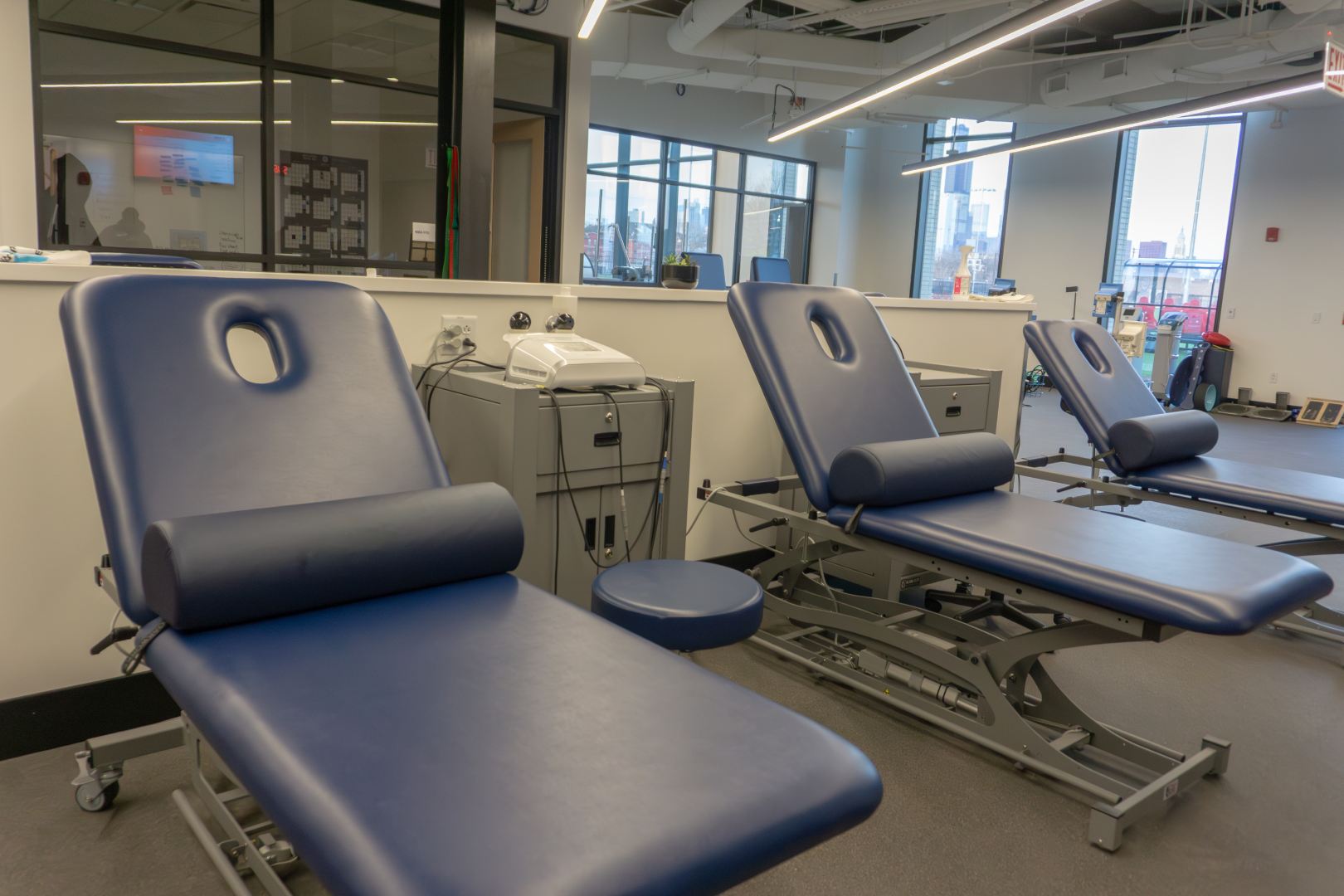
The team’s sports medicine suite includes an office space for the medical staff, several treatment beds, as well as an x-ray suite and a padded floor for physical therapy and rehabilitation. The space is large, and flooded with natural light from the adjacent training room.
Training room
While all of the facilities at the new performance center significantly upgraded from those at Bridgeview, the most striking visual change is the weight room. It was, to borrow a phrase from Cadwell, “dungeon”-like, hidden under the bowels of what is now called SeatGeek Stadium.
The new facility is a stark contrast. Surrounded by glass on three sides, it is filled with natural light, featuring panoramic views of the city and training pitches.
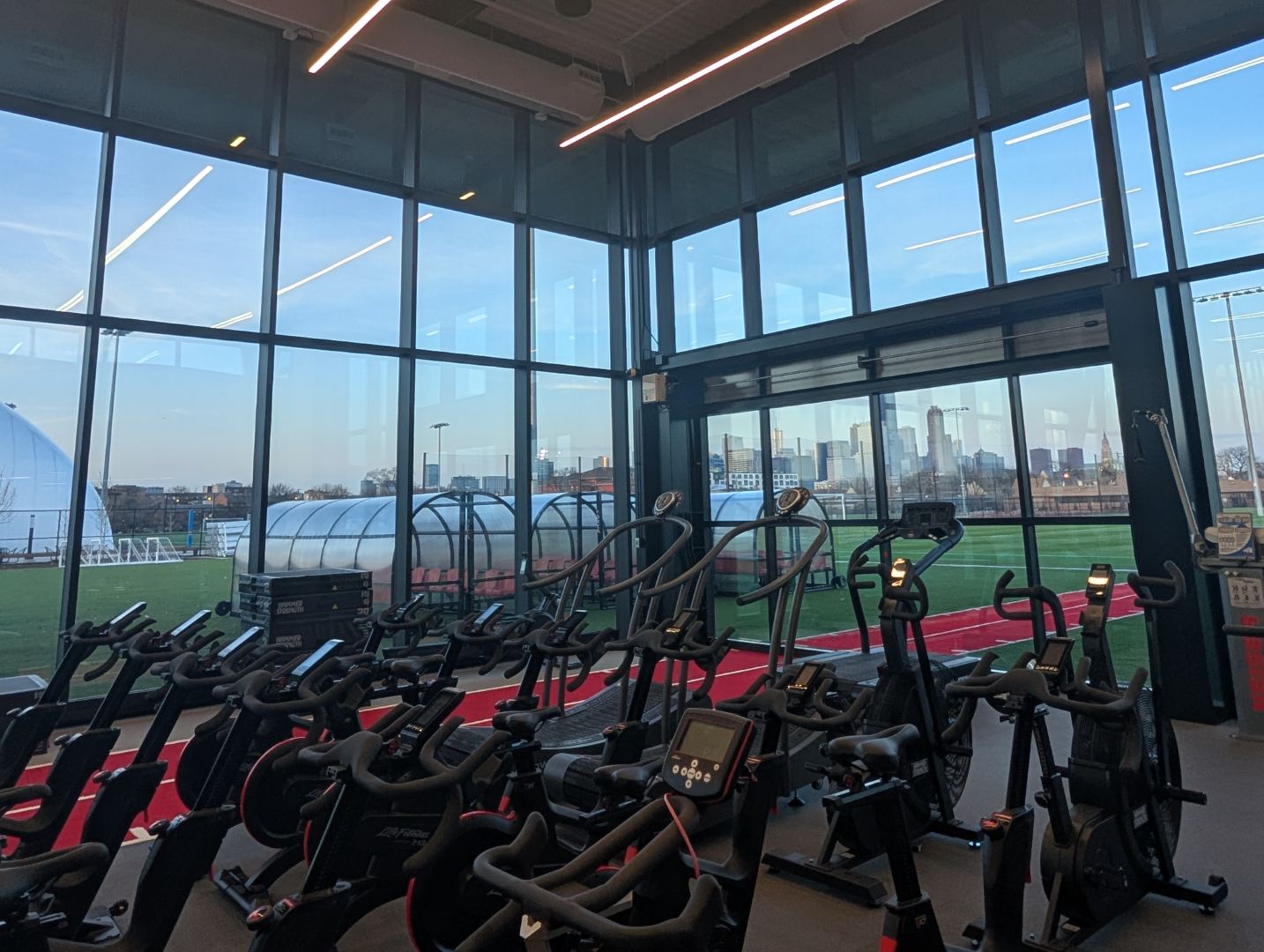
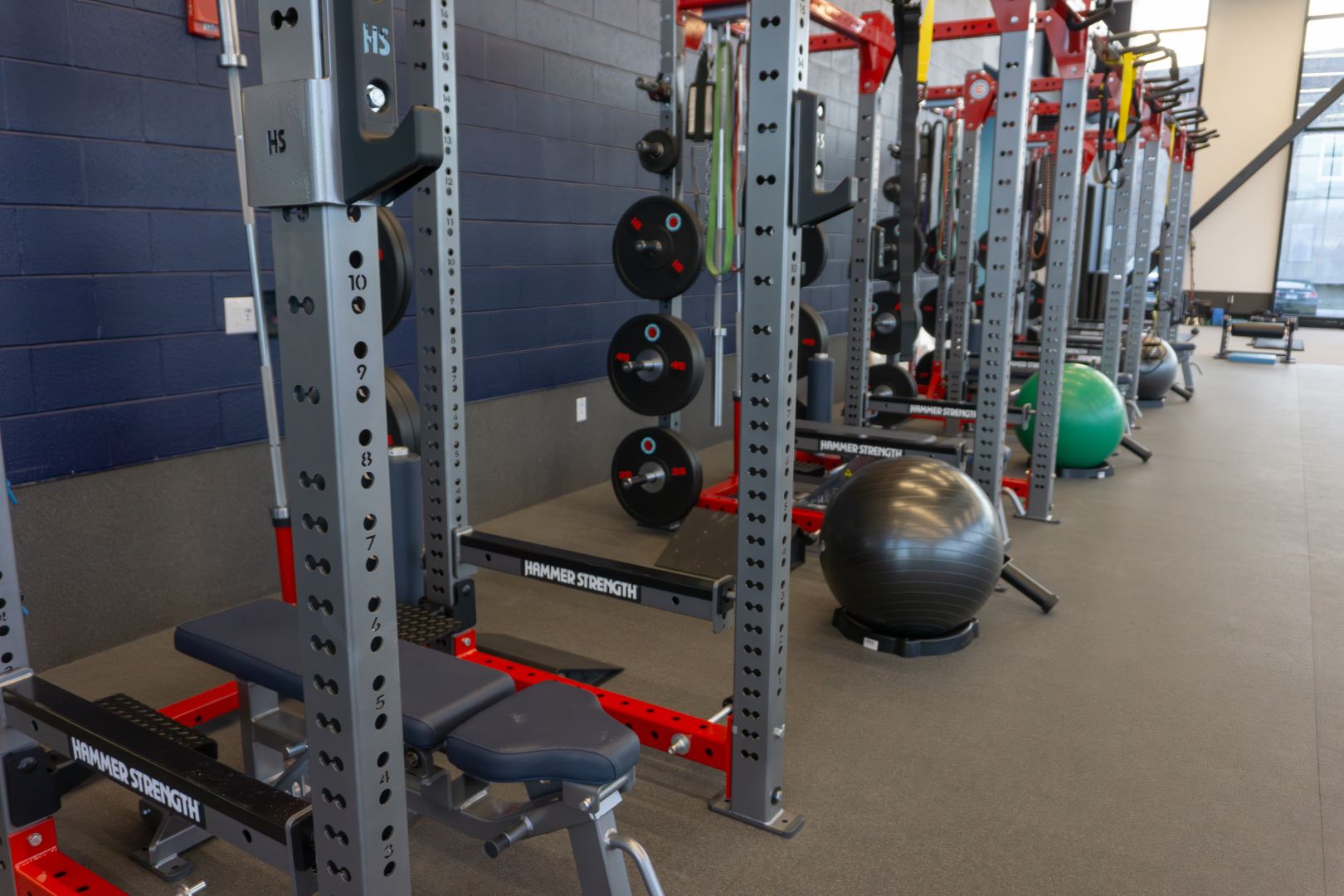
All of the equipment, Cadwell notes, is branded with the team logo, and includes treadmills, stationary bikes, weights and a soft-surface, 40-yard running track. The soft synthetic surface extends to the apron around the room on the outside, Cadwell notes, meaning that in nicer weather, players will be able to do stretches and use foam rollers outside.
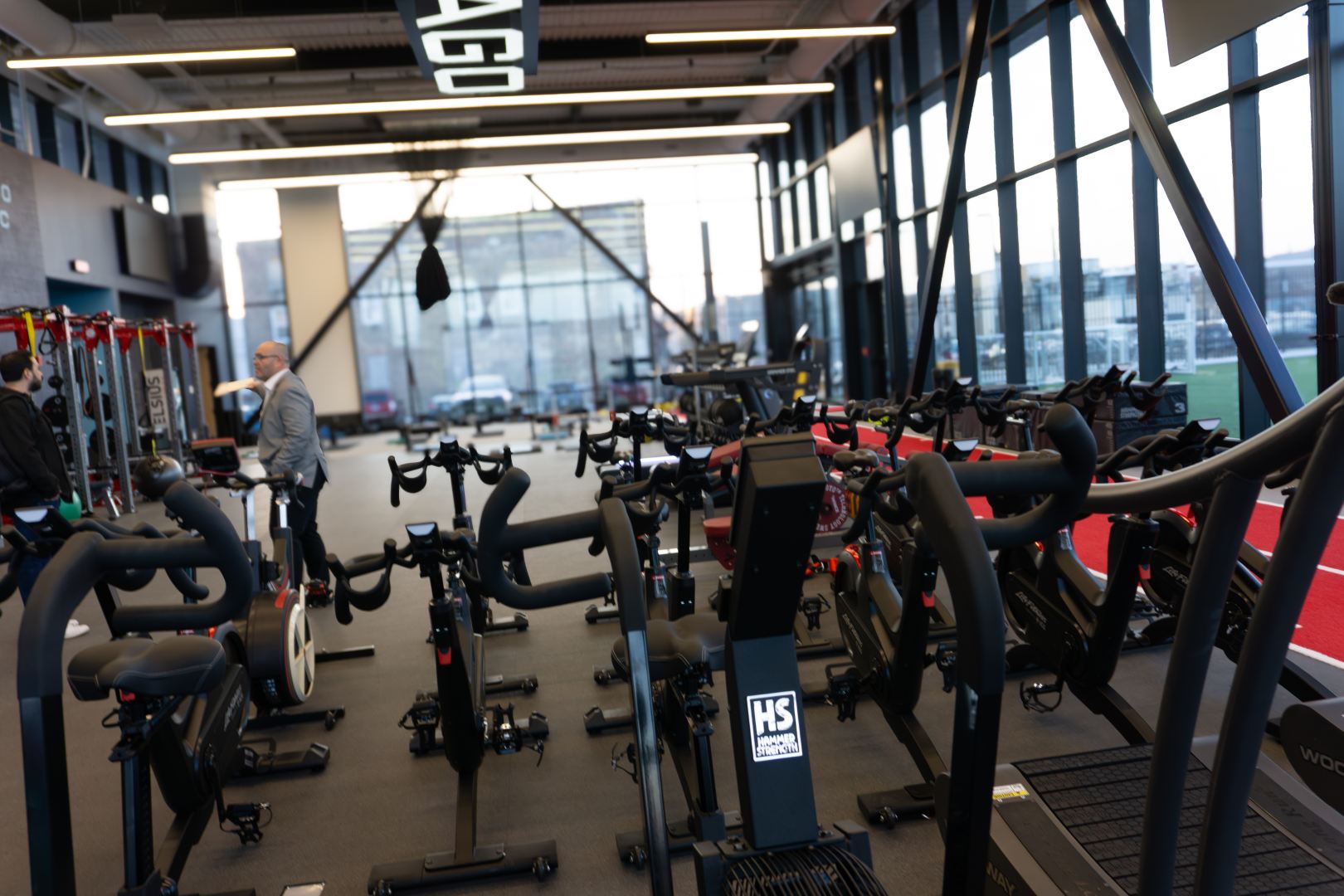
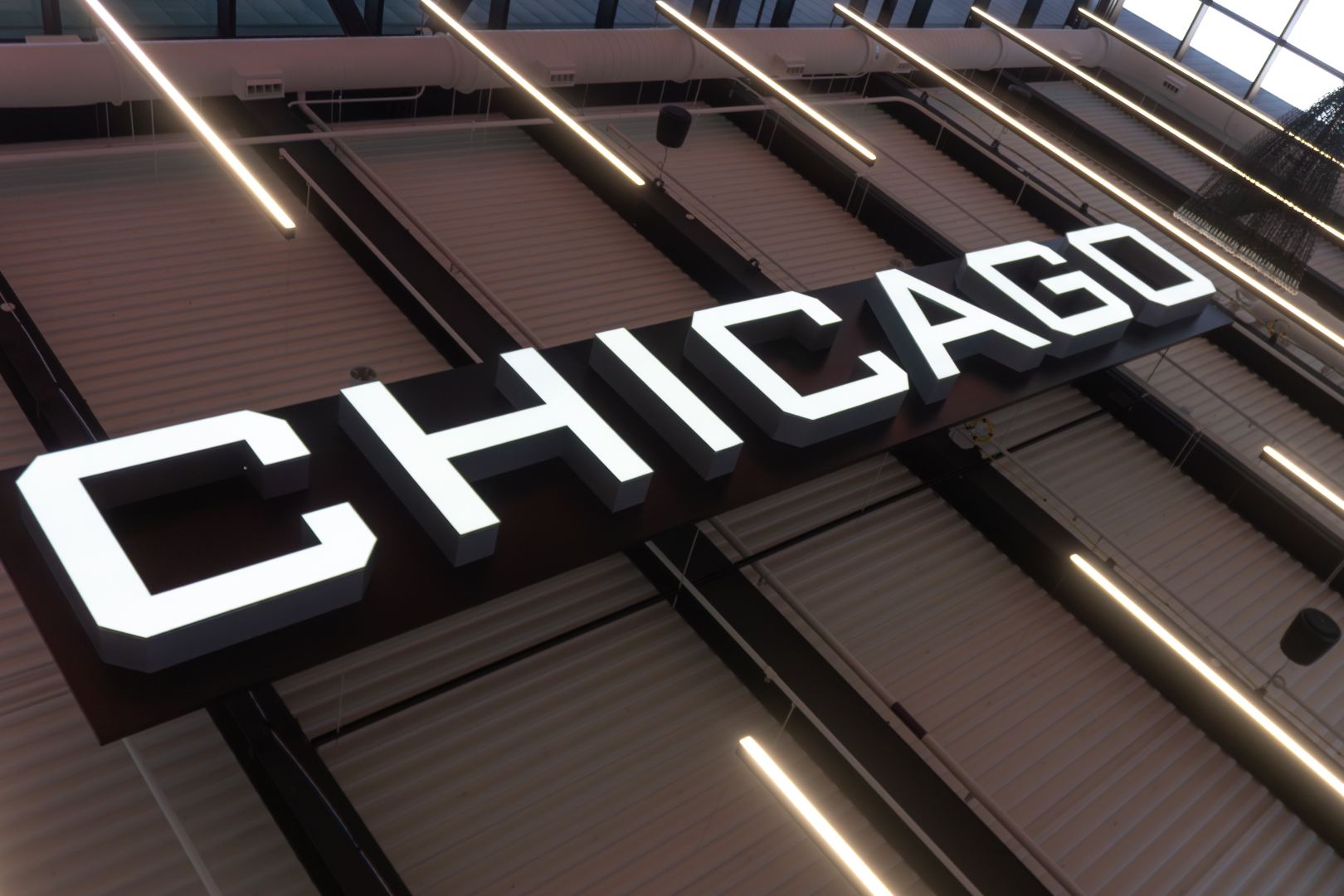
The ceiling features the word “Chicago,” lit up in the team’s typeface.
Not shown is the recovery room which features eight zero-gravity recliners and is just down the hallway from the gym area. At the time that we visited, it was being used by Omar González. While the veteran defender was being friendly and no one said that we couldn't take photographs, this reporter has seen enough tape of the former MLS Defender of the Year to think it was wisest not to intrude on the space he was occupying – particularly a room that, with high walls and filled to capacity with the large chairs, felt a lot like a box.
Finishing touches and next steps
Although the facility received its full occupancy permit – just one week before the ribbon cutting ceremony – the work isn’t yet done, with Cadwell saying that a significant amount of work needs to happen, both with finishing decorating tweaks inside as well as completing parking and decorative landscaping around the property, with public space “brought to life.”
And after that’s done? “If you listen to rumors,” Cadwell said with a winkle, “um, there might be another project coming in the future.” The Athletic’s Paul Tenorio, long off his days covering the Fire beat but not willing to let that statement go unprobed, said “You might build like, a special trophy room in the South Loop area?”
“Just a trophy room to bring them to life, yeah,” Cadwell said.