The Messi Era: Are MLS roster rules holding back progress?

When Lionel Messi announced his intention to sign with Inter Miami and Major League Soccer in June of this year, it was hailed as a landmark moment for the sport in the United States. The addition of the greatest player in the world and arguably one of the most famous faces to ever live represents an opportunity for the league and sport to gain momentum in this country ahead of the 2026 World Cup. The eyes of the world are on MLS in this unique moment, and it is something American soccer has sought to make the most of.
MLS’ 2024 rule changes – or lack thereof – show that, for whatever reason, the league isn’t ready to maximize the potential returns of the Messi effect and propel itself forward.
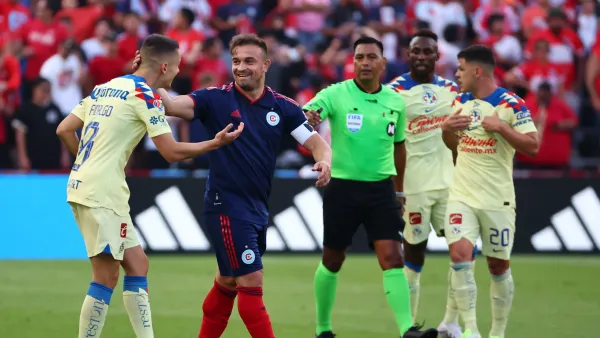
While the existing roster-building structure enables teams to sign some stars from overseas, like Messi, Xherdan Shaqiri, or Carlos Vela, its restrictions also severely limit flexibility. Teams are limited to just three Designated Players, and despite constant rumors of an addition of a fourth slot, that rule seems unlikely to change anytime soon. Introductions of Targeted Allocation Money (TAM) and the U-22 Initiative have been steps in the right direction that enable teams to pay slightly more to a handful of extra players, but with just around ten individuals who don’t count toward the salary cap, GMs can barely afford a misstep, and the players they can bring in are greatly limited.
“I think with Messi, it is amazing that he came, [and] it's unbelievable for the league, and I hope many more players going to follow,” Shaqiri told MIR97 Media earlier this fall. “But I don't know about the rules here with only three DPs. They have to think about it too in the future because if you want more players to be here, you have to change some rules, because the other leagues are coming and taking all the players.”

As one of the Chicago Fire’s three DPs, Shaqiri is earning in excess of eight million dollars a season. That figure accounts for nearly half of the Fire’s annual spending.
Since teams only have an unlimited budget on those three players, it often results in horribly unbalanced rosters, usually with forwards and attacking midfielders in the off-budget slots while defenders are secondary and benches are an afterthought. Competing in CONCACAF tournaments against the elite superclubs of Liga MX is challenging when the teams lack depth; MLS’ Mexican counterparts have no spending limits, and the top teams have roughly seven or eight players on DP-level salaries. There is no requirement to focus so much money on three players, so the money can be spread throughout the team, ensuring that the starting eleven is well-rounded and the bench is reliable.
In MLS, DPs typically make up more than half of the team’s total spend, heaping tremendous pressure on them, exemplified by Jairo Torres’ extraordinary failure with the Fire. Despite carrying the DP label, he has remarkably failed to return a single goal or assist in two seasons with the club; with that level of input at the top end of the roster, results have struggled in an extreme way. League rules also make it incredibly difficult for the club to fix the situation and open up that tag, unless another club were to miraculously make a transfer approach to take him off the payroll.
“I think there is a lot of rules here and we respect the rules, we saw that in the past some teams didn't, especially in Miami,” Shaqiri added, referring to Inter’s previous violations of roster restrictions that resulted in punishment last season. “This is not so simple for the guys who work with this, but in the near future, of course, I want also here in Chicago for sure more players with names and who can compete with the best in the league to try to win trophies.”
While Shaqiri, one of the league’s biggest names, is one of many vocal advocates for loosening the roster construction mechanisms, this week’s news was not promising. The MLS Board of Governors’ list of rule changes did include some small improvements, particularly to prevent time-wasting. There will be 10-second timed substitutions and two-minute treatment time for injured players, as well as welcome additions such as NFL-style VAR announcements from referees and in-stadium clocks that run past the 90th minute.

The budget guidelines, on the other hand? Discovery lists will be reduced from seven to five slots. DP sales and be partially converted to General Allocation Money. And there were changes to the domestic player eligibility. That’s all.
The impact on roster-building is negligible, and the ability of clubs to take advantage of MLS’ current attractiveness is not enhanced whatsoever. In a narrow moment where American teams have a sales pitch they may never have again – that Lionel Messi currently plays in MLS and the World Cup is coming stateside in 2026 – they are locked into the same constraining restrictions that have held the league back for years.
Unfortunately, for fans of the league who hoped the arrival of Messi would usher “evolution and change” as promised by Miami owner Jorge Mas, it seems his fellow stakeholders don’t agree. Despite increased revenue brought in during the last few months, growth off the field fuelled by the Apple TV deal, and a record number of eyes on the league, there will be no significant alterations to MLS’ most important mechanisms.
The lack of an expanded salary cap or additional DPs doesn’t seem to be hampering Mas’ or Miami’s pursuits of a super-team – Luis Suárez and Jordi Alba appear to be on TAM deals for 2024 – but for the rest of the league, it won’t be so simple. For teams like Shaqiri’s Fire, there is little hope of attracting those kinds of talents on reduced salaries, no matter how much owners like Joe Mansueto, LA’s Philip Anschutz, Atlanta’s Arthur Blank, or Seattle's Adrian Hanauer are willing to spend, simply because they are limited so much in the market by owners who don't want to dip into their pockets.
For MLS to take itself to the next level, and truly compete with the top leagues in the world, it must advertise itself as an attractive destination for players in their prime… and with so many restrictions, it simply won’t be able to do that, and make the most of the unique opportunity that this three-year Messi-fuelled runway to 2026 and beyond represents.