The Two Sides of Drew Conner

From playing alongside Bastian Schweinsteiger in the Chicago Fire’s midfield to co-founding both the Chicago House Athletic Club and his vibrant events company, House Calls, during the latter years of his professional career, Drew Conner has left and continues to leave a mark on the city of Chicago as both an athlete and a creative mind.
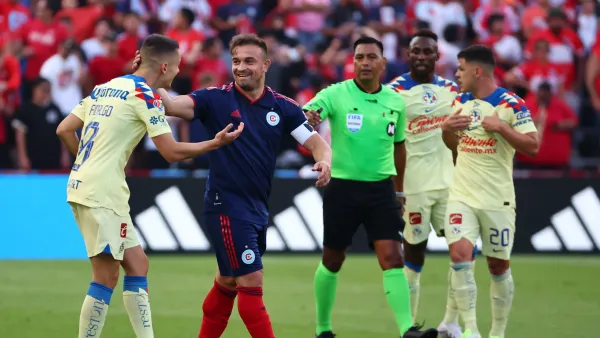
Drew recounts his first-ever MLS start - an away match against the L.A. Galaxy. He told the story of being pulled aside inside of O’Hare International Airport, awaiting the team’s plane, and being told that he would be starting at right-back. Conner said that it was his first ever competitive match of soccer playing as a right-back, and with the match being against the Galaxy, he was put right up against the likes of Ashley Cole and Romain Alessandrini. Despite the difficult matchup and having had no experience as a fullback, Conner said that he played a great match and that he used that performance as momentum for the rest of his season.
Beyond his dream debut against the Galaxy, other highlights from Conner’s breakout season included making the playoffs (the last time the Fire made the playoffs was during that season), connecting with his “most legendary” teammate, Alan Gordon, and playing in front of the home crowd that he used to be a part of when he went to Fire games with his father.

In addition to the beautiful game, nothing means more to Drew Conner than music.
Like soccer, Drew’s passion for music was also inspired by his father. He recalls his father playing blues tunes around the house when he was a kid and having always been surrounded by music growing up.
This is prevalent in Drew’s time at the Fire because it was then that he discovered that he wanted to do something with music in Chicago. When he was not training or traveling for matches, he went to lots of music events around the city to meet new people, make connections, and discover new music/artists as he pursued this interest of getting involved in the city’s rich music scene.
“I wasn’t really into one specific genre of music, but I loved identifying things that I thought would be big,” Conner told MIR97 Media. “The things that I found that were kind of undiscovered would oftentimes become popular a year or two later. That’s how I kind of realized that I was kind of onto something.”
Wanting to provide these undiscovered talents with a platform to play/perform, he joined an entertainment group called “Mob Rep” and started to help curate and host the group’s events.
He describes this dual life of playing in the MLS for the Chicago Fire while at the same time helping throw these underground parties as a “balancing act” that allowed him to pursue his two greatest passions.

“I had this like one side of me that was this Drew Conner soccer player, like a clean cut role model. Then there was this underground music side of me. When I would throw my events it wasn’t like I was going out boozing or doing anything irresponsible, I just genuinely wanted to be around the music. I couldn't help but to be around it (music) all the time. I was a total slave to the music.”
Addicted to the music and the idea of highlighting smaller/underground artists, Drew took the initiative to start a YouTube series that was sponsored by Lululemon called “Signal Flow” at a music studio up in Wicker Park.
Leaving the Fire after the 2018 season brought about a big change in Drew’s life as he headed overseas. It forced him to take a break from work in the Chicago music scene.
“I couldn’t take all of that event production and all that stuff with me (to Czechia). I was going on a soccer journey.”
In Czechia, Drew played in the country’s second division for a club by the name of SC Znojmo FK. Coming from the bustling city of Chicago to living in a small, isolated Czech town was certainly a massive change for Drew. However, he said his experiences overseas allowed him to learn a lot about himself and where he wanted to take things in his life.
After his stint with Znojmo, Drew bounced around Europe for a while as he went on many trials to find a new club. While he received offers from many of these clubs, none of these offers really appealed to him, and as a result, Drew almost retired.
Luckily, Drew continued to pursue his professional career and came back to the States to play for Indy Eleven during the second half of 2019. While at Indy Eleven, COVID hit, and Drew found himself cooped up in isolation like the rest of the world.
After having been away from music for so long during his time away from Chicago, Drew began to connect with it again during the pandemic. He described music as his “personal pushback of all the negativity that was happening in 2020,” adding that “we’re not going to let our heads go here. We’re going to dance, we’re going to have fun.” He promoted this idea of almost “dancing through the pain” on his social media pages, serving as a ray of positivity in what was ultimately a dark 2020.
Eventually, COVID restrictions were lifted, and Indy Eleven finished what would ultimately be viewed as an underachieving season. The failure to reach the playoffs with such a talented squad came at the expense of the players, who were practically all released from the team. Drew was then once again in between clubs, but this time, he had the opportunity to return to Chicago finally.
While it was not the Fire who came calling, it was his long-time friend Peter Wilt. With Drew’s background as a former MLS player with deep ties to Chicago, Wilt decided that Drew was the perfect person to start Chicago House Athletic Club with.

Conner dubbed the time that he spent with the House as the best year of his life and cherished the chance that Peter Wilt gave him with the club.
“[Peter] gave me the opportunity to have a really unique experience,” Conner added. “I got to start a pro soccer organization. A small, a very small pro soccer organization… I named the team, I got the sponsors, and I probably recruited about half of the roster.”
Many of the players that made up the roster had found themselves in similar positions, as misfits or towards the ends of their careers. That environment was a highlight of Conenr’s career.
“It was the most fun I had ever had on a team. It was honestly a blast.”
Not only did playing for the House, in addition to working the administrative and business side of the team, help Conner rediscover his love for the game, but it also encouraged him to do his research on the history of house music in the city of Chicago.
Having built the brand of the club around house music in the city of Chicago, he believed that as a founder of the club, it was important to be aligned with the history and the culture of Chicago and this music and where it comes from. I was his entry into the house music scene.
Hooked by the deep culture and spirit of house music in Chicago, Drew wanted to learn everything about the scene. From the old-school legends and the founding fathers to the modern-day stars coming out of the city and making it to the world stage, Drew wanted to immerse himself in it all.
“[House music] can come off as a bit mindless when in reality, it is this thing that has the ability to bring everybody together.”
In his eyes, this power that music has and its ability to unite people is what made music one of the saving graces of the pandemic/post-pandemic era.
“With everything going on in the world politically and with a lot of things that were not going our way for the human race as a whole, it just felt like soccer and music were kind of the last two things that we had,” adds Drew. “Soccer is this global thing that can bring everybody together, no matter what race or background you have, or where you’re from, or what language you speak. Soccer is a language and house music is a language. And so bringing these two things together in Chicago is probably one of the coolest things that I have ever done.”
“So during that time, I was like, I would love to have somewhere for me and my boys to go listen to some house music after we play a game. You know, how fun would that be?”
Having had experience in curating his own events and hungry to get back into the industry, Conner got in contact with Blind Barber - a late-night Fulton Market cocktail lounge that always featured live music.
“After my third event (at Blind Barber), they (the events) really started to grow. I then met Abby Lagunov, my future business partner, and we started promoting these events at Blind Barber for a couple hundred bucks. We were literally sitting down and blasting out 200 text messages to all of our friends. I think we realized in doing that, we kind of created a new market for house music in Chicago that didn’t exist prior.”
“Because it wasn’t really a big, dark, scary club, it made the music more approachable to people who were maybe just getting their feet wet. By bringing it into a small boutique space, you’re taking the spookiness out of it because it can come off as intense to people who haven’t been or seen a house show before.”
Shortly thereafter, they started House Calls. The name ties in house music with barbershop culture because when a barber comes to your house, it’s called a house call.

With the company name locked in, Drew and Abby developed a brand around the idea of a vintage barbershop, started an Instagram page, and began to sell five to ten-dollar tickets for their official House Calls shows.
“In the beginning, we would do one to two events a month at Blind Barber, and everytime we did it, the line got longer around the corner and it was f***ing slammed.”
Now, with his own events company, Conner was incredibly busy, having to juggle doing the House Calls shows at Blind Barber with helping run the Chicago House while also working on his podcast Free Kickin’.
It would not be long, however, until the ownership at the Chicago House fell through, demoting the professional team to an amateur one. With the team having dissolved, Drew talked about wanting to “go out on his own terms” and not being forced to retire due to a faulty ownership that was out of his control.
Not quite yet ready to retire, Conner returned to his beloved college town of Madison, Wisconsin, to play for Forward Madison in his final season.
“I was really just trying to take it all in because I knew that I wasn’t going to play another year,” Drew said as he reflected on his final season.
So passionate about both soccer and music, Conner was willing to pursue the balancing act of his two greatest interests for one more year. Not only was Drew focusing on making the most of his final professional campaign, but he was also still promoting and curating House Calls events back home in Chicago.
“Sometimes, on Saturdays after my games in Madison, I would drive two-and-a-half hours down to Chicago to run my House Calls events with Abby. I’d play a game, I’d get out of the locker room at 9:30, and I’d rip it back down the highway to get to Chicago at 11:45… For me, it was like taking that drive and determination that I had learned from soccer and putting it into this thing.I did it because we believed in House Calls and believed it would take off.”
“There’s nothing that could have stopped me from believing in our project.”
As Drew’s season went on, his events continued to grow, and so did his brand. Eventually, his business partners were able to secure House Calls its very own venue - an unused basement of a cocktail lounge in River North.
Drew and his team would ultimately transform this basement into what is now known as The Listening Room - an intimate 200-person venue that is dedicated to all House Calls-related events.
The new venue allowed House Calls to take off to new heights, transitioning the company from throwing one to two events a month to three every week.
“That was a really hard transition. It was like jumping on a treadmill that was already going 100 miles an hour. All of a sudden, we had to really focus and really start booking out in advance and planning all of these things that we just didn’t see coming. It became a very real thing really fast.”
“Operating our own venue was a whole new beast, it took a lot of marketing firepower. Every day, I’d come home from soccer practice in Madison and would be making TikToks and Instagram Reels to try and fill the space (the venue).”

After recognizing how much work it was going to take to operate their own venue and fill it with hundreds of people three times a week, Drew realized that his season with Forward Madison would definitely be his last. Although Conner is now officially retired from the professional game, he hopes to continue to use his passions to connect with the city of Chicago.
“My Chicago roots run deep and my goal is just to bring people together through music and soccer.”
He is most certainly doing that and there is still more to come from Drew Conner as he continues to establish himself as one of the most exciting names in the Chicago music scene. Drew now works full-time as the co-founder and creative director of House Calls, whose innovative and intimate events have the ability to connect so many people throughout the city of Chicago.
Drew is continuing to find ways to connect Chicagoans through the beautiful game, even beyond his work in the music scene. Drew has also expressed interest in collaborating with the Fire in regard to community outreach and connection.
“I would love to help figure out ways to help the Chicago Fire reconnect to the community and soccer roots here in Chicago.”