US Soccer Federation Says Teams Must Compete in U.S. Open Cup

Less than a week after Major League Soccer announced that the league would be sending MLS Next Pro teams instead of fielding first-team squads in the U.S. Open Cup, the U.S. Soccer Federation (USSF) released a statement stating that the league’s request would be denied. As such, MLS teams are expected to participate in the Open Cup as they have in every year of the league’s existence.
MLS required an exemption to tournament rules in order to field third-division Next Pro teams in the competition, as teams owned or controlled by another club are barred from entering. USSF denied that request, though the statement said that the federation is “committed to addressing the needs and concerns of all our members, including MLS… to enhance and improve the U.S. Open Cup.”
The league’s initial request to pull out of the tournament was voted on and approved by the Board of Governors last Wednesday. While many decisions by the Board of Governors are routine and relatively uncontested, with their outcomes all but certain before the vote, sources familiar with the deliberations have told MenInRed97 that the decision came as a surprise to league staff and that a number of clubs were opposed to the request to pull out of the tournament. It is not believed that the Chicago Fire supported the decision to cease first-team participation when the vote was taken last week.
The federation’s announcement comes after widespread reaction from fans, supporters groups, and media figures against the move by MLS, causing a nearly unprecedented show of support for the Cup.
Shortly after the announcement by the Federation, MLS released a statement defending its initial decision to send Next Pro teams to the tournament, citing “developing young professional players and providing them with greater opportunity to play before fans in meaningful competition… reducing schedule congestion for MLS clubs and enhanced investment from U.S. Soccer,” while stating that "MLS is committed to finding a viable solution for the 2024 tournament and is working to find a pathway that addresses its goals and concerns. Moving forward, MLS will remain focused on increasing opportunities for up-and-coming players, a key component of the League’s player development strategy that ultimately benefits the U.S. national team program."
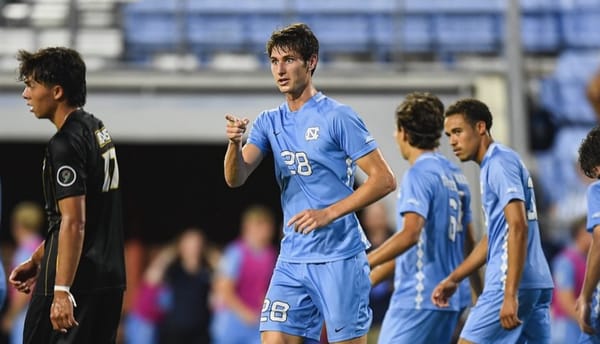
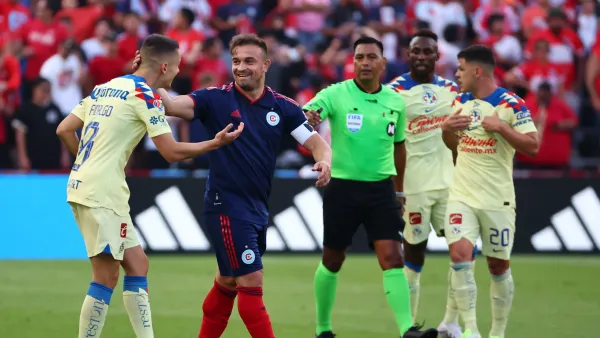
The league’s statement belies the U.S. Open Cup tournament rules, which state that any players eligible for league play are eligible for play in the tournament, as has been the case for several years. It is common for fringe players to get serious minutes in the tournament: Alex Monis started in the Fire’s initial Open Cup against House A.C. last season, and Missael Rodríguez, Sergio Oregel Jr., and Javier Casas Jr. appeared off the bench. Combined, those players had a total of 77 minutes of league play in 2023. Similarly, Los Angeles FC, who played a league-record 53 competitive matches in 2023, fielded a roster of primarily reserve players in last year’s competition.
The league does, however, currently restrict MLS first teams to 30 players, including 10 players on the supplemental roster. That is fewer players allowed than other top-flight teams around the globe, and larger rosters allow for greater squad rotation when teams compete in multiple tournaments, as will increasingly be the case for MLS teams with an expanded CONCACAF Champions Cup competition. Jeff Rueter writing for The Athletic reported that expanding MLS rosters was considered but rejected prior to the vote last week; it is currently unclear if the league may convene a meeting to reconsider that decision in light of the federation’s announcement.
With the MLS regular season schedule slated to be released later today, it is possible that some scheduled MLS matchdays will conflict with U.S. Open Cup windows. If so, some matches may have to be moved to alternate dates. Both MLS regular season and Open Cup matches have moved in the past: Last year, Inter Miami’s match against Charlotte FC was moved from August to mid-October after both teams advanced to the Leagues Cup quarterfinals; ultimately Miami won the final the day before the match against Charlotte was originally scheduled to be played. Similarly, in 1998, the U.S. Open Cup final, which the Chicago Fire won, was moved from late August to October 30th.