“We need to be more of a service provider:” Why the Chicago Fire Bought an Indoor Youth Soccer League

A little over four years after Chicago Fire owner Joe Mansueto purchased Swiss Super League club FC Lugano, the team made its next major acquisition – but this time, it was for an entire league. This past Tuesday, the club announced the purchase of the Chicagoland Indoor Soccer League, a local youth league founded in 2008 which served over 800 teams the past year.
While so-called multi-club ownership models – where one ownership group purchases multiple professional teams, often in locations continents away, are becoming more common moves like this – into youth soccer, on a scale far exceeding that of an academy – are relatively rare.
Here’s what drove the purchase and what the team hopes to get from owning the league.
What did the Chicago Fire just buy?
The league was founded in 2007 by John Niestrom, who operated the CISL until the purchase with the Fire. Niestrom, who ran the league alongside a full-time job, helped organize leagues for registered teams, including both boys and girls teams from the under-seven through the under-19 age brackets. This upcoming season, more than 12,000 youth are expected to play in teams registered in CISL.
The league does not own any facilities, but instead, rents time at a number of locations around Chicagoland, including the dome in Bridgeview, the former location of Chicago Fire training until the opening of the Endeavor Health Performance Center earlier this year. The other facilities used by CISL are in a belt between the western and southern suburbs, from Naperville to Tinley Park, LaGrange to Joliet.
Although the facilities, many of which are publicly-owned, are available to a number of users, time in indoor facilities during the winter months is hard to come by: Permanent indoor fields can cost tens of millions of dollars (or more) to construct, and have ongoing maintenance and staff costs. Air-supported domes have a lower upfront outlay, but still have seven figure price tags and must be maintained, set up and stored each season. Because they depend on positive air pressure to stay inflated, they must be constantly powered through the winter season, which can cost hundreds of thousands of dollars a year.
All of those costs makes those facilities – and time in them – a scarce resource. Contracts for blocks of time are often booked years in advance, making it a challenge for individual teams or smaller operators to book time. CISL’s scale and ability to sign those longer-term leases helped ensure that time would be available for multiple age groups at a variety of levels of competition.
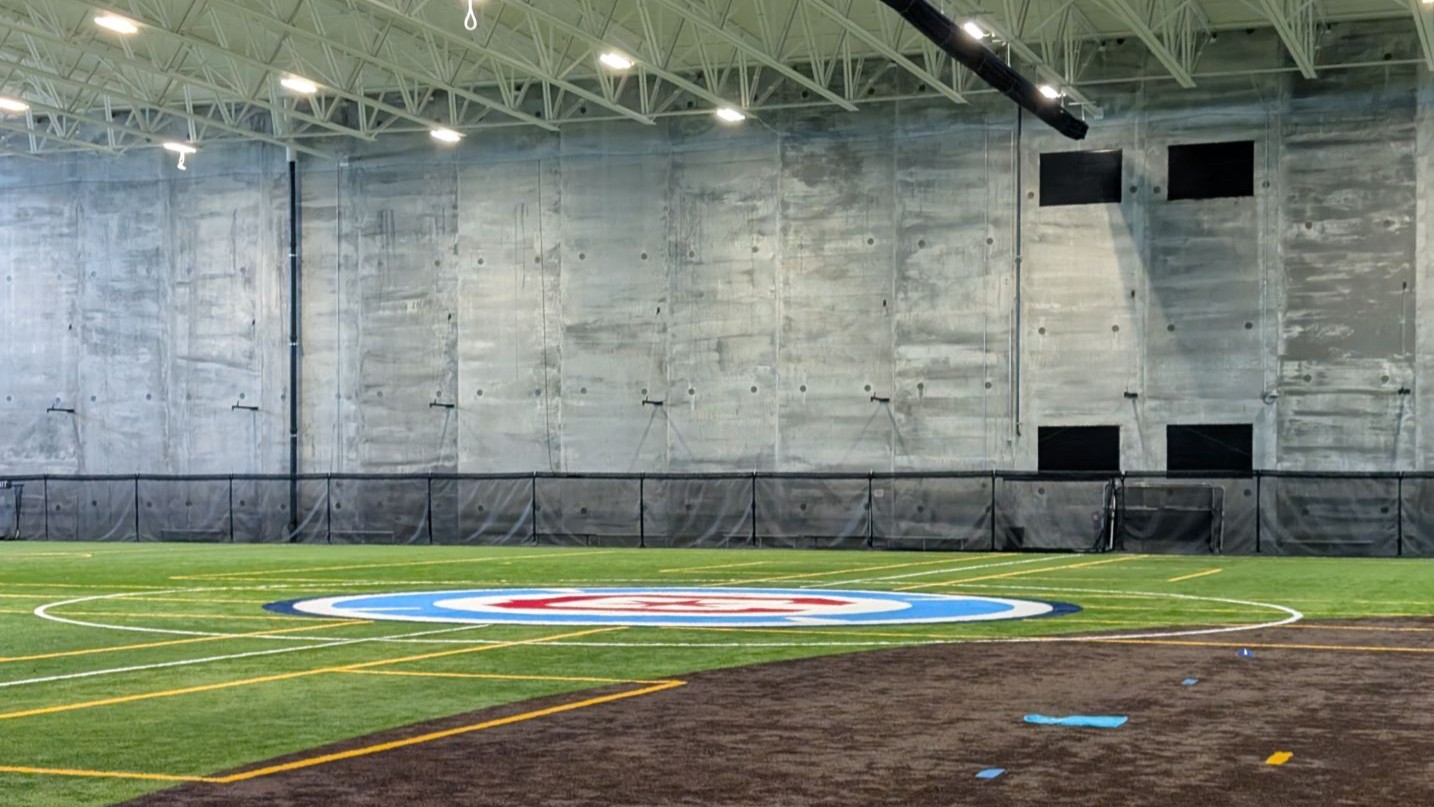
The Fire will take over those responsibilities, with plans to professionalize some of the operations, which had been run without full-time, year-round staff, and enhance the services that the league provides to teams.
Because of its size, CISL provides leagues for a variety of brackets, not just for age group, but also, level of competition. That marks it easier for teams to find competition at a level, and at the high end, an appropriate level of competition to stay sharp.
Move part of long term shift for Fire
Finding high-level competition in the winter months, when the game is forced indoors for Chicago’s competitive youth soccer, has long been a key challenge for top-level teams, according to Paul Cadwell, the Fire’s Vice President, Community Programs, Engagement & Facilities, who spoke to MIR97 Media about the purchase.
“One of the biggest development handicaps we have here in Chicago, and in the north of the country is that we can’t play year round, and I would see that when I coached,” Cadwell, who ran the team’s youth clubs for a number of years, said. “We would have teams in the spring that would be ranked in the top five, top 10 in the country. We would then go indoor for four or five months, and then we would then come and play our first tournaments… down in Los Angeles, Arizona, or places like that, and we would get killed. We’d go down there and get killed by a non-ranked team, and that’s because those teams continued to play through the winter.” A league with a larger scale can offer more tiers of competition, increasing the competitive level that teams face during the indoor season.
Many of the youth clubs that Cadwell referenced were the Chicago Fire Juniors youth teams that operated out of the Chicago suburbs and surrounding areas. The team shut those down in 2022 – part of the same shift in the Fire’s philosophy that led to the purchase of CISL. “My message and my team’s message to the youth soccer community,” Cadwell said of the decision to close the Juniors down, “was that as the pro club, we need to be more of a service provider to accentuate and help what you are all doing rather than compete against you.”
The Fire continue to operate their Youth Soccer Club in the city, for boys and girls aged 5 to 19. That program attracts, according to the team, 35,000 to 40,000 participants over the course of a year, both boys and girls, across age groups.
The top level of some of the older age brackets may field a team in CISL, but that will be it. “The youth club will not participate fully in the league, so maybe some of the high-level 11-v-11 teams might participate in the 11-v-11 league, but the idea is that we keep these [CISL and Chicago FIre Youth Soccer Club] distinctly separate. The people that operate them will be distinctly separate,” noting that the team has already hired someone to oversee CISL’s operations. That will help ensure the highest possible level of competition for the teams and players is available in the region, while also preserving the distinct operations and independence of clubs participating in CISL.
The shift from competitor to service provider for youth soccer in the city has started with listening. “So far, a lot of that’s been centered around, how can we further education? How can we help with pulling the curtain back one what the first team and the academy are doing, showing some of the ways that we use game analysis, how we use data, how we rehabilitate the players, how we prepare the players, and really showing them a first-class, a world class soccer operation looks.”
Cadwell says that the team plans to make resources available for everything from coaching to refereeing – the latter, a key concern in Chicago (and, more broadly, the country) where there is an acute referee shortage, to help ensure that the game can continue to grow, in both size and quality.
Growth – and dividends for the team
The purchase isn’t entirely altruistic: the team’s philosophy has been to build through the academy, with Frank Klopas, now the team’s Vice President of Football, saying last year that he wanted to “see the team lift a trophy with 70, 80% of the kids on the field being homegrown players.”
Unlike some other MLS academies which have large catchment areas, the Fire have become focused on recruiting from within Chicagoland, meaning that the team’s vision for long-term success depends on the region’s ability to produce top-level talent. Purchasing CISLis one way to pursue that aim.
Cadwell says that the aim is to deepen the relationship with youth soccer clubs, so that transfers from those clubs to the academy become more harmonious. Having stronger relationships – and a finger on the pulse of the league – also makes scouting for local talent easier. “It allows our academy scouts to go to the same places week in, week out, and track players, meet families, and really have more dedicated and consistent space to observe.”
The move also allows the Fire to look at expanding CISL’s reach. The six facilities hosting games for the league this upcoming season are all located in a band of suburbs ranging from the west to south, but the northwestern I-90 corridor and north shore are also hotbeds of soccer in the area. With professional staff organizing the league and able to access the kinds of financial resources needed, they can start to negotiate for time for CISL at facilities in other parts of the region – but it may take some time, with any of the domes and indoor fields around Chicagoland booked years in advance
There are also other, more direct benefits to the purchase: It gets the team’s name and logo front and center for a number of youth soccer players. In a world where MLS clubs are often overshadowed by distant global giants, Cadwell says that the team’s ability to be front-and-center to the area’s soccer-playing youth and their families helps create the kinds of connections that drive brand loyalty to the team.