What do the Chicago Fire need in this transfer window?
The MLS secondary transfer window is officially open, and the Chicago Fire have less than a month to make changes before the roster is frozen for the rest of the year. In the winter, the Fire front office revamped the team’s back line by bringing in Allan Arigoni from sister club FC Lugano alongside Chicago-area native Andrew Gutman and Tobias Salquist from Denmark, strengthened the midfield with Kellyn Acosta, and brought in forward Hugo Cuypers in a club-record transfer deal to fortify the attack.
The Fire are expected to make more modest summer changes. Although the team achieved roster compliance by deadline day, it has no available roster slots on either the senior or reserve roster. Regardless of the team’s salary cap space, that means the team can’t make blockbuster signings or give first-team deals to notable Fire II players such as Omari Glasgow or Harold Osorio without first finding a way to move players on to other clubs.
Just-announced roster rule changes give teams additional flexibility, but did not include a rumored second buyout which would have been useful for the Fire and provided more ways to create space to add new players. The team also exercised its one buyout of the season by sending striker Kacper Przybyłko to Lugano, meaning that any moves out must either be by trade within MLS, transfer abroad, or mutual contract termination.
Taken together, this severely restricts what can be done. The summer window in MLS is short, lasting just a month, but as the primary window elsewhere, it’s both open sooner and stays open later in most of Europe and South America.
The Fire currently have all three of their Designated Player (DP) slots filled, though Gastón Giménez is eligible to be bought down, potentially freeing up his spot. The team is also using all of its U-22 initiative slots, though if they buy Giménez down and do not replace him, the team would be eligible for a fourth slot if they can open up a roster spot. Rafael Czichos and Federico Navarro recently acquired Green Cards opening two more international slots.
Why does the summer window matter?
Although the summer window is considered MLS’ secondary window, it coincides with the offseason in Europe and is the time when most player movement happens worldwide. More players are available in the summer, and teams may be more willing to allow a player to depart because it is easier to find a replacement. Players who arrive in the summer have generally had an offseason, whereas winter arrivals, such as the Fire’s Allan Arigoni this past offseason, have already played roughly half a season before they arrive, adding to player fatigue down the stretch.
For those reasons, many MLS teams plan on being active in the summer, even if it means having holes in the roster through the first two-thirds of the season. Atlanta United, for example, have sold several players to Europe in the past few weeks to free roster spots and team President Garth Lagerwey has announced plans to spend up to $50m this window reloading the roster.
The Fire, meanwhile, have made relatively few player acquisitions during the summer transfer window since Georg Heitz has been Sporting Director. In 2021, the team brought in Fede Navarro in one of the first U-22 deals in the league, and in 2023 Ousmane Doumbia was added on loan from Lugano.
Will Shaqiri leave this summer?
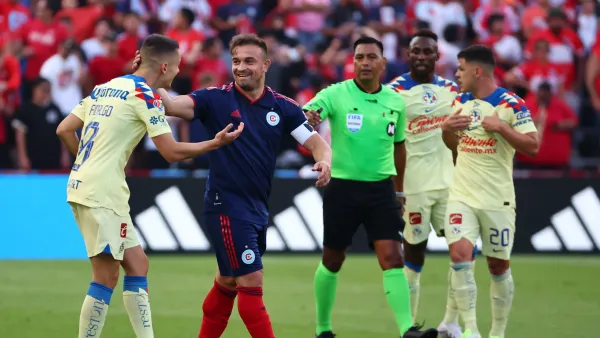
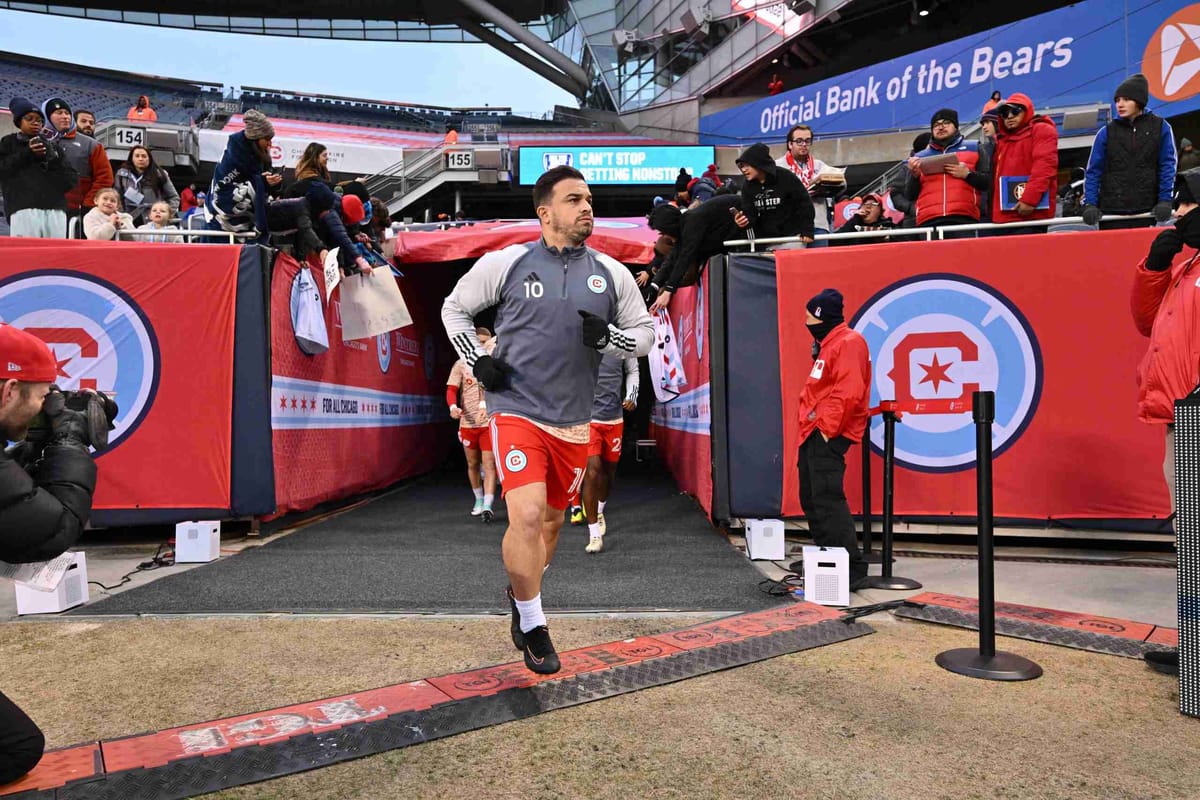
Xherdan Shaqiri, whose contract is up at the end of this MLS season, has announced his retirement from the Swiss National Team, and expressed in an interview with Swiss media that his desire was to return to Europe. If Shaqiri is to leave this summer, it would have to be either through a transfer or mutual contract termination. Either way would see the Swiss star forfeit the remaining money the Fire owe him from his current contract – over $2 million. Although the Fire would allow Shaqiri to depart on a free transfer, he would need to agree to personal terms with his new club and there is a good chance that his annual salary would be less than the Fire are scheduled to pay him between now and late October.
Though Shaqiri is supposedly set to return to Chicago in the coming days following his post-Euros break, that doesn’t mean he’ll return to the field for Leagues Cup next week. It’s no secret that the Fire are looking to find a solution with the DP that would allow both parties to move forward, but after momentum for a potential move to Greek giants Panathinaikos died down, finding a buyer might not be so simple. Shaqiri’s hefty salary will likely be the biggest stumbling block, but if a wealthy club from a league across the pond, such as the Turkish league, was prepared to take a gamble on him, he could easily leave MLS in the next few weeks.
What other Fire players might leave this window?
Besides Shaqiri, Gastón Giménez has been linked with a return to Argentina, but the Fire have not received any offers for the midfielder and interest appears to have cooled. Giménez remains under contract with the Fire through the 2025 season and has remained a Fire player despite frequent rumors of his departure to one of several Primera División clubs over the past few years.
Carlos Terán has made no secret of his desire to play in Europe, and the Colombian defender has the profile of a player who might garner interest from European teams, but his current injury likely minimizes any chance of him leaving this summer. Similarly, Fede Navarro’s camp has hinted at a desire for a return to Argentina, but his injury woes over the last 18 months, combined with a long-term contract, make a move nearly impossible right now.
Arnaud Souquet spent the majority of the preseason elsewhere, but no deal for the French defender materialized and he remains a Fire player under contract through the 2025 season. Injuries to the team’s back line have given Souquet regular minutes recently and he’s taken full advantage, putting together some of his best performances in a Fire jersey over the past few weeks. Whether that makes him more likely to be a transfer target or remain in a Fire jersey is yet to be seen. Regardless of his performance, he’s on a pricey contract, particularly if he isn’t a game-in, game-out starter.
Taken together, though, the full roster combined with the fact that the Fire have many players on generous contracts – which means the player would likely have to take a pay cut if they moved abroad or would have a significant cap hit if they were traded within the league – means that the Fire’s front office has its work cut out for it if they want to make large scale changes.
What should Fire fans expect from this transfer window?
Alex Calabrese:
The key thing to remember about this summer transfer window is that the team cannot physically sign anyone without parting ways with another player. The lack of a second annual buyout makes that even more difficult. The top priority will likely be to find a way to get Shaqiri off of the books, and as a mutual contract termination seems highly unlikely, that means the front office must find a club to sign him.
Once the task of opening roster spots is complete, the Fire might also opt to shop on the domestic market rather than on the international one. In the last offseason, there was a deliberate attempt to do so, bringing in the likes of Kellyn Acosta and Andrew Gutman from around the league in types of moves that have not been staples under Heitz. A similar approach would not be out of the question this summer.
Ultimately, however, it’s difficult to know how this window will shake out until roster slots are open. Going forward the Fire will likely want to upgrade in a few positions for next season – a starting quality winger to pair Maren Haile-Selassie and a midfielder partner for Kellyn Acosta will be atop the wishlist, and at least one of those would almost certainly be a DP. However, it’s hard to imagine a big move like that happening in this summer unless something dramatically changes.
Tim Hotze:
When the team announced that Georg Heitz’s contract was being renewed at the end of 2023, fan reaction was negative enough that team owner Joe Mansueto sat down for an interview with a team staffer explaining the decision to bring back the Sporting Director that had failed to return the Fire to the playoffs in any of his first four seasons in charge.
Still, the moves Heitz made in the offseason represented a productive window for the team. But there's still much more to be done to strengthen the roster, as evidenced by the team's struggle to work its way into the a postseason spot. Now more than four years into his tenure, he negotiated every current contract on the squad. If players are hard to move because the Fire can’t find another team in the world that wants to sign players for deals the players will accept, that’s ultimately on him and the front office.
The team needs reinforcement in virtually every area of the pitch but the cheat sheet to strengthening an MLS squad is to focus on the spine. The Fire could use a central attacking midfielder, preferably one who can also play on the wing, as well as a pass-before-the-pass No. 8 central midfielder to play alongside Acosta. In a perfect world, the team would also sign a winger – again, versatility would be useful here. That, combined with the Fire’s upgraded back line (which we still haven’t truly seen due to injuries) could create a much more dangerous team for the rest of this season and beyond.
If Heitz has truly changed, he needs to show it by taking full advantage of both transfer windows, regardless of the challenges in doing so. I expect the actual changes to be significantly more modest, but with other teams around the Fire in the standings expected to significantly strengthen in this window, that is the bar for success.